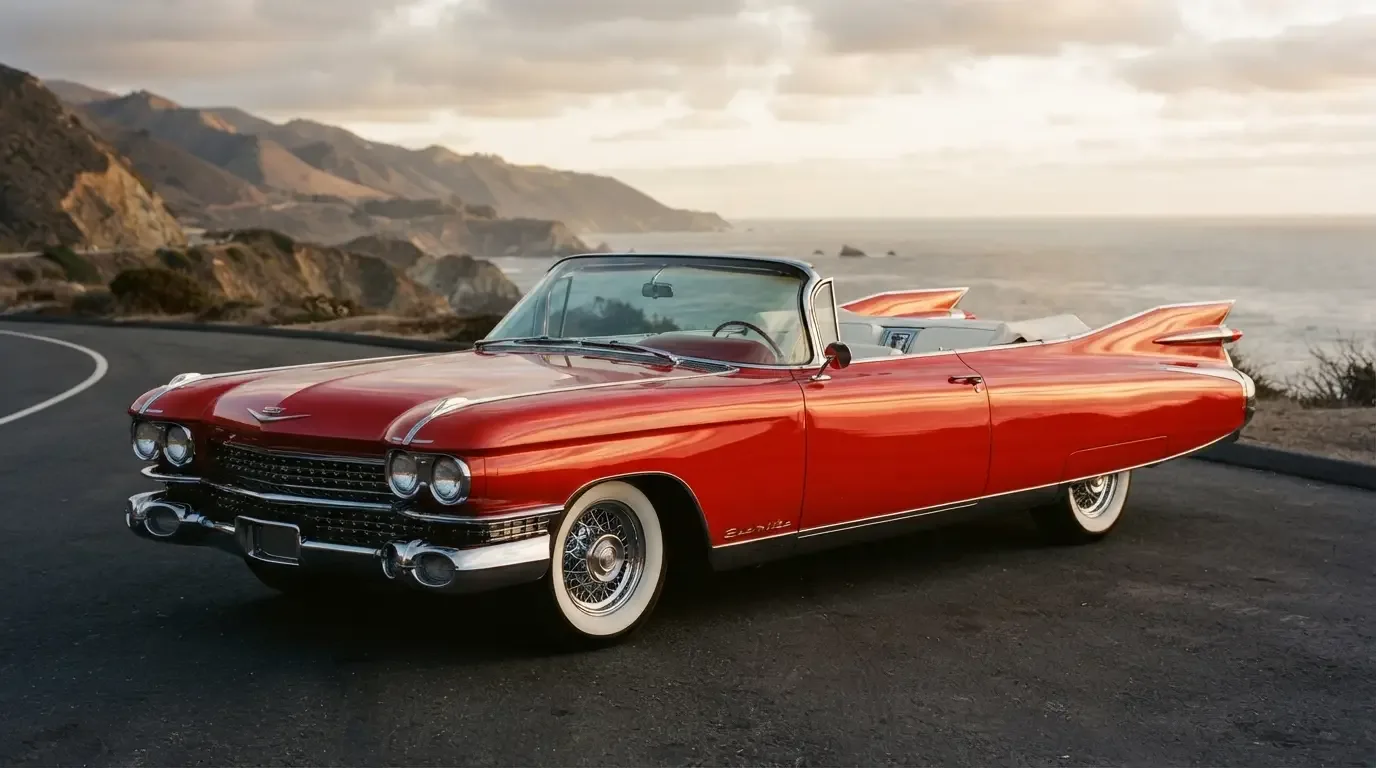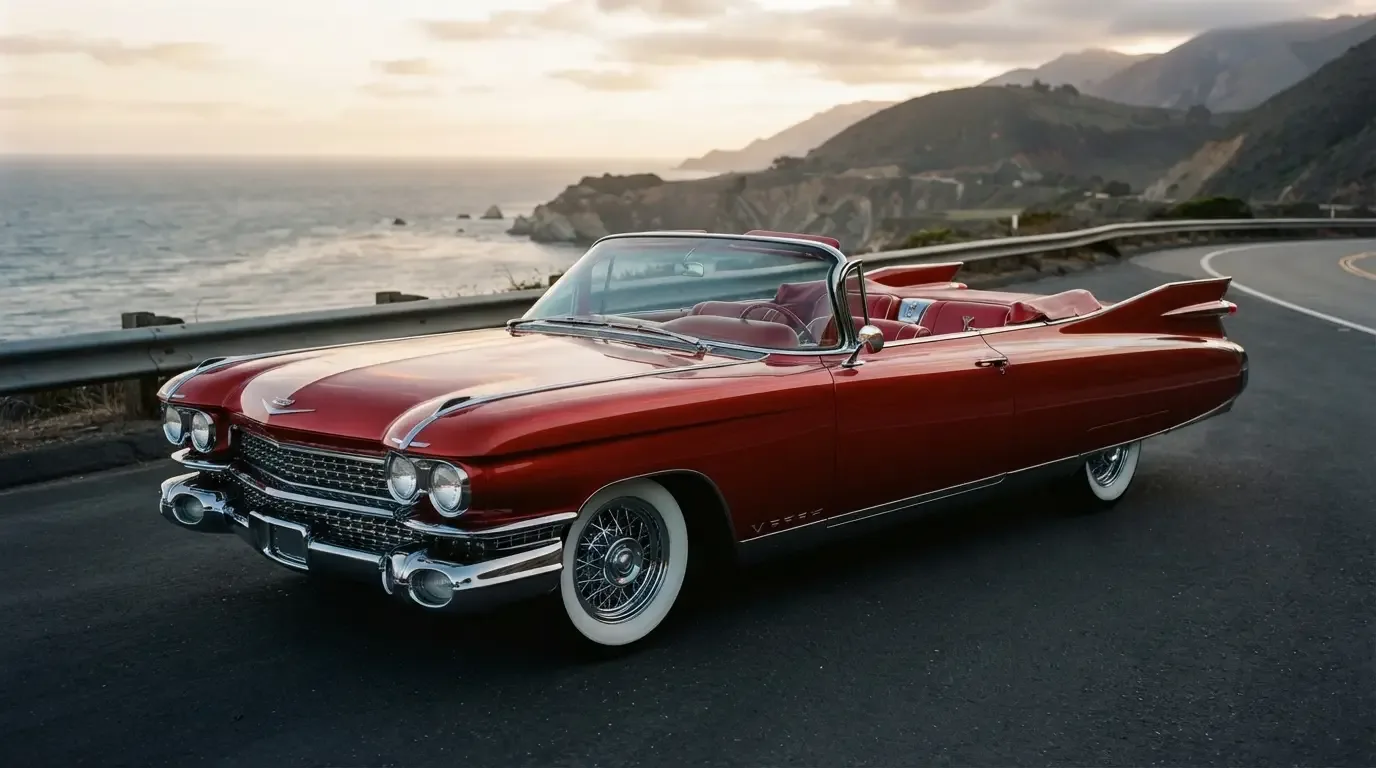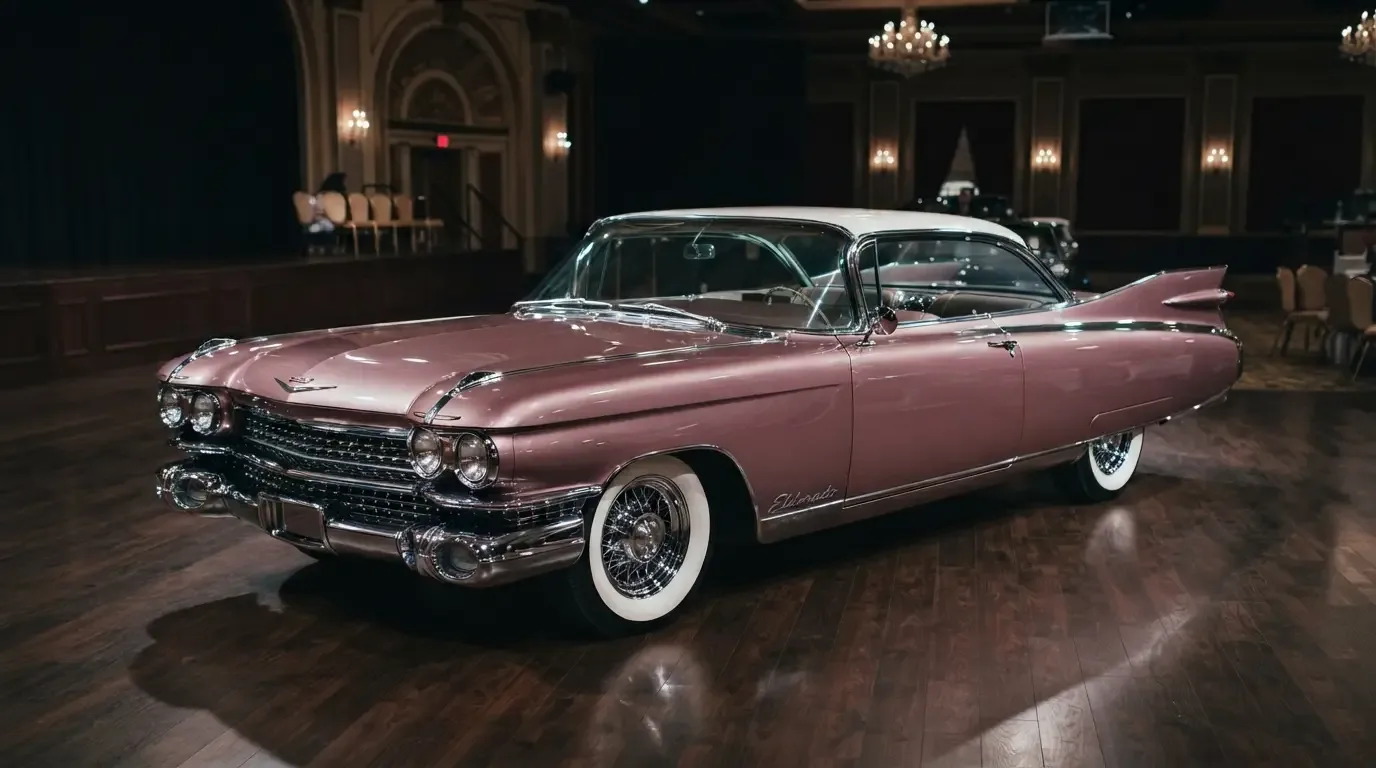
Every builder I know has an opinion about 1959 Cadillac Eldorado tailfins, and none of those opinions are quiet ones. Some call them the high point of American automotive design, the moment Detroit stopped playing it safe and just went for it. Others call them a warning sign, proof that a good idea can get pushed one model year too far. I have spent enough time with the sheet metal itself to land somewhere specific: these fins are the boldest thing Detroit ever built, and understanding why takes more than a glance at a photo.
How tall is tall, exactly
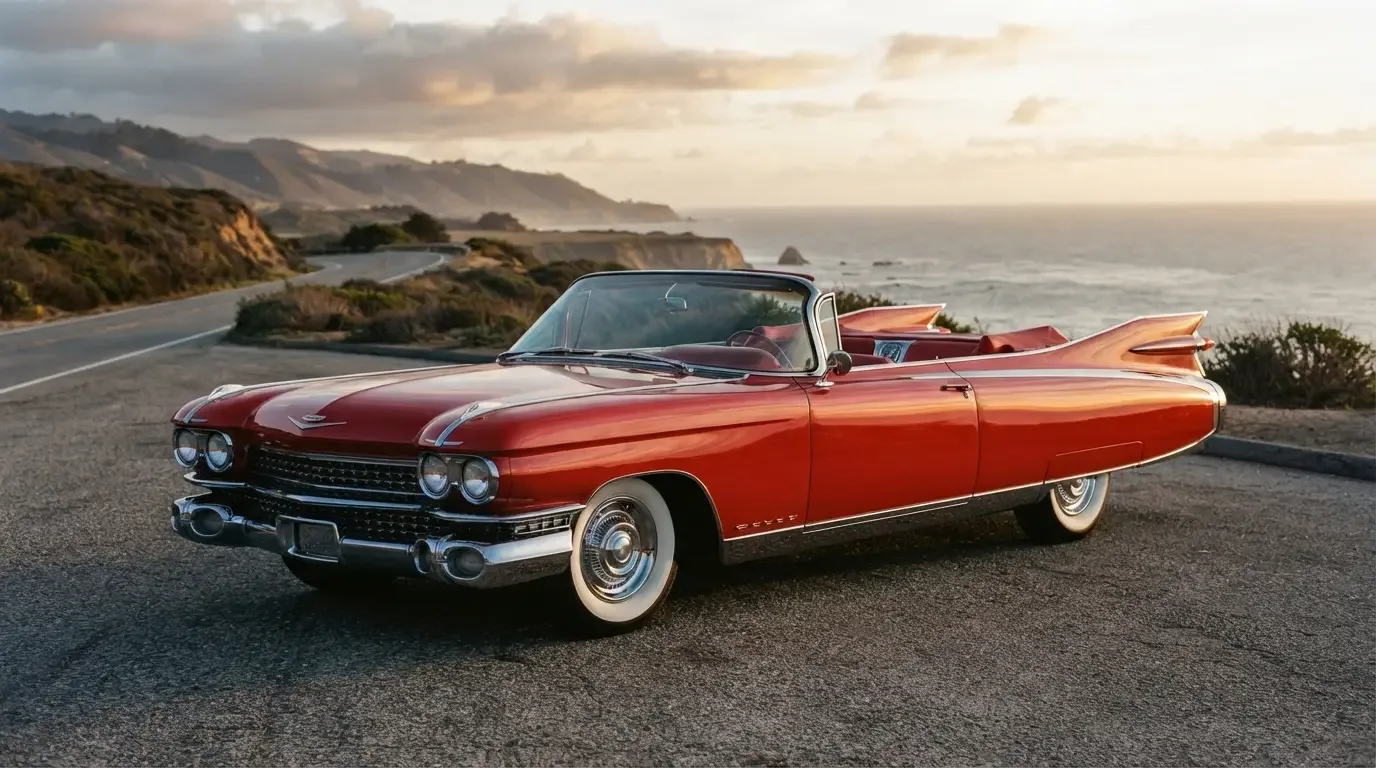
The 1959 Eldorado's fins stand taller than on any American production car before or since, a genuine engineering and stamping achievement as much as a styling one. Getting sheet steel to hold that shape, that sharply raked, without wrinkling or oil-canning under normal panel stress was not a trivial problem for Cadillac's body engineers to solve. The twin bullet-shaped taillamps set into the fin tips became the signature detail, instantly recognizable even to people who could not name the car, and the amount of chrome trim running the length of the rear quarter panel turned the whole rear end into a single, unmistakable statement.
What gets lost in most retellings is how much of that visual drama came from careful panel work, not just an ambitious drawing from the styling studio. Getting the fin's leading edge to read as a single clean line from the door all the way back required body panels stamped and fitted with a precision that a lot of period American cars, frankly, did not bother with. That is the part builders respect even when they think the styling went too far. The execution was genuinely good.
What the fins cost a body man today
Anyone who has worked on a 1959 Eldorado's rear quarters knows those fins are as much a liability now as they were an asset new. The complex compound curves that made them dramatic on a showroom floor make them a nightmare to source replacement sheet metal for today. Original panels, when they surface, get bid up fast by people who know exactly what they are looking at. A shop doing this work right treats every inch of that rear quarter as irreplaceable, because in a practical sense it often is.
That scarcity separates a genuinely period-correct 1959 Eldorado from cars wearing reproduction panels or, worse, fiberglass replacements dressed up to look original. I have seen both, and the difference shows up under a trained eye even after paint, in panel gaps, in how the chrome trim sits against the body line, in subtle proportion differences a fiberglass mold rarely captures exactly right. Buyers paying real money for a 1959 Eldorado owe it to themselves to have someone who knows these cars specifically look at the rear quarters before the deal closes.
| Detail | 1959 Eldorado |
|---|---|
| Fin height | Tallest of any Eldorado model year |
| Taillamp design | Twin bullet-shaped lamps set in fin tips |
| Body styles | Seville hardtop, Biarritz convertible |
| Replacement panel availability | Very limited, original panels highly sought |
Why the styling still holds up
Trends in car design move fast, and most bold styling statements age badly within a decade. The 1959 Eldorado's fins have done the opposite. Six decades later they still stop people at a car show, still get photographed more than almost any other American car from the period, and still get referenced by designers working in genres that have nothing to do with automobiles. That kind of staying power is rare, and it tells you something about the confidence behind the original design, a willingness to commit fully to an idea rather than hedge it down to something safer.
Part of what keeps the design working is restraint in exactly the places that matter. The fins are dramatic, but the greenhouse and beltline underneath them stay relatively clean, which keeps the whole car from tipping into visual chaos. A lot of period competitors piled on chrome everywhere at once. Cadillac's stylists let the fins carry the drama and kept the rest of the car disciplined enough to support it.
"You can tell a real 1959 Eldorado quarter panel from a reproduction the second you run your hand along the fin's leading edge. The original has a confidence to the metal that nobody has ever quite replicated."
- Jim Vasquez
Restoration work versus a genuine save
There is a real difference between a shop that restores a 1959 Eldorado's rear end properly and one that just makes it look right for a photo. Proper work means matching the original panel gauge, preserving the factory lead loading where it existed instead of skipping straight to modern filler, and getting the chrome trim's fit exactly right against the body line, since even a small gap there throws off how the whole fin reads from the side. A rushed job might look fine in listing photos and still fall apart under close inspection, with wavy reflections along the fin's edge or trim that sits proud instead of flush.
I have turned down more than one car brought in for "just a quick fin repair" because the underlying structure was too compromised to do the job right without essentially rebuilding the quarter from the wheel arch back. That is not a job for a shop chasing a quick turnaround, and it is not a job a buyer should assume was done correctly just because a seller says the car has "new quarters." Ask who did the work, ask for photos of the process, and treat vague answers as a red flag on a car this specific about its sheet metal.
Buying with the fins in mind
If you are shopping for a 1959 Eldorado, the fins should be the first thing you inspect closely, not the last. Rust hides in the compound curves where water collects and drains poorly, and prior repairs done in a hurry tend to show up right at the fin's base, where the panel transitions from the door skin into the quarter. A car that looks flawless from ten feet away can still be carrying filler in exactly that transition zone, so a magnet and a careful eye matter more here than almost anywhere else on the body of the entire car.
For the fuller story of what makes this specific model year matter beyond the styling, read 1959 cadillac eldorado history, and for more on the convertible version of these same cars, a related story covers the Biarritz in detail. Anyone ready to see what genuine examples are actually selling for right now can look at Eldorados for sale now and judge condition against everything covered here.