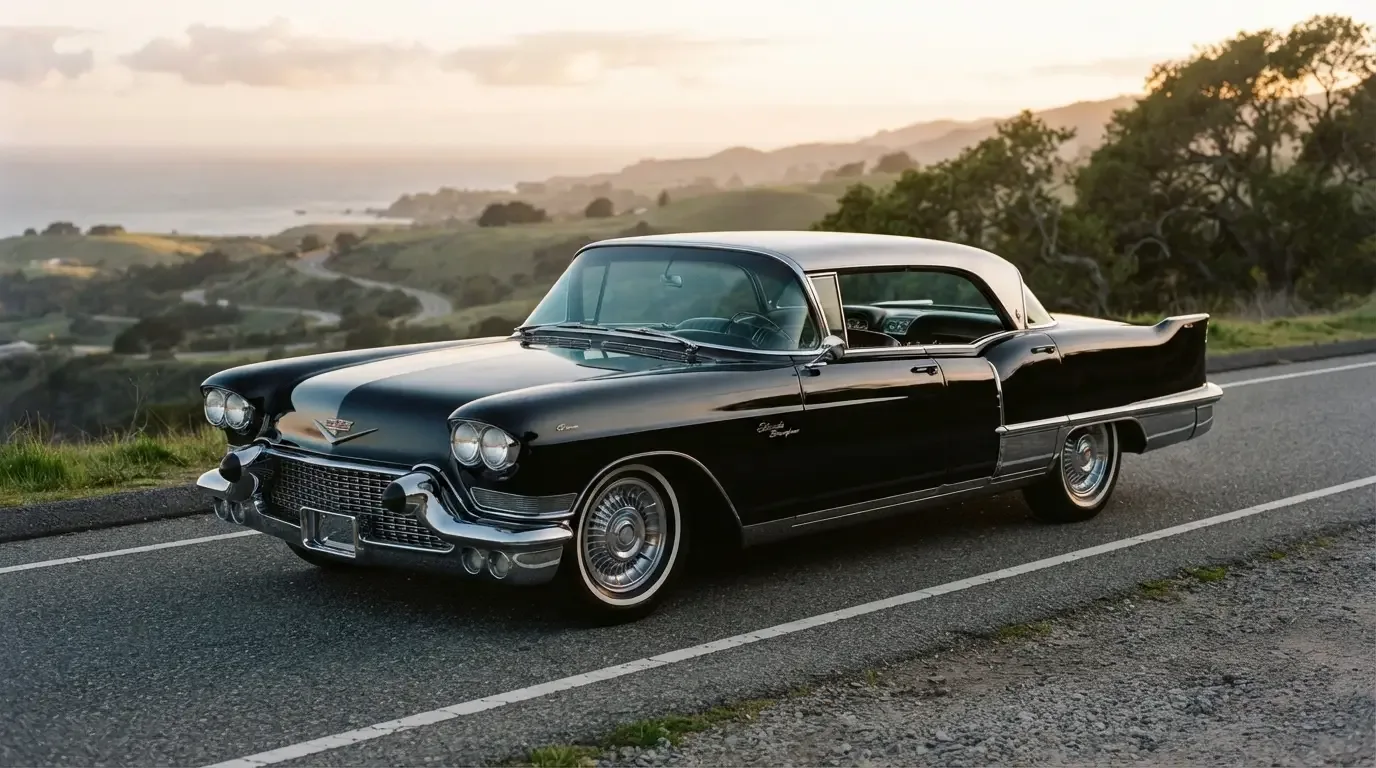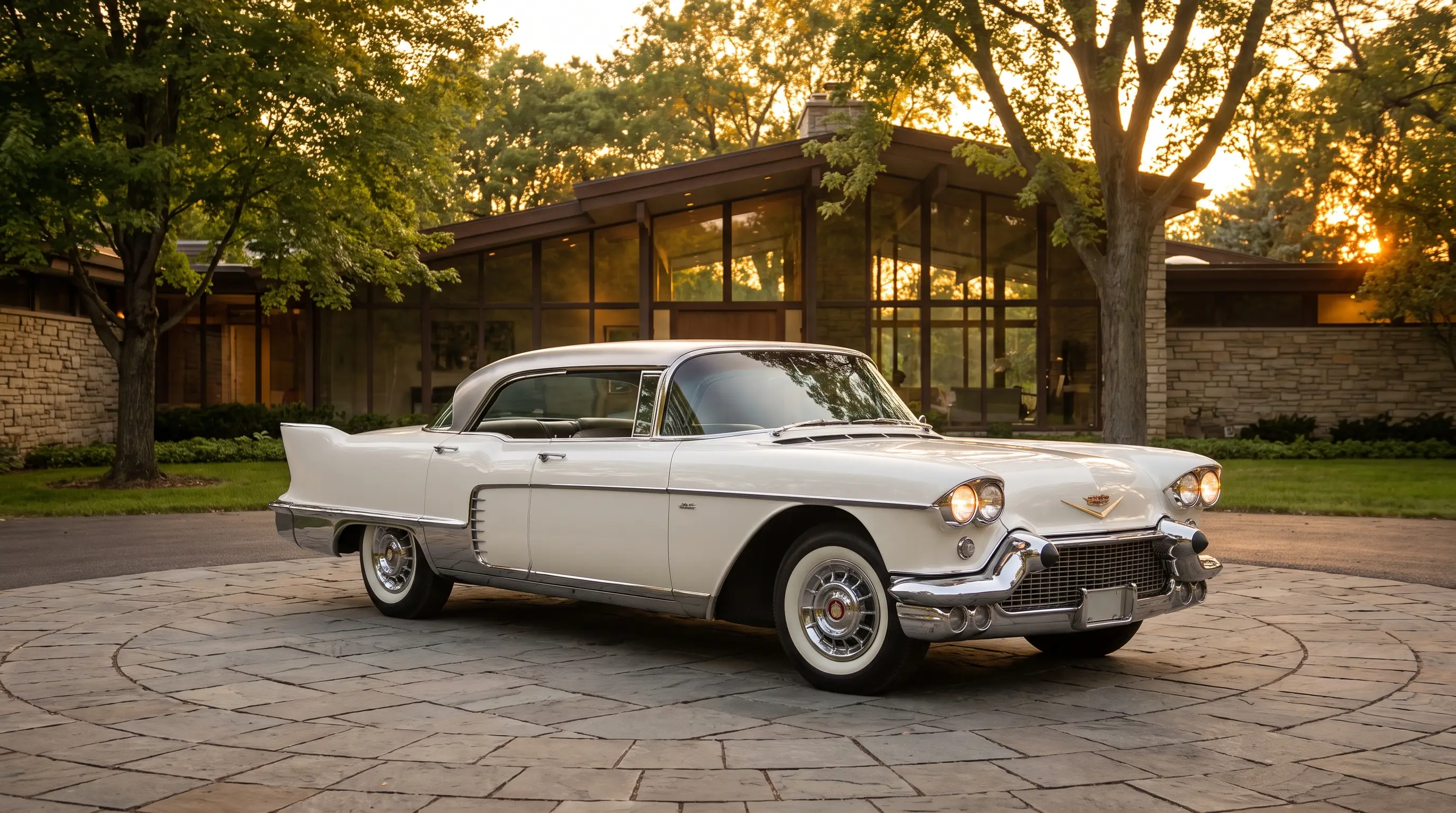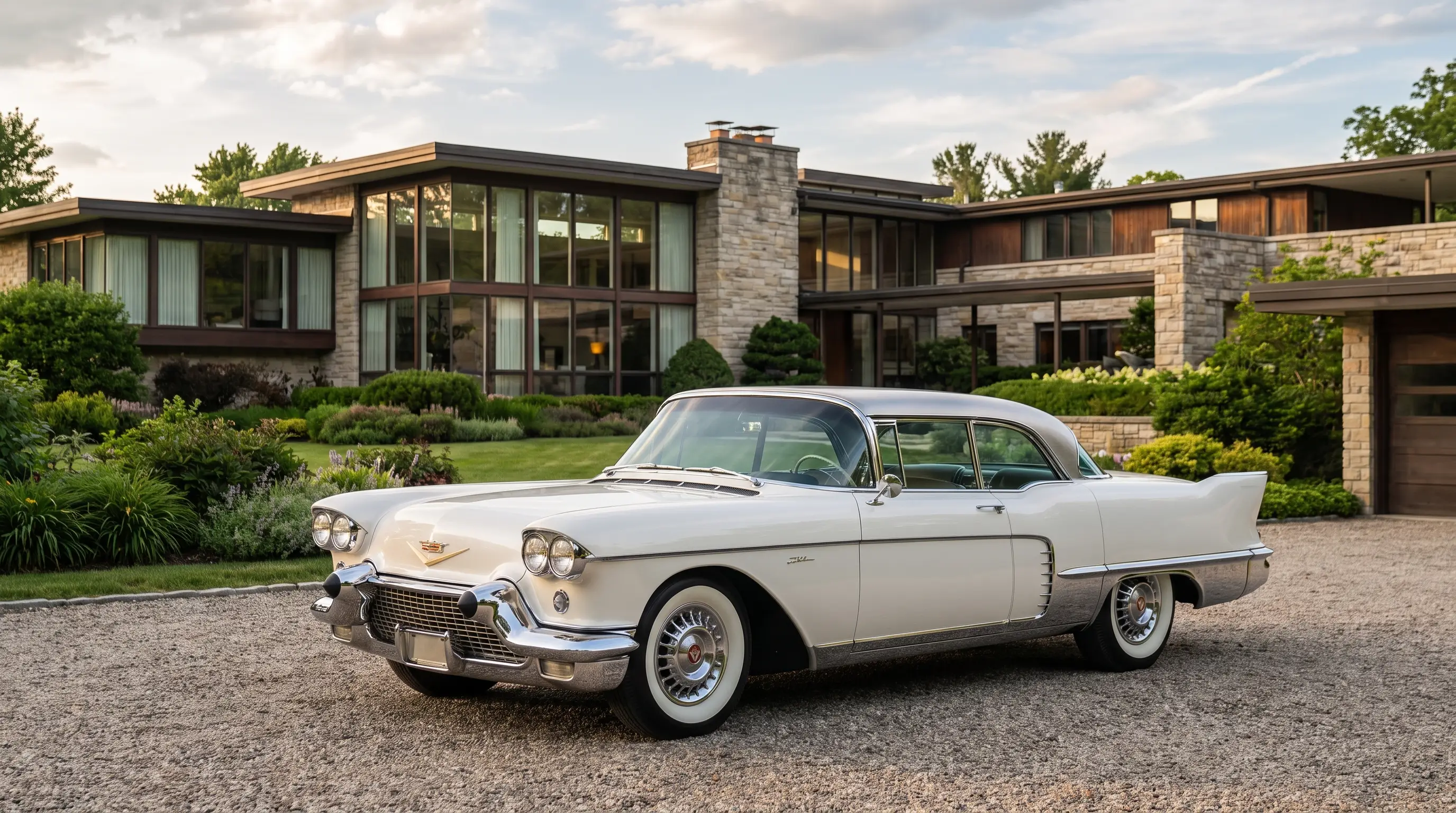
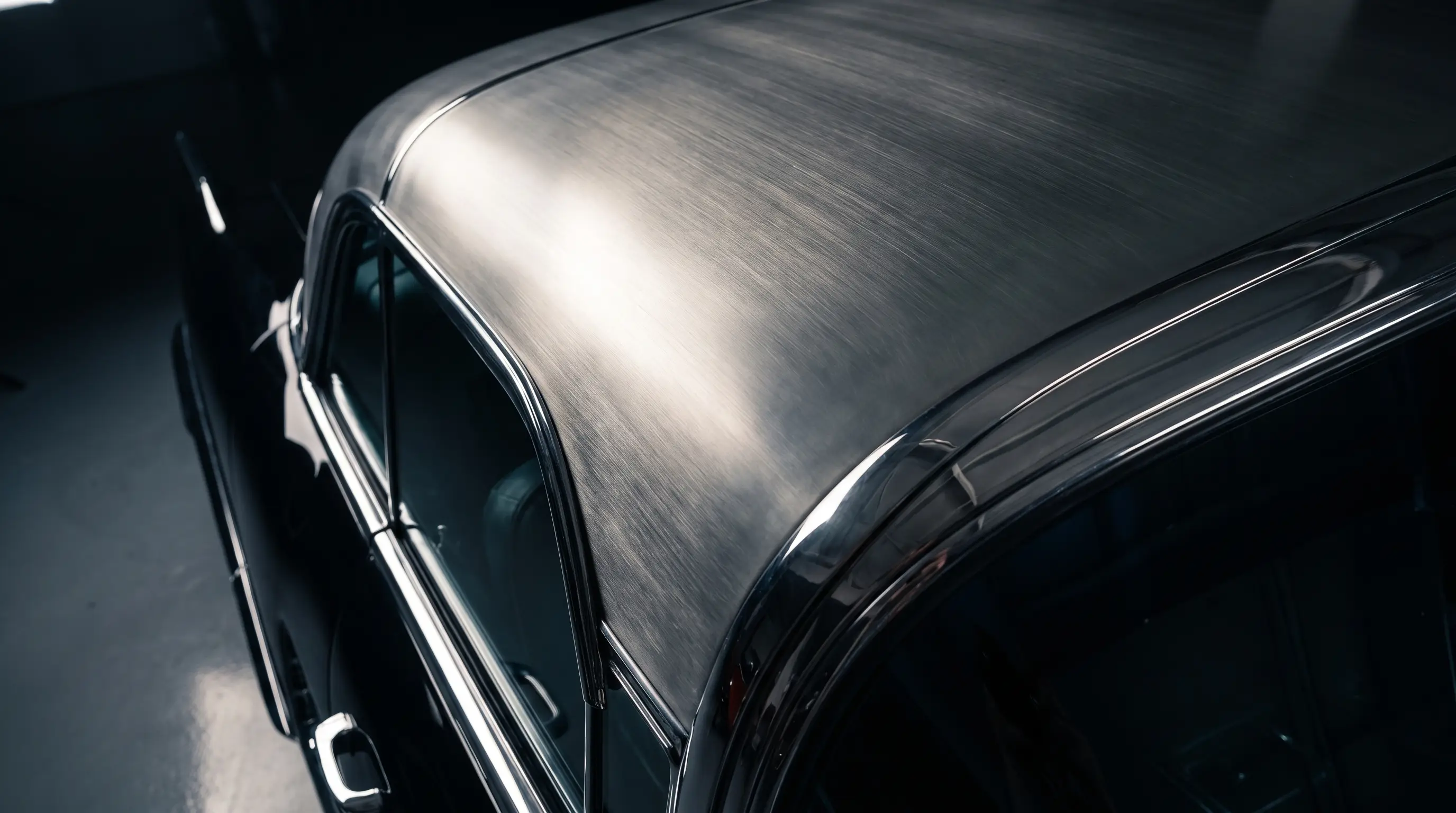
The Cadillac Eldorado Brougham wore a lot of unusual metal for a 1957 luxury car, but the piece everybody remembers first is the roof. It was not painted. It was brushed stainless steel, fitted as a distinct panel over the six-window greenhouse, and it is still the fastest way to spot a real Brougham from thirty feet away. Ask any longtime club member about the eldorado brougham stainless roof and you will get an opinion within about ten seconds. I have had my hands on two of these roofs in the shop, one original and one that somebody tried to fake with sheet trim thirty years later, and the difference tells you everything about how this car was actually built.
Why stainless instead of paint
Cadillac was not trying to save money on the Eldorado Brougham. The division lost money on every single car it sold, reportedly somewhere around ten thousand dollars a copy, because the hand assembly and the custom trim cost more than the sticker price could ever cover. The stainless roof was not a cost cut. It was a styling statement, meant to read as jewelry rather than sheet metal, and it separated the Brougham visually from every other four door on a Cadillac lot that year. A painted roof would have aged like any other painted roof. A brushed stainless panel does not fade, does not chip, and catches light in a way lacquer never will.
The panel sits over a conventional steel roof structure underneath. It is not structural on its own. It is a skin, bonded and mechanically secured to the roof pressing, with a brushed grain running in a consistent direction so the light plays across it evenly from any angle you view the car. Get that grain direction wrong on a replacement panel and the roof looks wrong even to somebody who cannot tell you why.
How the panel actually goes on a car
Fitting stainless to a compound curve is not the same job as fitting a flat trim strip. The Brougham roof has crown across the width of the car and a taper toward the rear window, so the factory panel was formed to match that shape rather than stretched over it after the fact. When I see a roof that has been redone badly, it is almost always because somebody tried to skip that step and force a flatter piece of stock into a curved opening. You end up with oil canning, a wavy reflection that shows up the moment sun hits the car, and no amount of polishing fixes that. The metal has to be shaped correctly before it goes anywhere near the body.
Attachment matters just as much as the shape. The original method used adhesive along with mechanical fasteners hidden under the drip rail trim, which means a correct restoration has to pull that trim, redo the bonding surface properly, and reinstall everything without leaving witness marks. Shortcuts here show up as lifting edges a few years down the road, usually right where the roof meets the C-pillar, which is also the spot most amateur repairs get wrong because it is the hardest to reach with a proper roller.
If you want read the background on why Cadillac built this car the way it did in the first place, that is where the whole project starts making sense. The stainless roof was one decision among dozens that all pointed the same direction: build the best car in America and worry about the balance sheet later.
What goes wrong on a real car
Stainless does not rust the way ordinary steel does, but it is not invincible. The panel can develop stress cracks near the fastener points if the body has ever flexed from a bad jack point or a collision repair that was not squared up correctly. Polishing damage is the more common problem. Stainless has a directional grain, and a shop that buffs across that grain instead of with it leaves a hazy scratch pattern that never quite disappears, no matter how much compound gets thrown at it afterward. I have turned away more than one roof job because the owner wanted it buffed to a mirror shine, which is exactly the wrong finish for this car. The factory grain was brushed, not polished, and a mirrored roof looks like a customized car, not a correct one.
Corrosion at the edges is the other real threat. Where the stainless meets the painted steel drip rail, moisture can sit if the seal has failed, and galvanic reaction between the two different metals will eat at the steel side long before it touches the stainless. That is invisible from the outside until the trim starts to lift, so anyone shopping a Brougham should run a hand along that seam and feel for looseness before falling in love with the shine on top.
"People assume stainless means maintenance-free. It means low-maintenance if you treat it right, and it means expensive if you don't, because there's no such thing as a cheap replacement panel for this roof."
- Jim Vasquez
Spotting a correct roof versus a fake
A handful of Broughams over the decades have had their stainless roofs replaced with fabricated panels, sometimes because the original was damaged beyond repair and sometimes because a car started life with a different roof entirely and got "upgraded" for show. The tells are consistent once you know what to look for. Grain direction that does not match panel to panel is the biggest one. Panel gaps at the drip rail that look slightly proud or sunk compared to the rest of the body are another. And fastener spacing under the trim, if you can get a look at it, either matches the factory pattern or it does not.
None of this is a reason to avoid the car. It is a reason to look closely, because a well done replacement roof still drives, rides, and looks the part, while a poorly done one turns into a rust and adhesion problem within a few seasons. The air suspension underneath the car is a related story with its own set of headaches, and it is worth a look too if the roof has your attention, because the two systems were engineered by the same team with the same no-compromise mindset.
Why it still matters to buyers
Cars with an original, unmolested stainless roof command a real premium in the Eldorado Brougham market, because so few of these cars survive with their factory panel intact after seven decades of weather, storage, and well meaning but misguided restoration work. The roof is not just a styling flourish. It is a genuine engineering and manufacturing achievement from a period when Cadillac was willing to spend money it would never get back just to prove it could be done. Anyone serious about buying one of these cars should treat the roof as a primary inspection point, not an afterthought, and should budget accordingly if it needs work. If the search for one of these cars has you looking seriously, you can shop classic Eldorado listings and see what condition and originality actually cost in today's market.
Sources and notes
- Autoevolution: How Cadillac Lost $7M on the Eldorado Brougham
- Supercar Blondie: Eldorado Brougham priced at $13,074, GM lost $10K per car
- RM Sotheby's: 1957 Cadillac Eldorado Brougham
- Heacock Classic: 1957-58 Cadillac Eldorado Brougham
- Hagerty Valuation Tools: 1957 Cadillac Eldorado Biarritz
- Wikipedia: Cadillac Eldorado