Put a 1953 Eldorado next to a 1959 Eldorado and you would be forgiven for not immediately recognizing them as the same nameplate. Six years, six model years of sheet metal decisions, and the Cadillac Eldorado fins evolution went from a barely-there suggestion to the tallest, sharpest rear fenders Detroit ever put into production. I have worked on cars from both ends of that run, and the difference in metalwork alone tells you everything about how fast Cadillac's design team was moving during this stretch.
1953: fins that barely announce themselves
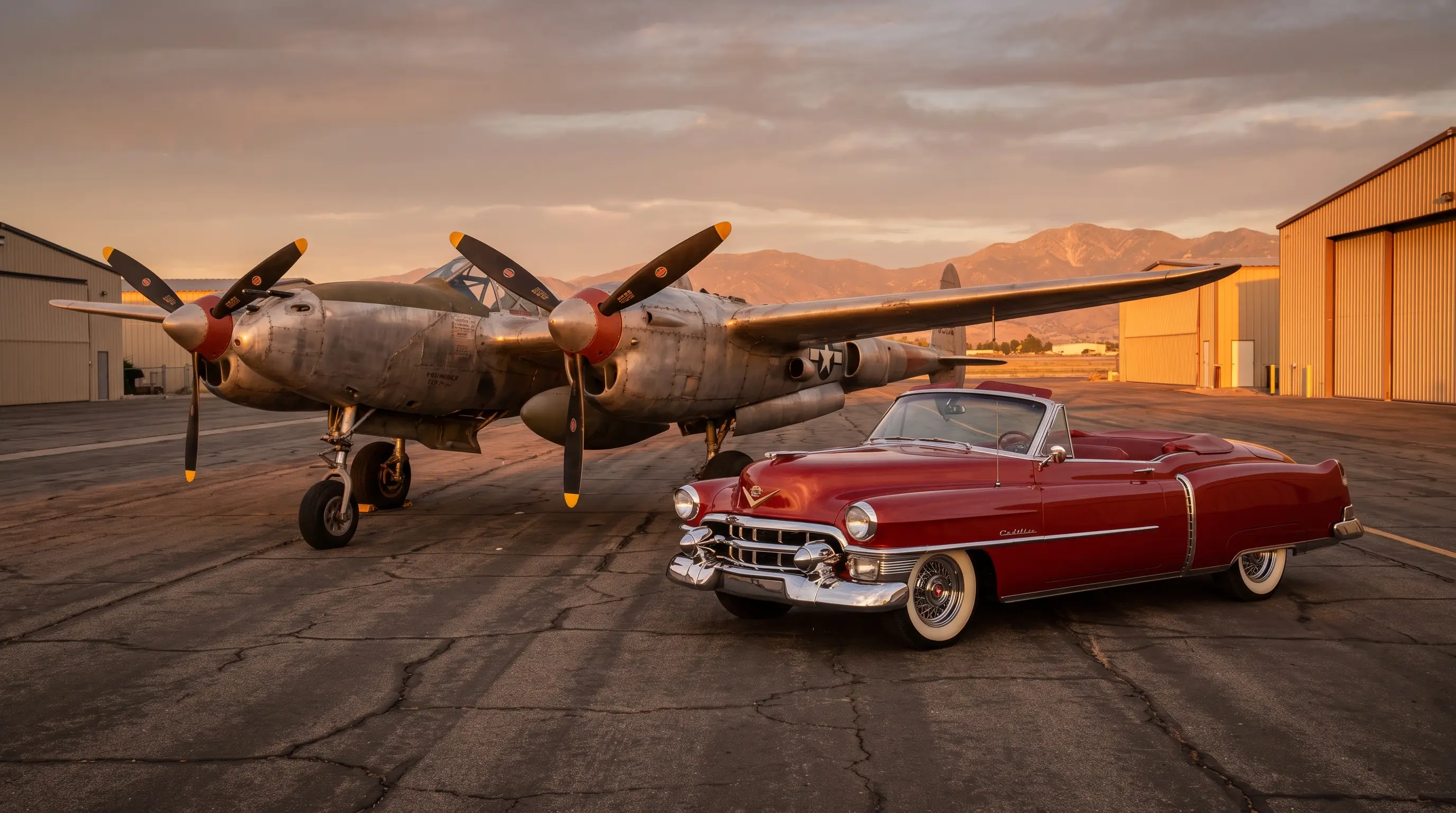
The first Eldorado did not really have fins in the way people picture them today. What it had was a subtle rear fender kick-up, an evolution of the small fin Cadillac introduced back in 1948, dressed up with more chrome and a lower beltline than the standard Series 62 it was based on. Bodywork on these early cars was hand-finished at a level the regular production line did not match, since only 532 were built that first year and Cadillac wanted every one to look genuinely special.
Working on an original 1953 body panel, you notice the metal gauge and the care in the panel gaps before you notice anything about the fin shape itself. This was a car built to prove Cadillac could do bespoke-level finish work at something close to production scale, and the fin was almost a secondary detail compared to that overall execution.
1955 to 1957: the shape starts to sharpen
By 1955, the fin had grown into something you would actually call a fin, a distinct raised line running from the door back to a pointed rear fender tip. The 1957 Eldorado, especially the Brougham variant with its stainless steel roof, pushed the shape further, sharper edges, more pronounced chrome trim following the fin's contour. This is the period where you can watch Cadillac's stylists getting more confident year over year, testing how far the shape could go before a customer would balk.
Body repair on cars from this middle stretch of the run is genuinely harder than on either the earlier or later cars, because the compound curves in the fin transition require more skill to get right than a flat panel or a simple straight crease. Anyone shopping a 1956 or 1957 Eldorado should look closely at the rear quarter panels for filler work, since this is where a rushed prior repair tends to show.
1958: a step back before the leap
The 1958 Eldorado actually pulled back slightly on aggressive fin styling in favor of heavier chrome ornamentation elsewhere on the body, a choice that gets mixed reviews from collectors today. Some see it as Cadillac catching its breath before the 1959 redesign. Others see it as the weakest year of the decade stylistically, overloaded with brightwork that competed with the fin shape rather than complementing it. Either way, 1958 sits as an odd middle step in the Cadillac Eldorado fins evolution, more ornate but less confident than the year before or the year after.
1959: as far as the shape could go
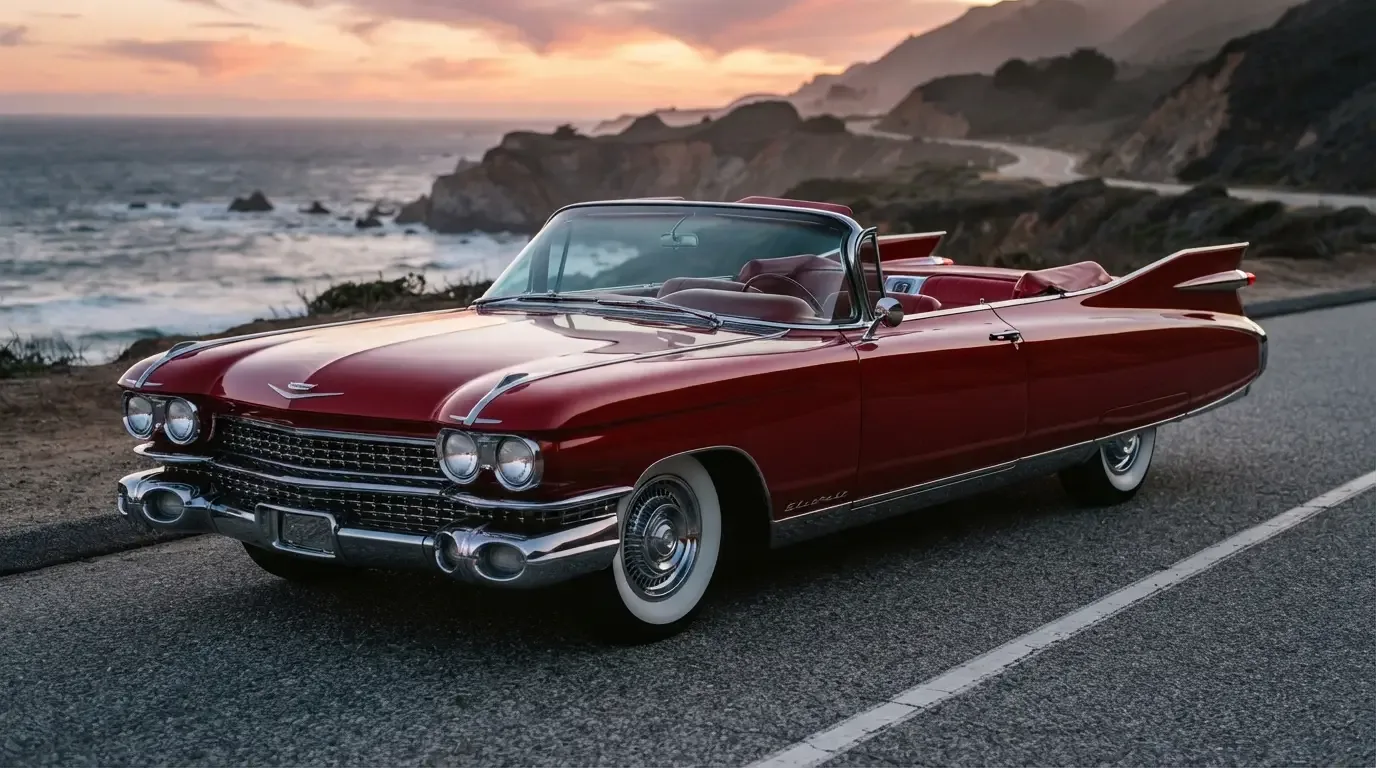
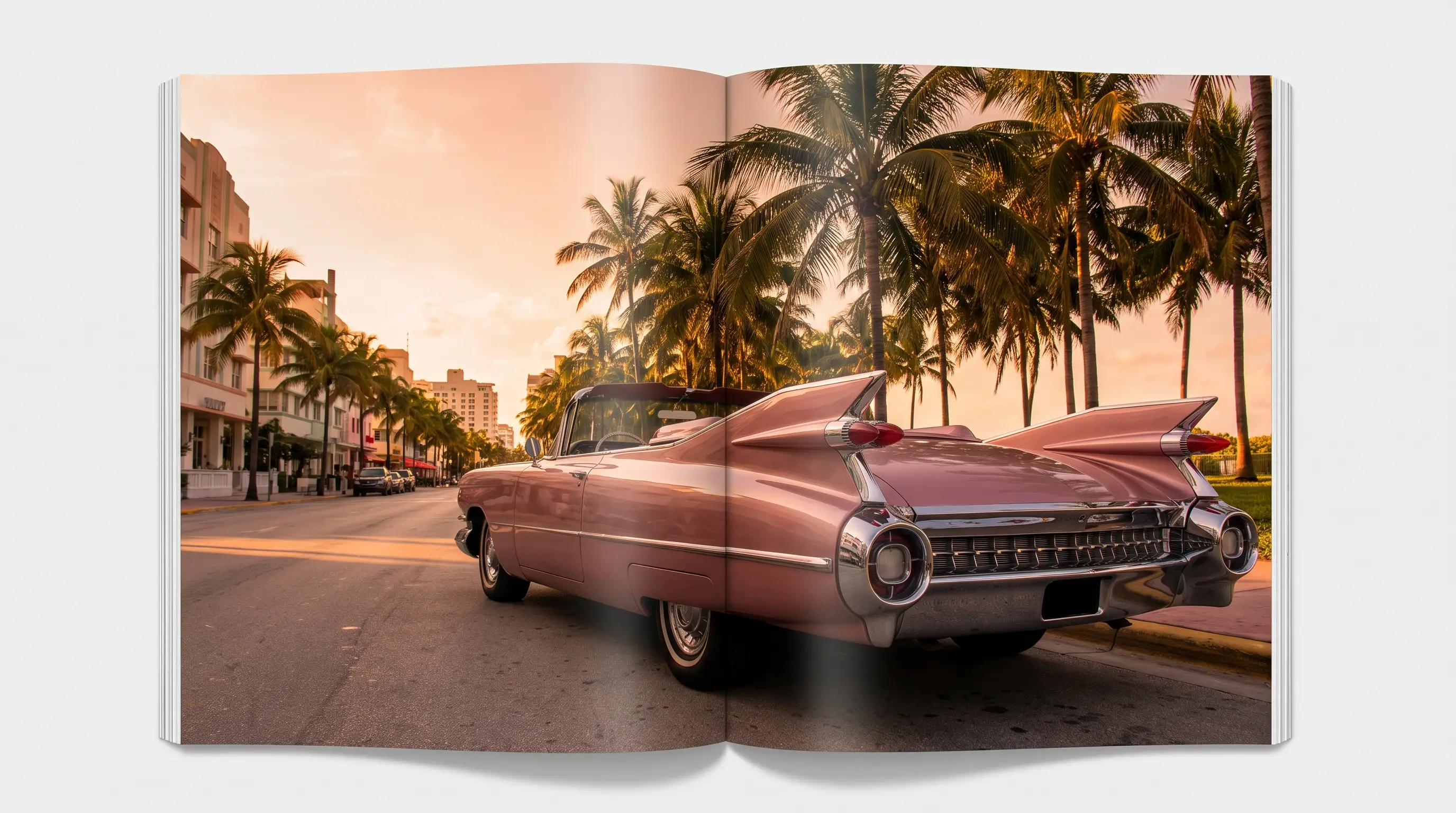
The 1959 Eldorado is where the fin evolution reaches its ceiling. The fins stand taller than on any prior Cadillac, capped with dual bullet taillights, and the sheer scale of the rear fender means this car requires more raw material and more forming work than any Eldorado before it. I have straightened a few of these panels over the years, and the shape does not forgive sloppy work. Get the compound curve even slightly wrong during a repair and the whole rear quarter reads off compared to the factory line.
Those 1959 fins rose to roughly 42 inches off the ground, among the tallest ever fitted to an American production car. For the full background on how this shape developed across the decade and what came after it, read the background covering the Eldorado's design history in complete detail, generation by generation.
"People think the fin just kept growing in a straight line every year, and it didn't. There is a real dip in 1958 before the 1959 cars go all the way. Once you have actually worked metal on both years side by side, you can feel how much more ambitious the 1959 panel is. It is not the same job at all."
- Jim Vasquez
Why the fin mattered structurally, not just visually
People talk about the fin as a purely cosmetic choice, and mostly it was, but it also changed how the rear body structure needed to be engineered year over year. Taller fins meant longer unsupported panel spans, and Cadillac's body engineers had to add internal bracing behind the fin skin to keep it from oil-canning under normal driving stress and temperature changes. That bracing is something you only really appreciate once you have a rear quarter panel off a 1959 car and can see how much structure sits behind what looks, from the outside, like pure decoration.
This matters today for anyone doing serious restoration work, because replacing a damaged fin section is not simply a matter of forming new sheet metal to match the outer shape. Getting the internal bracing right is what keeps a repaired fin from developing stress cracks or a visible wave a few years down the road, and it is a step some cheaper restoration shops skip entirely, which shows up eventually no matter how good the paint looks on delivery day.
What buyers should check on any year
Fin condition is one of the fastest ways to judge how a given Eldorado has been treated over its life. Original fin tips take damage easily in tight parking situations, and a poorly executed prior repair is often visible as a slight wave or inconsistency in the reflection along the panel's crease line under direct light. On 1957 through 1959 cars especially, where the fin geometry gets complex, a body that has never needed repair is worth a real premium over one that has.
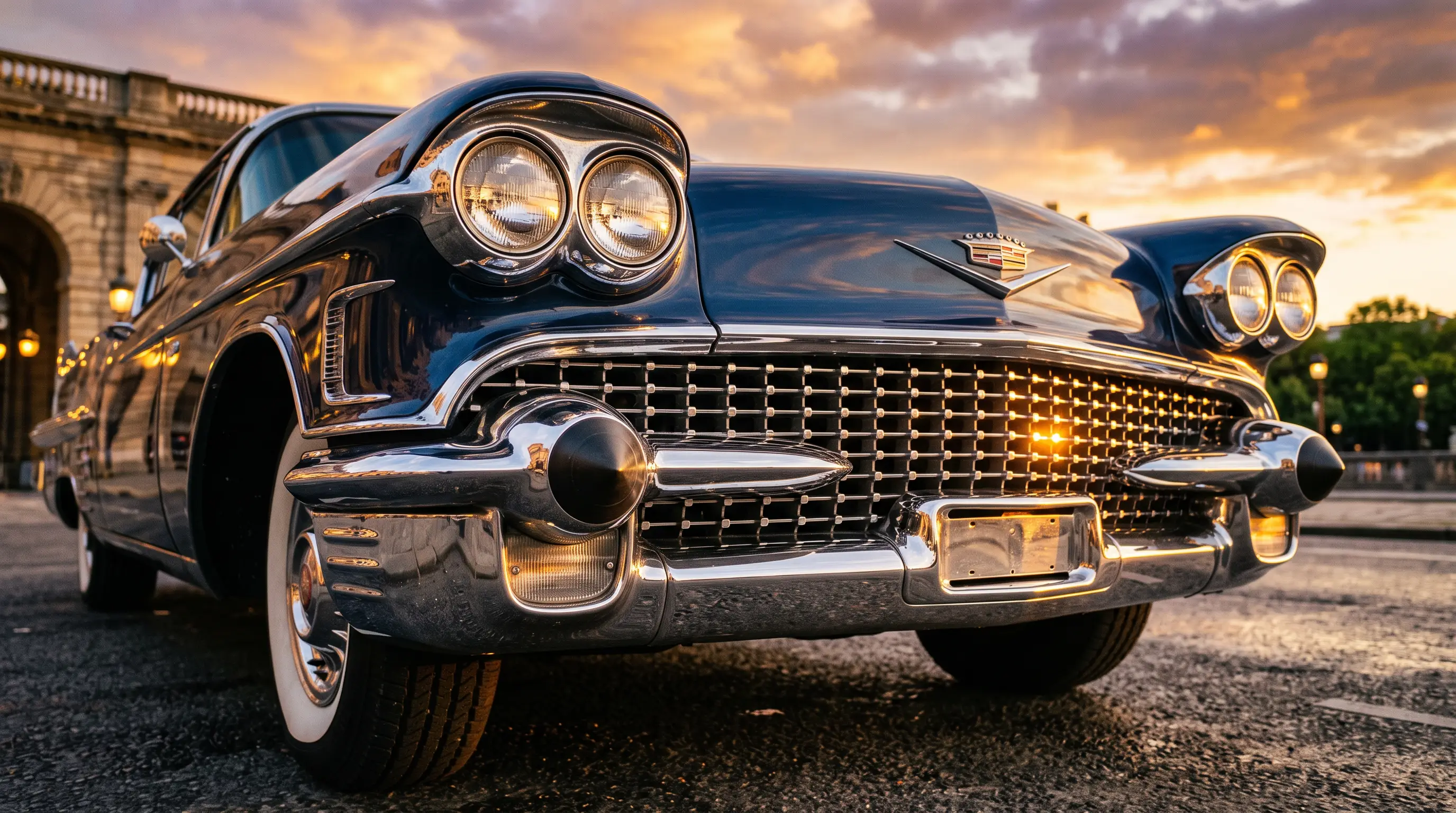
The chrome trim that follows the fin line on most model years is also getting harder to source in good condition, and reproduction parts vary widely in fit quality depending on the supplier, so a car with its original trim intact is generally worth chasing even if the paint underneath needs work. If a design detail like the egg-crate grille pattern catches your interest alongside the fin story, worth a look too covers that piece of Cadillac's styling history on its own. And if you are ready to see what survives from this whole run today, you can shop classic Eldorado listings and compare fin condition across different model years directly, and it is always worth asking a seller directly whether any rear quarter panel work has ever been done before you commit to a purchase.
Sources and notes
- Cadillac Eldorado, Wikipedia
- Eldorado 1953-66 Specifications, The Cadillac Database
- 1957-58 Cadillac Eldorado Brougham, Heacock Classic
- The Year of the Tailfin: Cadillac for 1959, Mac's Motor City Garage
- The 1959 Cadillac Eldorado Biarritz, Hagerty Media
- 1957 Cadillac Eldorado Brougham, Supercars.net