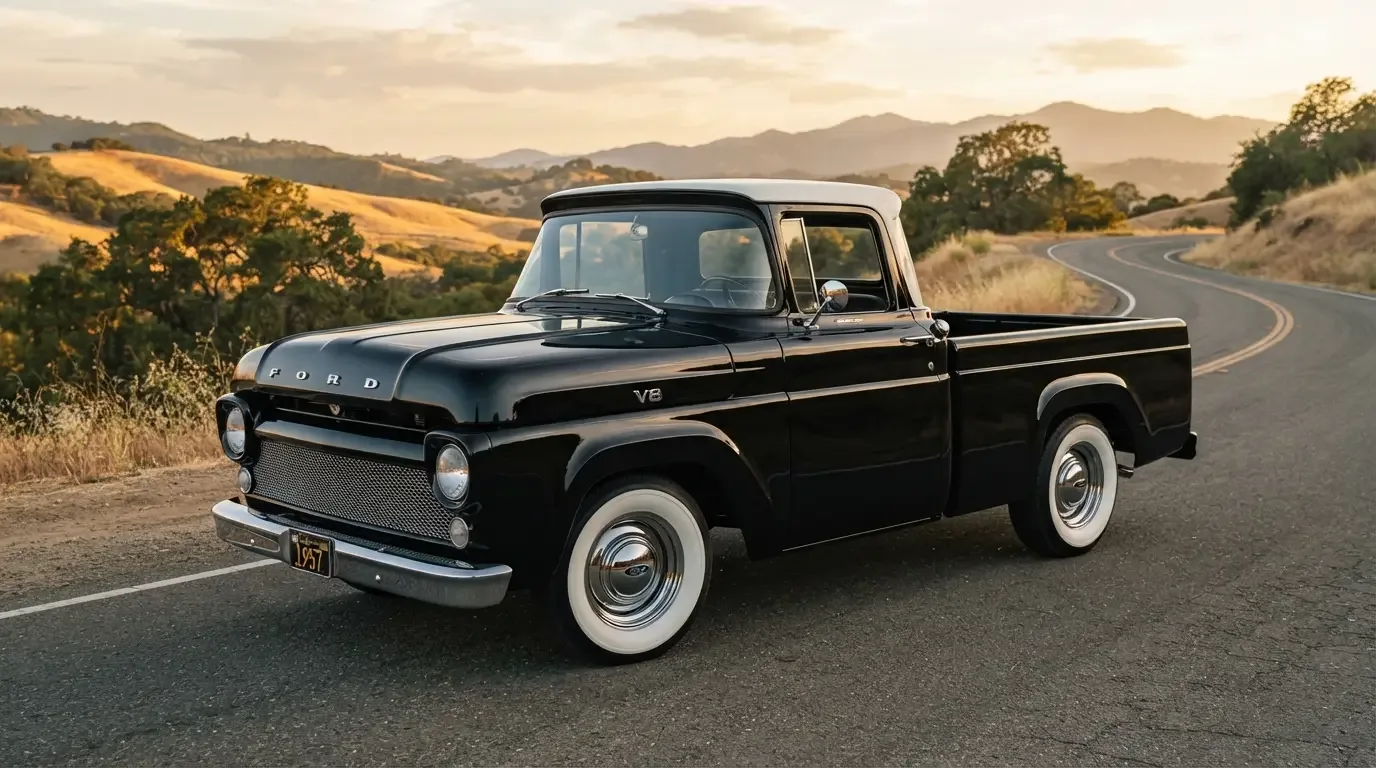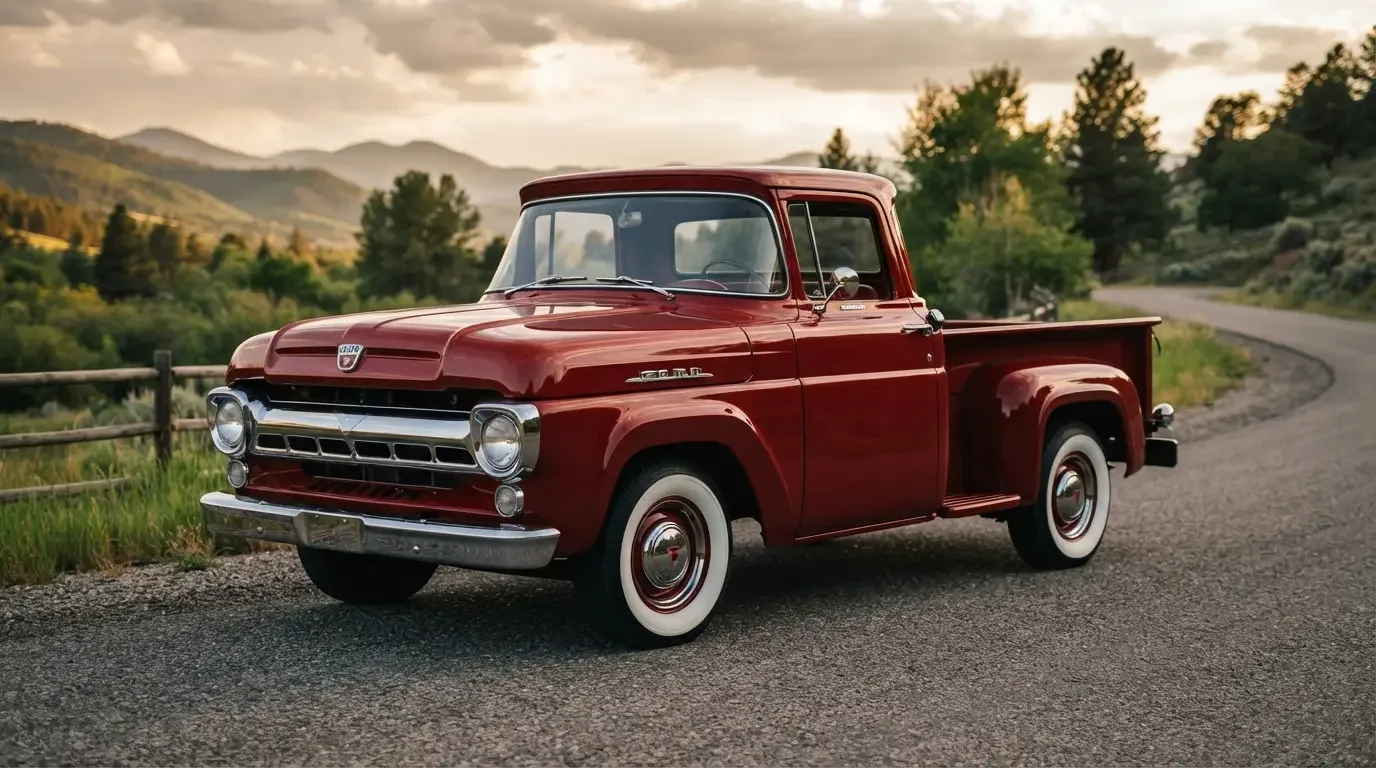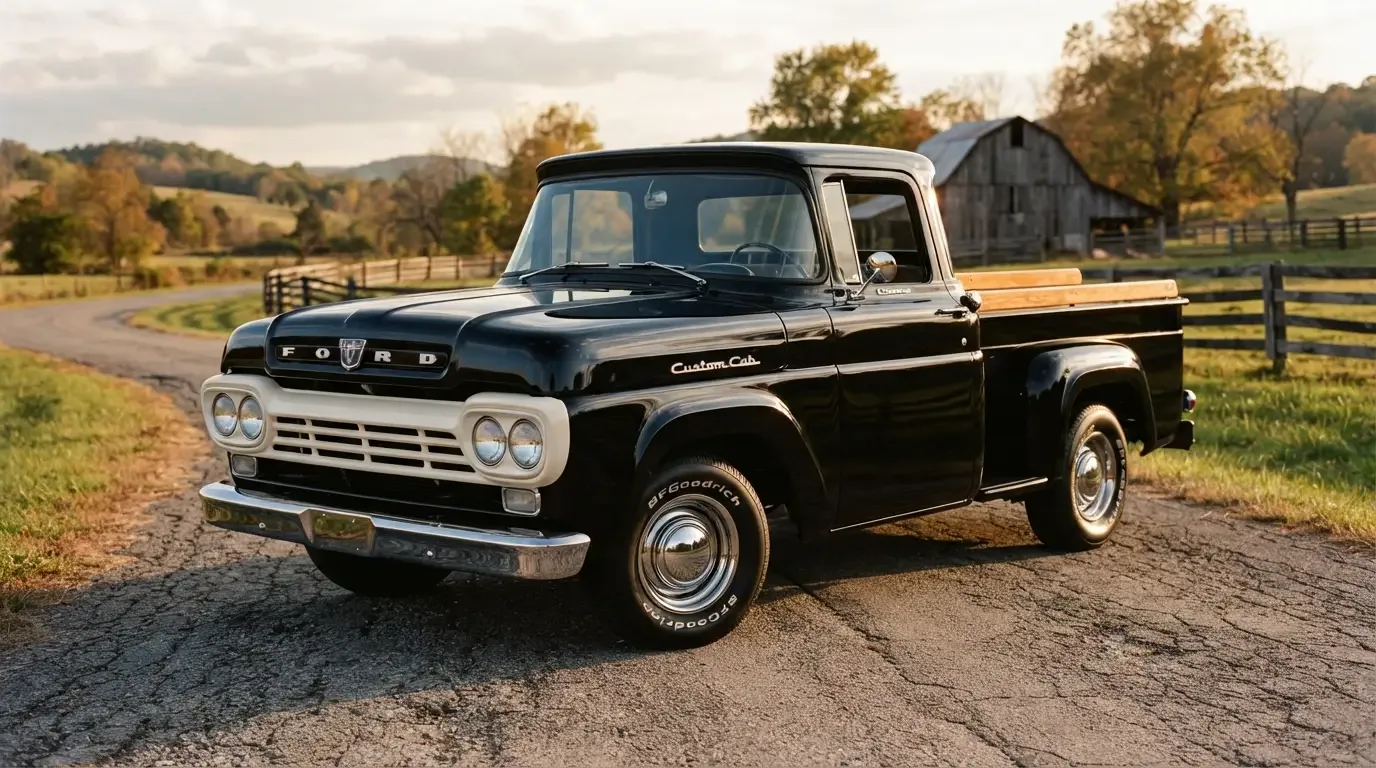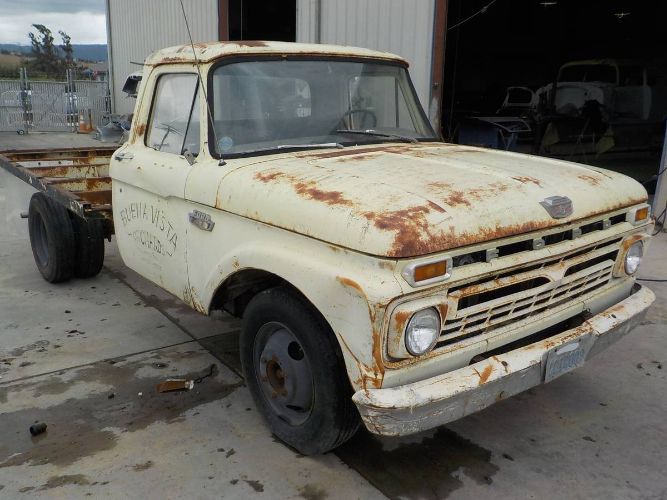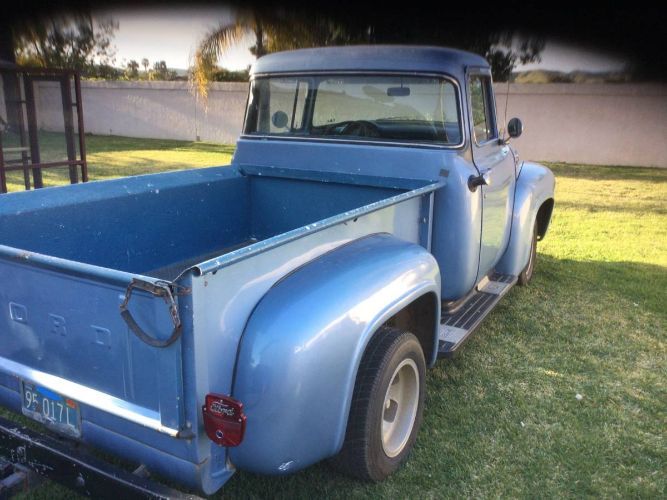
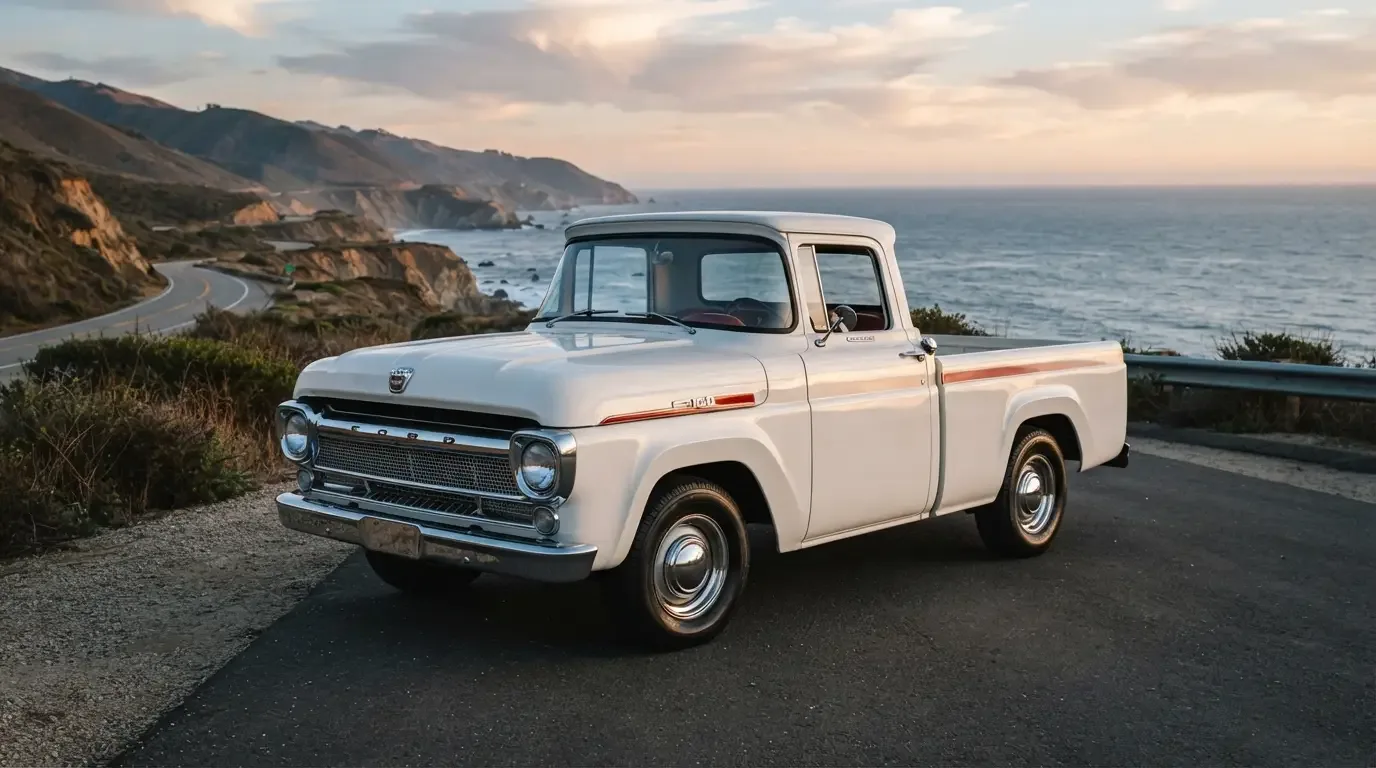
Stand a 1956 Ford F-100 next to a 1957 and the difference hits you before you even get to the fenders. The old truck has a hood that humps up in the middle, a grille that sits narrow between the headlights, and a face that still looks like it is wearing the 1953 truck's bones under a new coat of trim. The 1957 truck is flat across the top from A-pillar to A-pillar, wide at the nose, and low in a way that makes the older truck look like it is standing on its tiptoes. That flat hood and full-width face is the single biggest styling shift Ford made to its pickup line in the 1950s, and it is worth understanding what the shop actually changed to get there, not just admiring the result.
Dropping the hump and widening the stance
The earlier F-100 generation carried a center-hinged hood with a raised centerline, a leftover shape from an era when engine clearance and a taller radiator core dictated the sheet metal above it. For 1957, Ford's engineers lowered the cowl and flattened the hood into one continuous plane, wide enough to run edge to edge without the old crowned center section. That is not a trim change. Flattening a hood means re-engineering the radiator support, the inner fender structure, and the cowl vent underneath it, because everything that used to hide under the hump now has to fit under a much lower profile. Whoever signed off on that change at Ford committed the whole truck to a new cowl height, and every panel forward of the doors had to be drawn fresh to match it.
The width tells the same story. Full-width styling meant the grille, headlight bezels, and front fenders all read as one horizontal band instead of a narrow face flanked by bulging fenders, which is how the prior generation looked. Ford built the new fenders to blend into the hood line at a shallow angle rather than the steep crown of the older trucks, and the effect lowers the visual center of gravity of the whole front end. Park a lowered '57 next to a stock one and you can see how much easier that flat, wide nose is to work with when you are chopping a top or dropping a stance, because the surfaces are already simpler and the lines already run cleaner.
What this meant on the shop floor, then and now
A flat hood is a better canvas. Anyone who has laid paint or leaded a seam on both generations of these trucks will tell you the same thing: the crowned hood of the early '50s trucks fights you on reflections, because a curved surface catches light unevenly and shows every imperfection in the metal work. The flat '57 hood holds a line straight down its length, which makes scallops, two-tones, and pinstripe work look intentional instead of accidental. That is part of why the 1957-60 generation became such a favorite platform for custom builders decades later. The body gave them a flatter, cleaner surface to build on before anyone touched a grinder.
None of that means the flat hood was designed with hot rodders in mind. Ford built it that way because a lower, wider truck read as more modern to a 1957 buyer cross-shopping a new car-like cab against the boxier trucks of a few years earlier, and the flat hood also opened up more room for the wider V8 engines Ford was putting under it. The customizing appeal came later, as a side effect of a styling decision made for entirely different reasons on the factory floor.
| Element | Pre-1957 F-100 | 1957 F-100 |
|---|---|---|
| Hood profile | Crowned, raised centerline | Flat, single plane |
| Front width | Narrow grille, bulging fenders | Full-width grille and fender line |
| Cowl height | Higher, taller radiator clearance | Lowered to suit flatter hood |
| Windshield | Flat, two-piece | Wraparound, panoramic |
Ford paired the flat hood with a wraparound, panoramic windshield for 1957, another piece of the same idea: make the cab feel wider and lower than anything the company had built before. The whole front clip works as one design statement, and it is why this generation still gets pulled apart and reassembled on build tables sixty years later, because the bones underneath were drawn right the first time.
What a builder looks for on a real 1957 hood today
Original hood panels from this year are getting harder to find in usable condition, and reproduction panels of varying quality have filled the gap for anybody starting a build. The honest difference between a factory hood and most reproductions comes down to gauge and fit. Factory steel from this era tends to run a consistent thickness across the panel, which is part of why it holds a straight line without oil-canning under a flat hand. A lot of the cheaper repop panels flex more than they should, and that flex shows up later as a wave in the paint no amount of block-sanding will fully chase out.
Fit matters just as much. A factory hood sits with a consistent, tight gap against the fenders on both sides, front to back, because the tooling that stamped it was built to hold that tolerance across a full production run. Reproduction panels can run a little proud or a little short depending on the batch, and a builder chasing a truly correct panel gap will sometimes go through two or three reproduction hoods before finding one that actually sits right without hours of hand-fitting. None of this is a reason to avoid a build on this platform. It is a reason to budget the time to get the panel gaps right before you ever mix paint, because a flat hood shows every shortcut taken to get there.
"Flat panels don't lie to you. A crowned hood can hide a lot of sloppy bodywork in its curves, but lay a straight edge across a '57 hood and every high spot and low spot shows itself. That's why guys who know what they're doing gravitate toward this body. It rewards a builder who actually knows how to work steel."
— Jim Vasquez
Where the 1957 face fits in the bigger story
The flat hood and full-width front end were the opening move in a four-year run that carried through the 1958 quad-headlight update and into the 1960 model before Ford moved to an entirely new unibody design in 1961. Anyone digging into this era should read the background on how the whole generation came together, and the follow-up on the 1958 grille change is worth a look too, since it shows how quickly Ford kept iterating on a face that had only just been introduced. The flat hood itself stuck around basically unchanged in profile through 1960, proof that Ford had gotten the fundamental shape right on the first try, even as the trim details around it kept shifting year to year.
If you are hunting for a truck to build on, this generation remains one of the better starting points on the market, mostly because that flat hood and wide stance still look right with a lowered ride height and modern wheels, the same way they looked right to a 1957 buyer standing on a dealer lot comparing it to whatever he drove in on. For anyone ready to go put hands on real steel, you can shop classic F-100 listings and see how that flat front end holds up sixty-some years on.