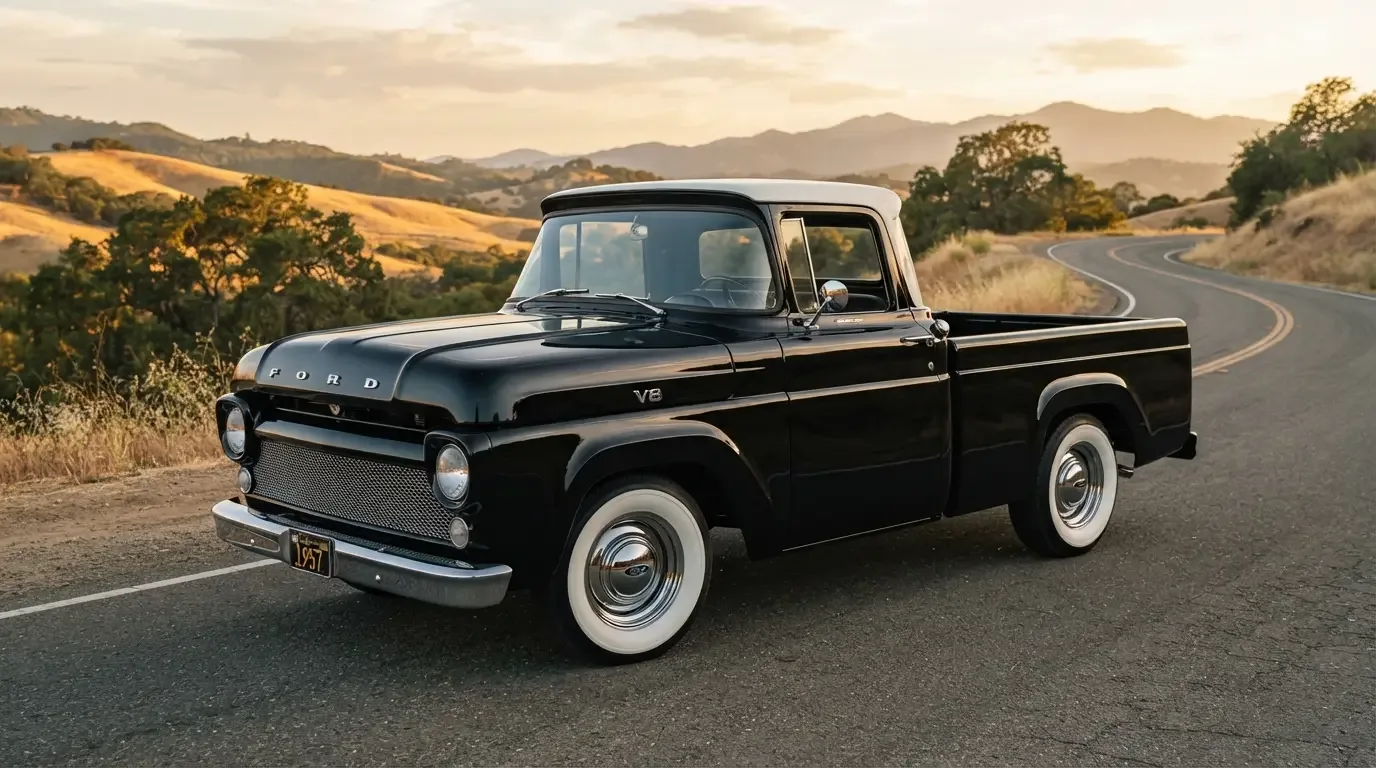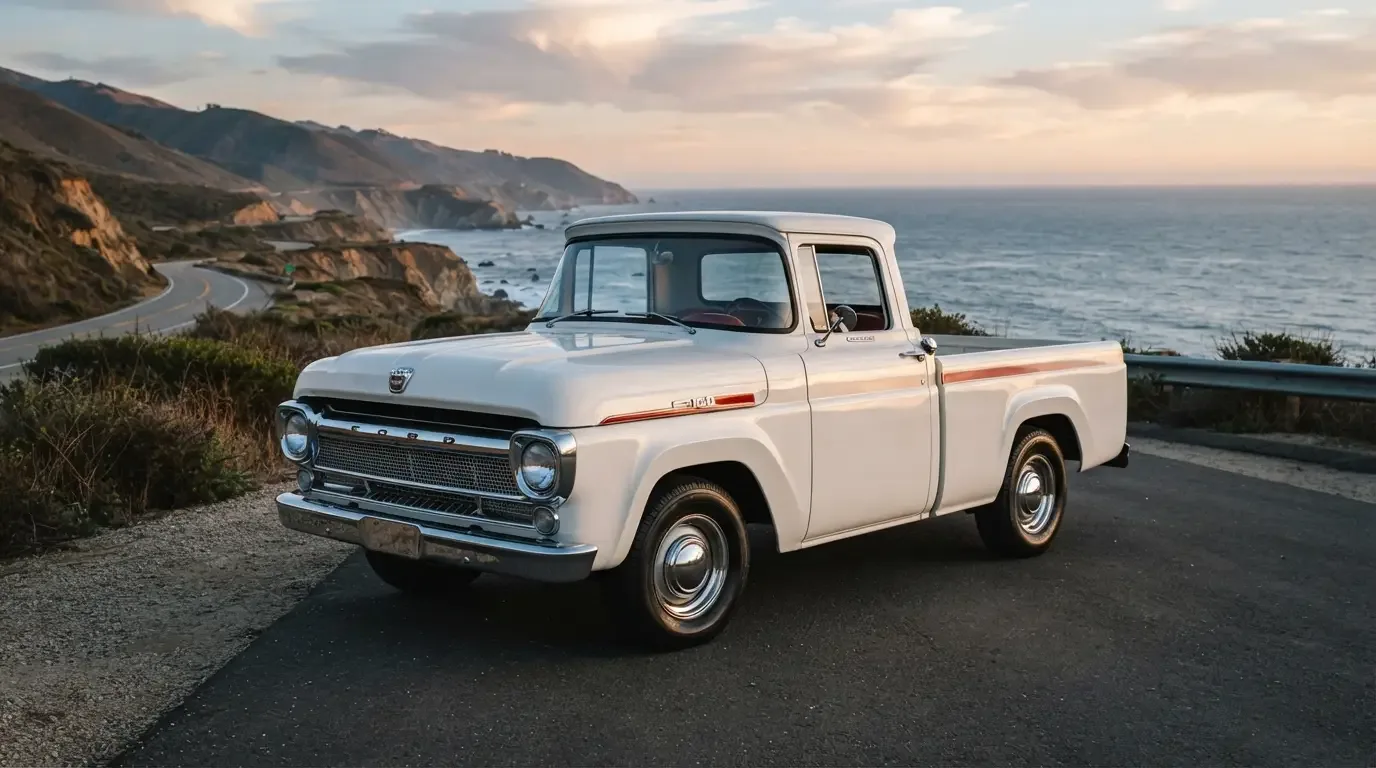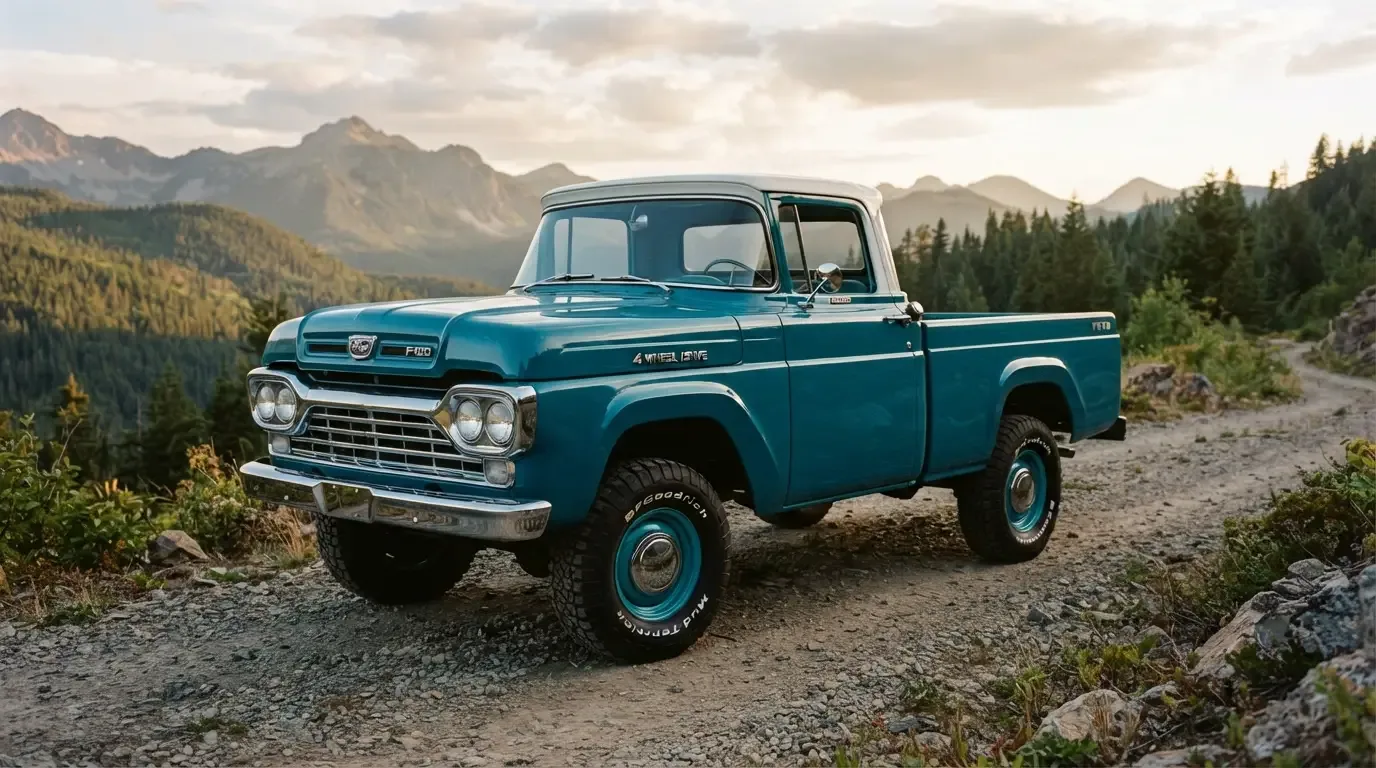
The 1958 Ford F-100 arrived on dealer lots wearing a face its own 1957 sibling would not have recognized. Quad headlights, a dual-lamp arrangement stacked in a way that had barely existed on any American vehicle a year earlier, replaced the single round lamp on each side, and the grille around them was redrawn to suit. It is a small change measured in inches of sheet metal, but it says a great deal about how fast styling moved through Detroit at the end of the 1950s, and about how a single federal and industry-wide shift in lighting law rippled straight into a work truck's front clip within a single model year.
The regulatory shift behind the change
Quad headlights became legal for use across the United States beginning with the 1957 model year, after individual states amended their equipment codes in a rolling wave through 1957 and into 1958, and the auto industry moved almost as one to adopt the format the moment it was permitted everywhere. Before that, federal and state law effectively mandated a single sealed-beam headlamp per side, a standard that had held since the late 1930s. The four-lamp system, two smaller lamps per side instead of one larger one, offered better low and high beam separation and, just as importantly for the stylists in Dearborn, a new horizontal element to compose a face around.
Ford was not first with quad headlights on its cars, several 1957 models across the industry had already adopted the look, but the F-100 carried a single round lamp per side through the 1957 model year before making the change for 1958. That one-year lag between the passenger car line and the truck line was typical of Ford's practice at the time. Truck styling updates generally trailed the car line by a season, since trucks were engineered on a different cycle and the tooling investment for a commercial vehicle's front clip was justified more conservatively than for the cars that dealers used to draw showroom traffic.
What actually changed on the sheet metal
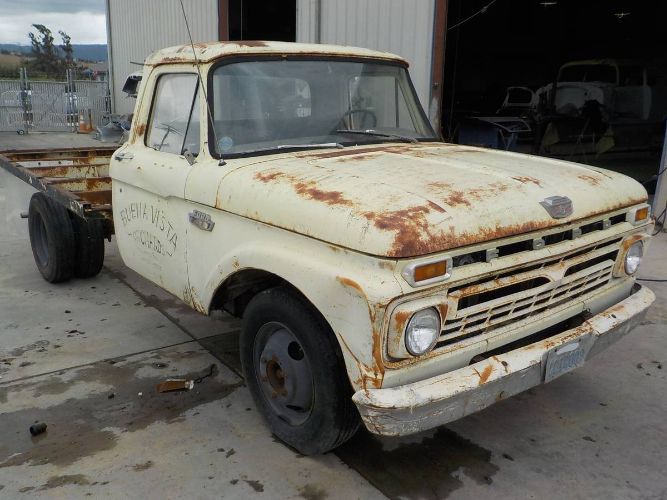
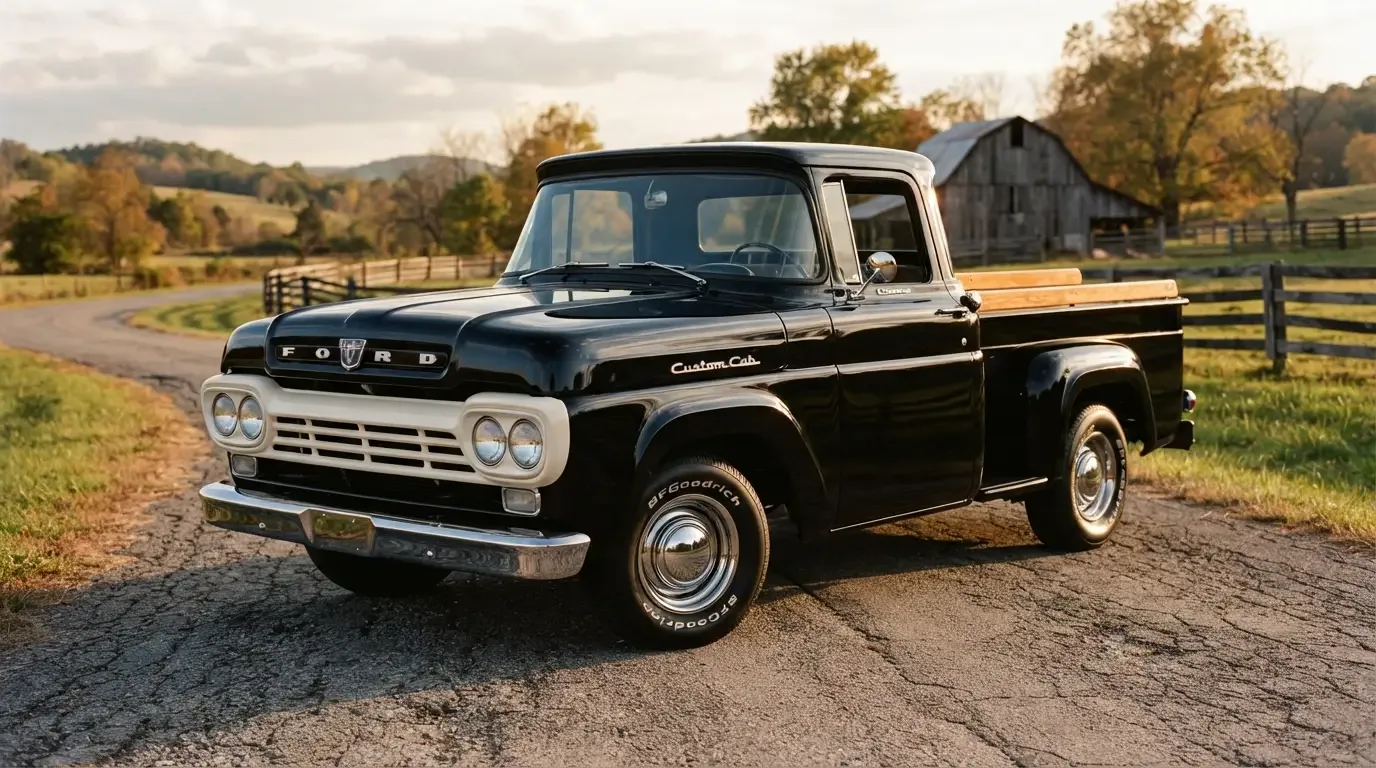
The 1957 grille used a single wide opening with the headlamps set into the outer edges of the front fenders. For 1958, Ford narrowed and reworked the grille bezels to accommodate the stacked lamp pairs, and the surrounding chrome trim was redesigned to frame four lamps instead of two without simply looking like an afterthought bolted onto the existing fender. The hood, cowl, and lower body remained essentially the 1957 architecture; this was a face change, not a full redesign, which is consistent with how Ford handled the middle years of a model cycle across most of its 1950s truck generations. A close look at surviving factory literature and dealer photography from the period shows the fender stampings themselves were revised around the lamp openings, not simply retrofitted with a different bezel on the same hole.
| Model year | Headlight configuration | Grille treatment |
|---|---|---|
| 1957 | Single round lamp per side | Wide single-opening grille |
| 1958 | Stacked quad lamps per side | Narrower bezels, revised fender stampings |
| 1959-60 | Quad lamps retained | Further minor grille and trim revisions |
Collectors researching a specific truck's originality should treat the headlight configuration as a reliable, low-effort dating tool. A genuine single-lamp F-100 front clip belongs to 1957 or earlier; a quad-lamp front clip places the truck at 1958 or later within this body generation, before the entirely new 1961 design replaced it. That distinction matters more than it might seem, because front clips on these trucks have been swapped, damaged, and replaced often enough over sixty-plus years that the sheet metal in front of you does not always match the year on the title without closer inspection of frame tags and other identifying stampings.
Provenance and originality in the field
When assessing a 1958 F-100 for authenticity, the headlight bezels and their mounting are worth examining closely. Reproduction trim exists for this generation, and quality varies. Original chrome bezels tend to show a heavier gauge and a more precise fit against the fender opening than many aftermarket replacements, a detail that becomes obvious once you have handled both side by side but is easy to miss on a first look. Concours judging for trucks of this era, where it exists at all, tends to weigh originality of trim and lighting components more heavily than mechanical originality, since so many working trucks from this period saw engine swaps and drivetrain changes over decades of service use that never touched the visible sheet metal.
"A truck's face tells you what year it actually is faster than a title ever will. Quad lamps on a fender that has clearly been reworked around them, that is not a red flag by itself, it is simply evidence, and evidence is what you build a real assessment on."
— Sarah Whitfield
How the industry moved together, and where it diverged
It is worth stating plainly how quickly this change swept the industry once the legal barrier fell. Within roughly two model years, quad headlights went from nonexistent on American roads to something close to standard practice across most major manufacturers, a pace of adoption that says more about how tightly Detroit watched its competitors than about any single company's design ambition. Ford's own passenger cars had already made the switch before the F-100 followed, a sequencing choice consistent with how the company generally treated its truck line as a secondary priority for cosmetic updates relative to the cars that drew the bulk of showroom foot traffic.
Not every manufacturer moved at the same pace, and not every model within a given lineup adopted the change simultaneously, which is part of why the exact year a specific model switched to quad lamps is a genuinely useful, low-effort dating tool for anyone researching period vehicles generally, not just Ford trucks specifically. A researcher working from photographs alone, without access to a build sheet or title, can often narrow a vehicle's model year within a tight window simply by counting headlights and studying how the surrounding trim was reworked to accommodate them, which is exactly the kind of detail that separates a careful assessment from a guess.
Where this fits in the generation's story
The 1958 update is best understood as one chapter in a four-year design arc. For the full context of the body style this truck was built on, including how the flat hood and full-width front end arrived a year earlier, more on the 1957 Ford F-100 covers that ground directly. And for the origin point of the F-100 name and lineage itself, where this started traces the naming and the truck's earliest years before this generation existed at all. The 1958 quad-lamp face held through 1959 and into 1960 with only minor trim revisions, meaning a buyer today looking specifically for the quad-headlight look has three model years to choose from, each with slightly different grille detailing worth researching before a purchase. Those hunting for one of these trucks can browse classic F-100s on the market to see how many survive with their original front-end sheet metal intact.
Sources and notes
- Curbside Classic: 1957 cars with alternate quad and single headlight front ends
- Hagerty Media: Cars that had quad headlights before they were in vogue
- Ford F-100s: 1957-1960 Third Generation overview
- LMC Truck: 1958-60 Ford F-100 headlight components
- The H.A.M.B.: 1957 dual and single headlight question