My grandfather's Ford F-100 was a color he called "barn red," though it was not quite red and not quite anything a paint chip chart would agree to. It was the color of a truck that had been repainted once by a man who trusted his own eye over the factory code, and for years I assumed every old F-100 wore whatever hue its owner happened to have on hand. It took a genuine deep dive into the color options Ford actually offered on the 1961 to 1966 trucks to understand how much intention sat behind those factory palettes, and how much they still shape which trucks catch a collector's eye today.
A palette built for two different buyers
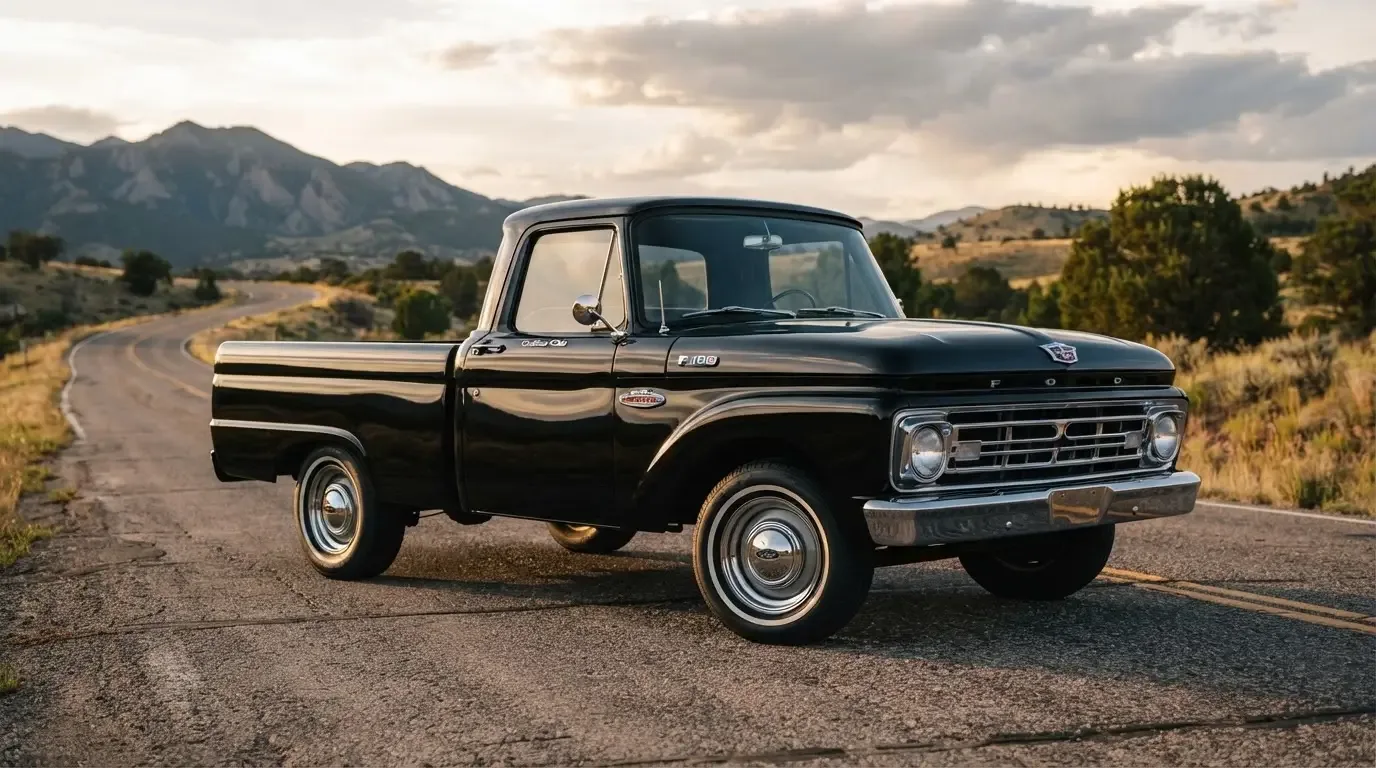
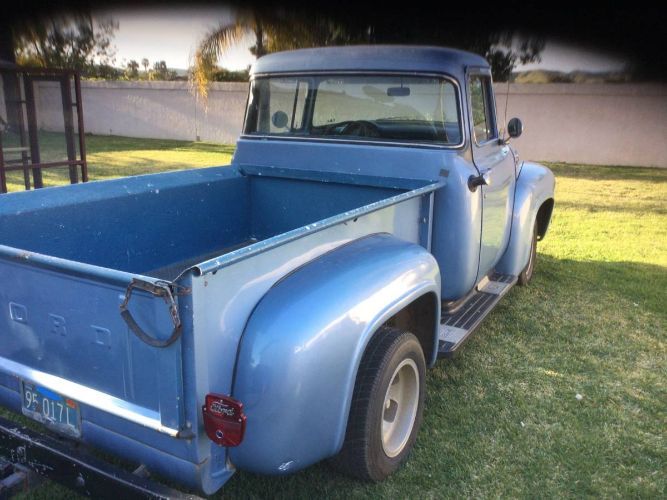
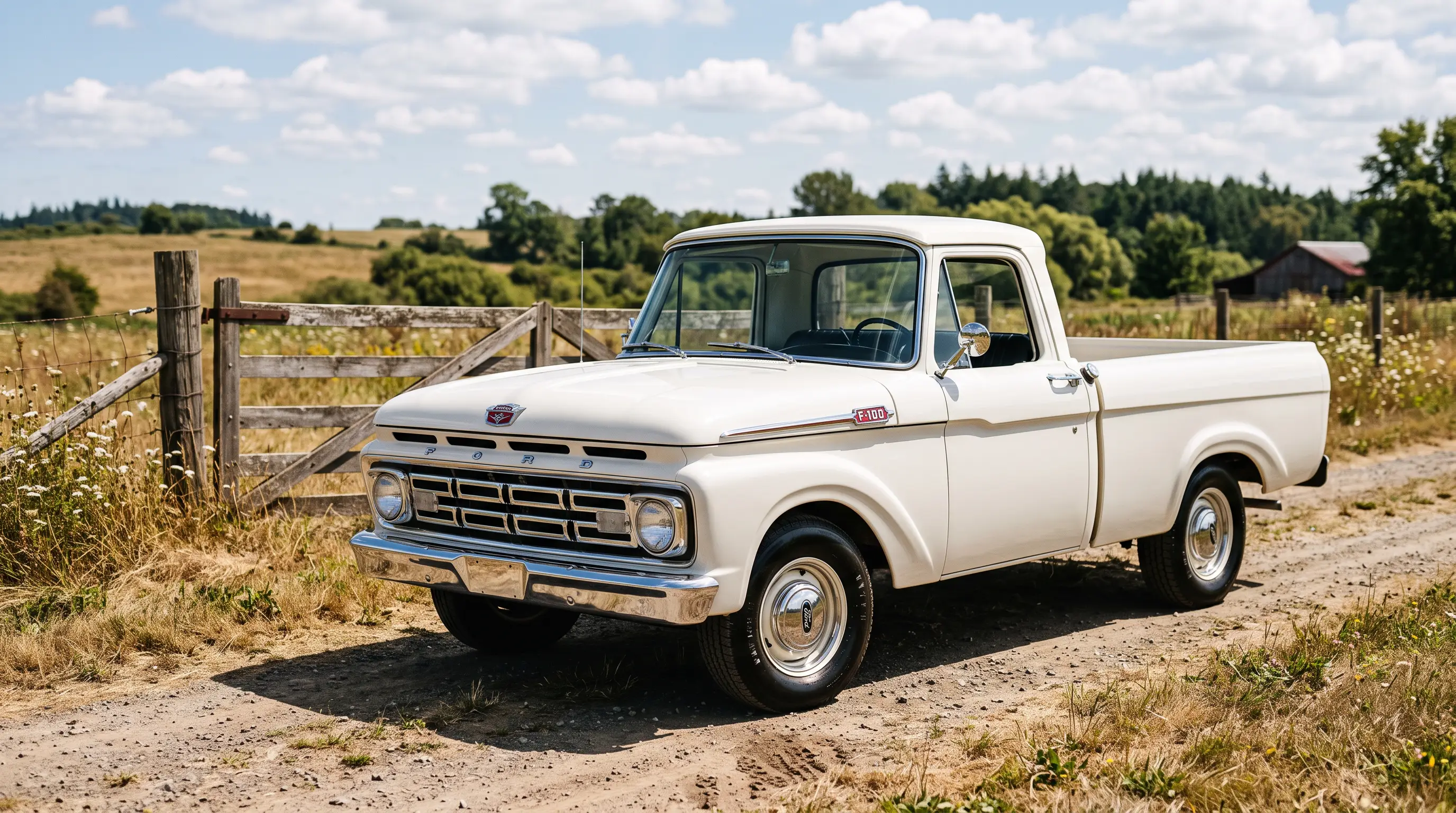
Ford's mid-1960s truck color chart had to serve two very different customers at once, the fleet buyer ordering a dozen work trucks in a color chosen for practicality, and the individual family buying one truck they wanted to actually like looking at in the driveway. That tension shows up clearly in the era's color offerings. Wimbledon White and Raven Black anchored the practical end of the spectrum, colors that hid dust and grime well and matched whatever a company's existing fleet already wore. Alongside them sat a run of deeper, more expressive colors, among them Arcadian Blue, Marlin Blue, Holly Green, Rangoon Red, and Sahara Beige, aimed squarely at the buyer who wanted the truck to feel personal rather than purely functional. By the mid-1960s Ford's truck color chart ran to well over a dozen factory options in a given year, each tied to its own paint code, so two trucks that look like close cousins in old photos can actually be entirely different factory hues once you check the door tag against a period paint reference.
Why color choice tracked the truck's job
Spend enough time looking at surviving trucks from this era and a pattern emerges. Work trucks, the ones that spent their lives on ranches, in construction fleets, or running municipal routes, skew heavily toward white and other light, practical colors. Family trucks, the ones bought for a mix of chores and everyday driving, show up far more often in the deeper color options, the greens and blues that a fleet manager would never have chosen but that a father picking out a truck for his own driveway happily did. It is a small detail, but it says something honest about how differently these trucks were bought and used, even when the sheet metal underneath was identical.
What faded paint tells a restorer
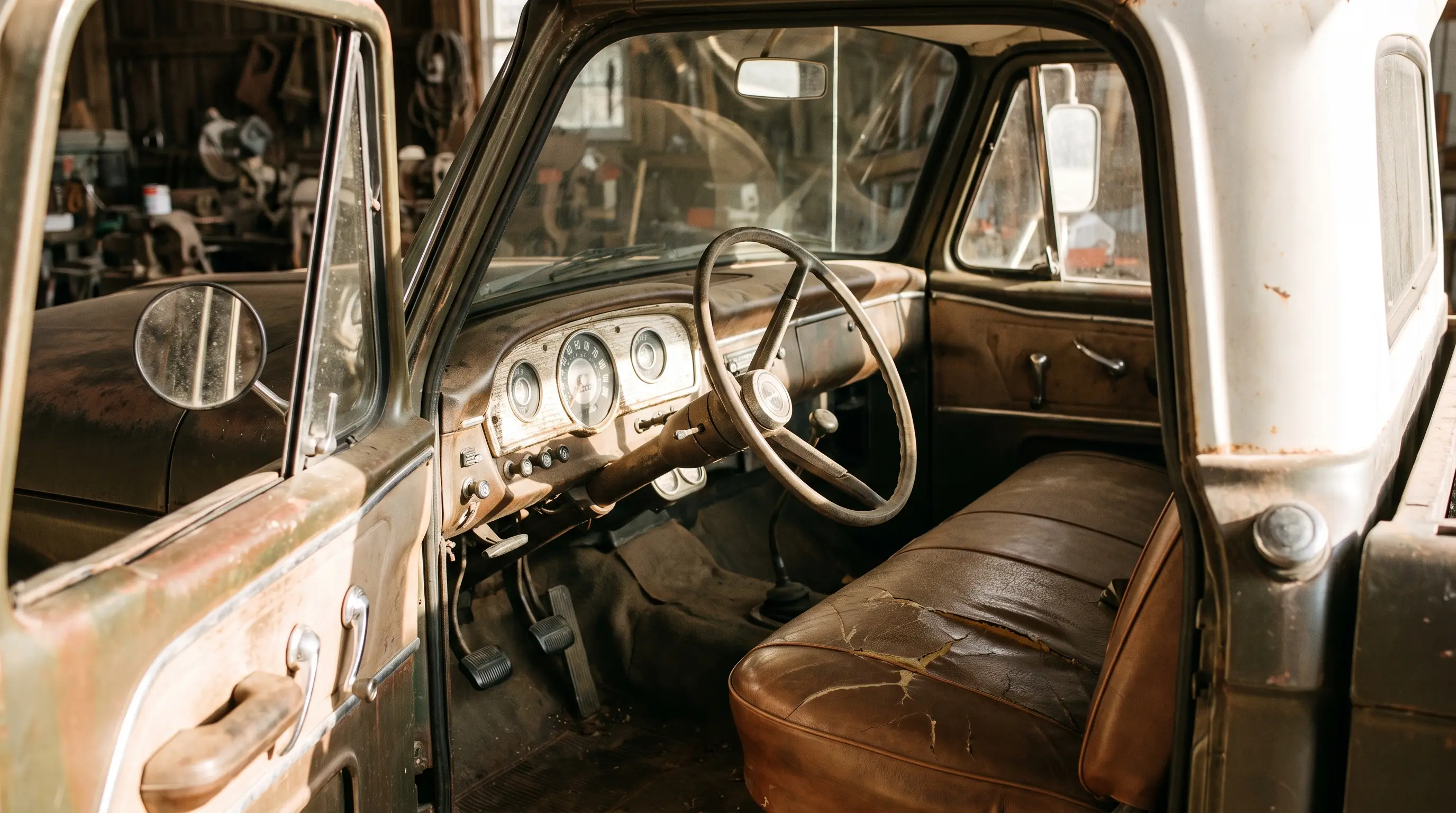
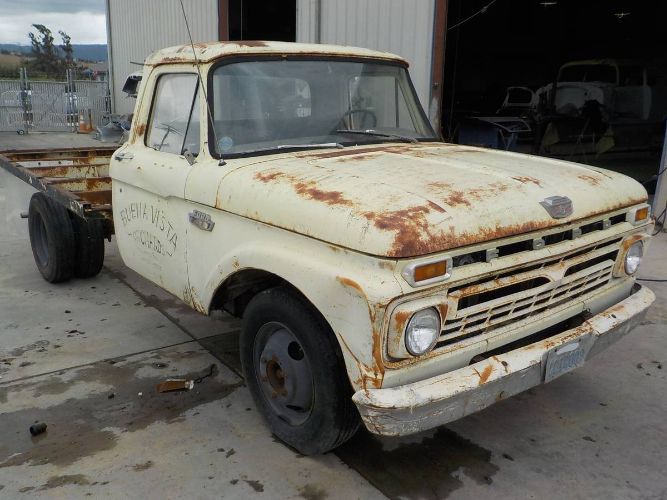
Original paint on a surviving 1961 to 1966 F-100 rarely looks like it did the day it left the factory, and that fading tells its own quiet story. Sun-baked reds shift toward a dusty rust tone, deep greens lighten and go a little chalky, and blacks develop a texture that no amount of polish fully erases. Restorers chasing an accurate repaint have to work backward from these worn survivors and factory paint chip references together, since relying on a faded original panel alone can lead to a repaint that is technically matched to what is there now but not to what actually left the factory. That kind of careful, patient cross-referencing is part of what connects this generation's color story to the 1965 ford f100 story more broadly, where small details compound into a much fuller picture of the truck.
"Every color on that old Ford chart was somebody's decision, a fleet manager being practical or a father wanting his truck to feel like his. You can still read those decisions in the paint sixty years later, if you know what you're looking at."
- Nora Beckett
Two-tone trucks and the choices behind them
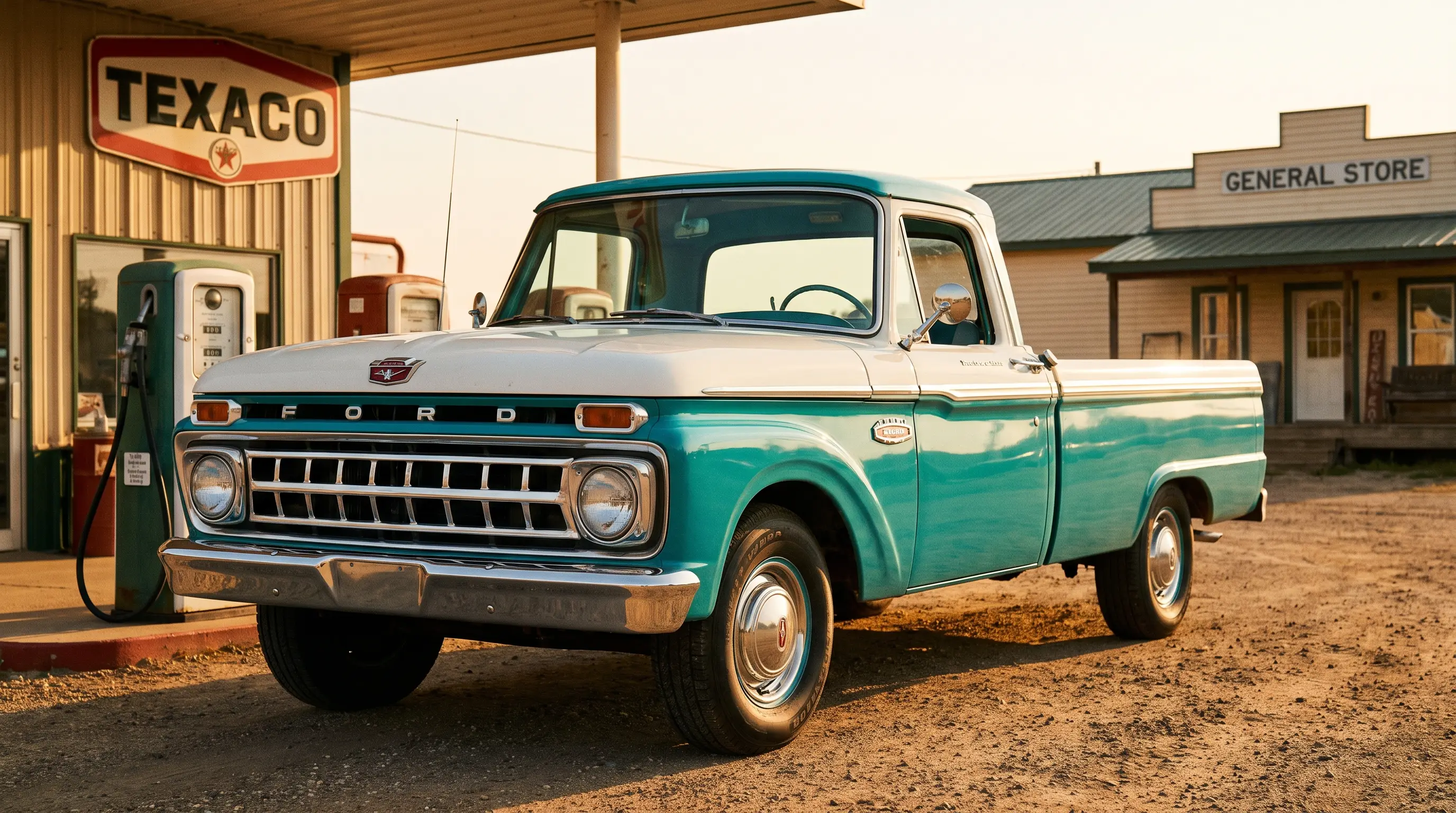
Beyond the single-color options, two-tone paint schemes deserve their own attention, since choosing one meant a buyer was making a more deliberate style statement than simply picking a single hue off the chart. A light roof paired with a deeper body color, or the reverse, gave the truck a visual break that flattered the slab-side design rather than fighting it, and it usually cost extra on the original order sheet. Trucks ordered this way tended to be personal purchases rather than fleet orders, since a company buying a dozen work trucks had little reason to pay a premium for a paint combination that offered no functional benefit. Spotting an original two-tone survivor today is a small but genuine clue that the truck was likely bought and cared for by an individual owner from day one.
Color as part of the truck's whole story
None of this is really about paint chemistry. It is about what a color choice reveals about the person who made it, the rancher who wanted white because white hid the dust, the young family that wanted a green truck because it looked cheerful parked outside a first house. Those choices are part of the same broader narrative covered in the full story of how the F-100 grew from a purely utilitarian machine into something people felt genuine affection for, one small personal decision at a time.
For anyone shopping today, color remains one of the fastest ways to sense a truck's history before ever reading a bill of sale. Buyers browsing classic F-100s on the market often find themselves drawn, without quite planning to be, toward the same warm, personal colors that original family buyers chose over sixty years ago. That is not coincidence. It is the same instinct working twice, once when the truck was new, and once again now that it has become something worth preserving.
What faded originals teach a careful eye
I have spent enough afternoons crouched next to a barn-find F-100 with a paint chip book in hand to know that reading original color accurately takes patience most people do not expect it to require. Sun exposure does not fade paint evenly across a truck's whole body. A hood that faced the sun for decades tells a different story than a bed side that spent most of its life shaded by a carport, and comparing the two on the same truck can be more revealing than comparing either one against a reference chip alone. That kind of close, patient looking is exactly the instinct that separates someone documenting a truck's real history from someone simply picking a color they like off a modern chart and calling it close enough.
There is also something to be said for the colors that never made it onto any official chart at all. Plenty of these trucks were repainted at some point in their working lives, often by an owner or a small local shop rather than a dealer, and whatever color happened to be available or affordable at the time became the truck's identity for the next several decades. Those non-factory repaints are not historically accurate, strictly speaking, but they carry their own kind of honesty, evidence of a truck that mattered enough to someone to keep alive rather than replace. A serious restorer chasing factory accuracy will strip that later paint away, but it is worth pausing to appreciate what it represented before it goes.
Choosing a color for a modern repaint
For owners planning a repaint today rather than a strict factory-accurate restoration, the original 1961 to 1966 color chart still offers plenty worth borrowing from, even for someone who has no intention of matching a specific code exactly. The deeper greens and blues in particular have aged into colors that read as genuinely handsome against modern backdrops, in a way some of the brighter, flatter colors from later decades have not. Sticking reasonably close to a period-correct hue, even without chasing an exact code match, keeps the truck visually honest to its era while still giving an owner room to pick a shade that speaks to them personally, which was really the whole point of Ford offering that range of colors in the first place.