
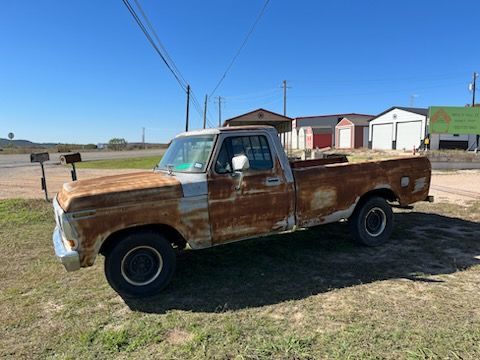
Every builder who has stripped a 1961 to 1966 Ford F-100 down to bare metal ends up saying some version of the same thing: this body has good bones. The slab-side styling that defined this generation was a genuine departure from the rounded, almost bulbous trucks Ford built before it, and once you have sanded through a few layers of old paint to see those flat panels up close, you understand why this shape has become the one restorers and custom builders keep coming back to.
Car Features
7 min read
The Slab-Side Styling of 1961-66
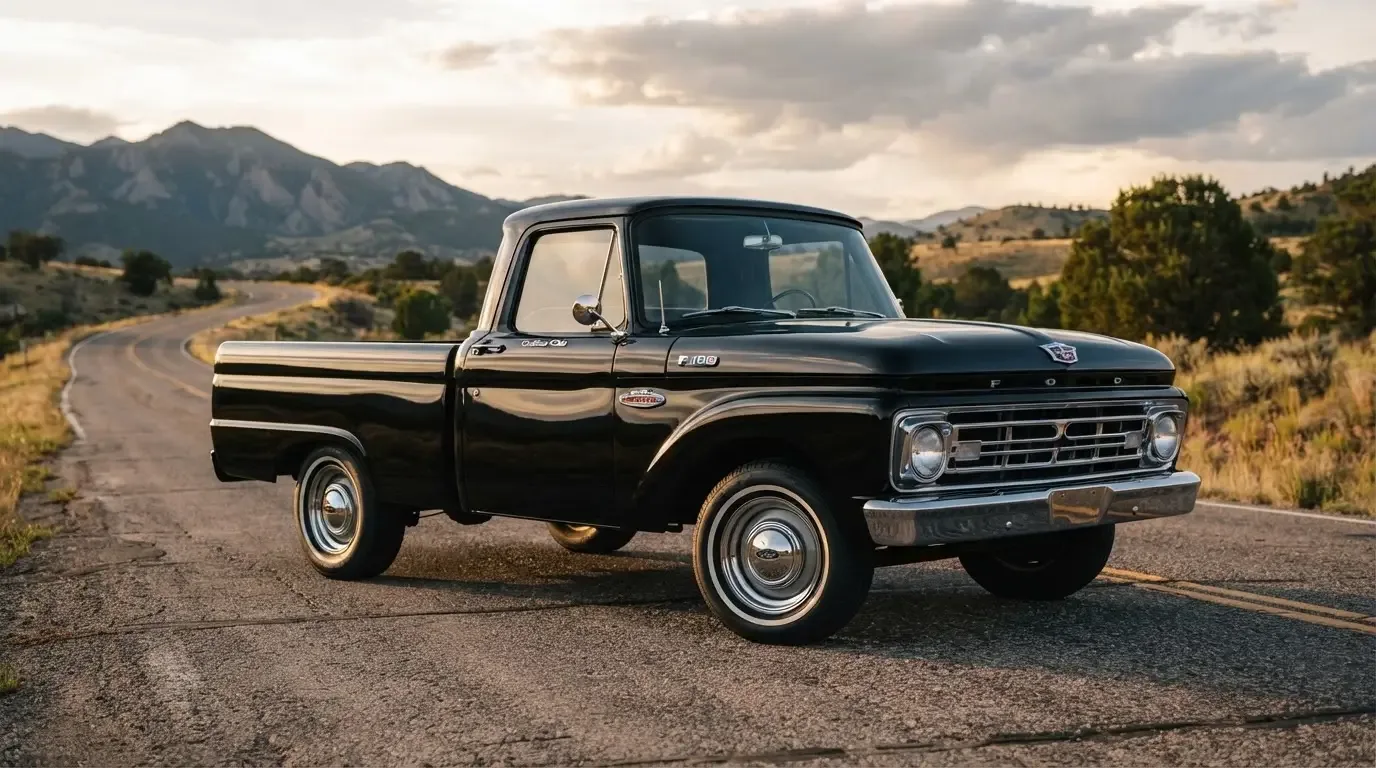
The slab-side redesign of the 1961-66 Ford F-100 replaced rounded fenders with flat, continuous panels, and it remains a favorite starting point for builders.

Flat panels were the whole point
Before 1961, Ford's trucks carried curved fenders and a separate, rounded bed that visually broke the truck into distinct sections. The slab-side redesign threw that out. The new Styleside bed ran flush with the cab, creating one continuous flat plane down each side of the truck with no fender bump to interrupt it. From a builder's standpoint, that flat surface is a gift. It is easier to strip, easier to check for straightness, and it takes paint and graphics without the panel gaps and curves that complicate bodywork on earlier trucks. The clean lines also mean less filler is needed to get a show-quality surface, assuming the metal underneath is sound to start with.
Two beds, two completely different builds
Ford offered this generation in both Styleside and Flareside configurations, and picking between them was never just a cosmetic decision. The Styleside, with its flat integrated panels, suits builders chasing a lowered, smooth, modern custom look, since the flush bed lines already do half the visual work before a single mod goes on. The Flareside, with its separate stepped fenders over the rear wheels, appeals to a different crowd entirely, people who want the truck to read as unmistakably a classic pickup, fenders and all, even after a full restomod build. Neither bed style is objectively better. They are different starting points for different visions, and any serious builder should decide which look they are chasing before buying a project truck, not after.
The unibody years and why they get skipped
The earliest trucks in this generation, built for 1961 through 1963, used a unibody design where the cab and bed were welded into a single structural unit rather than bolted separately to the frame. It looked clean and it drove tighter, but heavy bed loads twisted the structure over time, and Ford dropped the idea after just three years. Builders today mostly steer clear of unibody trucks for project work, since separating a damaged bed from the cab structure is far more involved than unbolting a conventional bed off a frame. If you are shopping for a build candidate, know which years you are looking at before you commit, a distinction covered in more depth in our 1965 ford f100 retrospective.
What the grille and trim years tell a builder
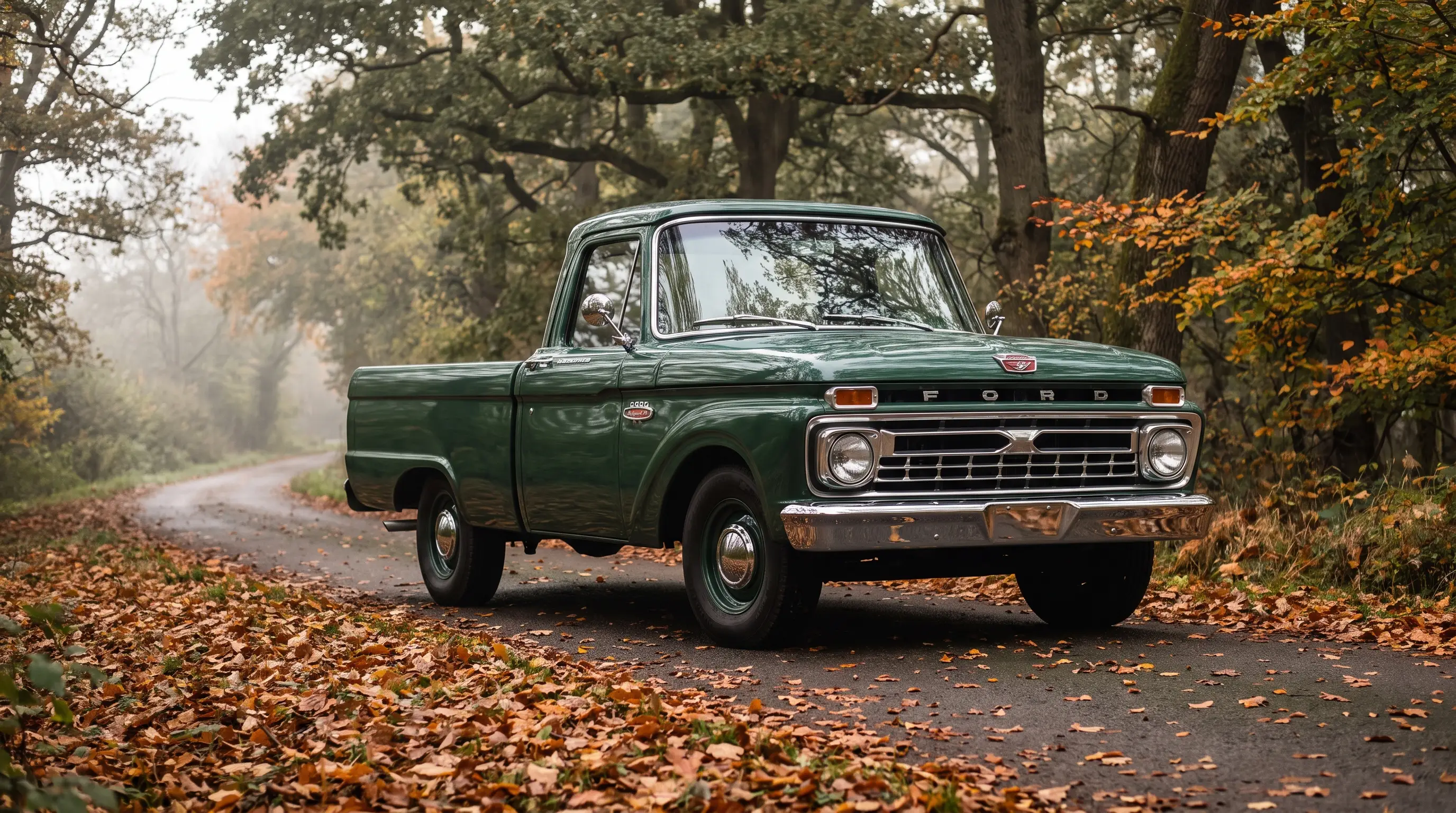
Within this six-year run, the front-end styling changed enough between 1961 and 1966 that experienced builders can usually date a truck at a glance just from the grille shape and bumper treatment. The earlier trucks carried a busier grille with more chrome detail, while the 1965 and 1966 trucks moved to a wider, cleaner horizontal bar that many custom builders actually prefer as a starting point, since it needs less rework to look contemporary on a modern build. That later grille pairs naturally with the Twin I-Beam suspension introduced in 1965, which is worth factoring in if ride quality on a driven build matters as much as looks.
"People think period-correct and custom are opposites. They're not, not with this generation. The slab sides were already doing half the modern custom look's job back in 1961. You just have to respect what the panels are telling you instead of fighting them."
- Jim Vasquez
How the cab shape influenced later Ford trucks
It is worth noting how much of this generation's design language carried forward, even after Ford moved on to a fully new body style at the end of the 1960s. The idea of a flush, flat-sided bed matched to a simple, boxy cab became the default expectation for American pickups for decades afterward, and builders today who chase a clean, minimal aesthetic on a modern custom truck are, whether they realize it or not, chasing a look this generation helped establish. That influence is part of why the 1961 to 1966 F-100 keeps showing up as a reference point in custom truck culture well beyond the small circle of people who actually own one.
Sourcing a straight body to start from
The single biggest factor in any build off this platform is finding a truck with straight, rust-free flat panels to begin with, since the slab-side design that makes bodywork easier on a good truck makes it that much more obvious on a bad one. Rust bubbling under a flat door skin or a wavy bed side shows up under paint far more readily than it would on a more heavily contoured older truck. Builders serious about this generation should budget real time for inspecting a candidate truck in person rather than trusting photos alone, and for anyone weighing project options against a related build angle, it is worth reading a related story on how the era's camper packages affected these same body panels.
Buyers hunting for a starting point can find current F-100s for sale now across a range of condition levels, from tired work trucks that need everything to solid, mostly original examples that only need the usual attention. Either way, understanding how this body was built, and where its structural quirks live, is worth more to a serious builder than any parts catalog. The slab-side F-100 earned its reputation as a good canvas the hard way, one welded-up unibody problem and one flat panel redesign at a time.
None of that history is decoration for a builder, it is practical knowledge that changes how you approach the truck sitting in front of you. Knowing which years used unibody construction changes how you plan a bed swap. Knowing how the grille evolved helps you date a truck accurately before you commit to parts. And knowing why the flat panels exist in the first place, as a direct answer to the rounded, fussier trucks that came before, gives the whole build a little more context than just chasing a look because it happens to be popular this year. That context is what separates a builder who understands the platform from one who is just following a trend.
Reading a truck's history in its panel gaps
Experienced eyes can often tell whether a truck's bed and cab have been separated and reassembled at some point simply by checking the panel gaps and paint transitions around the bed-to-cab joint. On an original, unmolested truck, those gaps tend to be consistent and the paint continuous in a way that is hard to fake convincingly. A truck that has had bodywork done, whether from an accident repair decades ago or a more recent custom build, usually shows some telltale inconsistency there if you know to look for it. That kind of forensic reading of the sheet metal is a skill worth developing for anyone shopping seriously in this generation, since it tells you more about a truck's real history than a seller's description ever will.
Sources and notes
Related Reading

Have a
Ford F-100
for Sale?
Reach thousands of serious classic car collectors across the US.
Sell It Here →
Are You a Classic Car Dealer?
List your full inventory and connect with targeted classic car buyers.
Join as a Dealer →

About the author
Jim Vasquez
Southern California hot rod and custom car builder with roots in the traditional kustom kulture scene.
Related Listings - Ford F-100

Comments
Be the first to comment on this article.