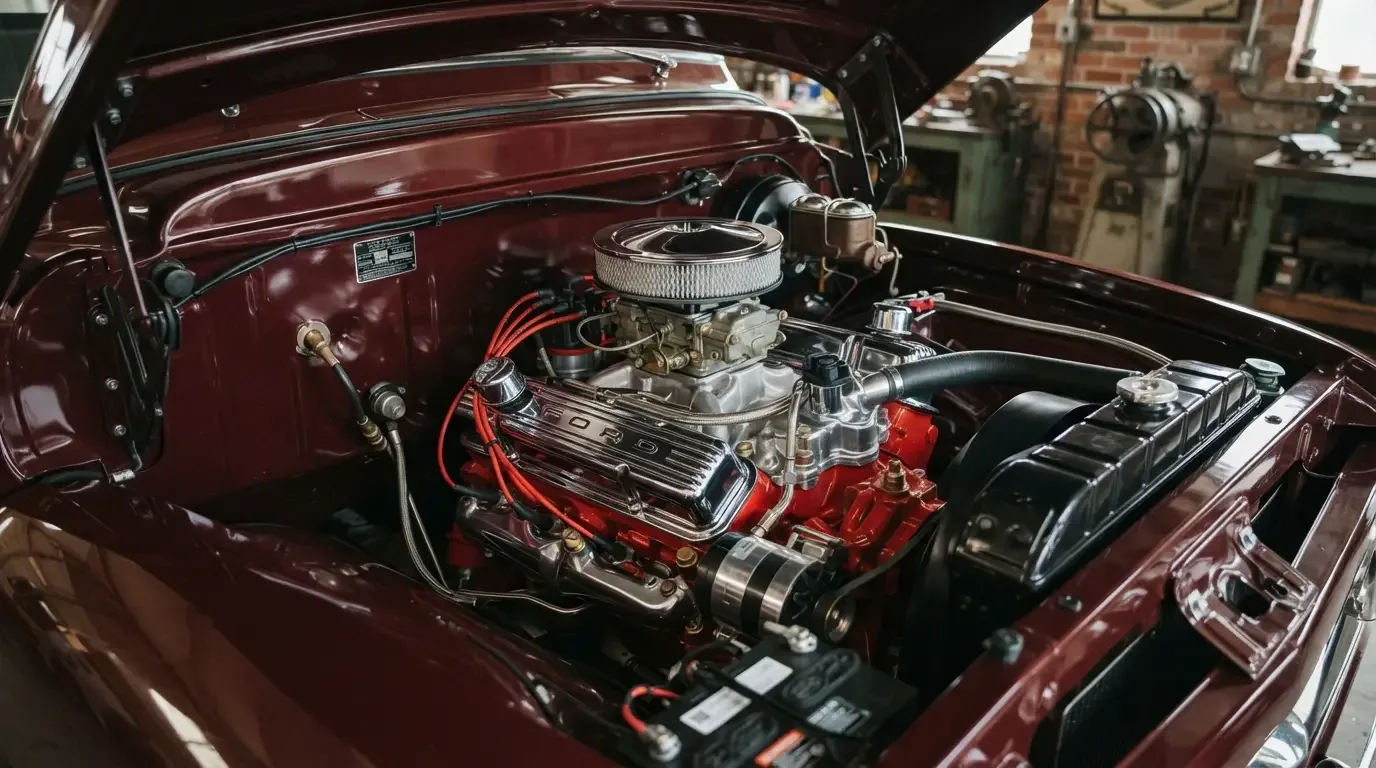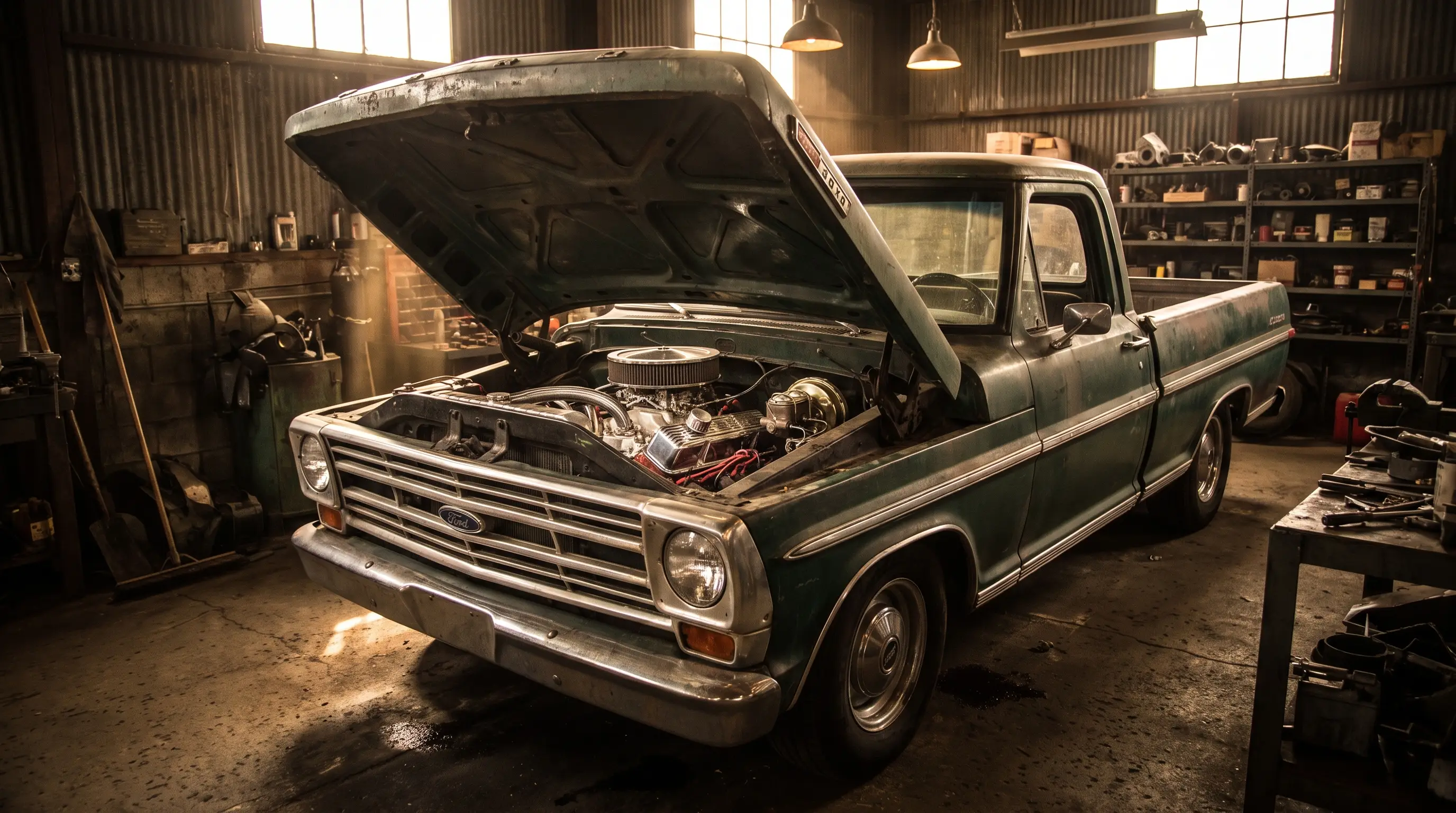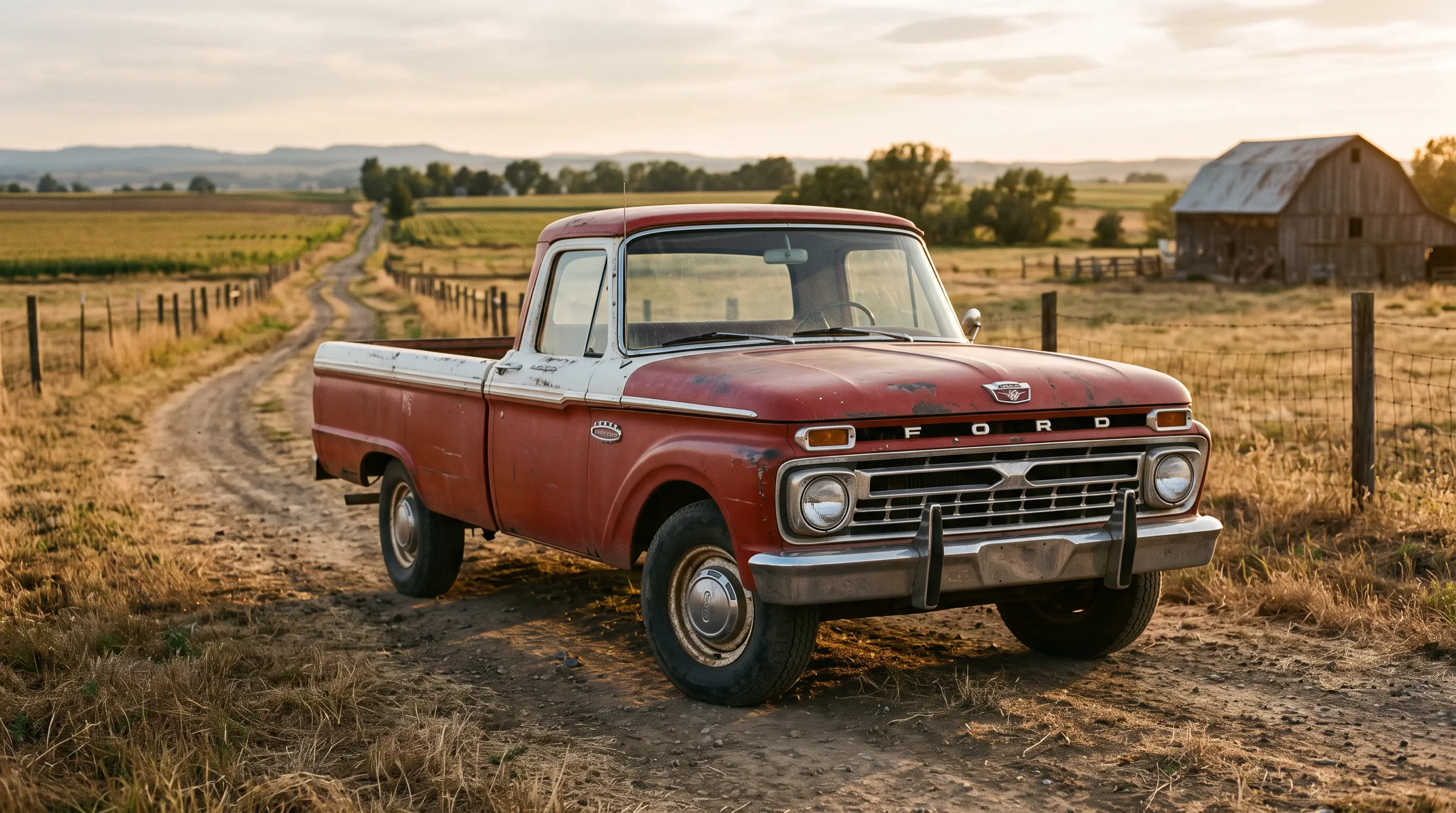
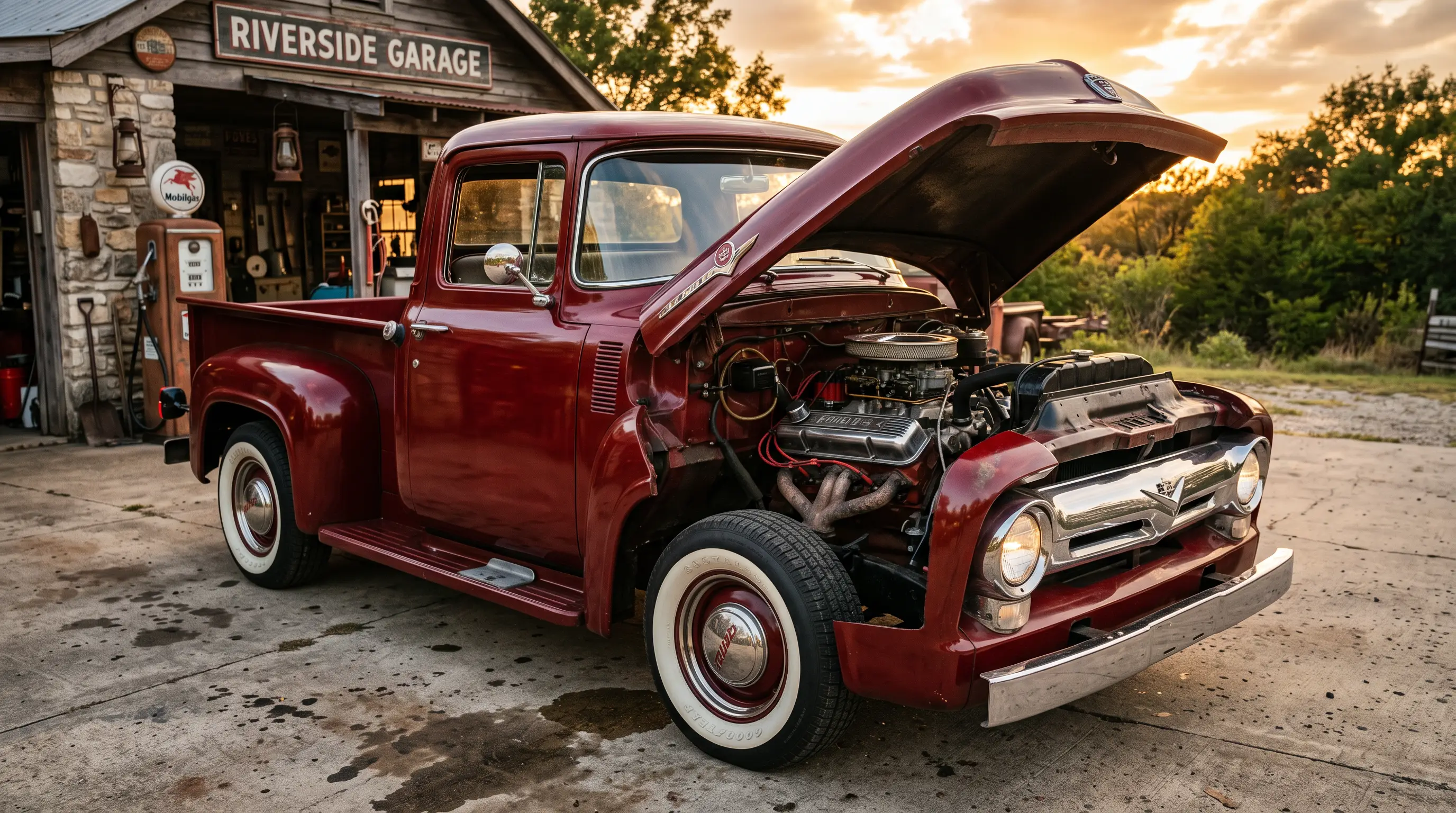
Ask ten F-100 owners which engine is the best one Ford ever put in the truck and you will get ten different answers, most of them defended with the confidence of someone who has never actually driven the alternatives. That is fine. Enthusiasm does not need to be rational. But if you strip the nostalgia out and look at the evidence, one engine keeps coming out ahead on the metrics that actually matter for long-term ownership: parts availability, documented reliability, and a power output that matches what most F-100 owners actually do with their trucks. That engine is the 302 Windsor.
Defining "best" before arguing about it
Most arguments about the best F-100 engine collapse because nobody agrees on what "best" means. If it means outright horsepower, the big-block FE engines win easily, and nothing else in the lineup comes close. If it means fuel economy, one of the six-cylinder engines takes it, no contest. If it means the engine most likely to still be running fifty years after it left the factory, with the widest support network and the fewest unknowns for a new owner, the picture narrows considerably, and that is the definition worth using for a buying decision rather than a bar argument.
Under that definition, three factors matter more than raw output: how many were built, how well documented the failure modes are, and how easy it is to source parts today. Run every F-100 engine option through that filter and the 302 comes out ahead of the six-cylinders on capability and ahead of the big-blocks on practicality.
| Engine | Strength | Weakness |
|---|---|---|
| 240/300 six | Simplicity, fuel economy | Limited power ceiling |
| 302 Windsor | Balance of power, weight, and parts support | Not the most powerful option |
| 390 FE big-block | Strong towing capacity | Weight, fuel consumption, harder to source some parts |
| 351 Cleveland/Windsor | Good mid-size power | Two distinct 351 designs cause parts confusion |
Why the 302 wins on evidence, not vibes
The 302's advantage is not that it makes the most power. It clearly does not. Its advantage is that Ford built enormous numbers of this basic engine architecture across multiple vehicle lines for decades, which means the parts supply for an F-100 302 is effectively the same parts supply that keeps a Mustang or a Bronco running. That kind of cross-platform commonality does not exist for the big-block FE engines, and it does not exist to the same degree for the six-cylinders once you get past the most basic maintenance items.
Reliability data backs this up in a less glamorous but more useful way. Ask any independent mechanic who has worked on classic Fords for twenty years which V8 shows up least often with a mystery problem, and the 302 tends to top that informal list, mostly because so many mechanics have already diagnosed every common failure mode this engine has.
"Best is a word people throw around without defining it. I define it as: which engine gives you the fewest unknowns five years from now. Run that test and the 302 wins, not because it is exciting, but because somebody has already solved every problem it is going to give you."
- Emily Chen
Where the big-block argument actually holds up
None of this means the 302 wins every category, and pretending otherwise would be dishonest. If your F-100 needs to tow anything substantial on a regular basis, the FE big-block engines have a genuine advantage that no amount of parts availability can offset. Torque numbers on the 390 outclass the 302 by a wide margin, and for a truck bought specifically to work rather than to be driven around on weekends, that capability matters more than convenience. The honest answer is that "best" depends entirely on what job the truck needs to do, and a fair comparison has to acknowledge that upfront rather than declare a single winner for every use case.
Reading the full engine record
Any serious comparison of F-100 engines should start with the complete lineup rather than a single favorite, and the ford f100 engines story lays out every option Ford offered across the model's production run, six-cylinder and V8 alike, with the context needed to judge each one fairly rather than by reputation alone.
That context matters because engine choice was never made in isolation. It connects to everything else about how a given F-100 was built and equipped, and for readers who want the complete picture of the truck itself, not just its engines, the full story covers the model's development from the ground up.
How this plays out in actual restorations
Restoration shops that work on F-100s regularly develop their own informal rankings, and those rankings tend to agree with the parts-and-reliability logic laid out here more often than they agree with any given owner's personal favorite. A shop billing hourly cares less about which engine sounds best at a car show and more about which engine can be diagnosed quickly and repaired without a parts search turning into a weeks-long delay. That practical bias shows up again and again in how shops advise customers who are choosing an engine for a build that is not strictly numbers-matching, and it consistently favors the same small-block that wins on the broader evidence.
None of this is an argument against passion picks. Somebody who wants a big-block F-100 because the sound and the torque matter more to them than convenience is making a perfectly legitimate choice, and no spreadsheet of failure rates should talk them out of it. The point of ranking engines by evidence is not to declare emotional preferences invalid. It is to give a first-time buyer, someone without a strong opinion yet, a rational starting point instead of whichever engine happened to come up first in a forum thread.
The verdict, with conditions attached
Call the 302 the best all-around F-100 engine if your priority is a truck you can drive regularly without worrying about parts or mystery diagnoses. Call the 390 the best if towing capacity is non-negotiable. Call the 300 six the best if you want the lowest-maintenance, lowest-cost ownership experience and do not need serious power. Every one of those answers is defensible, which is really the point. There is no single best F-100 engine in the abstract, only the best engine for a specific job, and anyone shopping should weigh that against what is actually available before deciding. A look at classic F-100s on the market is a reasonable place to start testing that decision against real inventory.
Whichever engine ends up under the hood, the same due diligence applies regardless of reputation. Compression numbers, service records, and a cold start tell you more about a specific truck's condition than any generalized ranking ever could. Rankings like this one are useful for narrowing a search before you start looking at real trucks. They are not a substitute for inspecting the actual engine in front of you.