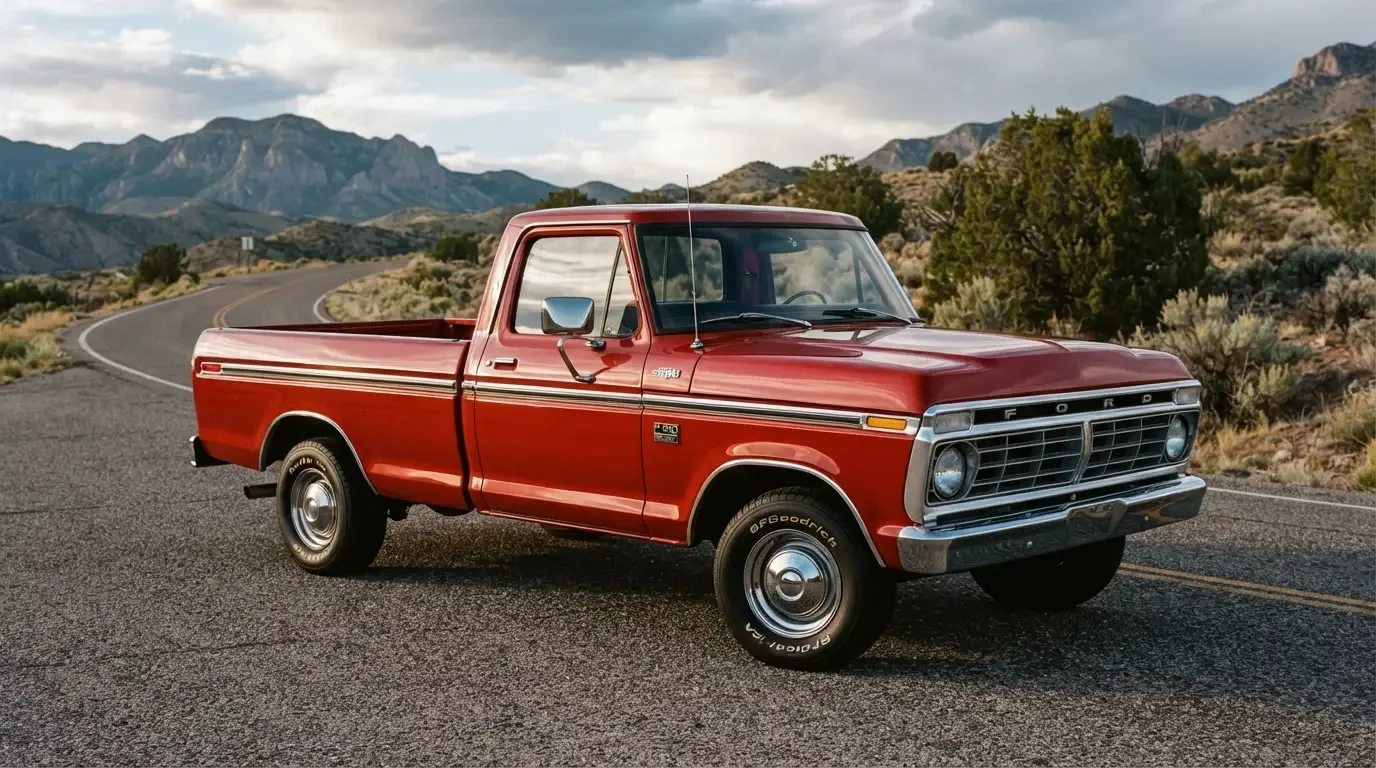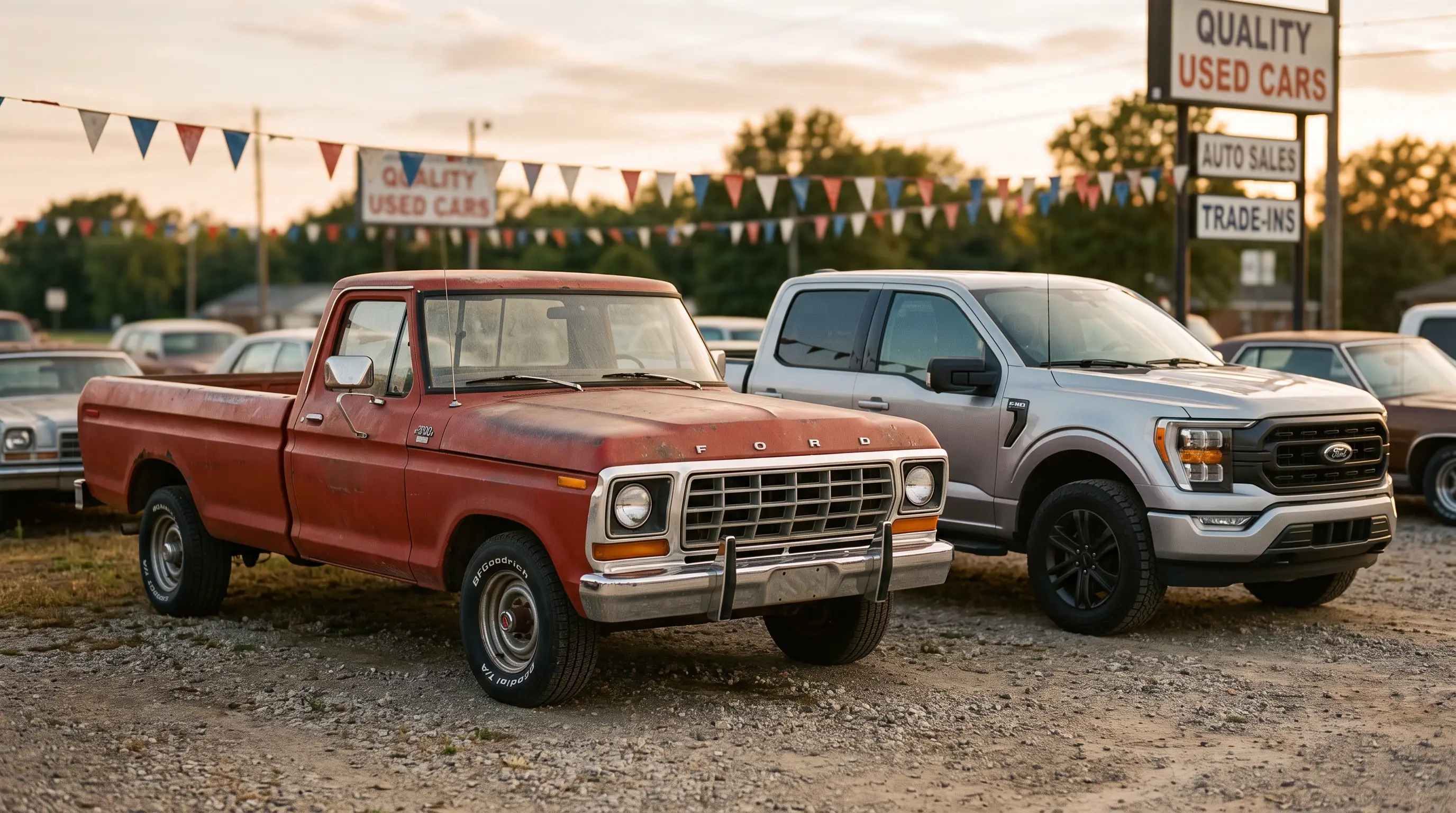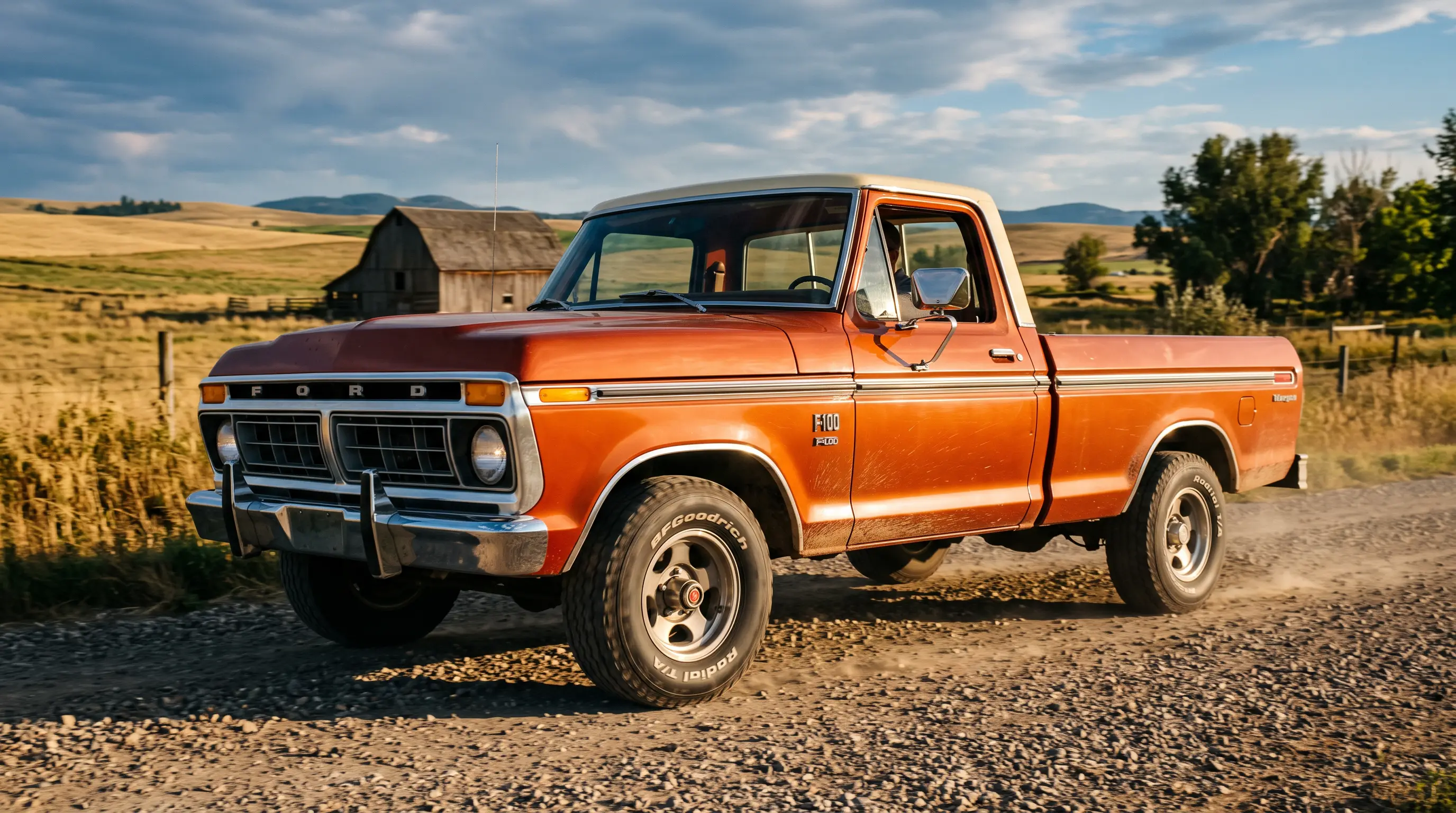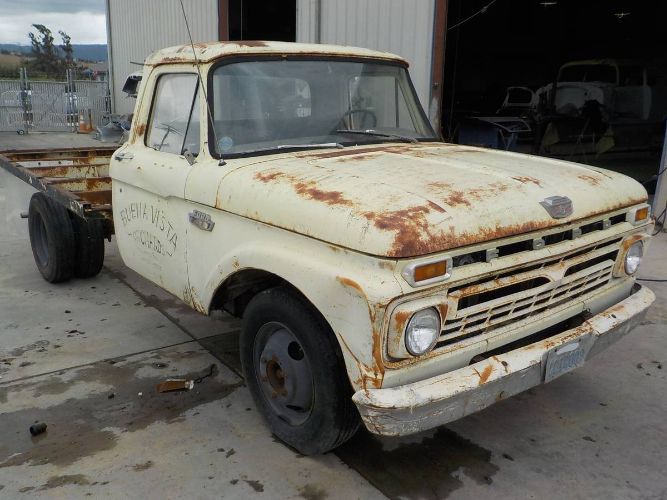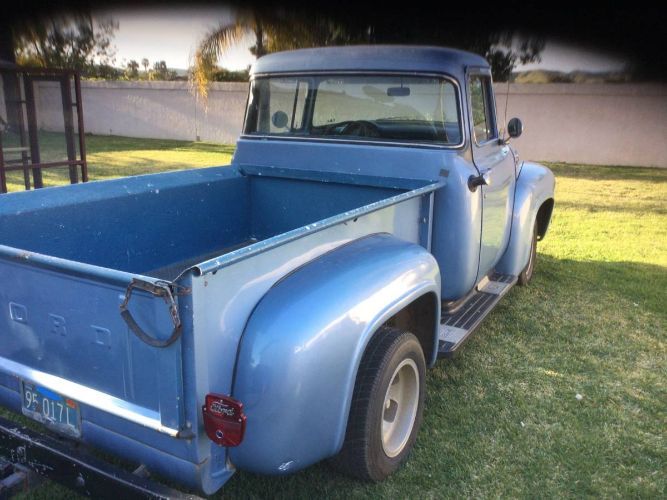
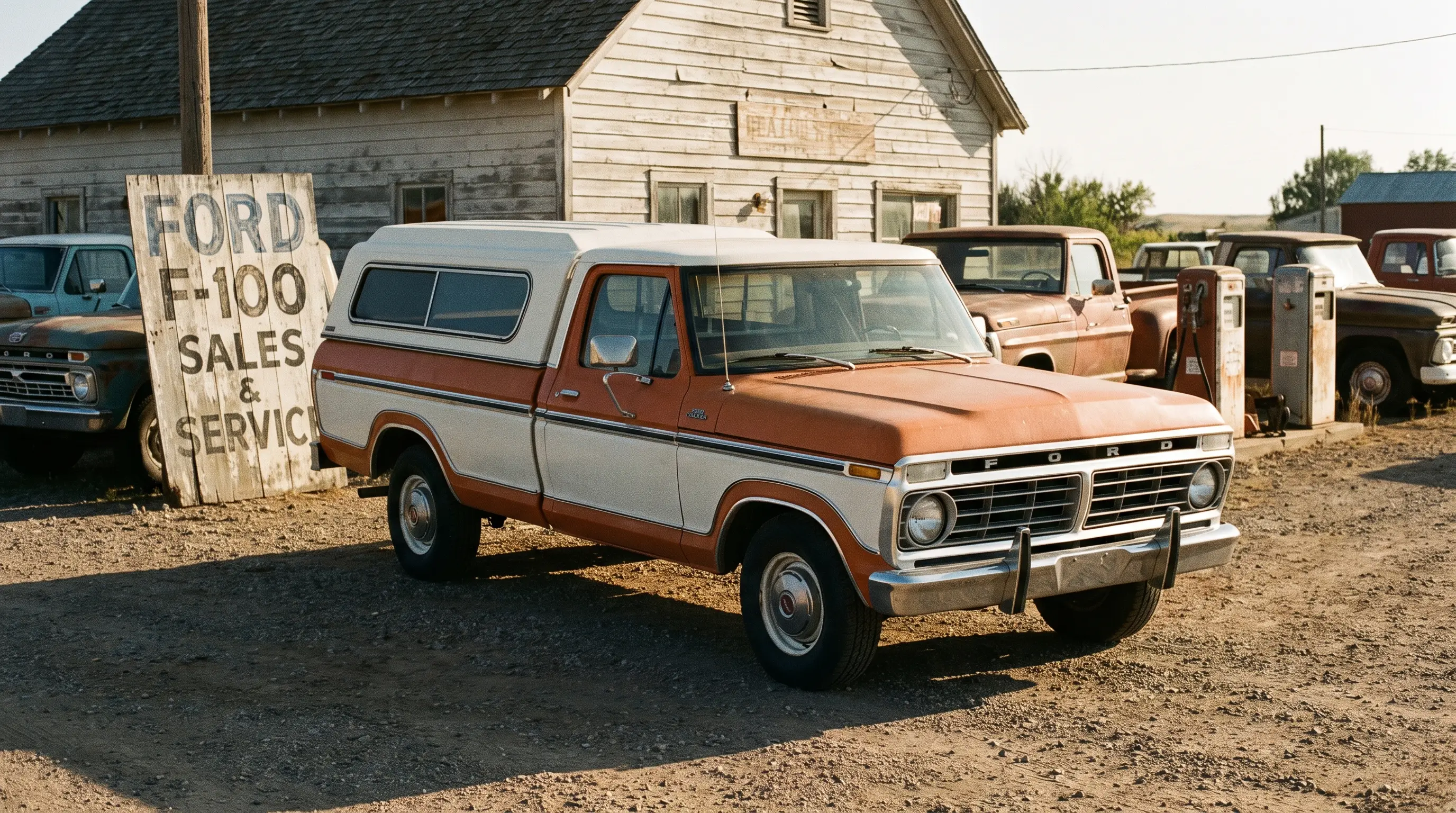
Ask a truck guy what the difference is between a Ford F-100 and an F-150 and half of them will shrug. Fair enough. Park a 1976 F-100 next to a 1976 F-150 and you would need to walk around to the tailgate to tell them apart. Same cab, same frame, same dentside sheet metal. But the F-150 did not show up as a trim package or a marketing gimmick. It showed up to solve a problem Ford's engineers had with the F-100, and within a few years it had quietly replaced it.
Why Ford needed a truck between the F-100 and F-250
By the mid 1970s the F-100 had a payload and gross vehicle weight rating pinned right at a threshold that federal emissions rules were starting to squeeze hard. Trucks under that rating got hit with tighter smog requirements than trucks just above it, and every year those requirements ate more horsepower out of Ford's V8 lineup. The F-250 sat well above the line but was heavier, thirstier, and more truck than most half-ton buyers wanted. So in 1975 Ford introduced the F-150 as a truck rated just past that regulatory line, using the same body and running gear as the F-100 but with beefed-up springs and axles to clear the weight threshold. It was not a new model so much as a loophole with a badge on it, and it worked exactly as intended.
Same truck, different rulebook
Mechanically there was not much daylight between the two. Both used the dentside cab that arrived in 1973, both offered inline sixes and V8s up through the 351 and later the 400, both came in short and long bed configurations. What changed was the certification path. The F-150's higher rating let Ford keep more usable power out of the 351 and 400 V8s while the F-100 versions of the same engines lost output year over year to emissions hardware. For a buyer cross-shopping the two trucks on a dealer lot, that meant the F-150 often felt stronger for a price difference that barely registered. The full story of that dentside generation covers how the body carried both badges through the rest of the decade with almost no visible difference between them.
How buyers made the switch without noticing
Dealers did most of the work here, not advertising. A salesman showing a customer a stripped F-100 work truck and a slightly better-equipped F-150 side by side, at close to the same price, was going to steer most retail buyers toward the truck with more payload and less risk of feeling underpowered. Fleet buyers, the ones ordering trucks by the dozen for utility companies or municipal work, held onto the F-100 longer because the marginal cost savings actually mattered at volume. But retail sales tipped hard toward F-150 through 1977 and 1978, and by 1979 the F-100 was effectively a leftover option rather than a mainstream choice. Browse classic F-100 listings today and you will notice how much rarer genuine F-100 badging is compared to F-150 trucks from the same exact years, because that is precisely when the market shifted underneath the nameplate.
"I have pulled the badge off a truck to check the VIN plate more than once because somebody swapped an F-150 tailgate onto an F-100 cab, or the other way around, and the parts bin does not care which name you wanted."
- Mike Sullivan
The overlap years, model by model
The stretch from 1975 to 1979 is where the confusion lives, because that is when both trucks were built side by side on the same lines with the same body. In 1975 the F-150 was new and the F-100 was still the default half ton, so F-100 volume was strong. By 1977 the gap had narrowed enough that dealers openly pitched the F-150 as the smarter buy for anyone hauling a trailer or carrying real weight, since its rating handled both without an asterisk. In 1978 and 1979, F-100 orders were increasingly limited to fleet contracts and buyers who specifically wanted the lighter rating for insurance or licensing reasons in their state. None of this shows up as a dramatic press event in period road tests, because reviewers of the day treated the two trucks as functionally the same vehicle wearing different badges, which they largely were. The real record lives in the production numbers and order guides rather than in anything Ford said publicly at the time.
What this means if you are shopping one now
If you are looking at a dentside-era Ford half ton today, the F-100 versus F-150 question matters less for how the truck drives and more for documentation and rarity. They share axles, transmissions, and body panels closely enough that a competent shop can keep either one running with common parts. What differs is how common the truck itself is. F-150s from 1975 through 1979 vastly outnumber surviving F-100s from the same window, because Ford built fewer of them as the decade wore on and fewer still have survived four decades of daily use as work trucks. That scarcity is not a performance advantage. It is a collector's consideration, and it is worth knowing before you pay a premium for a badge rather than for the truck underneath it.
The F-150 did not beat the F-100 on merit so much as on paperwork, but paperwork is what determined which truck stayed in production. That is not a dramatic story, but it is an honest one, and it explains a badge swap that a lot of people assume was about styling or performance when it was really about a weight rating on a federal form.
There is also a simpler lesson buried in this history for anyone assembling a collection or just buying a driver. The truck you actually get in these years is more or less the same regardless of the two letters and number on the tailgate. What changes is how it was sold, who bought it, and how many are left to choose from. A shop that has serviced both will tell you the same thing I will tell you here: chase the condition and the paper trail first, and treat the F-100 versus F-150 question as a footnote rather than a deciding factor. It matters for value and rarity, not for how the truck is going to behave once you turn the key.