
Ask ten people at a cruise-in which bed style is worth more on a classic F-100 and you will get ten confident, contradictory answers. That is usually a sign the market has not settled the question cleanly, and after pulling recent sale results, I can tell you it has not. Ford f100 flareside value depends less on a simple bed-style rule and more on regional taste, restoration quality, and which decade of buyer you are talking to.
Car Features
7 min read
Styleside vs Flareside Values Today
Ford F100 flareside value versus Styleside value comes down to buyer type and region more than any hard rule, and the auction data backs that up.
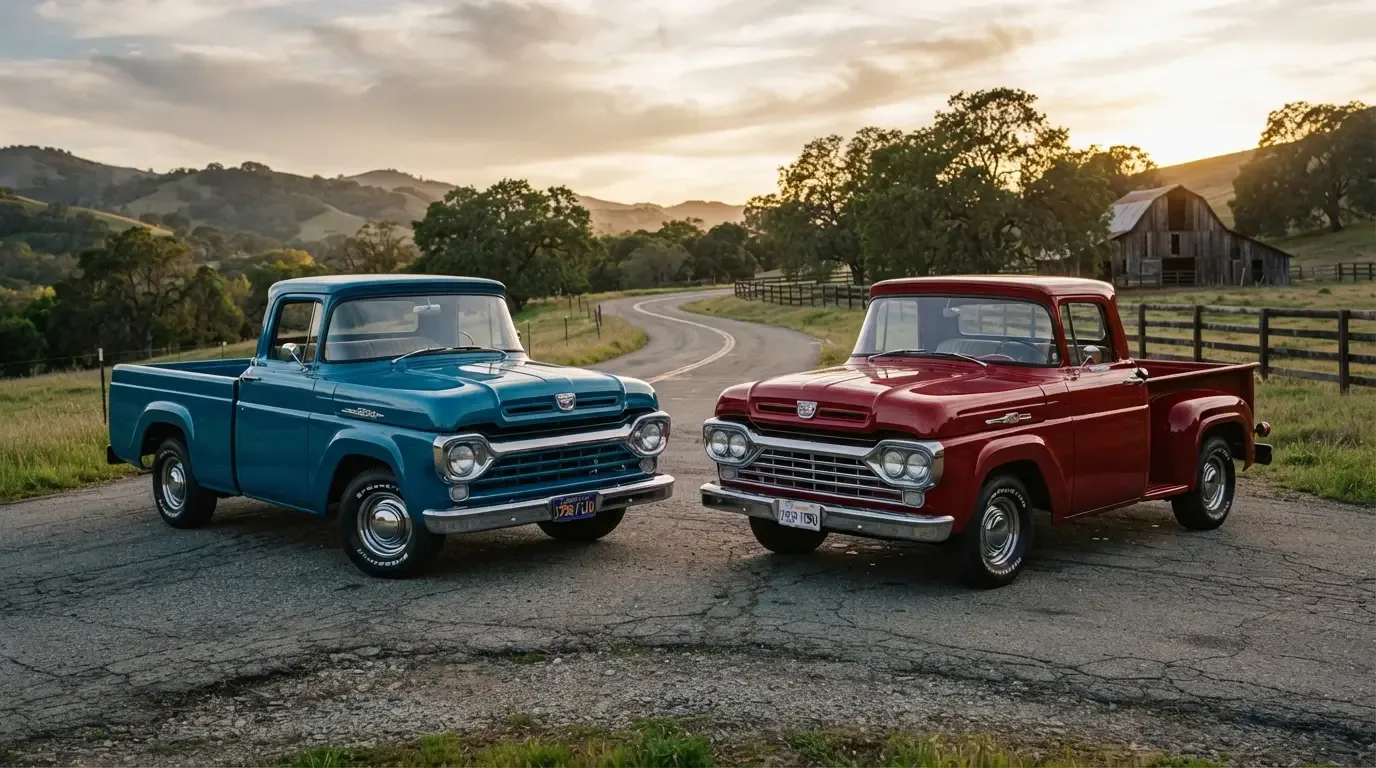
Two beds, two different trucks
Ford offered these trucks with two distinct bed styles through the classic era. Styleside beds have smooth exterior panels that run flush with the cab, giving the truck a cleaner, more integrated look. Flareside beds, sometimes called stepside depending on the year and reference material, use separate fenders that flare out over the rear wheels, with a narrower bed floor between them. It is the older layout in Ford's lineup, and for years it was simply what a truck looked like before Styleside came along and offered a more modern alternative.
The two styles were never simply old versus new on the sales floor. Both remained available across overlapping years, and buyers chose based on preference and use case as much as anything. A contractor who valued a lower floor and easier loading over the wheel wells might have picked one, while a buyer chasing a specific look picked the other. That parallel availability is exactly why the value conversation is not straightforward today.
What the auction data actually shows
Pull recent results across major auction platforms and a pattern emerges, though it is a softer one than the internet forums suggest. Flareside trucks, particularly in shorter wheelbase configurations, tend to command a modest premium in the current market, driven largely by street rod and custom builders who favor the narrower bed's proportions and the exposed fender look for lowered, chopped, or otherwise modified builds. Styleside trucks, meanwhile, hold stronger appeal with restorers chasing factory-original presentation, since the flush panels read as the more contemporary, purpose-built option from Ford's own era.
The premium is real but it is not enormous, typically in the range of a few percentage points on comparable trucks in similar condition, and it evaporates entirely on rough, incomplete examples where drivetrain and body condition dominate the price conversation regardless of bed style. A rusted-out flareside project is still a rusted-out project.
| Factor | Flareside lean | Styleside lean |
|---|---|---|
| Buyer type | Custom and street rod builders | Factory-correct restorers |
| Bed floor | Narrower, between fenders | Full width, flush panels |
| Typical premium | Small, condition-dependent | Stronger for numbers-matching originals |
| Regional taste | Stronger in West and Southwest | More even nationally |
Condition still wins every argument
None of this changes the basic rule that governs every classic truck transaction. Condition, originality, and documentation move the needle far more than bed style ever will. A clean, well-documented Styleside truck with a solid drivetrain will outsell a rough flareside every time, and vice versa. Bed style is a tiebreaker between two otherwise comparable trucks, not a category that overrides everything else.
Where it matters most is at the margins, when a buyer is choosing between two similarly priced, similarly conditioned trucks and simply prefers one look over the other. In that scenario, knowing which style tends to draw more competitive bidding in your region can be the difference between a truck that sells in a week and one that sits.
"I tell people to buy the truck, not the bed style. The premium for one over the other is real but it's a rounding error next to what a rusted frame or a tired motor does to your final number. Get the fundamentals right first."
- David Mercer
Regional taste shapes the numbers
West Coast and Southwest markets tend to show a stronger flareside preference, tracking with the strength of custom and lowrider culture in those regions. Midwest and East Coast markets skew slightly more toward Styleside, where farm and work-truck heritage carries more weight with buyers who want their truck to look the way it did in a 1959 dealer brochure. Neither preference is universal, and a truck that sells strong in one region might sit longer in another regardless of which bed it wears.
If you are buying to sell later, factor your likely resale region into the decision. If you are buying to keep, the whole premium conversation matters a lot less than whether the truck actually makes you happy to drive.
What restoration cost does to the equation
A factor that rarely gets enough attention in the flareside versus Styleside conversation is how much a proper restoration costs for each style, and that cost difference can swing the practical value calculation more than raw market preference does. Flareside beds involve more individual panels and more complex sheet metal work around the fender flares, which generally makes a full bed restoration more labor-intensive and more expensive than a comparable Styleside repair. A Styleside bed's flat panels are simpler to fabricate or source, which keeps restoration costs lower and more predictable.
That cost gap matters most for project trucks bought in rough condition. A buyer weighing two similarly priced, similarly rough trucks should factor in that a flareside restoration may eat into the eventual resale premium it commands, sometimes enough to erase the advantage entirely. It is the kind of detail that only shows up once you have actually gotten quotes from a body shop, not something that shows up in an auction result summary.
How custom builders think about it differently
For builders working toward a lowered street truck or a full custom build, the value calculation looks nothing like a restorer's spreadsheet. A flareside bed's exposed fenders and narrower proportions read as a feature to be emphasized rather than a complication to be managed, and builders will often pay a premium specifically for a flareside body regardless of its current condition, because the bed is headed for extensive modification anyway. Original paint, factory upholstery, and matching numbers simply do not factor into that buyer's decision the way they do for a restorer chasing originality.
This split in buyer psychology is exactly why the same truck can attract wildly different offers depending on who is looking at it. A rough flareside that a factory-correct restorer would pass over without a second look might be exactly what a custom builder has been hunting for, and that mismatch in priorities is where a patient seller can find real value in an otherwise slow-moving listing.
Shopping with this in mind
Before you let bed style drive your decision, spend real time comparing what is actually available. If you browse classic F-100 listings, you will see both styles represented across a wide range of condition and price, and that range will teach you more about current values than any single rule of thumb. Pay attention to how long each listing sits and what it eventually sells for relative to its asking price.
For the fuller context on how this generation of truck came together, including why Ford kept both bed styles in production side by side for so long, our complete history covers the design decisions behind both options in detail.
Sources and notes
Related Reading

About the author
David Mercer
Classic car market analyst with two decades of experience tracking collector car valuations, auction results, and investment trends.
Related Listings - Ford F-100
More in Car Features
Comments
Be the first to comment on this article.