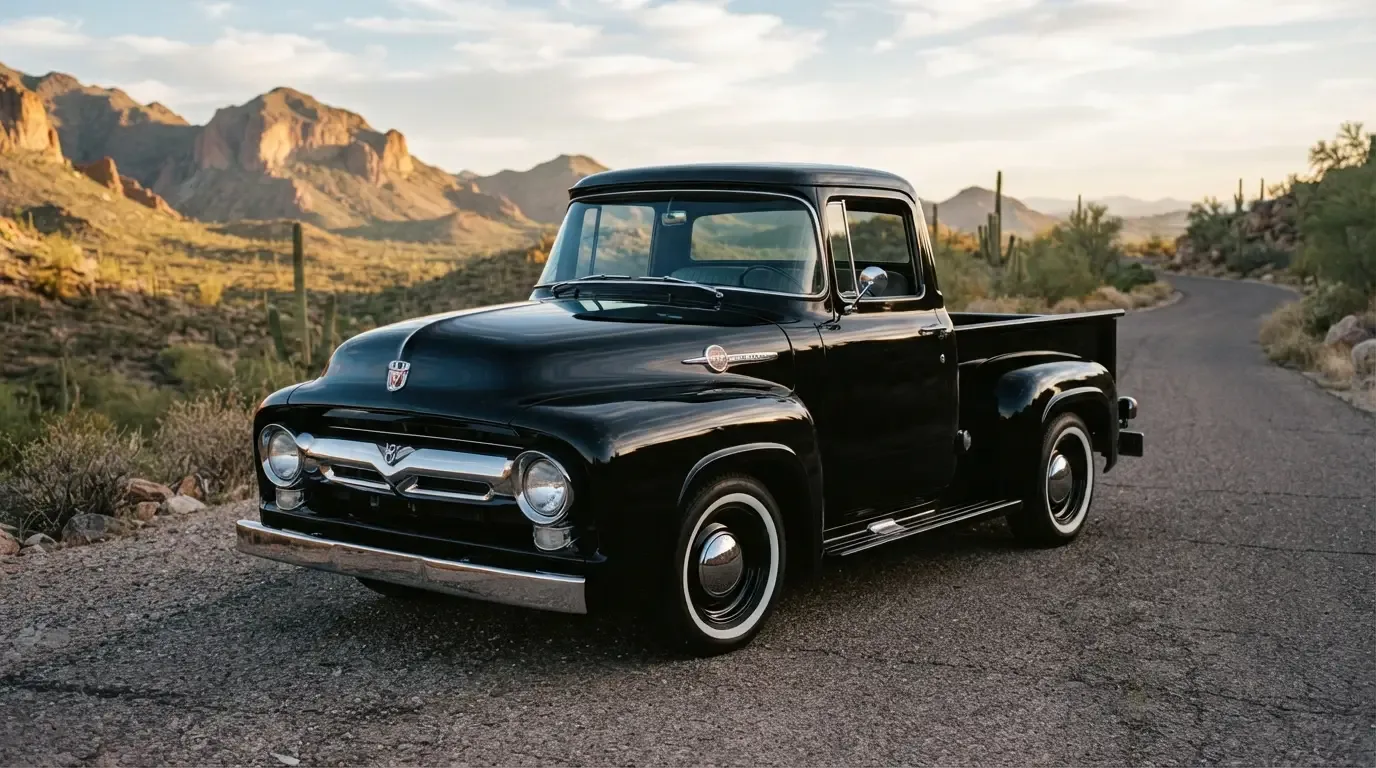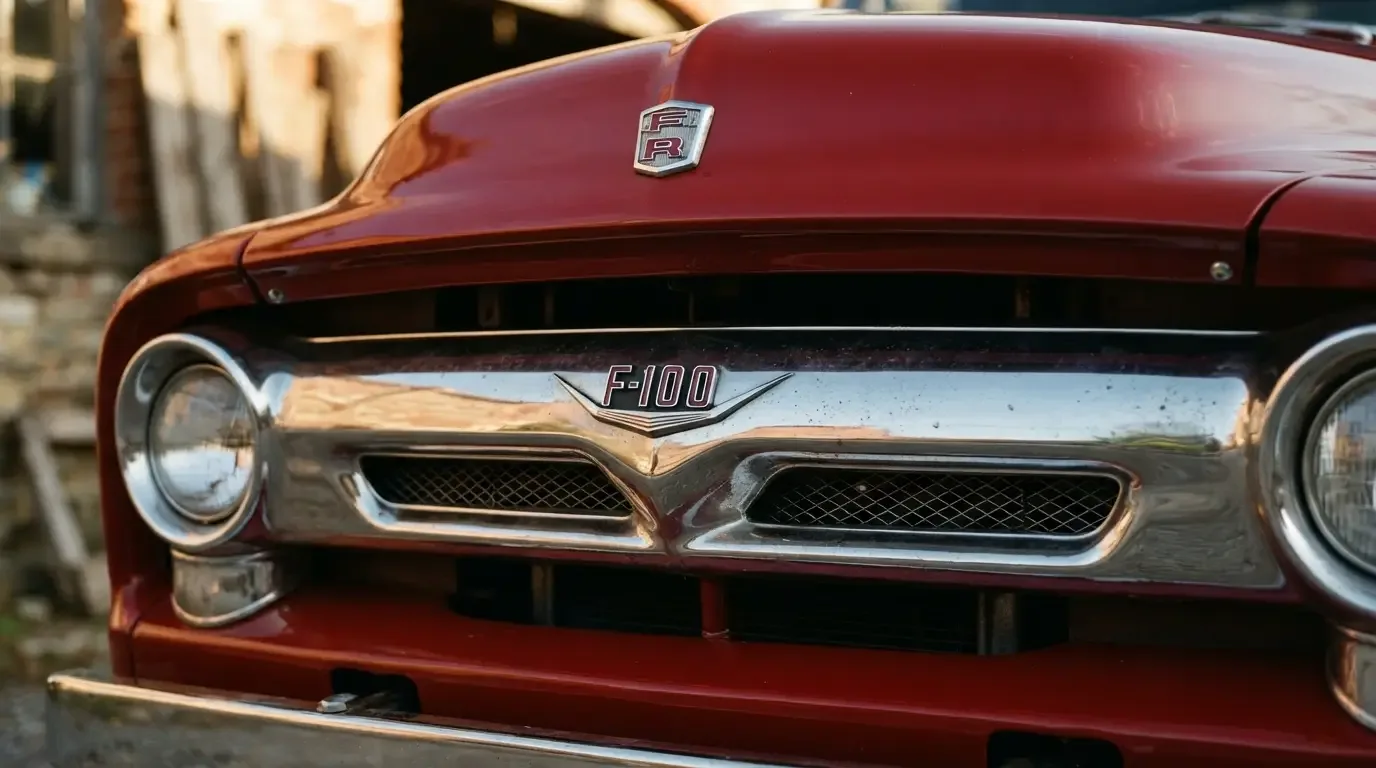
Somewhere in a farmhouse garage in the Midwest sits a 1956 Ford F-100 the color of a robin's egg, and every time its owner opens the door she says the same thing: nobody paints trucks like this anymore. The 1956 ford f100 colors were not accidents. They were a decision by Ford's design department that a work truck could wear the same optimism as the cars parked next to it in the showroom, and six decades later those colors are part of why this generation of F-100 still stops people on the street.
A truck line that stopped hiding from color
Before 1953, most F-Series trucks left the factory in a narrow band of practical greens and blacks, colors chosen because they hid road grime and matched what farmers and contractors expected from a work vehicle. When Ford redesigned the line for its fiftieth anniversary, the palette opened up along with the sheet metal. Suddenly a truck buyer could order the same kind of cheerful, saturated color that a Fairlane customer might choose, and plenty of them did. It was a quiet signal that Ford saw the pickup market shifting, that trucks were starting to serve double duty as a family's second vehicle rather than strictly a tool.
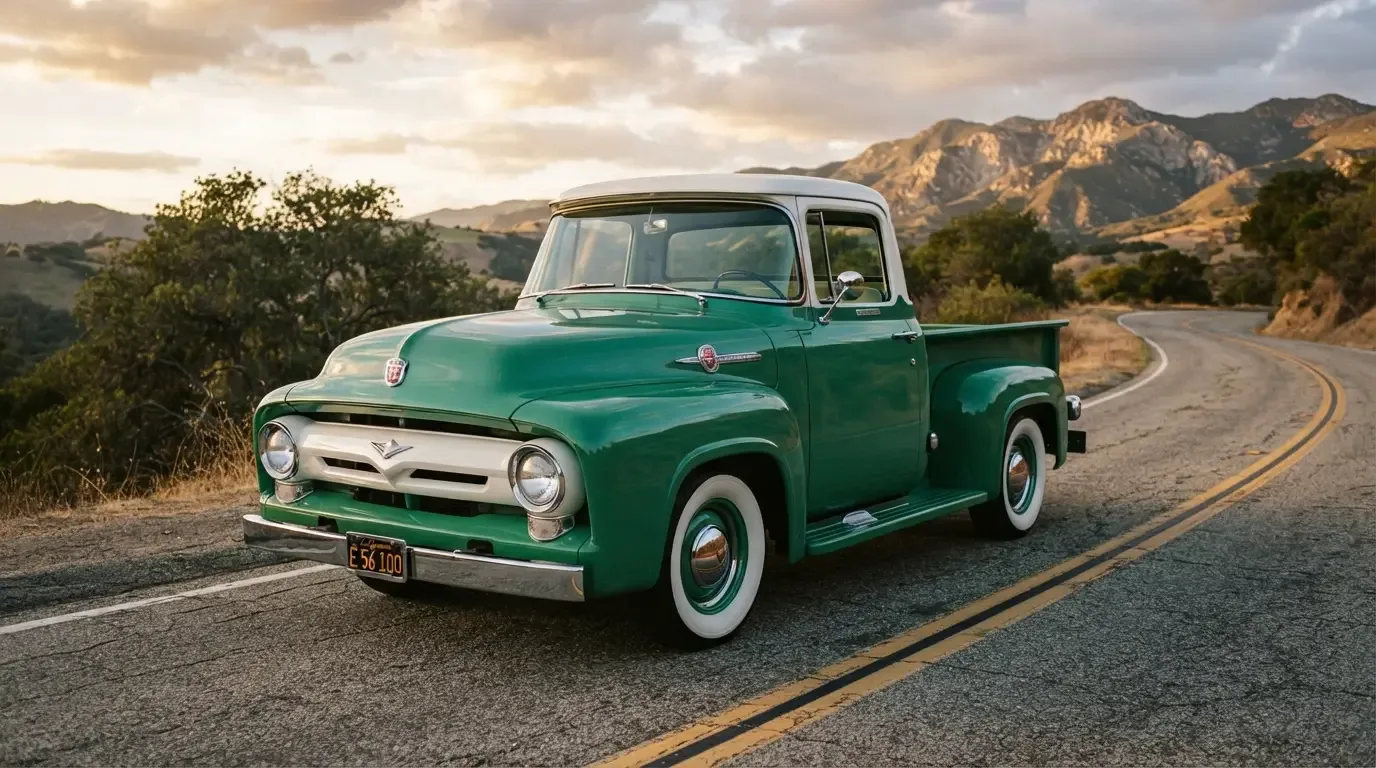
By 1956, the final year of this body style before the styleside redesign arrived, the color chart had grown into something genuinely appealing. Buyers could choose from solid colors or two-tone combinations that split the cab and hood from the fenders and lower body, a treatment that made even a base model truck look like it had been dressed for a night out.
The shades that defined the year
Colonial White anchored the lighter end of the chart and became a common choice for two-tone lower panels, paired often with deeper colors above the beltline. Meadow Green and Sea Sprite Green carried the era's fondness for muted, almost pastel greens, colors that read as fresh rather than institutional the way earlier truck greens had, and the 1956 chart also ran to Banner Blue, Diamond Blue, Nocturne Blue, Goldenrod Yellow, Platinum Gray, and Vermilion red. Buyers chasing period-correct restorations lean on surviving dealer literature and original paint chip books to nail down the precise shade names, since exact codes shifted slightly between years and some colors were mid-year additions rather than full model year offerings.
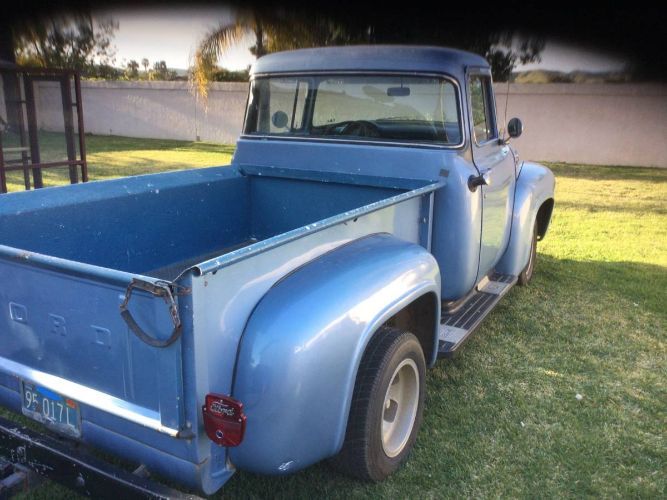
Blues also had a strong showing that year, ranging from a pale sky tone to a deeper marine shade that photographs beautifully against chrome trim. Yellow and gold tones rounded out the chart for buyers who wanted their truck to be seen from a distance, a practical consideration for contractors running fleets who needed to spot their own vehicles at a job site.
Two-tone as a status marker
Ordering a two-tone F-100 in 1956 cost extra, and that extra cost turned paint into a quiet class marker among truck buyers. A single-color truck said the owner needed a tool. A two-tone truck said the owner wanted a tool that also looked good parked outside church on Sunday. Dealers leaned into this distinction in their advertising, showing two-tone trucks in family settings rather than job sites, a subtle pitch toward the buyer who saw the F-100 as transportation for the whole household rather than strictly a work vehicle.
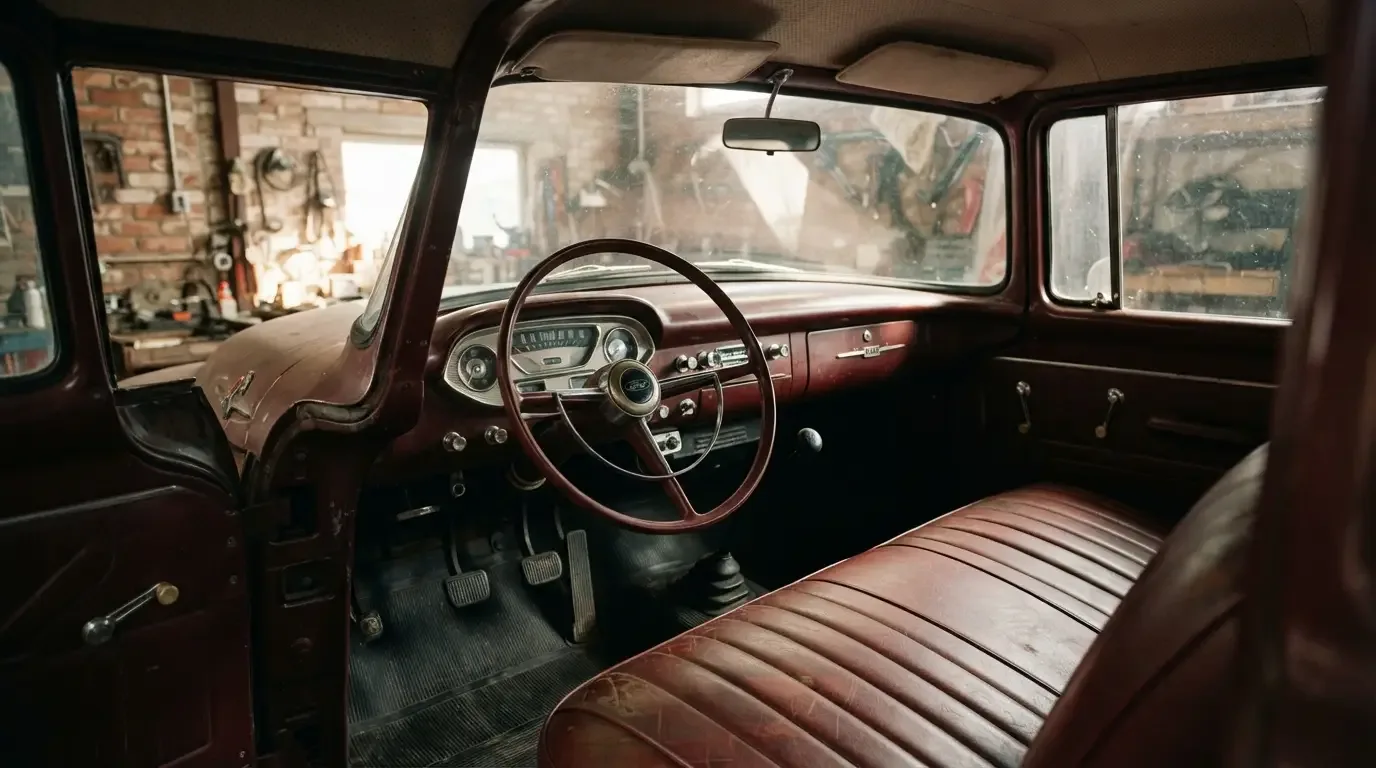
"There is a particular kind of quiet in an old truck cab that still wears its factory color. You are not just sitting in a restoration. You are sitting in someone's decision, made in a showroom in 1956, about what kind of truck they wanted to be seen driving."
- Nora Beckett
What survives and what gets guessed at
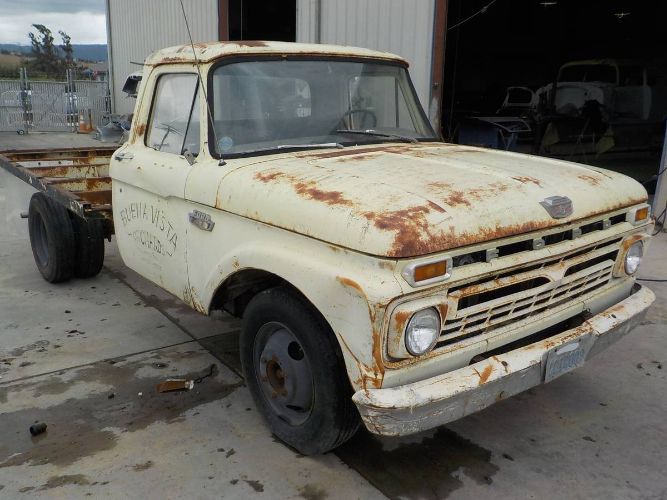
Finding an unrestored 1956 F-100 with its original paint intact is rare enough that when one surfaces at a swap meet or estate sale, word travels fast among collectors. Most trucks from this era were repainted at least once during their working lives, often in whatever color the local body shop had on hand rather than a factory-correct match. That makes the restoration community's reliance on original dealer brochures, paint chip cards, and door tag codes especially important. A door tag with a legible paint code is worth more to a serious restorer than a dozen photographs of a similarly colored truck, because codes do not lie the way memory does.
Collectors chasing the 1956 ford f100 story often start with color precisely because it is the most visible, most argued-over detail of any restoration. Get the color wrong and even a mechanically perfect truck looks slightly off to anyone who knows the era. Get it right and the truck reads as authentic the moment it rolls into a parking lot.
Color and the market today
Original or correctly restored two-tone trucks in desirable color combinations command a real premium over single-color examples in similar mechanical condition. Buyers are not just paying for paint. They are paying for the visual signature of an era when Ford decided a work truck deserved the same design attention as a family sedan. That decision echoes through the full story of how the F-100 line grew from a bare-bones hauler into an American design icon.
Anyone shopping classic F-100s on the market for a 1956 model will notice how quickly color comes up in conversation, long before horsepower or mileage. That is not vanity. It is history, worn on the outside where everyone can see it.
Regional habits that shaped what survived
Where a truck spent its working life shapes what color survives on it today almost as much as what left the factory. Trucks that lived their decades in dry climates, Arizona ranches or West Texas farms, kept original paint far longer than trucks that wintered in salt-heavy states, where a repaint every decade or so was simply part of ownership. That geographic split means certain original colors are rarer in some parts of the country than others, not because Ford built fewer of them there, but because the paint itself did not survive the weather. A buyer chasing a specific factory shade sometimes has better luck searching by climate history than by color name alone.
Farm trucks also tell a different color story than trucks bought for personal or family use. Working examples were more often ordered in solid, practical colors precisely because the extra cost of two-tone paint was hard to justify on a vehicle meant to get muddy every day. That practical calculation means the two-tone survivors collectors chase hardest today were, in their own time, the exception rather than the rule, bought by owners who valued appearance alongside utility from the very first day at the dealership.