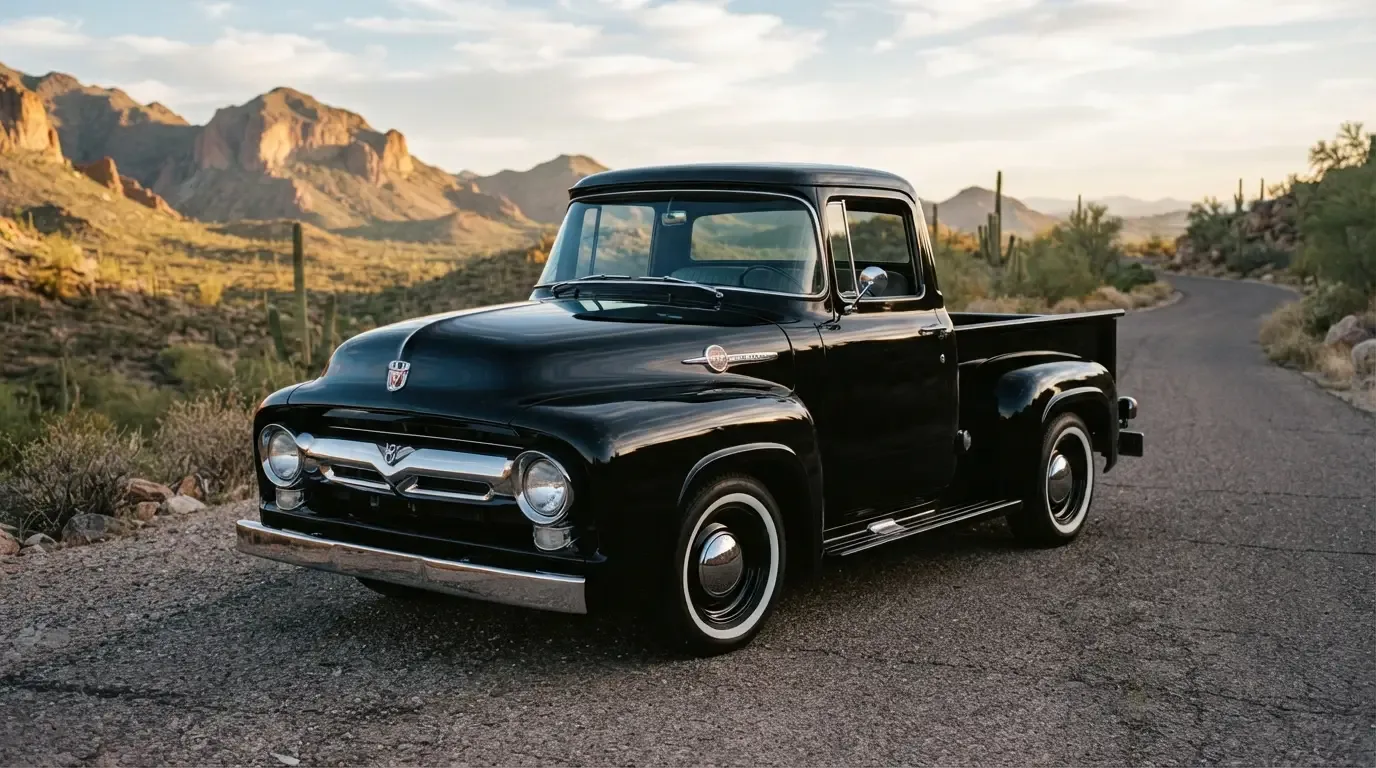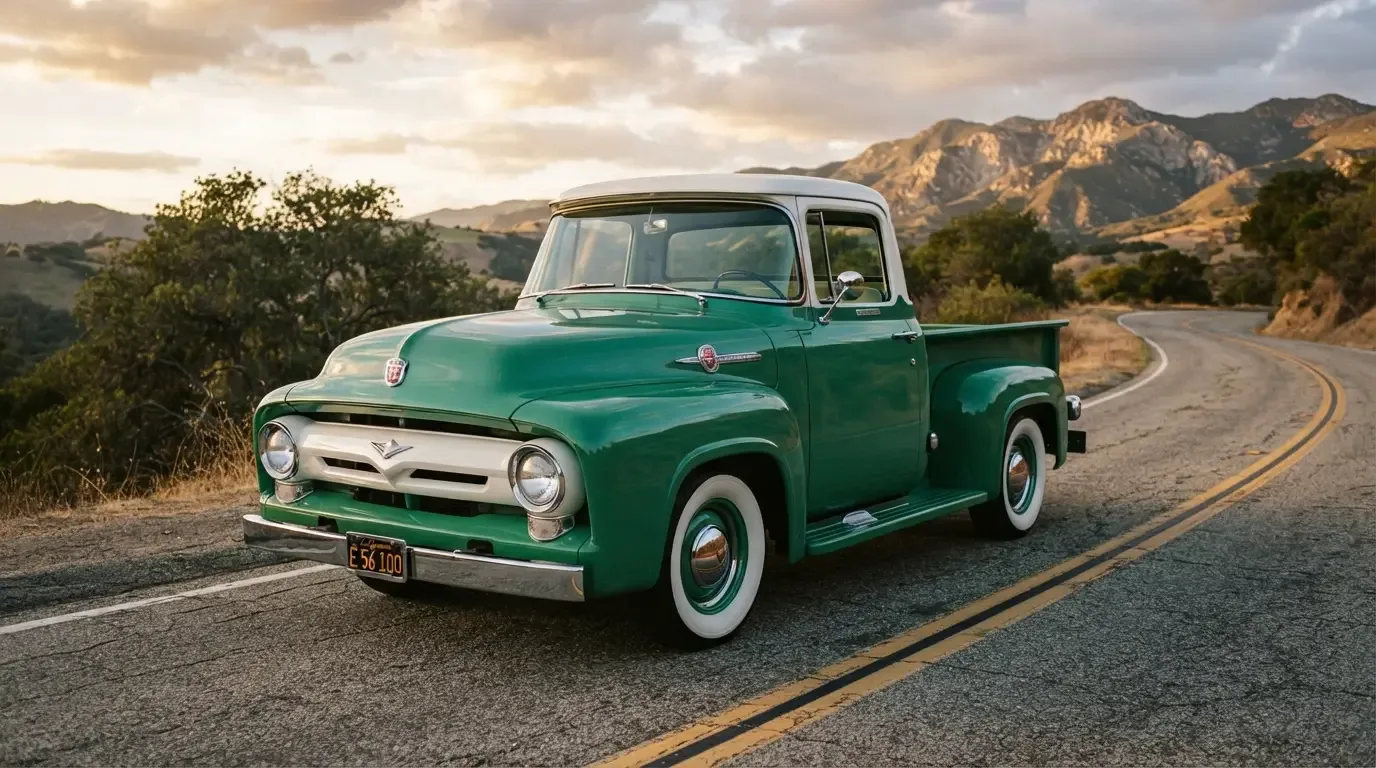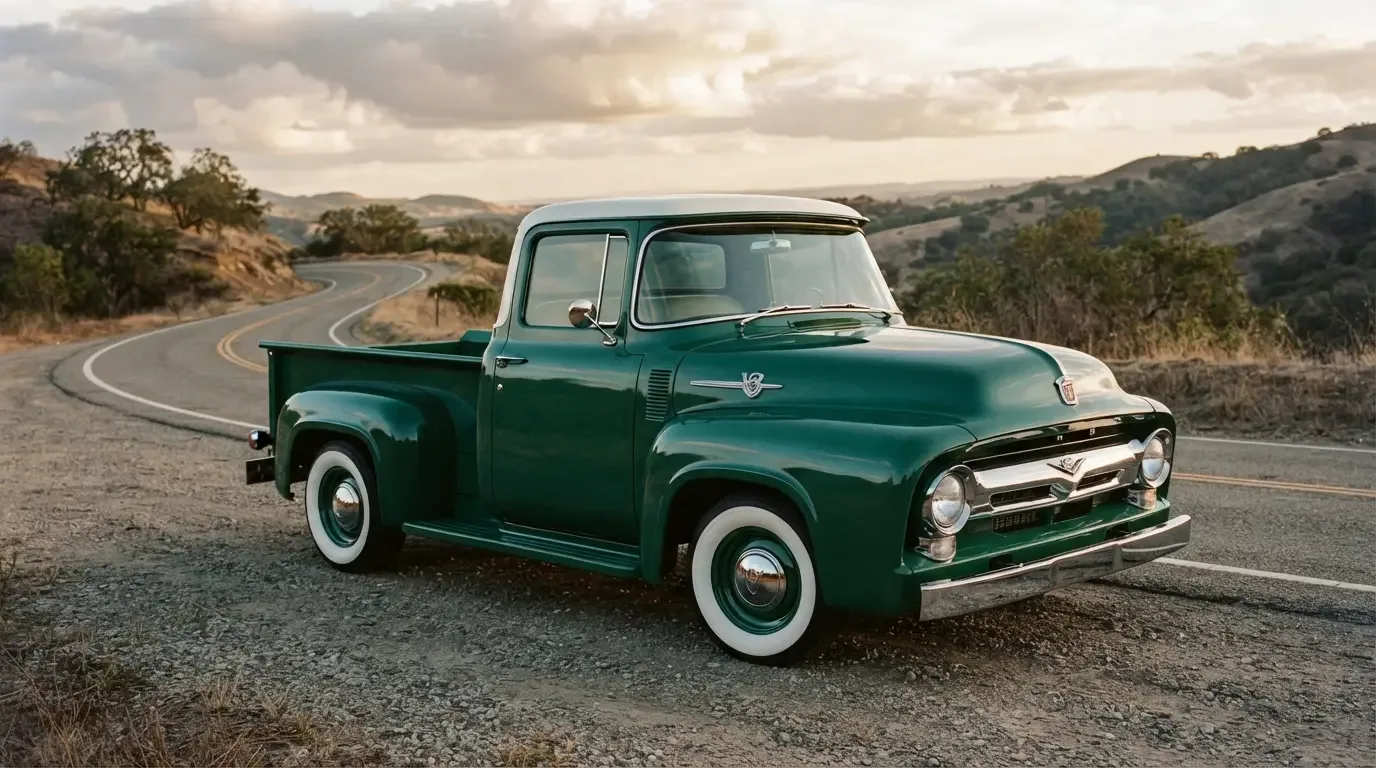
Open the door of a well-kept 1956 Ford F-100 and the first thing that hits you is how much simpler everything looks than a modern truck, and how little that simplicity costs it. The 1956 ford f100 interior was built for a driver who needed to see the gauges, reach the shifter, and get back to work, and every panel inside reflects that priority. There is a lesson in there for anyone who thinks more buttons always means more truck.
A dashboard built to be read at a glance
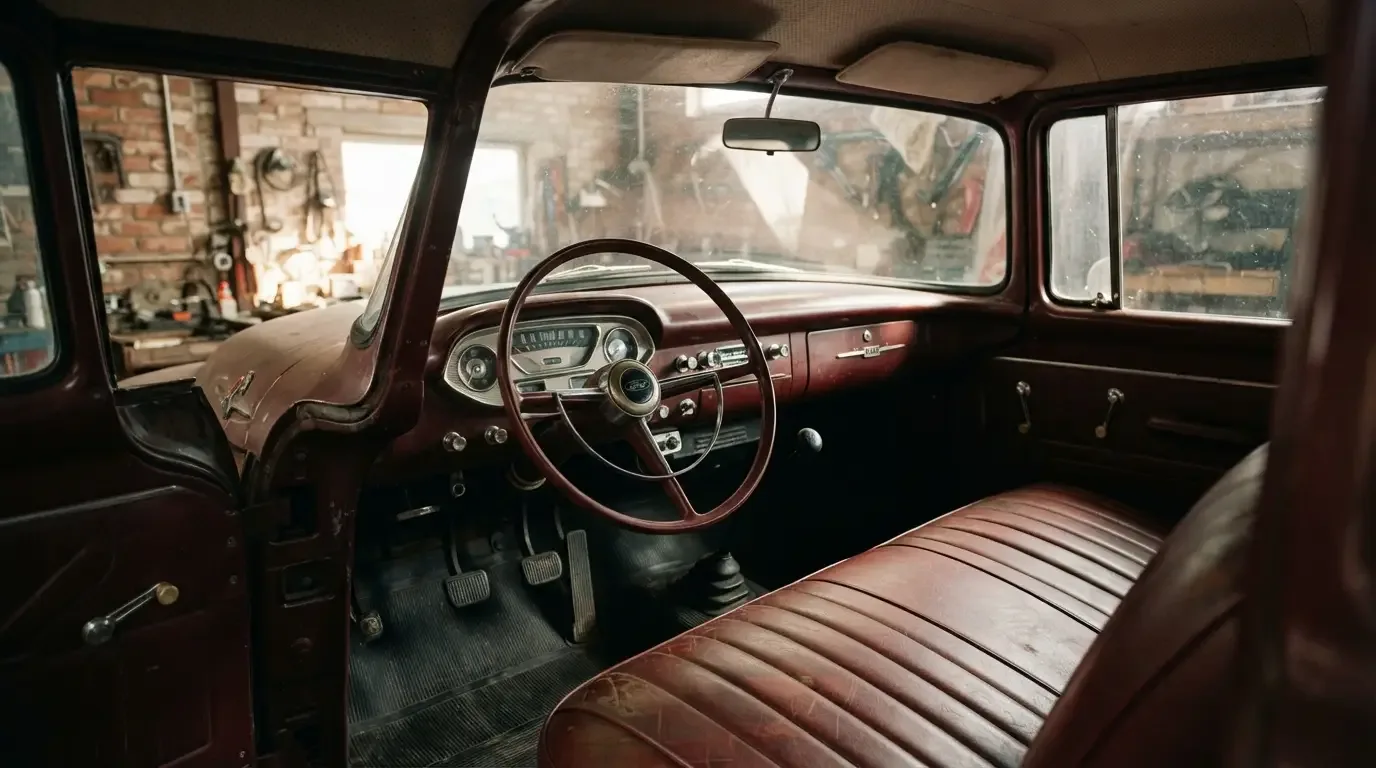
The instrument panel on the second generation F-100 sits low and wide, dominated by a single large speedometer housed in a chrome bezel with smaller gauges for fuel and temperature clustered nearby. Ford kept the layout deliberately uncluttered. A driver working a job site all day did not need a sweep of idiot lights, they needed to glance down once and know exactly what the truck was doing. That philosophy carried through the whole cab, from the simple three-spoke steering wheel to the column-mounted shifter that kept the bench seat clear for a third passenger or a stack of paperwork.
By 1956, Ford had moved the electrical system to 12 volts, which meant brighter dash lighting and more reliable gauges than the 6 volt trucks that came before. It is a detail easy to overlook until you have driven both back to back and noticed how much easier the later truck is to read at dusk.
Seats that assumed you were working
The standard bench seat in a base model F-100 used a simple woven vinyl material chosen for durability over comfort, something that could survive a work boot and a spilled thermos without complaint. Buyers who wanted more could step up to Ford's Custom Cab package, which dressed the interior with better upholstery, additional insulation, and brighter trim, turning a bare work truck into something closer to a proper daily driver. The gap between a base cab and a Custom Cab interior was significant enough that surviving examples of each feel like different trucks entirely once you sit inside.
Door panels stayed simple across trim levels, mostly painted metal with a narrow strip of trim rather than the padded panels that later trucks would adopt. It is one of the clearest visual tells separating a 1950s work truck cab from anything built even a decade later.
Restoring the details that get overlooked
When shops tackle a full interior restoration on one of these trucks, the headliner and door seals are usually the first things gone, victims of decades of sun and moisture long before the upholstery itself wears through. Sourcing correct replacement material has gotten easier over the last twenty years as demand from restorers grew, but matching the exact weave pattern and color of a Custom Cab interior still takes patience and a willingness to pay a premium for the right supplier.
"Everybody wants to talk about the engine and the paint, but I can tell you more about how a truck was actually used by looking at the seat springs and the floor mat wear than I can from popping the hood."
- Jim Vasquez
Floor coverings are another area where originality gets lost fast. Most base trucks left the factory with a simple rubber mat rather than carpet, chosen specifically because it was easy to hose out. Owners who later added carpet for comfort inadvertently erased one of the clearest signals of a truck's original trim level, something restorers now have to research carefully through build sheets and factory literature rather than assume from what is currently installed.
Why the cab still feels right today
Part of what makes this generation of F-100 so beloved by builders and daily drivers alike is how well the cab has aged ergonomically. The seating position is upright and commanding, visibility out the windshield is excellent thanks to the wraparound glass introduced mid-generation, and the controls fall to hand in a way that still feels intuitive sixty years later. Modern restomods that swap in updated seats and sound deadening tend to keep the original dash layout intact precisely because there is nothing to fix. Ford got the basics right the first time.
That staying power is part of the full story of this generation, a truck that succeeded not by overcomplicating the driver's experience but by trusting a simple layout to do its job well. Buyers browsing classic F-100 for sale listings today often comment on how comfortable the cab feels compared to what they expected from a truck this old, a sign of genuinely sound design rather than nostalgia alone.
What to check before you buy
A cab that has been sitting outside for years typically shows its age first in the headliner and the seat foam, both of which sag and crack long before the sheet metal shows serious rust. Door hinges wear enough over decades that a sagging door is common even on otherwise solid trucks, and it is a cheap fix that should not scare off an otherwise good buy. Gauges are more of a gamble. Original speedometers and fuel senders on these trucks were not built for a sixty year service life, and finding a shop that still rebuilds them takes some searching.
Sit in one of these cabs for five minutes and the appeal becomes obvious. Nothing about it is trying too hard, and that restraint is exactly why it still works.
Heater and ventilation, the parts nobody photographs
Nobody shops a truck like this for the climate control, but the simple under-dash heater unit offered on these trucks is worth understanding before you drive one in cold weather. It was an option, not standard equipment, and plenty of work trucks left the factory without one at all, since a farm or job site truck often sat running with the windows down regardless of season. Owners restoring one today either source a period-correct unit and rebuild it, or quietly add a modern equivalent hidden under the seat, a compromise most purists tolerate because the alternative is a genuinely cold cab on a January morning.
Ventilation relied on a simple vent window in each door and a cowl vent ahead of the windshield, both of which still work well enough that most owners never bother upgrading to air conditioning. It is another small example of a design that solved its problem simply and never needed revisiting, a theme that runs through nearly every corner of this cab.