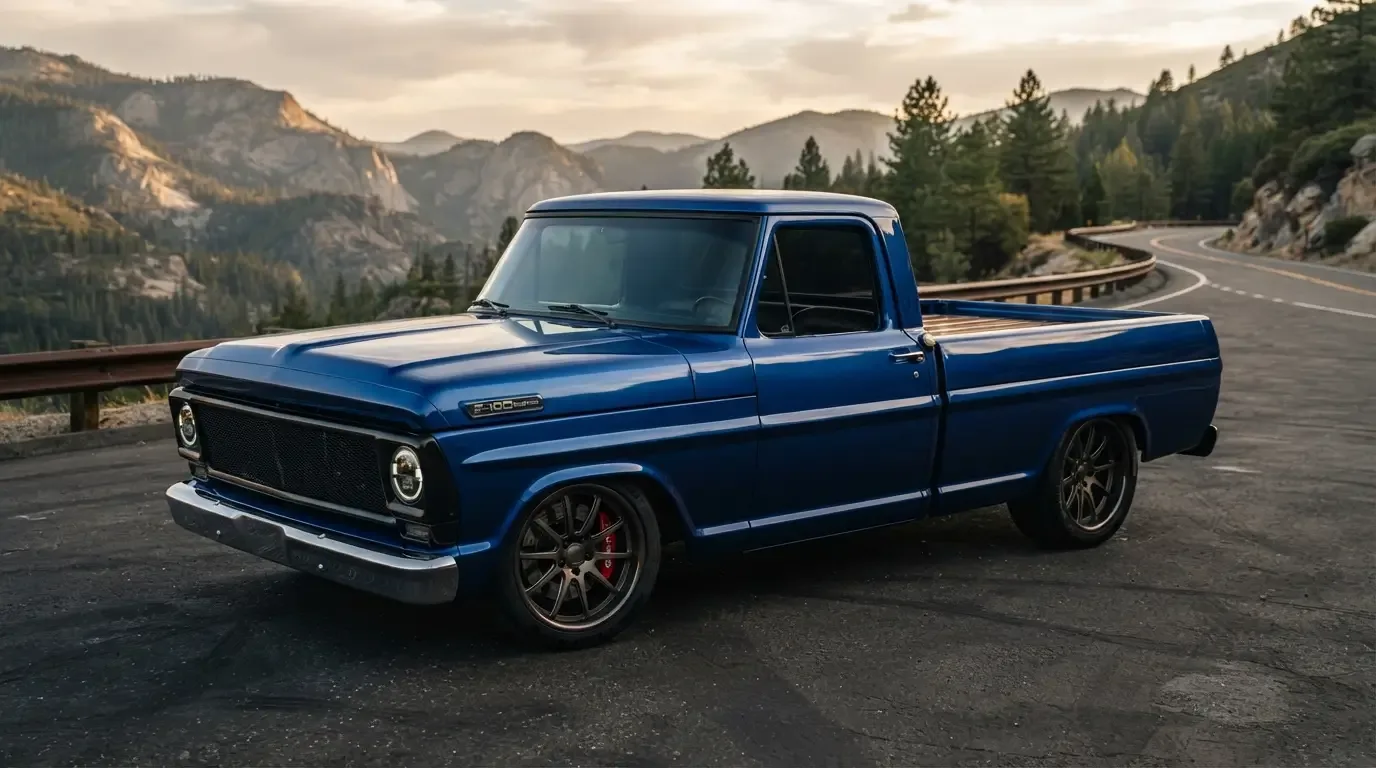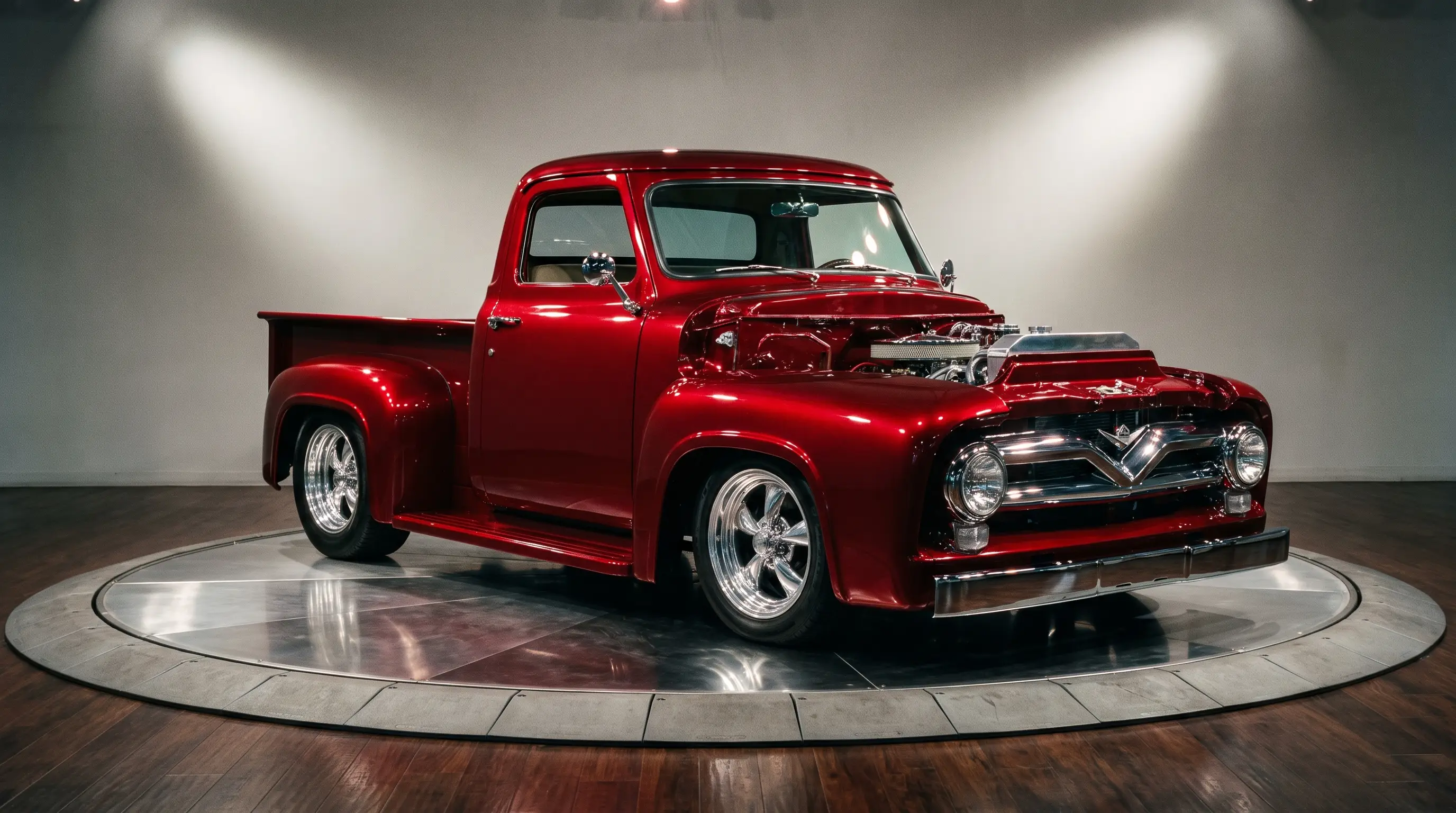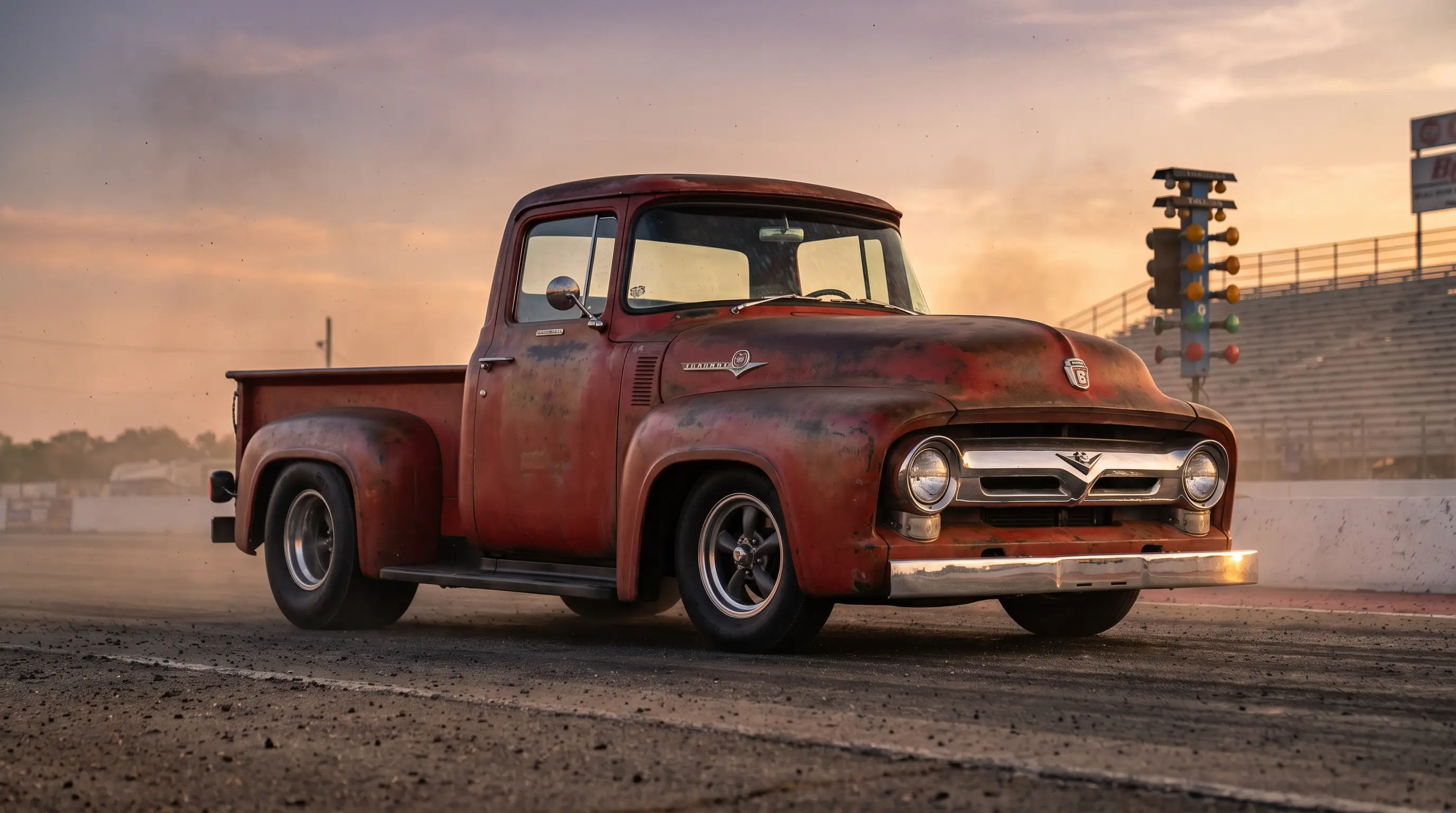
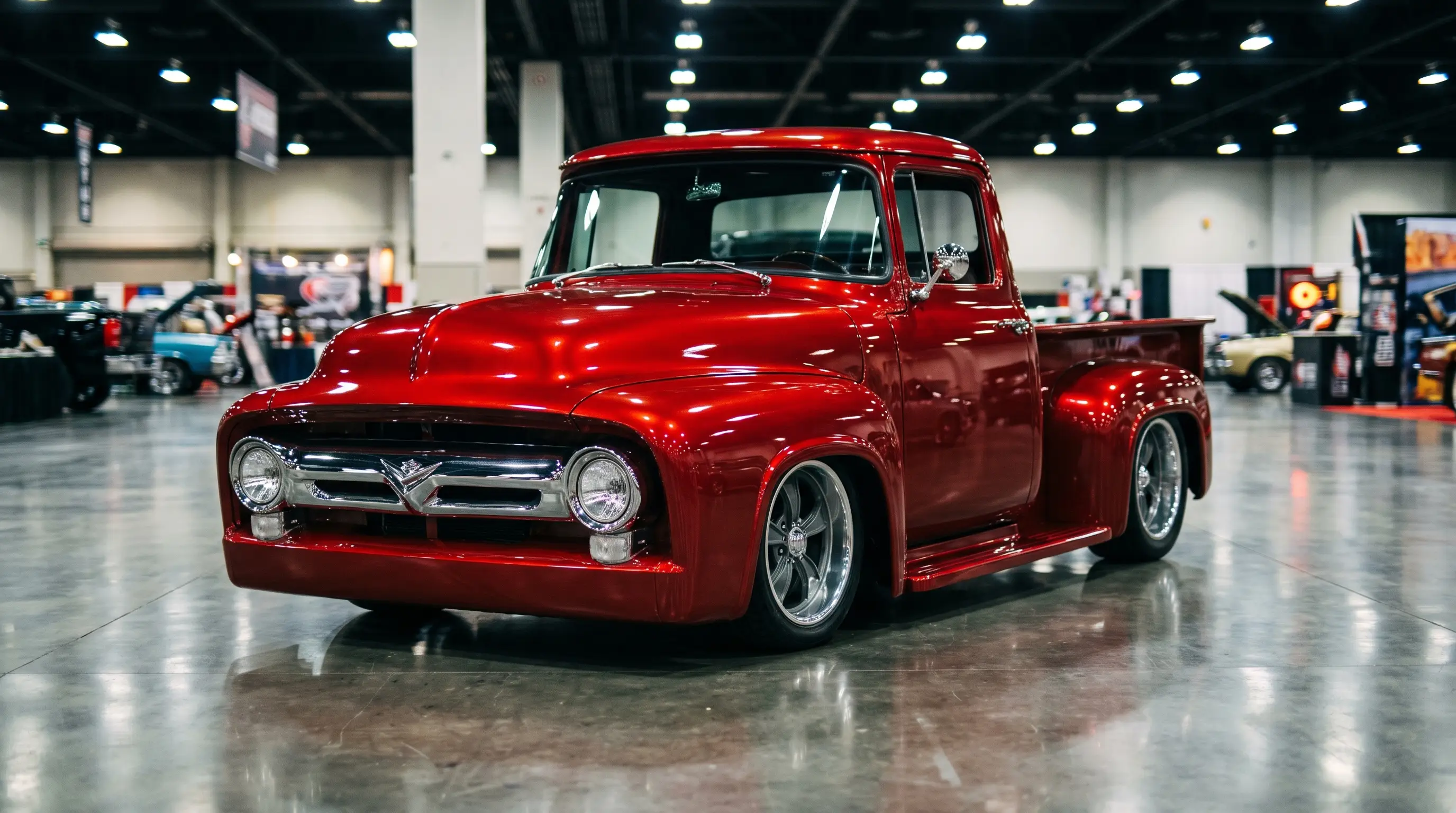
Walk the Las Vegas Convention Center floor during SEMA week and you will see more sheet metal than most people see in a lifetime. Somewhere in that noise, a sema ford f100 build reliably stops traffic every single year, and it is not because the truck is loud about it. It is because a well-built F-100 does something most SEMA metal does not: it looks like it belongs on the street the next morning, not just under the lights.
Why builders keep bringing F-100s to Vegas
SEMA is a trade show first, a car show second, which means every build on that floor is there to sell something, whether that is a wheel brand, a suspension kit, or the shop's own name. F-100s do that job well because the platform reads as classic Americana to a booth full of buyers from all over the world, while still being a blank enough canvas to display whatever product the build is meant to highlight. A parts company that wants to show off a new coilover kit gets more attention bolting it under a 1956 F-100 than under yet another Camaro, simply because there are fewer F-100s on that floor to compare it against.
The builds that actually won
SEMA hands out its own awards, and F-100s have taken home real hardware over the years, including recognition in the Battle of the Builders truck category, where shops compete head to head for best overall build. The trucks that win are rarely the loudest ones on the floor. Judges tend to reward fabrication quality that holds up under a magnifying glass: panel gaps you could set a level on, wiring tucked so cleanly it looks like it came that way from the factory, and paint with zero orange peel under the show lighting. A truck can have the wildest engine bay on the floor and still lose to a simpler build that was executed without a single visible mistake.
What separates a SEMA truck from a driver
Here is the part nobody at the booth wants to say out loud: a lot of SEMA-spec builds are not really meant to be driven hard. They are built for photography and for the show circuit, with fitment and finish pushed further than a truck that has to survive daily potholes and parking lots. That does not make them fake, but it does mean the truck rolling across the SEMA stage and the truck a buyer eventually drives home are not always doing the same job. Anyone who wants the whole picture on how show culture and daily-driver restomods diverged should read up before assuming every SEMA truck translates directly to a street build. Shops that build with a customer's actual driving habits in mind tend to make different tradeoffs from the very start, favoring durability over the absolute lowest ride height or the tightest possible fitment, and those choices rarely show up in a single glossy show photo.
"I've laid under enough SEMA trucks to tell you the difference between a show build and a real one in about ten seconds. Look at the exhaust routing. If it's pretty but it'll melt a tire on full lock, that truck isn't going anywhere but the trailer."
- Mike Sullivan
What it takes to even get a booth
Getting an F-100 onto the SEMA floor at all requires more than just building a good truck. Booth space at the show is expensive and limited, and manufacturers typically reserve their spots for builds that support a specific product launch or marketing push tied to the calendar year. A shop wanting to feature a truck usually needs a sponsor relationship already in place months before the show, along with a build plan that satisfies whatever the sponsoring brand needs highlighted. That commercial reality shapes what actually rolls onto the floor every November. The trucks spectators see are not simply the best builds a shop happened to finish that year, they are the builds that lined up with a company's product calendar and marketing budget.
That selection pressure explains some of the pattern watchers notice over the years, where certain wheel brands, suspension companies, or engine builders seem to show up disproportionately often on F-100 builds at SEMA compared to other truck platforms. It is rarely a coincidence. A brand that had strong results marketing around an F-100 one year tends to return to the platform the next, reinforcing the truck's presence at the show well beyond what raw popularity numbers alone might predict.
The engine bay as a marketing tool
Nowhere is the trade-show purpose of a SEMA truck more obvious than under the hood. A SEMA F-100's engine bay is usually built to be photographed from three feet away, which means every hose, bracket, and fitting gets an upgrade whether or not it improves performance. Billet valve covers, polished intake manifolds, and color-matched wiring looms show up constantly, because a company sponsoring the build wants its part visible and clean in every photo that comes out of the show. That level of detail costs real money and real labor hours, and it is one reason a genuine SEMA-grade build rarely comes cheap even years after the show lights go dark.
Fabrication shops treat SEMA season almost like a deadline-driven sprint. Builds are frequently finished in the final days or even hours before the show opens, with crews working around the clock to get a truck rolling onto the floor. That crunch produces some remarkable work, but it has also produced trucks that needed touch-ups after the show once the adrenaline wore off and problems the late-night crew missed became obvious in daylight. Buyers looking at a former SEMA truck secondhand should always ask what work, if any, happened after the show closed. A truck that looked flawless under show lighting can develop rattles, fitment shifts, or wiring issues once it settles into normal use, and a shop with a good reputation will usually address those problems quietly rather than let a customer discover them first.
What buyers should take from a SEMA build
The value of watching SEMA trucks is not in copying them exactly. It is in seeing where the industry is pushing fitment, colors, and drivetrain choices a year or two before those trends filter down to shops doing regular customer work. A wheel width or a paint color that looks extreme on a SEMA F-100 in November tends to show up as a mainstream option by the following summer. For buyers trying to figure out what a real, drivable F-100 build should cost and include, it helps to compare a few show trucks against actual listings, and anyone ready to start that search can shop classic F-100 listings and see how those SEMA trends have actually filtered into trucks people are driving today.