Walk through the truck corral at any regional car show now and count the ages. Ten years ago the Ford F-100 crowd skewed gray, retirees who bought these trucks new or close to it and never let go. Today a noticeable slice of that crowd is under forty, phone out, filming the walk-around for an audience that was not alive when these trucks were built. Young Ford F-100 enthusiasts did not inherit their love for this truck from a childhood memory of riding in one. Most of them found it online, in a feed, and then went looking for the real thing.
That reversal matters. For decades the collector market ran on nostalgia, buyers chasing the car their father owned or the truck a neighbor drove to the lumber yard. The F-100, built from 1953 through 1983 as Ford's mainstream half-ton (with the earlier F-1 covering 1948 to 1952, and the classic body style most collectors chase wrapping up around 1979 before the F-150 took over the spotlight), does not need that personal memory to sell a twenty-five year old on it. It sells itself on shape.
A truck built before design got complicated
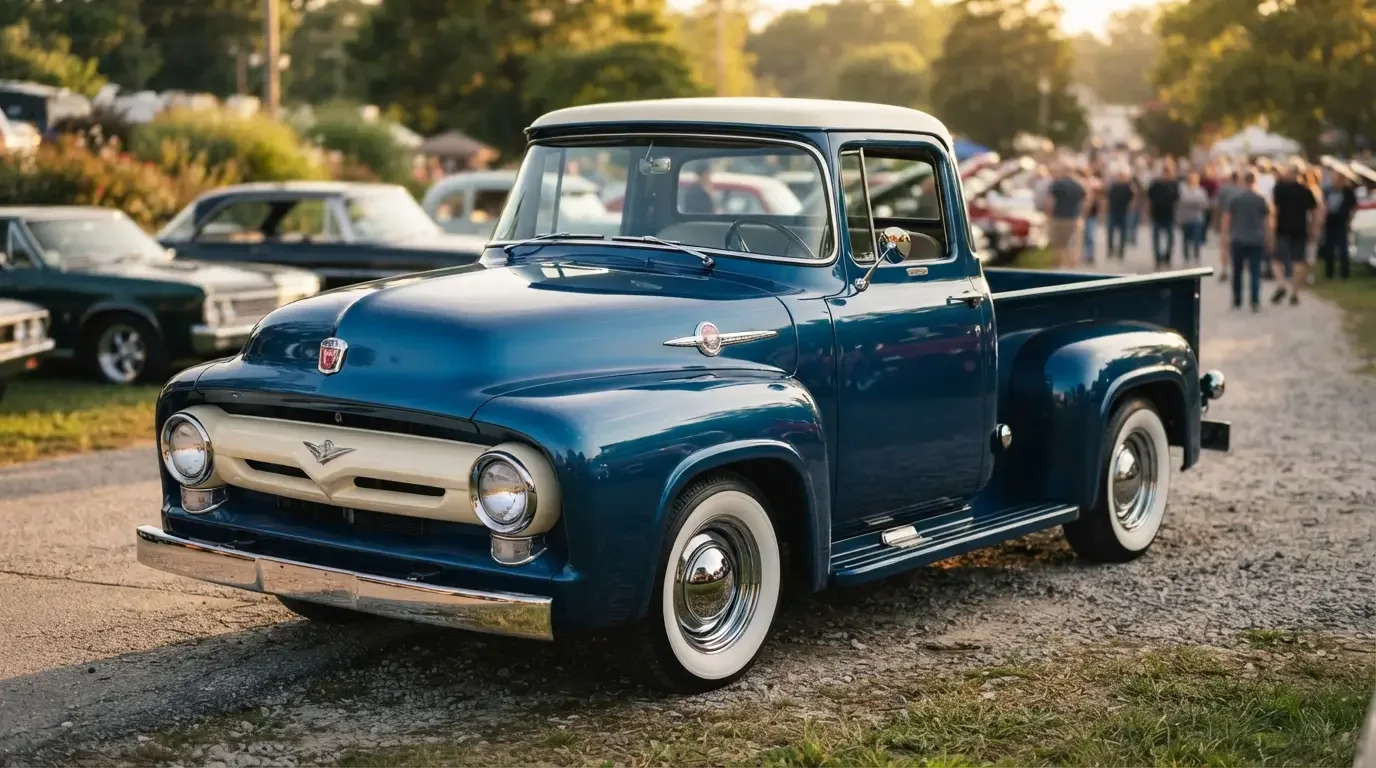
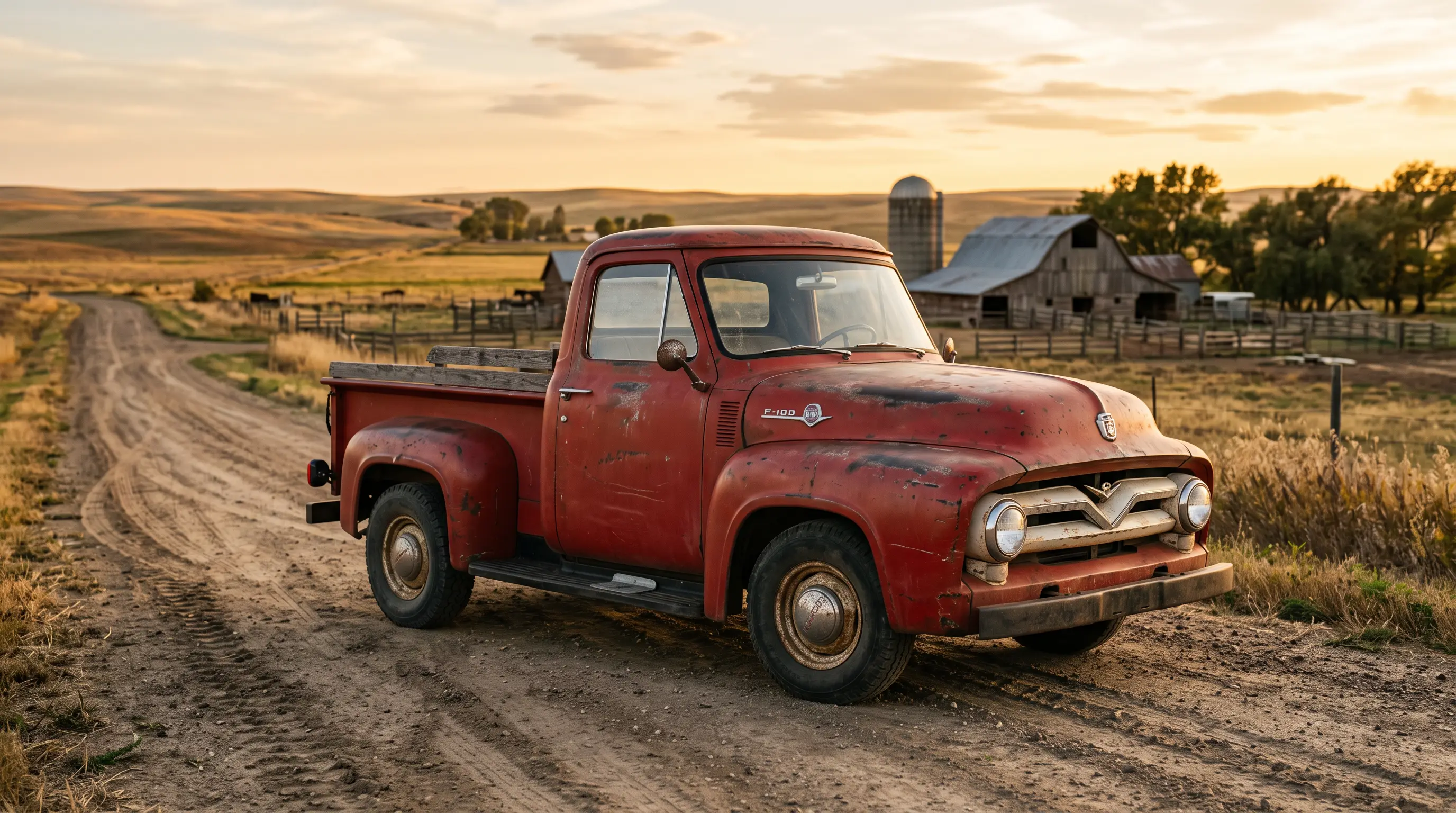
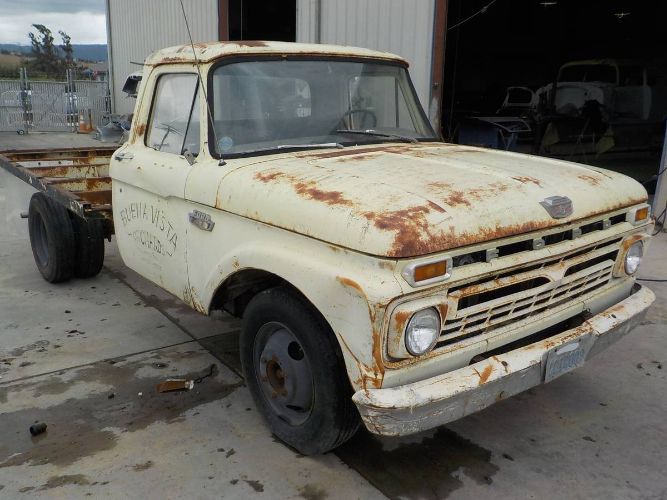
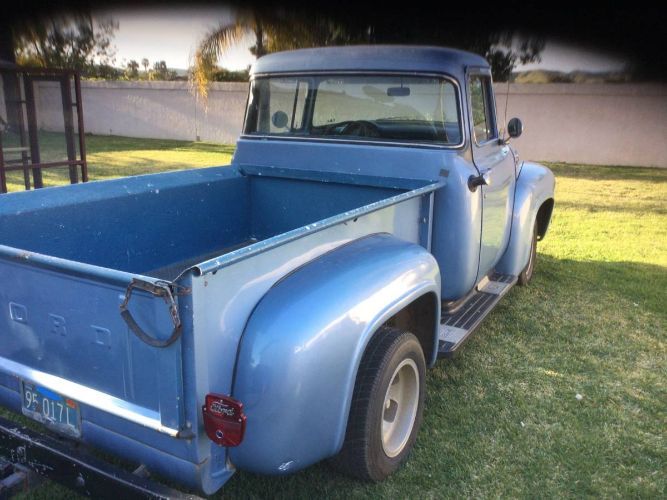
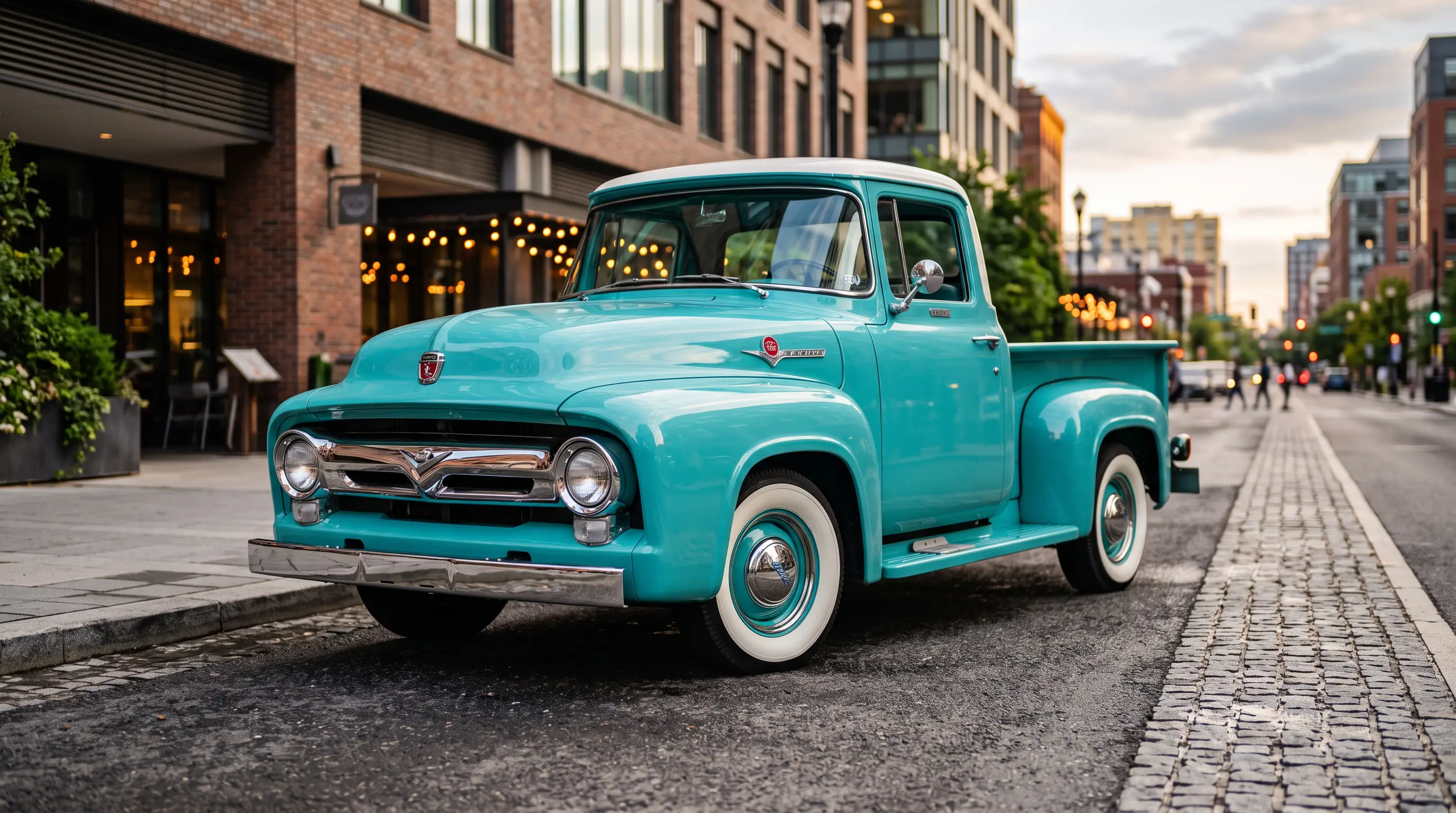
The F-100's appeal to a younger buyer starts with proportion. A 1956 F-100 or a 1969 F-100 has a hood you can see the front corners of, a cab you sit up in rather than down into, and body panels flat enough to read clearly from across a parking lot. There is no character line doing three different jobs, no sensor cluster hiding behind the grille. For a generation raised on cars that all look like they are frowning, that simplicity reads as honest rather than dated.
Social media rewards exactly that kind of clarity. A clean side profile shot of a '56 Ford in two-tone paint photographs well in a square crop. It does not need context or explanation the way a modern truck's styling sometimes does. Enthusiasts who grew up scrolling before they grew up driving understand instinctively which shapes hold attention, and the F-100's third and fourth generation bodies hold attention.
The price of entry, and why it still moves
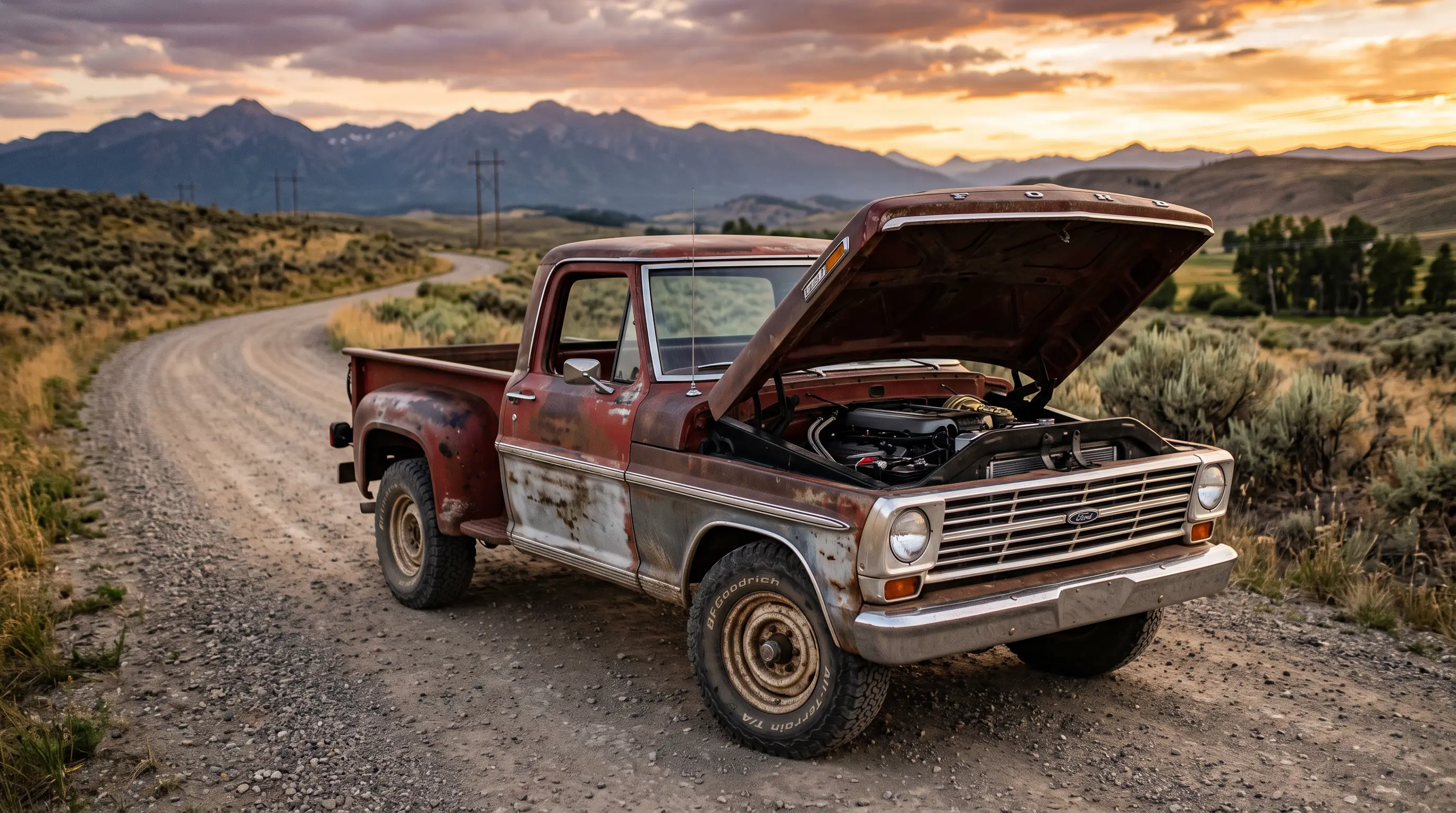
Money is the other half of the story. A running, driving F-100 from the late 1960s in decent but unrestored condition remains one of the more accessible entry points into American classic trucks, especially compared to muscle cars from the same era carrying six-figure price tags for the desirable variants. A young buyer with a modest budget and a garage bay can still find a project or a driver-quality F-100 without needing to inherit money or win an auction bidding war against collectors twice their age.
That affordability is shrinking as demand rises, and everyone in the hobby knows it. But relative to a first-generation Camaro or a big-block Chevelle, the F-100 still offers a foothold. It is a truck, not a status symbol, and for years that kept prices honest. It is also mechanically simple by design, which lowers the barrier for a first-time owner willing to learn as they go rather than write a check for someone else's labor.
Restomod culture speaks a younger buyer's language
Part of what pulls a twenty-something into the F-100 world is not the stock truck at all, it is what people have done to it. The restomod scene, dropped stance, modern wheels tucked tight, a fuel-injected V8 under the hood, LED lighting integrated cleanly, speaks directly to a buyer who wants a period shape with none of the period compromises. That is a very different relationship with the truck than a collector chasing numbers-matching originality, and it opens the door to classic F-100s on the market for people who never cared about factory-original anything.
This is not a new phenomenon invented by social media, custom truck culture around the F-100 goes back decades, but the visibility of it now is new. A build that once got seen at one regional show and maybe a magazine feature now gets seen by a hundred thousand people in a day. That kind of reach recruits new fans faster than any print publication ever could, and much of it lands on viewers who were not around for the original run of the truck at all.
"I didn't grow up around these trucks, I grew up watching build videos of them, and by the time I bought my own I already knew more about F-100 sheet metal than most guys who owned one new."
- Patrick Walsh
A community that still gathers in person
What keeps a younger enthusiast in the hobby past the initial online discovery is the same thing that has always kept people in it: the people. Truck club meets, cruise nights, and regional shows built around Ford trucks specifically give a new owner somewhere to bring questions, borrow tools, and hear stories that never made it into a forum post. That in-person layer is where casual interest turns into ownership, and where a twenty-five year old with one truck ends up hearing about a second one for sale from someone three times their age.
The generational mixing works both ways. Longtime owners get an audience hungry to learn, and younger owners get access to decades of accumulated knowledge about which years are easiest to source parts for, which cabs rust in predictable places, and which engine swaps have already been sorted out by someone else's trial and error. Anyone curious about how the truck got here in the first place can find more on the ford f100 history, and the deeper background sits in our complete history of the model.
Why this matters for the truck's future
A collector vehicle needs new buyers or it eventually stalls, no matter how good the truck is. The F-100 is fortunate in that it appeals to a young audience for reasons that have nothing to do with marketing and everything to do with the shape Ford drew in the 1950s and refined through the 1970s. Young Ford F-100 enthusiasts are not chasing a memory, they are chasing a truck that looks right to them on its own terms, and that is arguably a more durable kind of appeal than nostalgia ever was.
As long as that keeps happening, the F-100 market has a pipeline of buyers who did not need to be convinced the old truck was cool. They already decided that themselves, from a screen, before they ever sat in one.
What older owners notice about the newer crowd
Longtime F-100 owners describe a specific pattern when a younger buyer shows up at a meet with their first truck. The knowledge gap that used to take years to close now closes in months, because a curious twenty-five year old with a phone can research a specific generation's trim differences, common rust spots, or correct paint codes faster than any of us could when we were learning the hard way, one wrong part order at a time. That is not a criticism, it is just a different path into the same hobby, and most veteran owners seem genuinely glad for the company.
What does still take time to earn, regardless of how fast someone can research a fact, is the judgment that comes from actually owning a truck through a full season of use. A young enthusiast who has read everything about F-100 history still has to learn what a tired U-joint sounds like at idle, or how a particular year's brakes feel different from another's under real braking pressure. That gap between information and experience is where the in-person side of the hobby still does work that no amount of scrolling can replace, and it is part of why club meets and cruise nights keep drawing a mixed-age crowd rather than splitting into separate online and offline communities.
A hobby that keeps renewing itself
Every collector category eventually faces the same question: who buys these when the original generation of owners is gone. The F-100 has an answer that most other classic vehicles from the same era would envy, a genuinely younger fan base discovering the truck on its own terms rather than through inherited nostalgia. That is not a guarantee the values will keep climbing forever, markets do not work that way, but it is a strong signal that demand for these trucks is not solely dependent on an aging population of original buyers holding on for one more summer.