
Walk through any major pre-war concours and you will hear the word "coachbuilt" used like a password. It separates the cars that rolled off an assembly line wearing a factory body from the cars whose bodies were designed and built, often by hand, for a single chassis and a single owner. Understanding what that word actually means changes how you look at every pre-war classic afterward.
Car Features
7 min read
What Is a Coachbuilt Automobile?
The word coachbuilt gets thrown around at every pre-war concours. Here is what it actually means, and how to spot it on a real car.
The basic definition
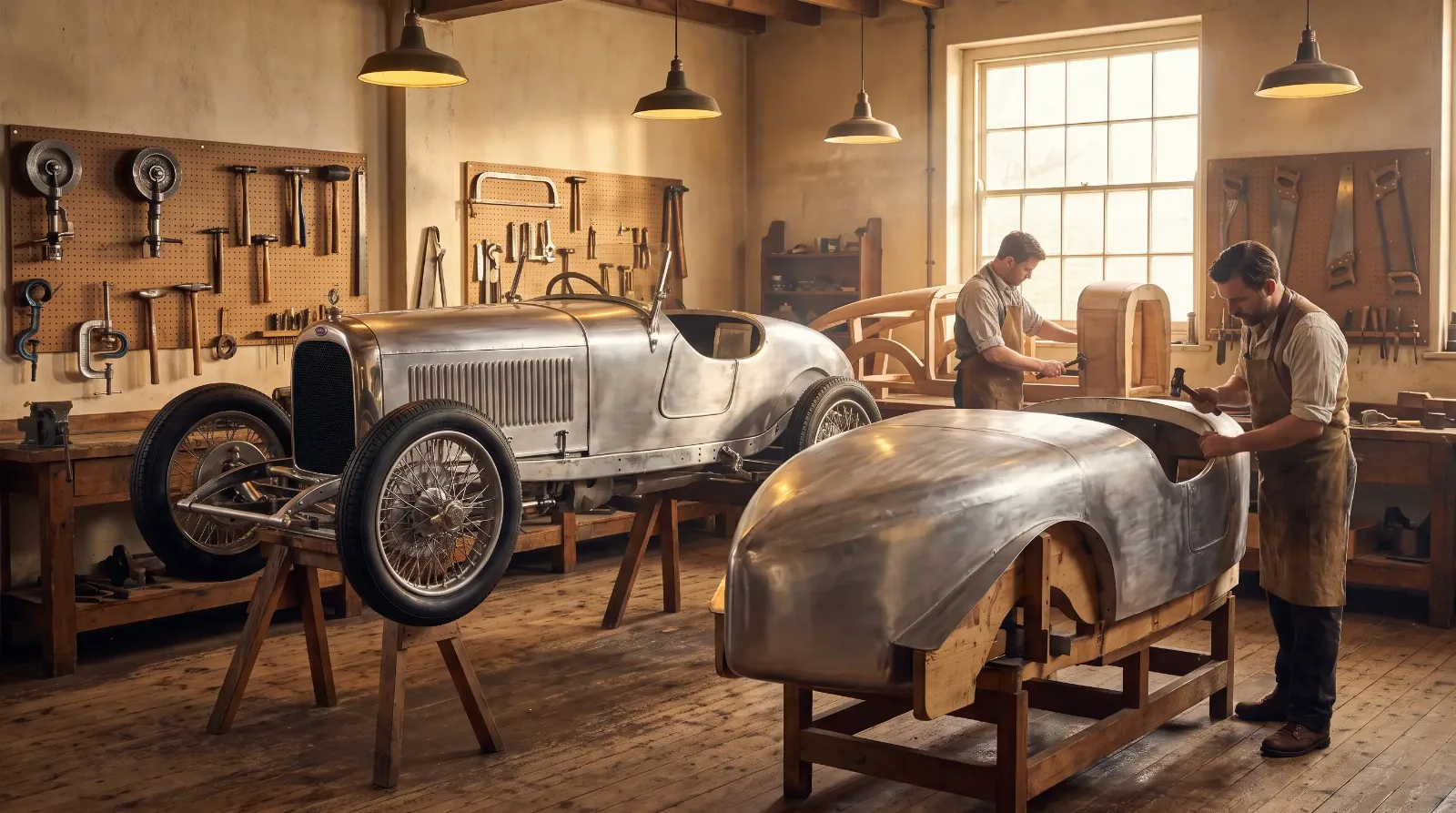
A coachbuilt automobile is a car whose chassis, engine, and running gear came from one manufacturer, while the body, the part you actually sit in and look at, was designed and constructed by an entirely separate firm called a coachbuilder. The chassis maker, say Duesenberg or Rolls-Royce, sold what was essentially a rolling platform: frame, engine, transmission, wheels, and a firewall. The customer then took that bare chassis to a coachbuilder of their choosing, who fitted it with a body built to the buyer's specifications, sometimes duplicated a handful of times, sometimes never repeated at all.
This is different from how nearly every modern car is built, where one company designs and stamps the body panels and the chassis together as a single engineering exercise. In the coachbuilt era, those were two separate businesses with two separate skill sets, and the buyer acted as the person who connected them.
Where the term comes from
The word "coach" reaches back to horse-drawn carriage building. Long before the automobile existed, firms in London, Paris, and later New York built ornate carriage bodies for wealthy clients, and many of those same firms, or their direct descendants, simply transferred their woodworking, upholstery, and metal-shaping skills onto automobile chassis once the horse left the picture. Names like Brewster, which had built carriages since the 1800s, moved into automobile coachwork almost seamlessly. The craft carried over. Only the platform changed.
Why chassis and body were sold separately
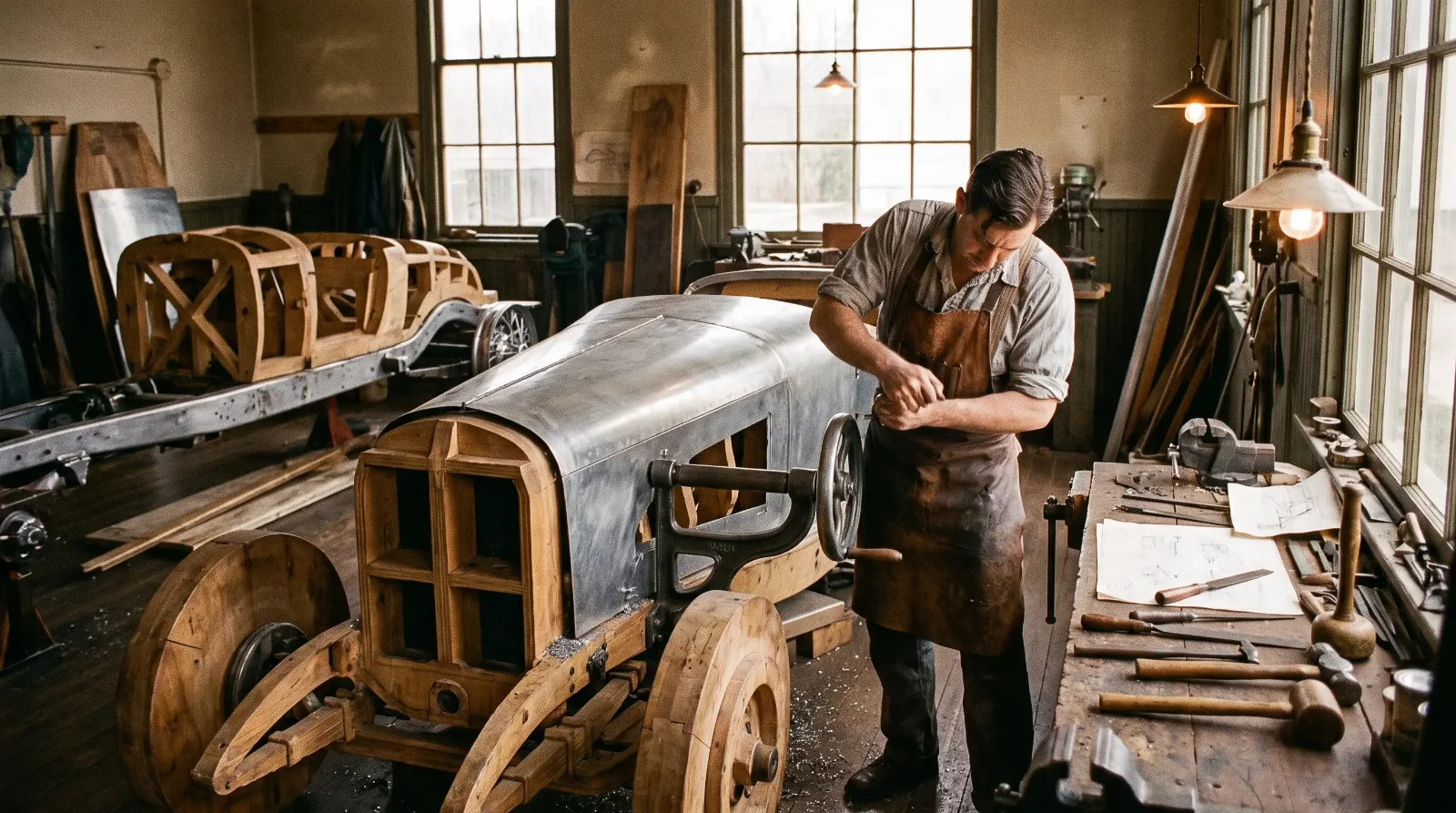
In the 1910s through the mid-1930s, an expensive chassis maker's real product was engineering: a smooth, powerful, well-balanced platform. Building bodies at scale required a totally different kind of factory, one built around wood framing, hand-formed aluminum or steel panels, and skilled trimmers, not stamping presses. Rather than build that capability in-house, high-end makers often left bodywork to specialists and simply certified which coachbuilders they'd work with. Some manufacturers, like Cadillac with its Fleetwood body division, eventually brought a coachbuilder in-house, blurring the line, but through most of the pre-war period the split between chassis and body remained the industry norm at the top of the market.
Buyers who wanted something less bespoke could usually order a "catalog" body directly from the coachbuilder's standard line, still hand-finished but built to a repeatable design rather than drawn up from scratch. That distinction, one-off custom versus catalog custom, is worth knowing when you're reading a car's history, since it changes both rarity and value.
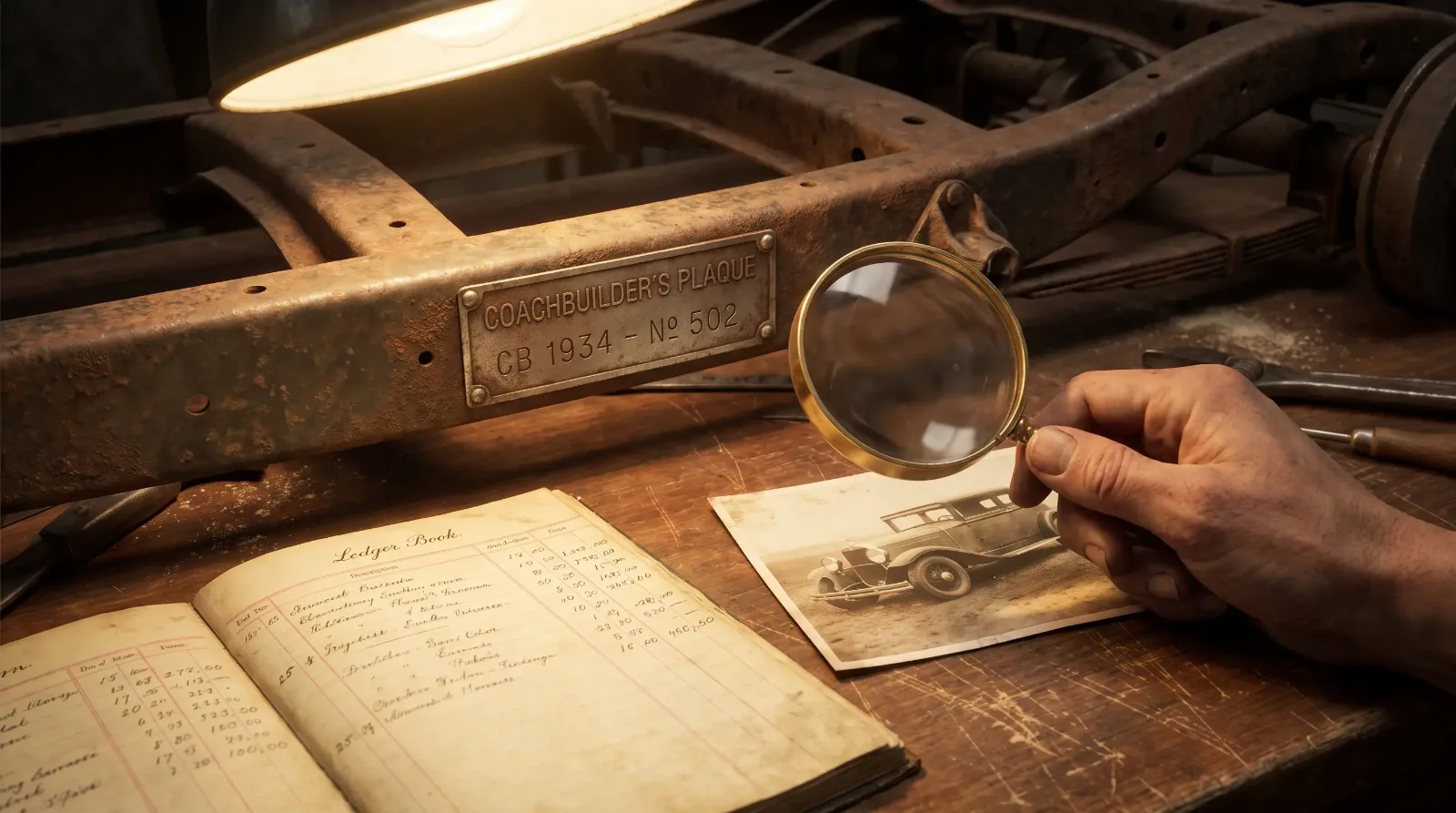
The chassis maker generally handled the mechanical warranty and set the price of the running gear itself, while the coachbuilder billed the customer separately for the body. That meant a buyer walked into the whole transaction with two different invoices and two different sets of specifications to approve, one covering engine output and suspension, the other covering wood species, paint color, and upholstery leather. It was closer to commissioning a custom home than buying an appliance, and the paperwork from both sides is part of what today's collectors chase when they research a car's history.
The order process, from chassis to finished car
A buyer typically started at the chassis maker's showroom or through a dealer, selecting the engine and wheelbase length they wanted. From there, the bare rolling chassis, often shipped on its own wheels with a temporary seat and steering wheel bolted on so it could be driven, went to the chosen coachbuilder's shop. The coachbuilder then measured the actual chassis rather than working from published dimensions alone, since manufacturing tolerances of the period meant no two chassis were guaranteed identical. Design sketches, sometimes full-scale drawings, were reviewed and approved before any wood framing began, and a client of means might visit the shop more than once during construction to check progress or adjust a detail.
This entire process, from chassis order to finished, delivered car, could take anywhere from a few weeks for a catalog body to several months for a fully bespoke commission. That lag is one more reason coachbuilt cars carried the price premium they did: the buyer wasn't just paying for materials and labor, they were paying for a slower, more deliberate manufacturing process that could not be rushed without damaging the quality the customer was paying for in the first place.
How to spot a coachbuilt car today
A coachbuilder's body plate or badge, usually a small metal tag mounted on the door sill, kick panel, or firewall, is the first thing to check. It will name the coachbuilder rather than, or in addition to, the chassis manufacturer. Door construction is another tell: coachbuilt doors are often hung with more hand-fitted panel gaps than a factory-bodied car of the same period, since each body was trial-fitted to its individual chassis. Interior details, custom instrument bezels, unusual seat stitching patterns, non-standard window mechanisms, frequently point back to a specific coachbuilder's house style rather than a factory parts bin.
If you're building a broader picture of this world, the what is a coachbuilt car guide lays out the full landscape of chassis makers and coachbuilders working together during this era, and it's a useful reference point before you go further into any one firm's history.
"People assume coachbuilt just means expensive, and it usually was, but the real distinction is authorship. A factory body is designed by committee for thousands of buyers. A coachbuilt body was designed for one person's taste, one person's height, sometimes one person's specific request about where the cocktail cabinet should go."
Sarah Whitfield
Why it still matters to collectors
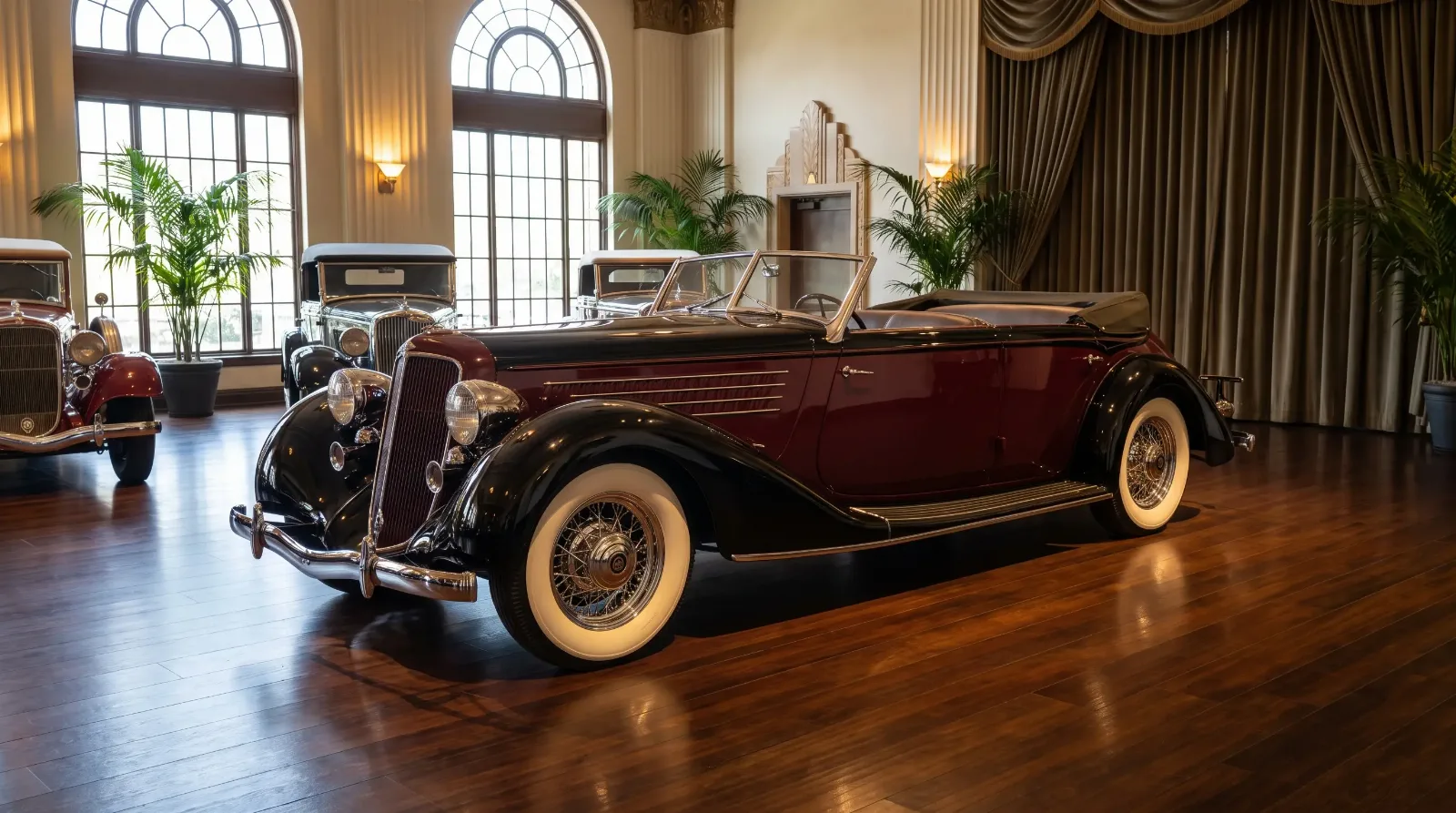
Coachbuilt status directly affects a car's story and its place in history. A documented, one-off body by a respected house carries a different kind of significance than a catalog body, and both carry a different significance than a later re-body or a car that lost its original coachwork entirely somewhere along the way. None of that is about which car is objectively "better," a well-built catalog body can be a beautifully engineered thing in its own right, but it is about knowing precisely what you're looking at, which is the whole point of learning the vocabulary in the first place.
From here, the next installment puts names and faces to the craft, and if you want the wider arc of the period these cars came from, the pre-war classics story sets the stage for why coachbuilding flourished when it did.
Sources and notes
Related Reading
Have a
Classic Car
for Sale?
Reach thousands of serious classic car collectors across the US.
Sell It Here →
Are You a Classic Car Dealer?
List your full inventory and connect with targeted classic car buyers.
Join as a Dealer →

About the author
Sarah Whitfield
Third-generation classic car collector specializing in pre-war American and European coachbuilt automobiles. Researcher and concours enthusiast.




Comments
Be the first to comment on this article.