
Everybody wants to know which factory muscle car was the quickest in the quarter-mile. The honest answer starts with a warning. Quarter-mile times from the era are slippery numbers. They depend on the tires, the driver, the track, the air temperature, and how honest the magazine felt that day. A car that ran 14.5 in one test ran 13.8 in another with stickier rubber and a better launch. So treat every number here as a period test result, not a law of physics.
Car Features
6 min read
The Fastest Factory Quarter-Mile Muscle Cars
LS6, 426 Hemi, ZL1 and Stage 1: which factory muscle cars ran the quickest quarter-mile, and why traction mattered as much as horsepower.
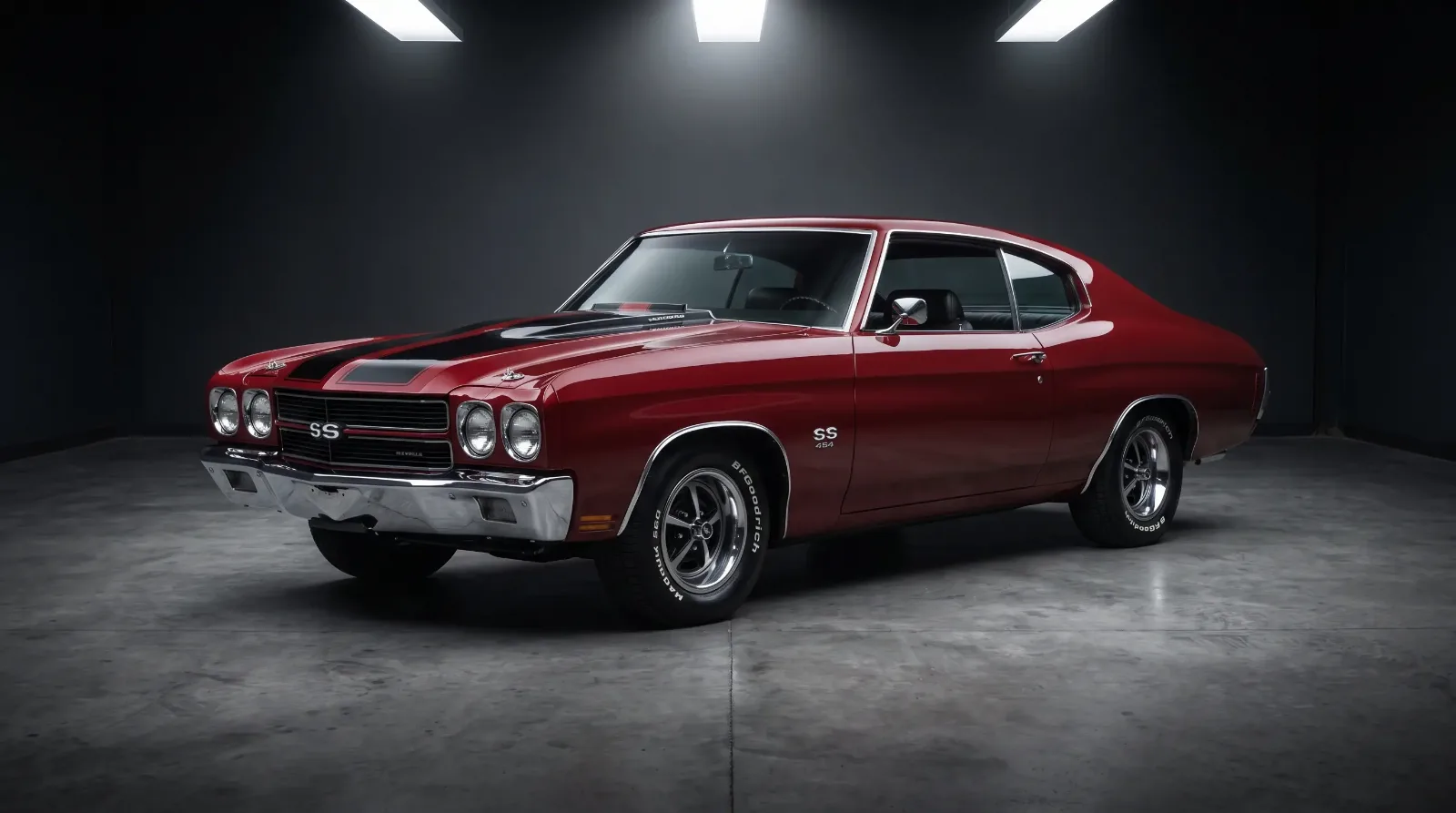
With that said, a small group of cars genuinely ran the quarter in the 13-second range straight off the showroom floor, and that was the ceiling for factory muscle. Getting a heavy street car into the 13s in 1970 was a real achievement. If you want the engineering behind why these engines made the power they did, the the muscle car engines explainer covers it. Here we are talking about which combinations actually got to the other end first.
What it took to run 13s from the factory
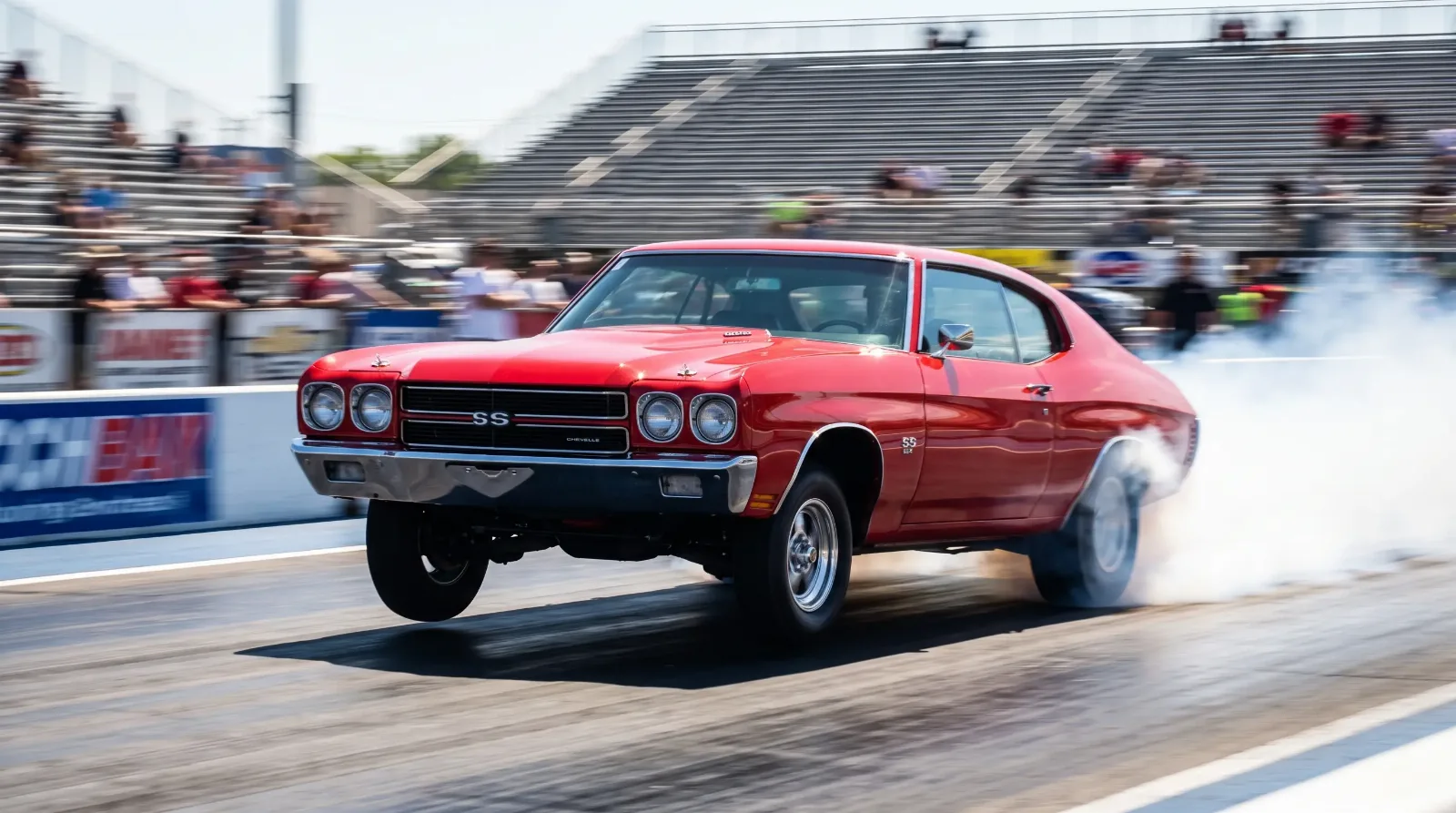
A stock muscle car in the low 13s needed three things working together. Big power, a chassis and gearing that could put it down, and tires that would hook, which the skinny bias-ply rubber of the day barely did. That last part is why so many of these cars ran better in later tests on modern tires than they did when new. The engine was rarely the limit. Traction was.
The magazines of the day did not test cars the way a track does now. Some ran open headers, some ran slicks, some had a factory ringer prepped by the manufacturer. That is why you see the same car quoted at wildly different times. When I quote a number, understand it is a representative period result and the real spread was wide. The transmission mattered too, and the four-speed cars often launched harder than the automatics in skilled hands. You can read the full story on the gearboxes that made it happen.
The Chevelle LS6 454
The 1970 Chevelle SS with the LS6 454 is the car most people name first, and for good reason. It was rated at 450 horsepower gross, the highest factory rating of the era, and the number was believable. Period road tests put a stock LS6 in the high 13s, roughly 13.7 to 13.9 seconds, with the right gearing and a good launch. That made it one of the quickest cars you could buy off a dealer lot in 1970.
The LS6 was a big-block done right. It made monster torque and enough top-end to keep pulling through the traps. The limit, as always, was hooking those 450 horsepower to a skinny rear tire. On modern rubber, LS6 cars have run quicker than they ever did new, which tells you the engine had more in it than the tires could use.
The Hemi cars and the Buick surprise
The 426 Hemi is the other name that always comes up. In a Road Runner, a Super Bee, a Charger, or a 'Cuda, the Hemi was rated at 425 horsepower gross, and like the Buick number that rating was conservative. Period tests put well-driven Hemi cars in the low-to-mid 13s, and a factory-prepped example could dip lower. The Hemi made its power high in the rev range, so it rewarded a driver who could launch it and keep it singing.
Then there is the car nobody expected. The 1970 Buick GSX Stage 1, rated at a modest 360 horsepower but making close to 510 lb-ft of torque, ran quarter-mile times right alongside the Hemi and LS6 cars in period testing, in the high 13s. It got there on torque instead of headline horsepower, launching hard and hooking better than the peakier engines. That is the whole lesson of the quarter-mile in one car. Getting off the line clean beat raw power.
Ford belongs in this conversation too, even if it rarely wins it. The 428 Cobra Jet cars, in the Mustang and the Torino, were rated at 335 horsepower gross, another number nobody in the business believed. A Cobra Jet Mustang ran the quarter in the low 14s in period tests, and the Super Cobra Jet with the drag package could edge into the high 13s with the right gear. Pontiac's Ram Air IV GTO and the Olds W-30 sat in the same window, mid-14s to low-14s, quick cars that just did not quite have the ceiling of the top three.
"People argue about which car was fastest like there is one answer. There is not. On the same tires, on the same day, with the same driver, three or four of these cars are within a couple tenths. The winner was usually whoever launched cleanest, not whoever had the biggest number on the fender."
Dan Reeves
The quickest factory muscle, ranked loosely
| Car (1969-1970) | Rated hp (gross) | Period quarter-mile (approx.) |
|---|---|---|
| Camaro ZL1 427 (prepped) | ~430 (underrated) | 12s, into the 11s race-prepped |
| Chevelle LS6 454 | 450 | ~13.7-13.9s |
| 426 Hemi cars | 425 (underrated) | low-to-mid 13s |
| Buick GSX Stage 1 455 | 360 (underrated) | ~13.4-13.9s |
| Olds 4-4-2 W-30 455 | ~370 | mid 14s to low 14s |
What the numbers really tell you
The takeaway is not a single winner. It is that the best factory muscle cars clustered together in the 13s, and the differences between them came down to traction and launch as much as engine output. The ZL1 sat apart because it was a race car sold through a loophole, not a street car anybody could realistically buy. Among the cars a normal person could order, the LS6, the Hemi, and the Stage 1 traded the top spot depending on the day.
These are the cars at the peak of the whole era, and understanding how they got there is really understanding the muscle car saga as a whole. If you want to see what the survivors bring today, you can view current muscle car listings and judge for yourself which quarter-mile legend is worth chasing. Just remember, when a seller quotes you a 13-second time, ask which test, which tires, and which driver. The answer usually explains the number.
Updated October 6, 2026: Corrected the race-prepared ZL1 Camaro quarter-mile times to the 11-second range.
Related Reading
Have a
Classic Car
for Sale?
Reach thousands of serious classic car collectors across the US.
Sell It Here →
Are You a Classic Car Dealer?
List your full inventory and connect with targeted classic car buyers.
Join as a Dealer →

About the author
Dan Reeves
Performance engine builder from North Carolina's motorsports corridor, focused on swaps, forced induction and making real, repeatable power.




Comments
Be the first to comment on this article.