
Everybody talks about the engines. Nobody talks about the box behind them, and that is a mistake, because a muscle car with the wrong transmission is just a fast car that cannot get out of its own way. I have swapped enough of these units over the years to tell you the four-speed was half the personality of these cars. The stick, the shifter, the gear whine at a stoplight, that was the experience as much as the noise coming out the tailpipe.
Car Features
6 min read
Legendary Muscle Car Four-Speeds
Inside the muscle car four-speed manuals: the Muncie M20, M21 and M22 Rock Crusher, Ford's Toploader, and Chrysler's A833, and what they mean for buyers.
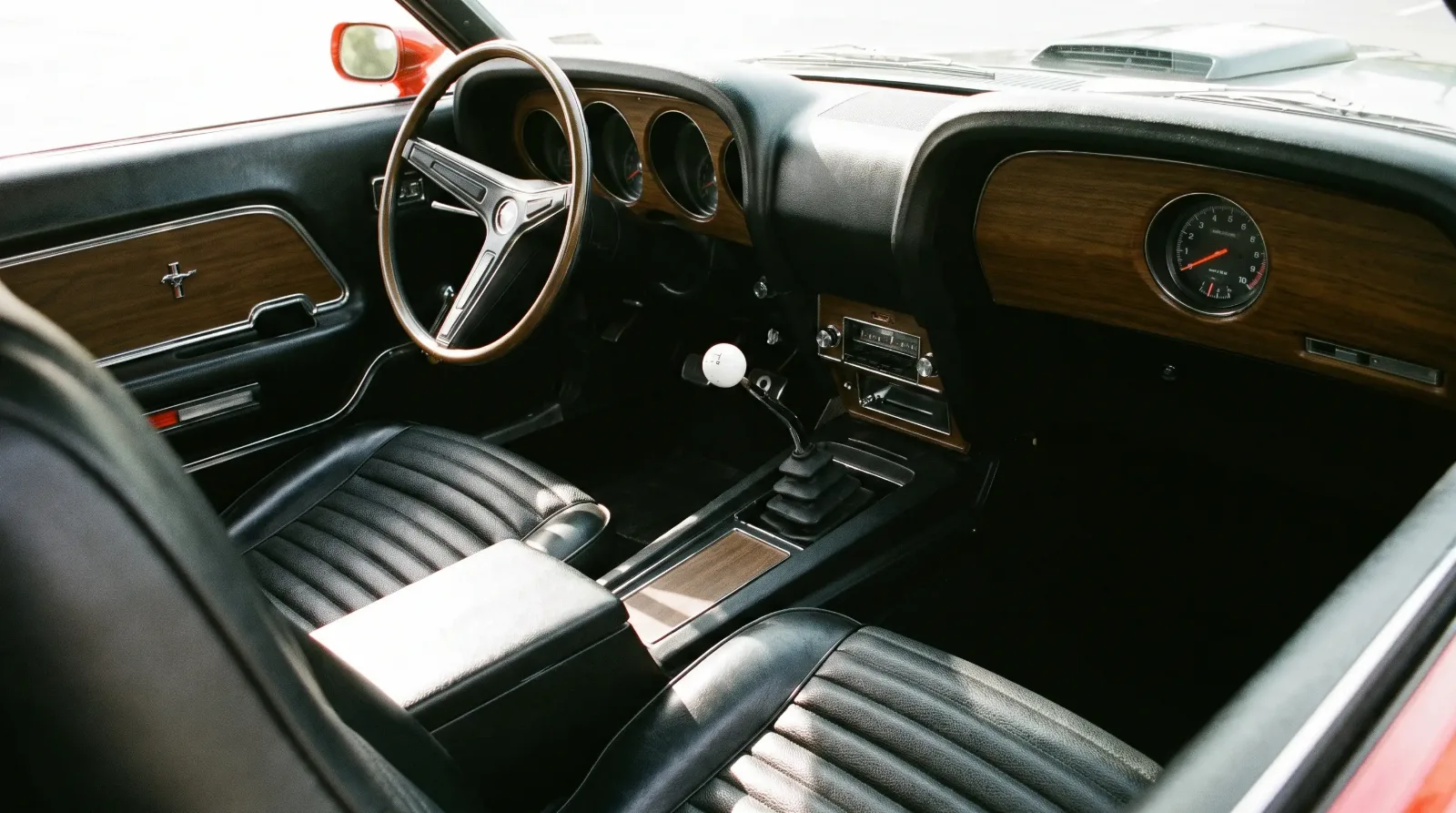
The four-speed manual was the enthusiast's choice in the muscle era, and each of the Big Three built its own answer. Chevrolet had the Muncie. Ford had the Toploader. Chrysler had the A833. They were not interchangeable, they were not equal, and knowing which one sat behind a given engine tells you a lot about how serious the car was meant to be. If you want the bigger picture on how power got to the ground, see why it matters in our engine coverage.
Why a four-speed mattered
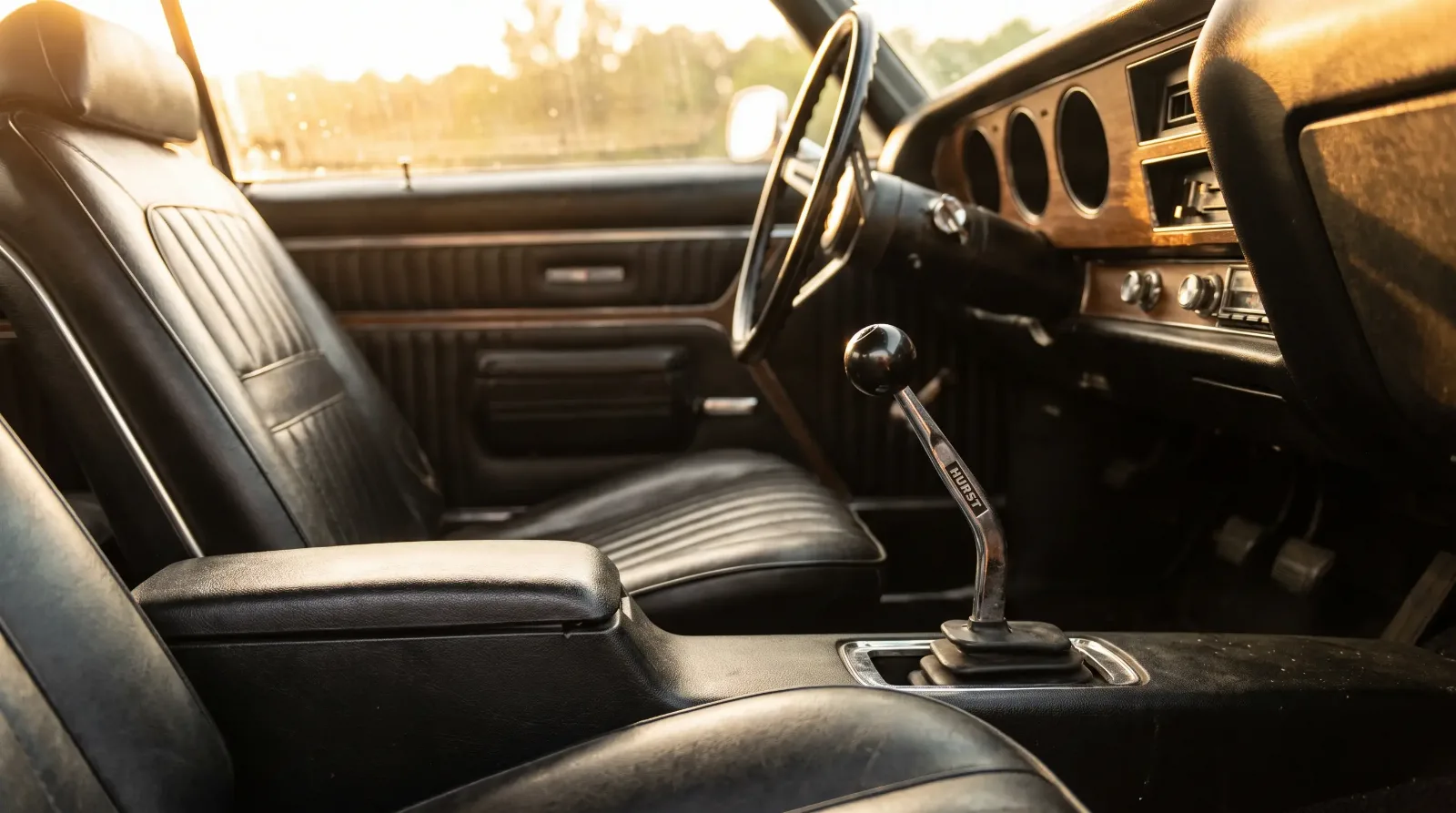
A muscle engine makes its power in a band. Too tall a single gear and you fall off the cam. Too short and you are shifting every two seconds. The four-speed let a driver keep a big-block or a hot small-block right in the meat of its torque curve, launch hard in first, and still cruise in fourth. That is the whole point.
Most of these boxes ran a 1:1 top gear, which means fourth was direct with no overdrive. Cruising speed came from the rear axle ratio, not the transmission. Pair a close-ratio four-speed with a steep 4.10 or 4.56 rear and you had a drag car that hated the highway. Pair a wide-ratio box with a milder 3.31 or 3.55 and you had something you could actually drive to work. Buyers chose the combination, and the factory built it that way.
The shifter was the other half of the feel. A sloppy factory linkage could ruin a good gearbox, which is why Hurst shifters became almost universal on the hot cars, some fitted at the factory and countless more added later. A tight, short-throw shifter turned a strong transmission into something a driver could bang through under full load without missing a gate. It is a small part with an outsized effect on how the car feels in your hand.
The Chevrolet Muncie family
General Motors leaned on the Muncie four-speed from 1963 into the mid-1970s, named for the Indiana plant that built it. There were three main flavors, and the codes matter when you are buying. The M20 was the wide-ratio box, with a low first gear around 2.52:1, good for street cars and lighter engines. The M21 was the close-ratio version, first gear near 2.20:1, aimed at cars with steep rear gears that did not need a granny first.
Then there was the M22, the one everybody wants. The "Rock Crusher" got its nickname from the sound it made, because it used a coarser, straighter gear cut that ran louder to handle the torque of the biggest engines. The factory bolted the M22 behind the heavy hitters like the 454 LS6 and the aluminum ZL1. Before Muncie took over, GM ran a Borg-Warner T-10, and some early cars still wear one. When somebody tells you a car has "a real Rock Crusher," get under it and read the case, because that badge adds money and gets faked.
| Four-speed | Maker | Typical application |
|---|---|---|
| Muncie M20 (wide ratio) | Chevrolet / GM | Street small-blocks and mild big-blocks |
| Muncie M21 (close ratio) | Chevrolet / GM | Performance cars with steep rear gears |
| Muncie M22 "Rock Crusher" | Chevrolet / GM | 454 LS6, ZL1, highest-torque engines |
| Ford Toploader | Ford | FE, 428 Cobra Jet, Boss engines |
| Chrysler A833 | Mopar | 440, 426 Hemi, small-block performance |
Ford's Toploader and Chrysler's A833
Ford's answer was the Toploader, and the name is literal. Unlike a side-loading case, the internals go in through an opening on top, which made service easier and the case strong. Ford ran the Toploader behind the FE big-blocks, the 428 Cobra Jet, and the Boss engines. It came in wide and close-ratio versions like the Muncie, and it earned a reputation for taking abuse without complaint. A lot of drag racers trusted it precisely because it did not fold under a hard launch.
Chrysler built the A833, a stout four-speed that sat behind everything from the small-block performance cars up to the 440 and the 426 Hemi. It was overbuilt for the job, which is why Hemi cars could hook and shift without shredding gears. Mopar paired most of these with a Hurst shifter and a pistol-grip handle on the later cars, and that shifter is a piece of the car's identity all by itself. The A833 held up so well that people still run them in modern builds making far more power than the factory ever intended.
What this means for a buyer today
Here is the practical part. On a numbers-matching muscle car, the transmission is part of the value, and the codes on the case and the build sheet need to agree with the story the seller is telling. An M22 car and an M20 car can look identical in the driveway and be worth very different money. Same with a Hemi A833 versus a swapped-in replacement. Verify the casting numbers and the assembly date, do not take a badge or a shifter handle as proof.
Drivability is the other half. A close-ratio box with a steep rear is a blast at the strip and miserable on a long trip. If you plan to actually drive the car, factor the gearing into what you buy. The right transmission and axle combination separates a car you enjoy from one that sits in the garage. Once you understand the box, the rest of the drivetrain choices make more sense, and you can read the full story on how the factory bundled these parts into option packages.
"People buy the engine and forget the transmission is what gives the car its manners. A Rock Crusher behind a 454 tells you somebody ordered that car to be mean. An automatic behind the same engine tells you a different story entirely. Read the whole drivetrain, not just the valve covers."
Mike Sullivan
Related Reading
Have a
Classic Car
for Sale?
Reach thousands of serious classic car collectors across the US.
Sell It Here →
Are You a Classic Car Dealer?
List your full inventory and connect with targeted classic car buyers.
Join as a Dealer →

About the author
Mike Sullivan
Detroit-area muscle car enthusiast and restoration specialist with three decades of hands-on experience working on American iron.




Comments
Be the first to comment on this article.