
Three carburetors on one engine looks like overkill until you understand what the setup was actually doing. It was not about dumping more fuel. It was about matching the engine's appetite to how you drive, running lean and efficient most of the time, then opening up a wall of extra breathing when you put your foot in it. Tri-Power and the Six-Barrel systems were the factory's answer to a real problem, and when they were tuned right they worked beautifully. When they were tuned wrong, which was often, they made grown men swear.
Car Features
6 min read
Tri-Power and Six-Barrel Carburetors Explained
How Tri-Power and Mopar Six-Barrel setups worked, why GM banned them in 1967, and what it takes to live with three carbs today.
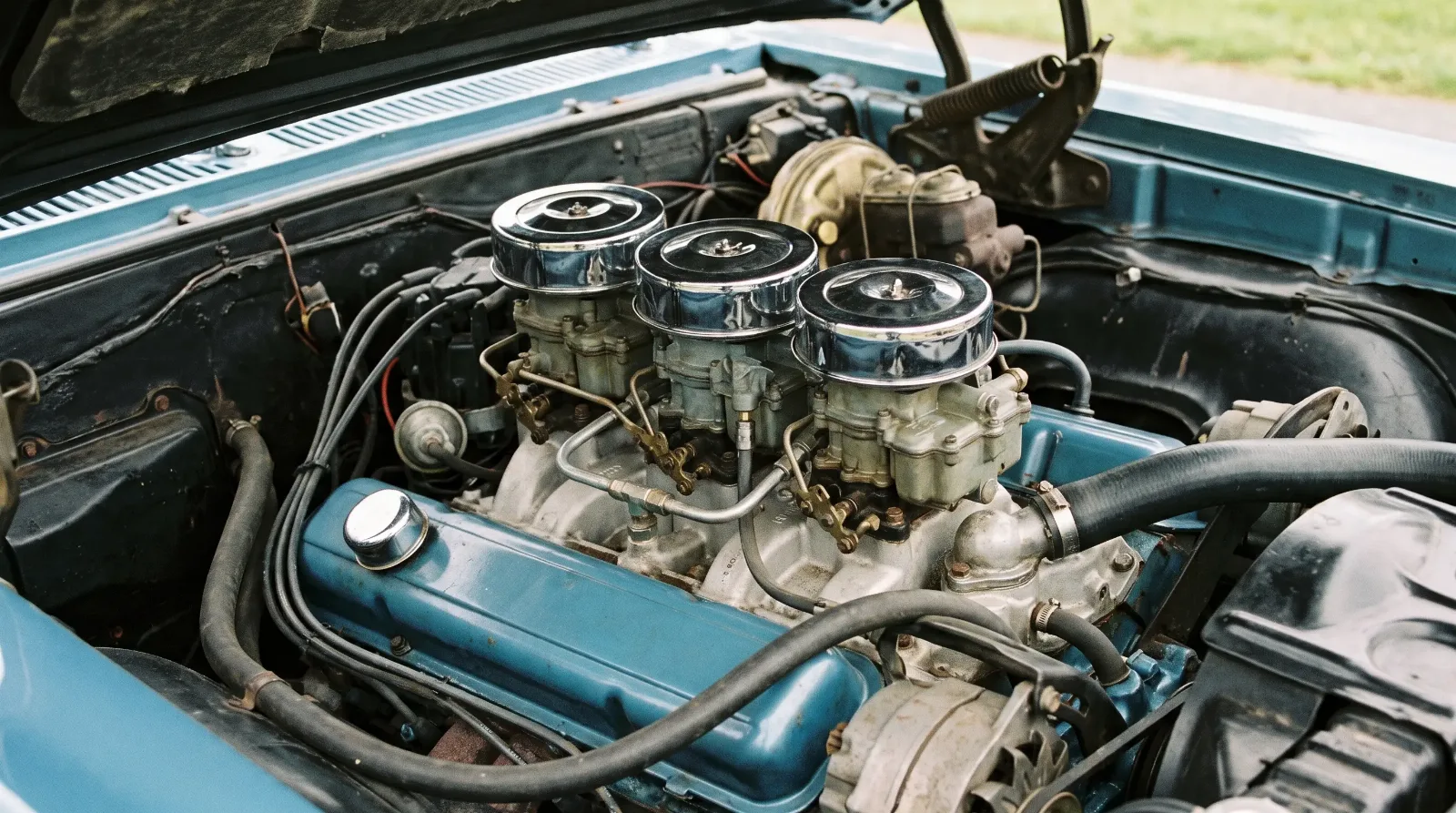
I have set up more of these than I can count, and I will tell you up front that they are more art than a single four-barrel. But the payoff on a correct one is real. If you want to see where induction sat in the bigger power picture, our muscle car engines coverage is worth a read to dig into the details. Carburetion was one of the main levers Detroit pulled, and multi-carb was the loudest way to pull it.
What a multi-carb setup actually is
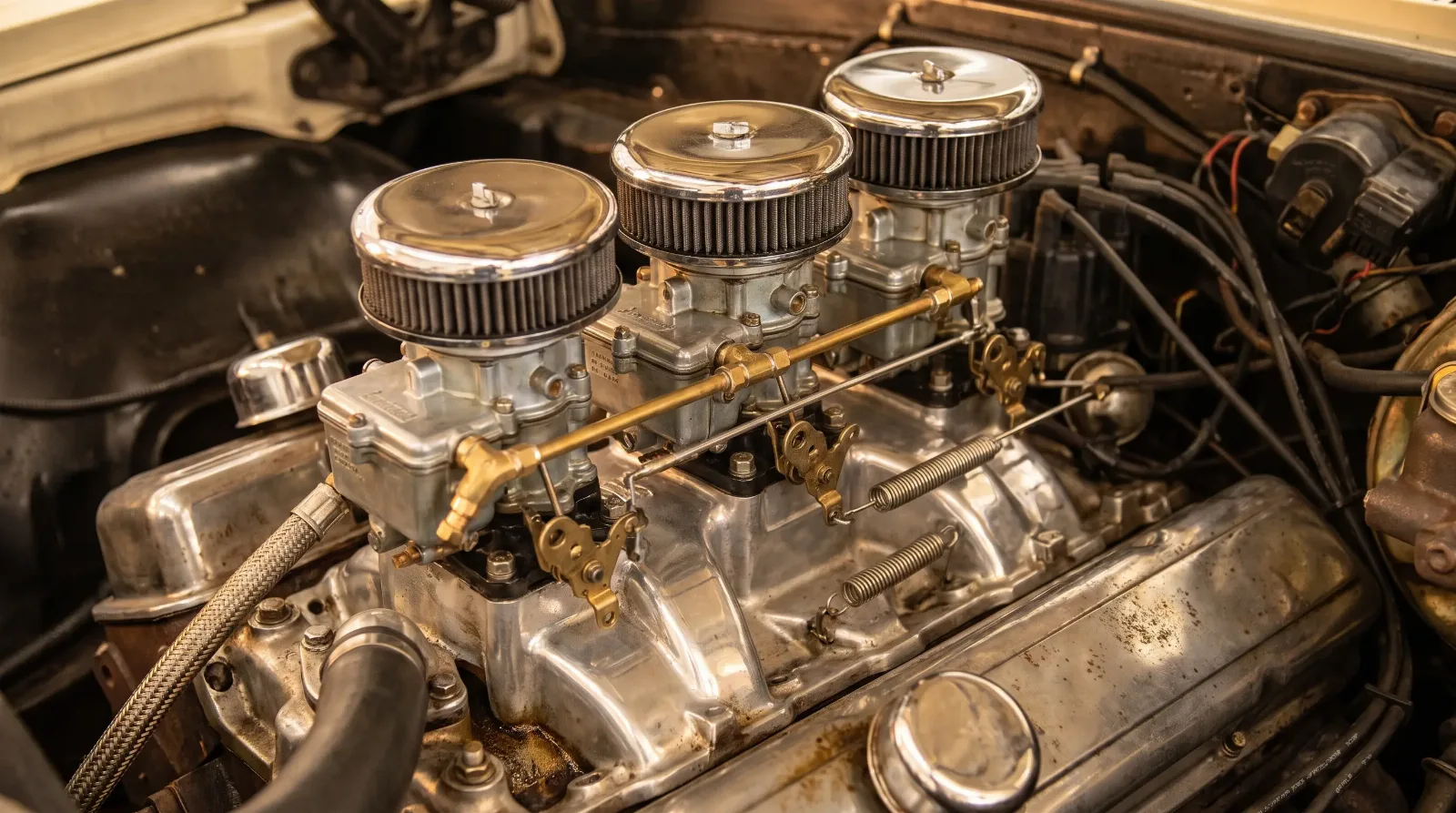
Tri-Power means three two-barrel carburetors sitting in a row on a common intake manifold. The center carb does the everyday work. It handles idle and light cruise all by itself, which keeps the engine efficient and driveable around town. The two outboard carbs stay closed until you ask for real power, and then they open and feed the engine a huge gulp of air and fuel it cannot get from one carb alone.
How the outer carbs open is the key detail. Some systems used a progressive mechanical linkage, so the more you pushed the pedal the more they opened. Others used a vacuum-operated system that brought the end carbs in based on engine load. Both approaches chased the same goal, a smooth transition from thrifty two-barrel cruising to full six-barrel breathing without a flat spot in between. Get that transition right and the car pulls clean all the way. Get it wrong and it stumbles right where you want it to go.
Pontiac Tri-Power and the GM ban
Pontiac made Tri-Power famous. The name showed up on the 389 in the early GTO, and through 1966 you could order a GTO with three two-barrels feeding that big Pontiac V8, rated as high as around 360 horsepower gross in its hottest form. Oldsmobile and Chevrolet ran their own triple-carb setups too on cars like the 409 and the earlier full-size performance models.
Then General Motors pulled the plug. For 1967 the corporation banned multiple carburetors on everything except the Corvette, part of a broader effort to cool down the horsepower race the divisions were running against each other. That is why an original Tri-Power GTO is a 1966-or-earlier car, and it is why those cars carry a premium today. The setup went away right as it was getting good.
Mopar picks up the torch
Chrysler never signed onto GM's ban, so when the multi-carb idea needed a home, Mopar gave it one. Plymouth called it the Six-Barrel and Dodge called it the Six-Pack, but it was the same hardware. Three Holley two-barrel carburetors sat on an aluminum Edelbrock intake, and the whole thing bolted onto the 440 big-block. The 440 Six-Barrel was rated around 390 horsepower gross, just shy of the far more expensive Hemi, and on the street the gap was small enough that plenty of buyers skipped the Hemi and pocketed the difference.
Chrysler also put a Six-Pack on the 340 small-block for the 1970 Challenger T/A and AAR 'Cuda, built to homologate those cars for Trans-Am. Same principle, smaller engine. The 440 versions are the ones people remember, because that combination of near-Hemi power at a big discount is exactly what a smart muscle buyer wanted. These setups did serious work at the strip, which fed straight into the era's quarter-mile arms race. You can read the full story on which factory cars ended up quickest.
"A single four-barrel is easy. Anybody can make one run. Three carbs is a conversation. You have to get the center carb happy, then teach the outer two when to wake up. When it is right, it is magic. When it is wrong, it is a boat anchor with linkage."
Mike Sullivan
Living with three carbs today
Here is the honest part. Multi-carb setups need attention. Three carburetors means three times the linkage to wear, three float levels to keep synchronized, and end carbs that sit unused enough to gum up if the car does not get driven. A lot of the bad reputation these systems carry comes from cars that were set up by somebody who did not understand the progressive transition, not from a flaw in the design itself.
If you are restoring one and want the deeper mechanical walkthrough, the community has documented the process well, and it pays to read the full story before you crack open the linkage. Done right, an original multi-carb car is one of the most rewarding things to drive from the era. The transition from quiet two-barrel cruising to that full six-barrel surge never gets old.
These setups also carry a real premium in the market because so many were removed and replaced with a simpler four-barrel over the decades. A documented, correct multi-carb car is worth chasing. If you want to see what original examples are bringing, you can view muscle cars on the market and get a feel for the spread between a real one and a swapped one.
Related Reading
Have a
Classic Car
for Sale?
Reach thousands of serious classic car collectors across the US.
Sell It Here →
Are You a Classic Car Dealer?
List your full inventory and connect with targeted classic car buyers.
Join as a Dealer →

About the author
Mike Sullivan
Detroit-area muscle car enthusiast and restoration specialist with three decades of hands-on experience working on American iron.




Comments
Be the first to comment on this article.