
The Firebird Formula sleeper reputation is not a marketing story. It is a pricing pattern I have watched play out across a decade of auction results, and it comes down to one uncomfortable fact for Trans Am buyers: the Formula usually carried the same engine, the same frame, and often the same suspension hardware, for a fraction of the money.
Car Features
6 min read
The Formula's Sleeper Reputation
Auction data shows the Firebird Formula sleeper trading well under a comparable Trans Am despite sharing the same drivetrain, and that gap is a real buying opportunity.
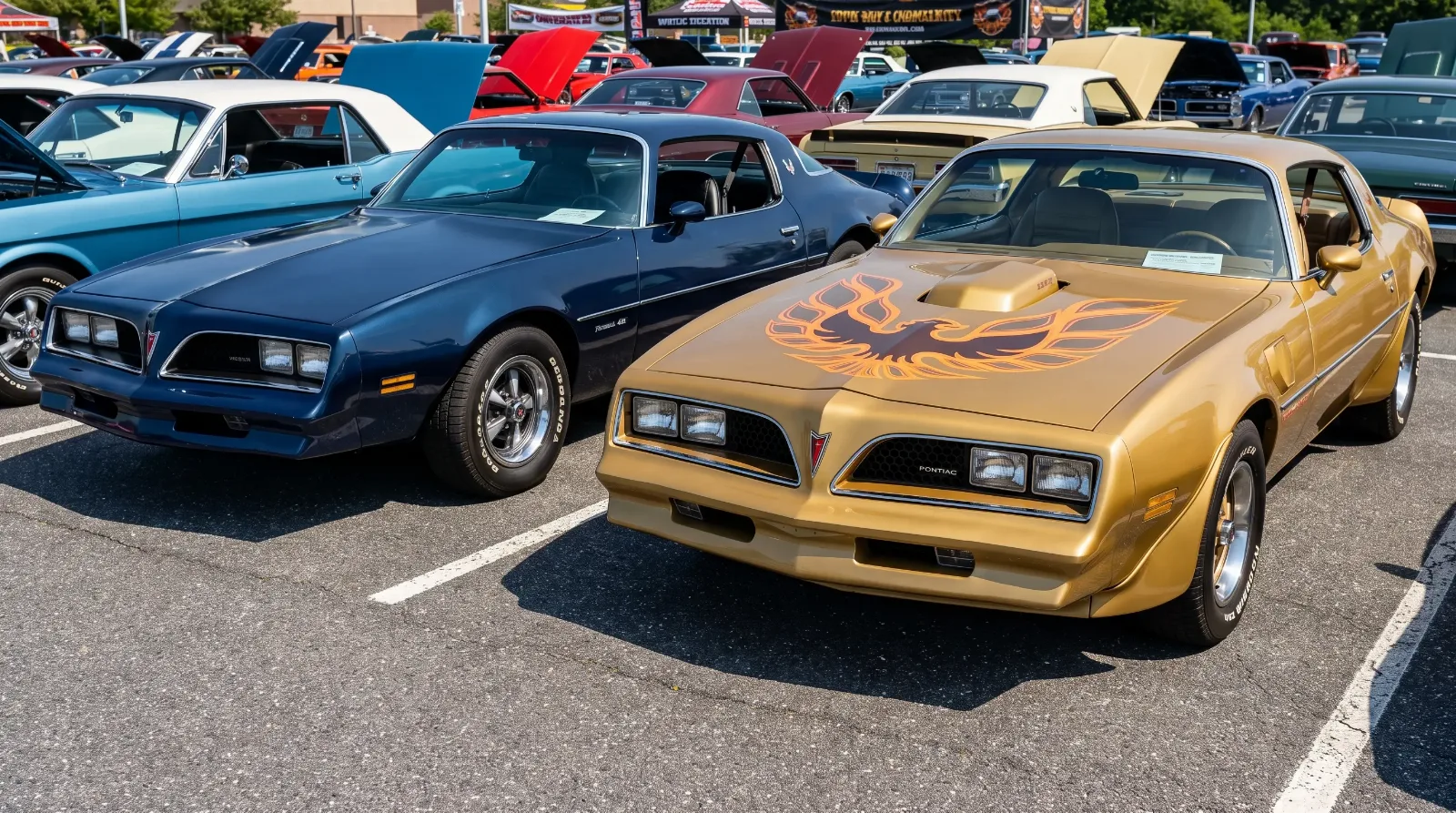
Pontiac built the Formula as the understated sibling in the second and third generation Firebird lineup. No shaker scoop standing proud through the hood, no rear spoiler, none of the graphics package that made a Trans Am recognizable from three cars back in traffic. What buyers are paying for when they choose a Trans Am over a Formula is largely image, and the market has never fully closed that gap even though the mechanical case for doing so is thin.
Same bones, different price tag
Across most of the Formula's production run, the engine options mirrored what Pontiac offered in the Trans Am. A 1971 Formula 455 and a 1971 Trans Am 455 share a block, and in years where the H.O. or Super Duty package was optional on both, a buyer willing to skip the appearance items got the same output for meaningfully less money. That price gap has narrowed over the past fifteen years as buyers have gotten smarter about what they are actually purchasing, but it has not closed. Auction data still shows Formulas trading at a consistent discount to comparable Trans Ams with the same drivetrain.
I track hammer prices across the major houses every season, and the pattern holds across generations. A well-documented 1978 Formula 400 will bring less than a comparably equipped 1978 Trans Am at the same sale, often by a meaningful double-digit percentage, despite near-identical mechanical specification. That gap is pure brand premium. It has very little to do with what the car actually does.
Why the discount persists
Part of it is simple recognition. The Trans Am had Hollywood behind it after 1977, and that kind of cultural exposure creates demand that has nothing to do with horsepower figures or build quality. The Formula never got that boost. It stayed the car that enthusiasts bought because they understood the mechanical package and did not need the visual statement.
Part of it is also documentation. Trans Ams tend to have deeper paper trails because owners and clubs invested more energy in verifying them over the decades. A Formula with equally solid documentation is harder to find simply because fewer people bothered to build the record, which means buyers today pay a small premium just for a Formula that can prove what it is.
| Comparison point | Formula | Trans Am |
|---|---|---|
| Engine options (typical year) | Identical to Trans Am | Identical to Formula |
| Visual package | Dual-scoop hood only | Shaker scoop, spoiler, graphics |
| Typical auction discount | Consistently under comparable TA, often by a meaningful double-digit percentage | Baseline |
| Documentation availability | Thinner on average | Deeper club/registry support |
How the discount shows up by generation
The pattern is not identical across every era of the Firebird, and buyers should understand where the gap is widest. Second-generation cars, particularly the big-block 400 and 455 Formulas from the early to mid seventies, show the largest spread against comparable Trans Ams, since that generation's Trans Am carries the strongest brand recognition of the whole nameplate. Third-generation Formulas from the mid to late eighties show a smaller but still consistent gap, since the GTA-trimmed Trans Ams from that era commanded their own separate premium on top of the base Trans Am price.
What buyers should watch for is a Formula that has quietly picked up Trans Am appearance parts along the way, whether through a partial restoration or an owner who wanted more visual presence without the paperwork. A Formula wearing a shaker hood scoop it did not come with from the factory is not a problem mechanically, but it changes what you should be willing to pay, since that kind of modification muddies the exact comparison this whole discount argument depends on.
The sleeper argument for buyers
If you are buying to drive rather than to flip, the case for the Formula is straightforward. You get the same power under the hood, generally lighter weight since the base car skips some of the Trans Am's add-on hardware, and a purchase price that leaves room in the budget for mechanical restoration instead of cosmetic chasing. I have advised more than one client toward a documented Formula over a marginal Trans Am specifically because the money left over covered a proper engine rebuild.
The investment case is softer, and I will not pretend otherwise. If pure appreciation is the goal, the Trans Am has a longer track record of outpacing the broader muscle car market, and that brand premium is unlikely to disappear. But for buyers who want the driving experience without paying the premium for a hood ornament, the Formula remains one of the better values left in the second and third generation Firebird world. For the mechanical side of that argument, the sleeper Firebird case holds up under closer inspection of what actually came from the factory.
Where the market goes from here
I do not expect the Formula discount to vanish, but I do expect it to narrow further as more buyers do their homework and stop paying strictly for image. The cars that will benefit most are the well-documented, numbers-matching examples with the bigger engine options, since that is where the mechanical case for the Formula is strongest and the price gap against a Trans Am is largest in absolute terms.
My advice to anyone shopping this segment right now is to buy the best documented Formula you can find rather than stretching for a mediocre Trans Am. The mechanical experience will be nearly identical, and the money saved buys real restoration work instead of a name on the fender. For a closer look at how the third-generation cars fit into this same value equation, a companion piece covers the Gen3 Formula's own place in the market.
"The Formula is the closest thing this market has to buying the engineering without buying the marketing. That gap will not last forever, but it has not closed yet."
David Mercer
Sources and notes
- Hagerty Media - 5 Pontiac Firebirds That Deserve a Second Look
- Curbside Classic - What Really Killed Muscle Cars in the '70s
- SlashGear - What Makes a Pontiac Firebird a Formula, and How It Differs from a Trans Am
- Third Gen F-Body - Difference Between Firebird/Trans Am/GTA/Formula
- Hagerty Valuation Tools - 1979 Pontiac Firebird Trans Am
- Wikipedia - Pontiac Firebird (second generation)
Related Reading
Have a
Pontiac Firebird
for Sale?
Reach thousands of serious classic car collectors across the US.
Sell It Here →
Are You a Classic Car Dealer?
List your full inventory and connect with targeted classic car buyers.
Join as a Dealer →

About the author
David Mercer
Classic car market analyst with two decades of experience tracking collector car valuations, auction results, and investment trends.
Related Listings - Pontiac Firebird




Comments
Be the first to comment on this article.