
A man in a canvas jacket stands next to a river crossing, one boot up on a rock, the other still in the water, and behind him sits a boxy little truck with no doors and a canvas top rolled halfway back. That was the picture Ford put in front of America to sell the new Bronco in the fall of 1965. Ford Bronco 1966 advertising did not try to sell a family car or a status symbol. It sold a place you could not get to any other way, and that single idea carried the entire launch campaign.
Car Features
7 min read
Selling the 1966 Bronco, Ford's First Ad Campaign
Ford did not sell the 1966 Bronco as a work truck. It sold a place you could not reach any other way, and that single idea built the launch campaign.
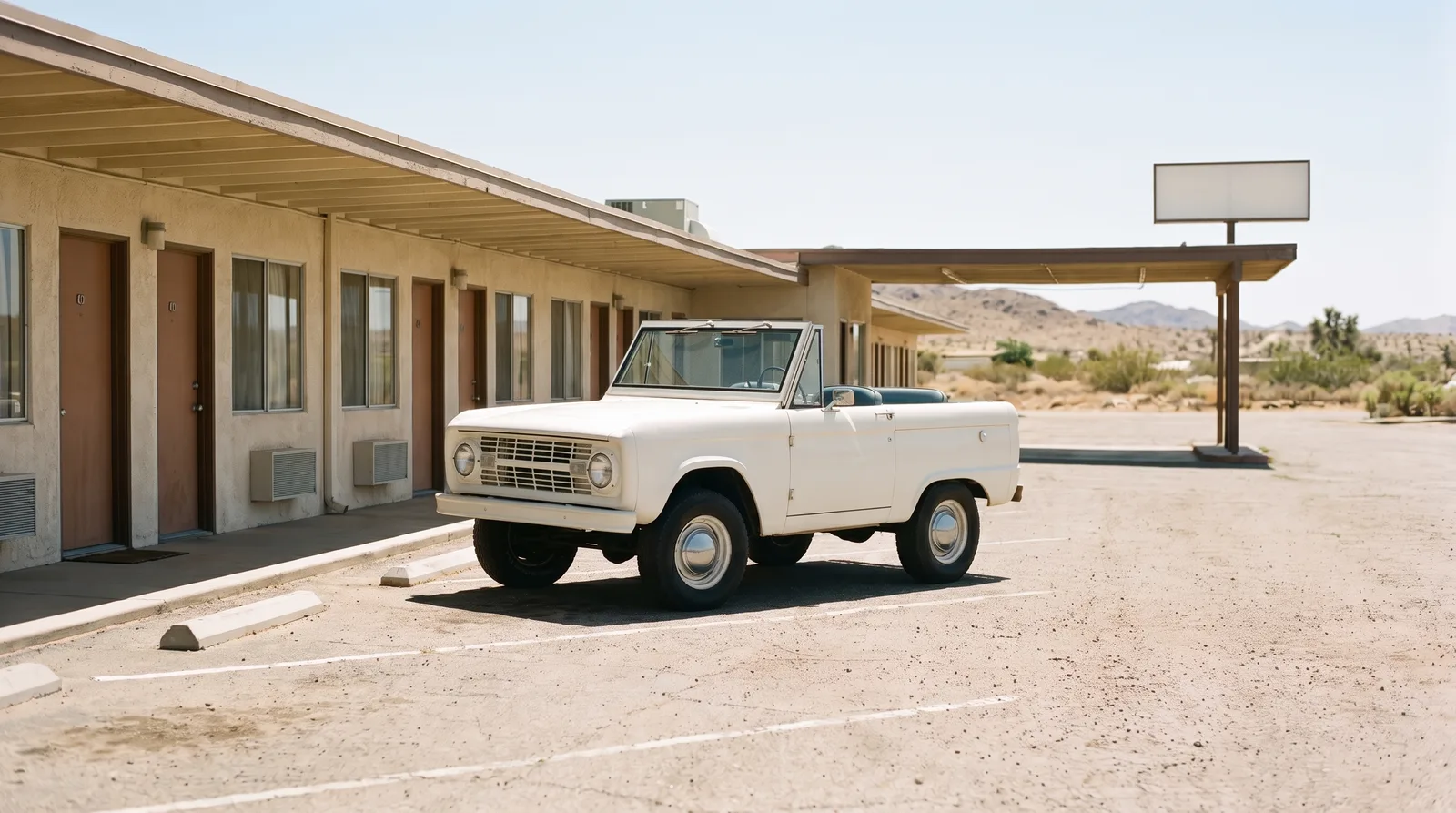
Selling a place, not a machine
Ford's copywriters leaned hard on geography. Print ads showed the Bronco fording streams, climbing rutted trails, and parked on ridgelines that no sedan would ever reach, with headlines built around the promise that owning one opened up terrain a normal car simply could not touch. The tagline that stuck, in one form or another across the campaign, was some version of a truck built to go where the road quits. It was aspirational in a very specific way. Ford was not asking buyers to imagine themselves as wealthier or more fashionable. It was asking them to imagine a weekend somewhere with no pavement at all.
That pitch mattered because the Bronco launched into a market where most buyers still thought of four wheel drive trucks as strictly work equipment for ranchers and utility crews. Ford's ads reframed the same capability as recreation. Hunting, fishing, camping, and simple exploring became the selling points, aimed squarely at a growing postwar audience with disposable income and a new interest in the outdoors.
Three bodies, one message
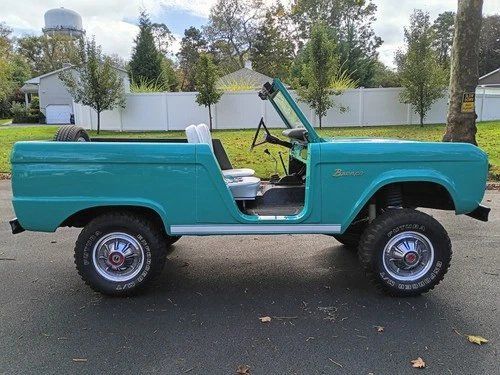
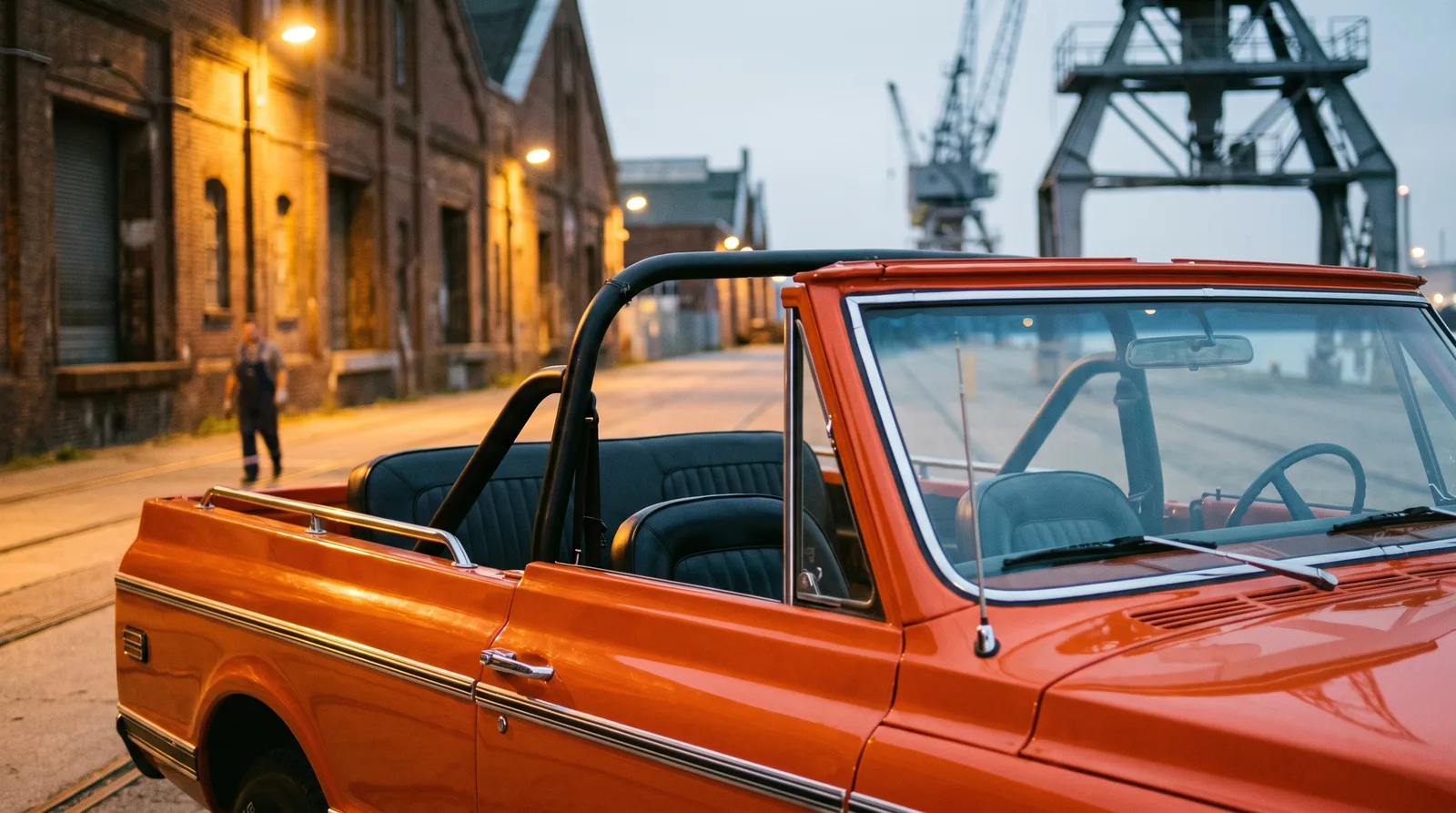
Because Ford offered the 1966 Bronco as a wagon, a half cab pickup, and an open roadster, the advertising had to work across three very different silhouettes. Rather than run separate campaigns for each, Ford kept the message consistent and let the body style photography do the differentiating. The wagon ads leaned toward families and weekend trips. The roadster ads, with the top down and no doors at all, leaned younger and more rugged. The half cab split the difference, pitched at buyers who wanted cargo space without giving up open air driving.
Dealers as the second audience
Ford's advertising was not only aimed at buyers. Dealer training materials and trade press ads worked to convince Ford dealers themselves that the Bronco was worth floor space. Many dealers in 1965 had never sold a dedicated off road vehicle, and Ford's internal marketing had to explain why a compact utility truck belonged next to Mustangs and Galaxies on the same lot. The pitch to dealers echoed the consumer campaign almost exactly: this was a new kind of customer, one who wanted a second vehicle built purely for going places a family car could not.
"You can read the whole story of the segment in how Ford aimed this campaign. They were not trying to beat International Harvester on horsepower or price. They were trying to convince a guy who had never considered a four wheel drive that he suddenly needed one, and that is a much harder sale than anyone gives Ford credit for."
- Patrick Walsh
The photography did as much work as the copy
Look closely at the surviving print ads and it becomes clear how deliberately Ford's photographers chose their locations. River crossings appear constantly, along with steep dirt grades, open ranch land, and rocky trails that a passenger car would never attempt. There is almost no pavement in the launch campaign's imagery at all, which was itself a statement. Ford's other 1966 lineup, from the Mustang to the Galaxie, sold on style and speed against a backdrop of city streets and open highways. The Bronco campaign deliberately kept the truck away from anything resembling a normal road, reinforcing the idea that this was a different kind of purchase entirely.
Regional dealers reinforced that same message with their own local advertising, often photographing demonstration trucks at nearby lakes, hunting grounds, or unpaved back roads familiar to their own customer base. That local layer gave the national campaign's abstract promise of adventure a concrete, nearby version buyers could actually picture themselves living out on a Saturday morning.
How the campaign shaped the truck's reputation
The advertising worked well enough that it outlasted the specific models it was built to sell. Decades later, when Ford revived the Bronco name, the marketing language borrowed directly from the 1966 playbook, right down to imagery of river crossings and open trails. That is a rare thing in the industry. Most launch campaigns fade with the model year. The original Bronco's campaign became part of the truck's identity, referenced by owners and collectors long after the last print ad ran.
It also shaped how the truck aged in the public imagination. Because Ford sold the Bronco as an adventure vehicle rather than a work truck, it picked up a cultural association with outdoor recreation that Scouts and Jeeps of the same era did not carry quite as strongly in mainstream advertising. That association is part of why today's buyers searching for background on the launch often start with the 1966 ford bronco story before digging into the marketing specifically, since the two threads are tightly connected.
Print, television, and the limits of the budget
Ford's launch spend on the Bronco was modest compared to what the company poured into the Mustang just two years earlier, and the campaign shows it in its choices. Print carried most of the weight, running in outdoor and general interest magazines rather than the broader mass market buys Ford reserved for its passenger cars. Television spots existed but ran less frequently, often regional rather than national, which meant a lot of the campaign's actual reach depended on word of mouth among the hunting, fishing, and ranching communities the print ads targeted directly. That smaller budget forced a sharper message. Ford could not afford to be everything to everyone with this launch, so the campaign narrowed hard on a single promise about terrain and access rather than trying to compete broadly against every other vehicle category at once.
What the campaign gets wrong today
Modern readers looking at the original ads sometimes assume the Bronco was marketed as a rugged workhorse first and a recreational vehicle second. The actual campaign ran the opposite way. Ford barely mentioned towing capacity or payload in the launch materials. It mentioned trails, rivers, and terrain. That framing tells you something about who Ford thought would actually buy the truck, and it is worth remembering when you see modern retrospectives that flatten the original pitch into generic truck marketing. The 1966 campaign was built around a specific promise about access to places, and that promise is still doing work for the nameplate today.
For anyone tracing the full arc from that first ad campaign through six decades of the model's history, the full story covers the ground this piece only touches on. And if the old ads have you thinking about owning one instead of just reading about it, there are always classic Broncos on the market worth a look.
Sources and notes
Related Reading
#Ford Bronco
#vintage car ads
#Ford marketing history
#1966 Bronco
#classic truck advertising
#Bronco launch

About the author
Patrick Walsh
Automotive journalist covering classic car shows, events, and the enthusiast community across North America.
Related Listings - Ford Bronco
Comments
Be the first to comment on this article.