
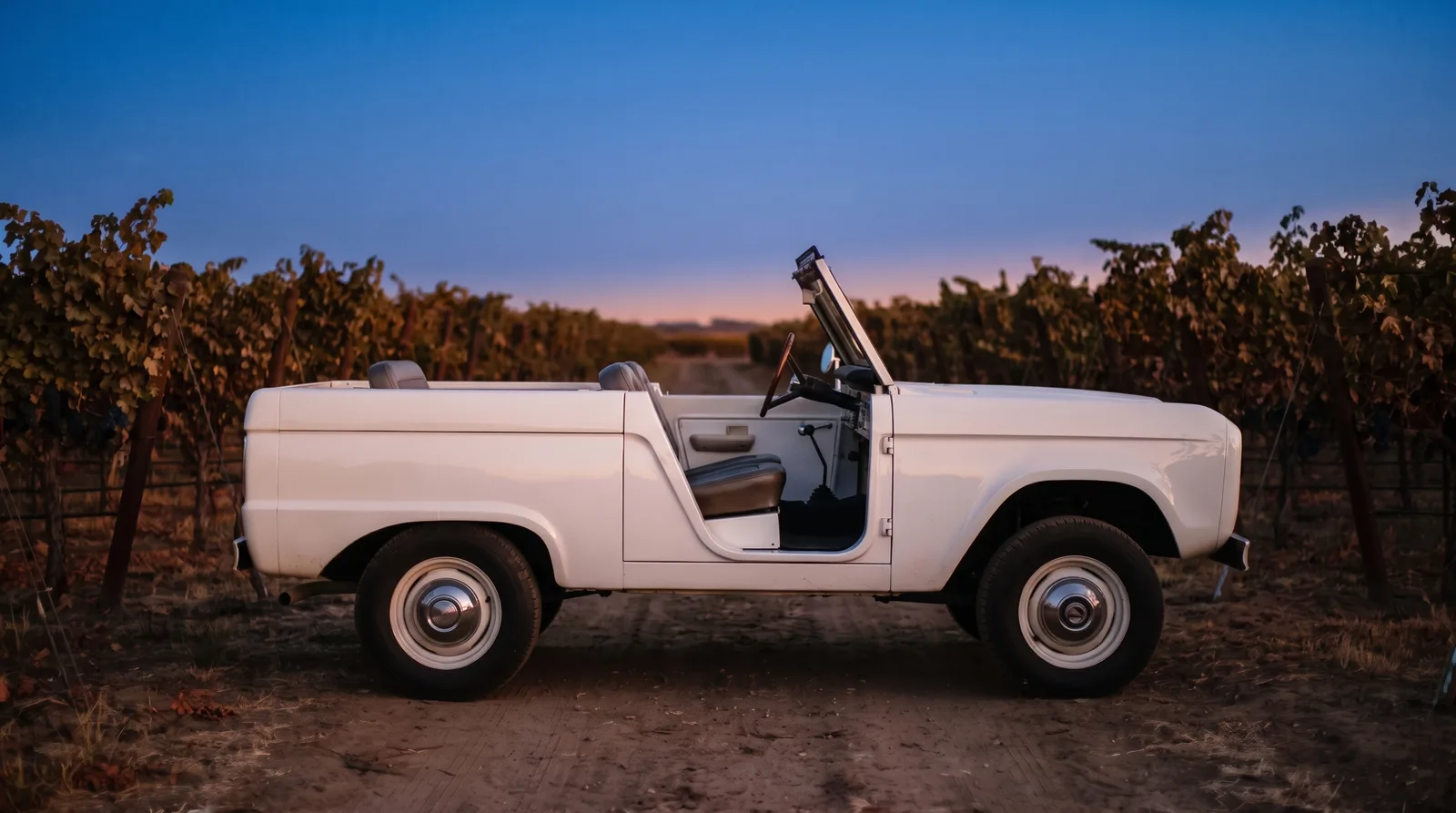
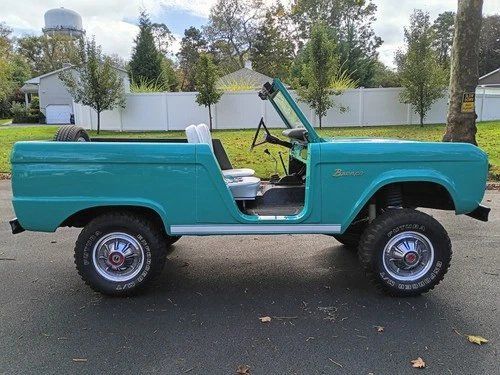
Somewhere in a barn or a backyard, a handful of the ford bronco 1966 u13 roadster still sit under tarps, doorless, topless, and largely forgotten by anyone who was not paying close attention in 1966. This was the rawest version of Ford's new truck, the one built for buyers who wanted almost nothing between themselves and the trail.
Car Features
6 min read
The 1966 Bronco U13 Roadster, the Doorless Original
The ford bronco 1966 u13 roadster was the doorless, topless original, built for buyers who wanted the rawest possible version of Ford's new 4x4.
The body style nobody quite matched
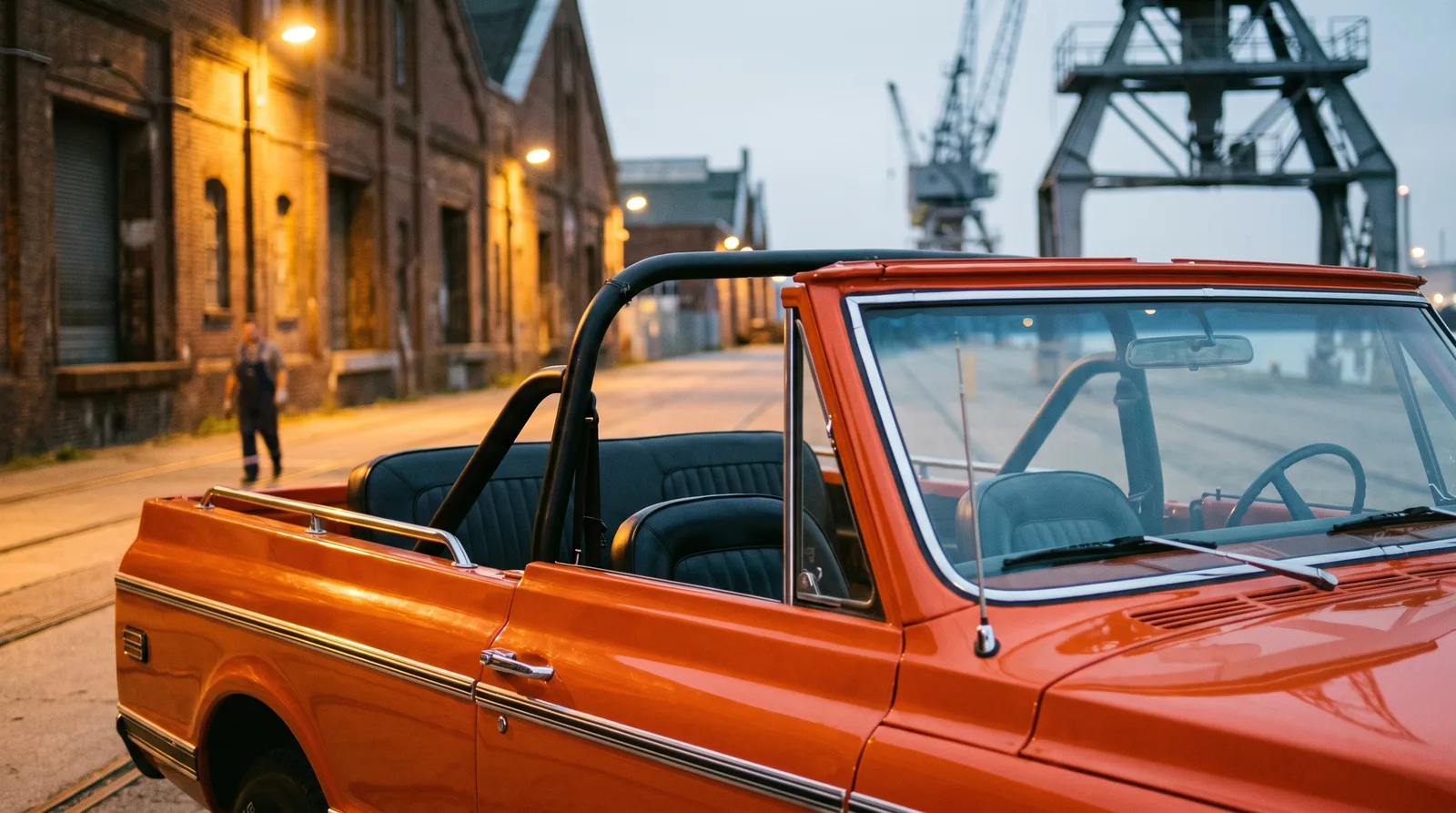
When Ford launched the Bronco, it offered three body configurations from the same 92 inch wheelbase chassis, and the U13 was the starkest of them. No doors, no roof standard, a fold-down windshield, and a bare-bones interior that treated comfort as an afterthought. Where the U15 wagon wrapped the same mechanicals in a full cabin, the U13 stripped everything back to expose the truck's basic purpose, get through rough terrain with as little weight and complication as possible.
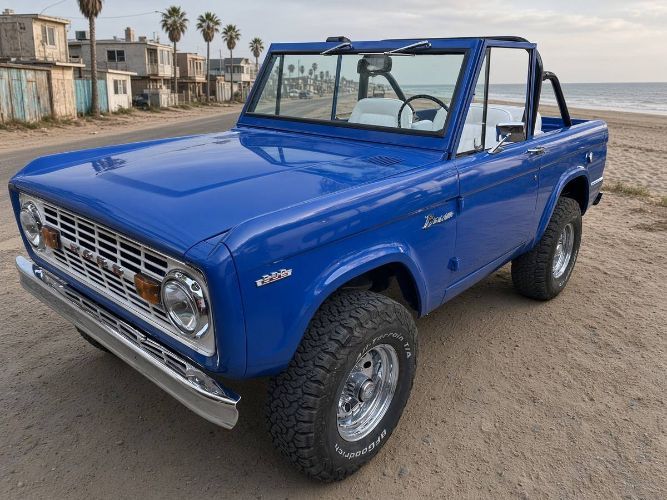
Buyers who chose the roadster were not shopping for a family vehicle. They wanted something closer to a purpose-built trail machine that happened to be road legal, and Ford built it to satisfy exactly that customer without compromise. Optional soft doors and a removable top existed for buyers who wanted occasional weather protection, but the base configuration assumed you would drive it open.
Why so few survived
The roadster's low sales figures relative to the wagon and half-cab were not really a surprise even at launch. Most buyers wanted at least the option of shelter from weather, and the wagon offered practicality the roadster simply could not match for everyday use. That made the U13 a niche choice from day one, appealing mainly to buyers who used the truck hard, off-road, in conditions where a full cabin was more liability than benefit.
Hard use took its toll. A truck bought specifically to be driven through mud, over rocks, and across open range tends to get used up faster than one bought to sit in a driveway and occasionally go camping. Combine lower original production numbers with harder average use, and the survival rate for U13 roadsters decades later is noticeably thinner than for the other two body styles. Finding one that has not been heavily modified, rusted through, or parted out is genuinely difficult now.
"There's something almost stubborn about a doorless truck in 1966, when everyone else building 4x4s was adding comfort features to chase a wider buyer. Ford let this one stay exactly what it needed to be, and that honesty is why people still chase it decades later."
- Nora Beckett
Living with a roadster, then and now
Owning a U13 in 1966 meant accepting a set of tradeoffs most modern drivers would find hard to imagine. No air conditioning, obviously, but also no real weather protection unless the optional soft doors and top were fitted and installed, which took time and effort rather than the flip of a switch. Rain meant getting wet. Cold meant dressing for it. Dust followed the truck into the cabin on any trail with loose ground underfoot. None of this was a design flaw. It was the entire point, a truck built for people who valued unfiltered contact with the terrain over creature comforts.
That same character defines U13 ownership today, for the small number of enthusiasts who have managed to find and keep an original example. Driving one is closer to driving a period-correct off-road machine than a classic car in the conventional sense. Owners who take theirs seriously tend to talk about the roadster less as a vehicle to be admired from a garage and more as a machine meant to be used exactly as Ford intended, doors off, top down, wheels in the dirt.
What collectors actually look for
Because the U13 was always the minority body style, originality carries even more weight for this variant than it does elsewhere in the Bronco lineup. A roadster with its original soft top, its original folding windshield hardware, and unmolested sheet metal underneath is a genuinely rare find. Many surviving examples have been modified over the decades, sometimes converted closer to half-cab configuration, sometimes heavily customized for off-road use, which makes a truly stock U13 stand out sharply from the rest of the surviving population.
Documentation matters more for this body style than almost any other early Bronco variant. Because conversions and modifications were so common over the decades, buyers and appraisers alike lean heavily on original build sheets, period photographs, and ownership history to confirm that a given roadster left the factory as a genuine U13 rather than being converted from a different body style later. A truck with solid paper trail evidence tends to command significantly more confidence, and often a meaningfully higher price, than one with an uncertain history, even if the two trucks look nearly identical sitting side by side in a driveway. Serious buyers increasingly ask sellers for whatever paperwork exists before negotiating seriously, treating the documentation almost as carefully as the sheet metal itself, since a U13 without a clear history carries real risk of turning out to be something other than what it appears. A dealer invoice, an old registration, or even a period photograph showing the truck in its original doorless configuration can settle questions that would otherwise linger over an entire transaction.
That rarity has not gone unnoticed. As interest in early Broncos has grown broadly, the U13 in particular has drawn attention from buyers who want the purest possible expression of the original 1966 concept, the truck as Ford's engineers first imagined it before compromise crept in for broader market appeal.
The roadster's place in the bigger story
Understanding the U13 means understanding what Ford was trying to prove with the entire 1966 launch, that one platform could serve wildly different customers if the body style flexed enough. You can read more on the 1966 ford bronco to see how the roadster fit alongside its wagon and half-cab siblings, and where this started covers the broader arc of how the Bronco name became what it is today.
If a doorless original 1966 truck is what you are after, they surface rarely, but classic Broncos on the market is worth checking regularly, since a genuine U13 in solid condition tends to move fast once it is listed.
Patience tends to pay off for buyers specifically hunting a U13. Because so few remain and because the ones that do surface are often known within enthusiast circles well before they hit a general market listing, staying connected to Bronco-focused communities and forums can put a buyer ahead of the general public when a genuine example does come up for sale. It is a slower path than shopping a wagon or half-cab, but for a body style this scarce, slow and thorough usually beats fast and hopeful.
Sources and notes
Related Reading

About the author
Nora Beckett
Automotive features writer and photographer who tells the human stories behind the cars, from show fields to cross-country road trips.
Related Listings - Ford Bronco
Comments
Be the first to comment on this article.