
At a truck meet outside Austin last fall, a 1973 Ford Bronco pulled in with a note taped to the windshield that read simply "5.0 Coyote, ask me about it." Within twenty minutes a small crowd had gathered around the open hood, phones out, trading questions about sound and fitment. That scene has become common at classic truck gatherings across the country, and it says a lot about where the culture around the 1973 Bronco has drifted over the past decade.
Car Features
7 min read
Coyote-Swapped 1973 Broncos and the New Builders
A new generation of builders is pairing the 1973 Ford Bronco's simple chassis with Ford's modern Coyote V8, splitting the enthusiast community between purists and modernizers.
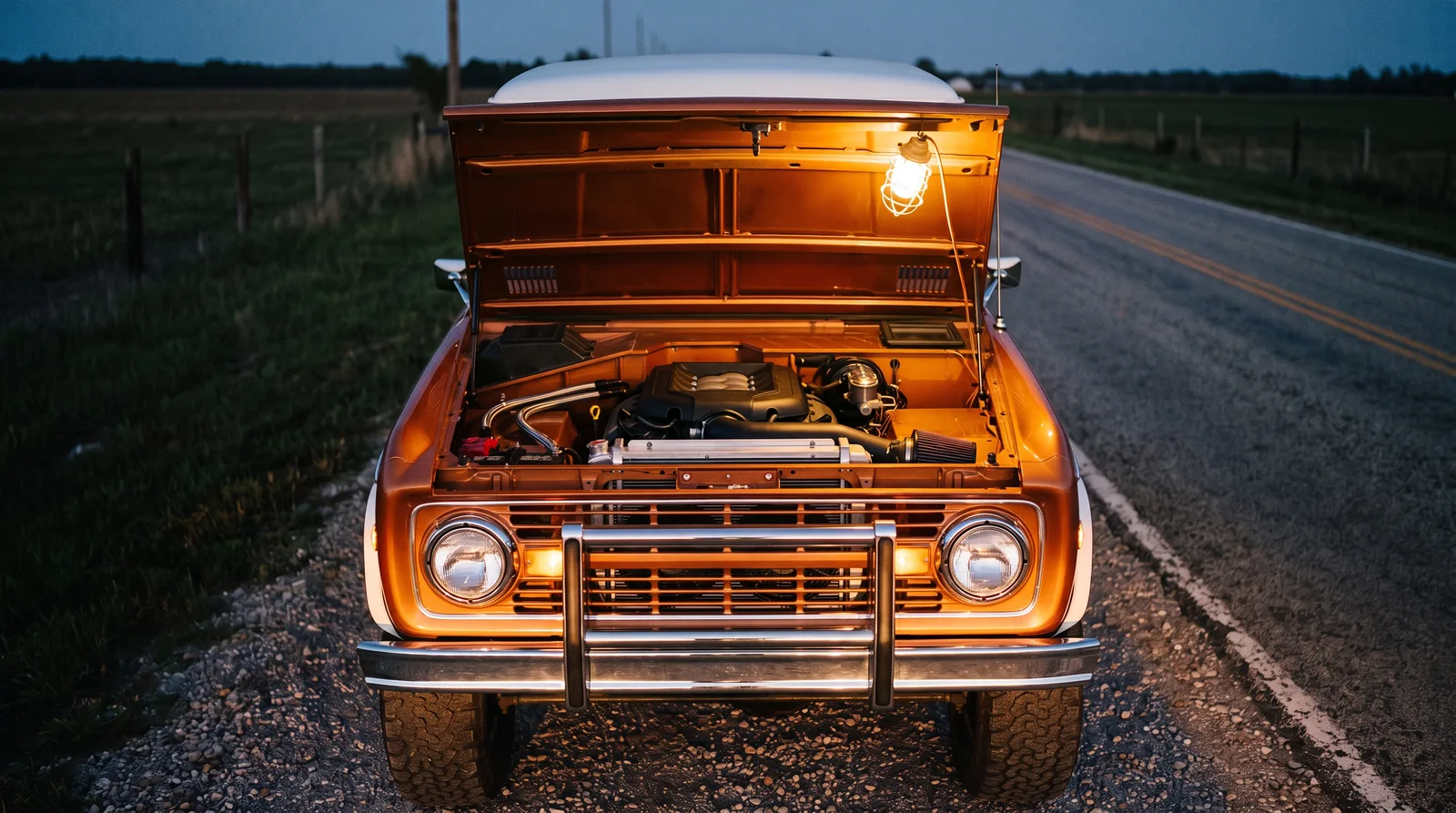
Why this particular truck became a canvas
The 1973 Bronco was never a powerhouse from the factory. Its 302 V8 option delivered modest output by modern standards, and the standard inline six was built for durability over speed. For decades that was simply accepted as the character of the truck, a rugged compact hauler rather than something quick. What changed is the rise of a builder generation less interested in preserving that original character and more interested in what the truck's simple, boxy chassis could become with a modern heart under the hood.
Ford's Coyote V8, developed originally for the Mustang and later F-150, became the engine of choice for a specific reason: it shares the same manufacturer badge as the truck itself. Builders and buyers alike treat that as meaningful, an in-family upgrade rather than an outside transplant, even when the swap itself involves extensive fabrication work far removed from anything Ford engineers imagined for this platform in 1973.
A scene built on shops, not solo builders
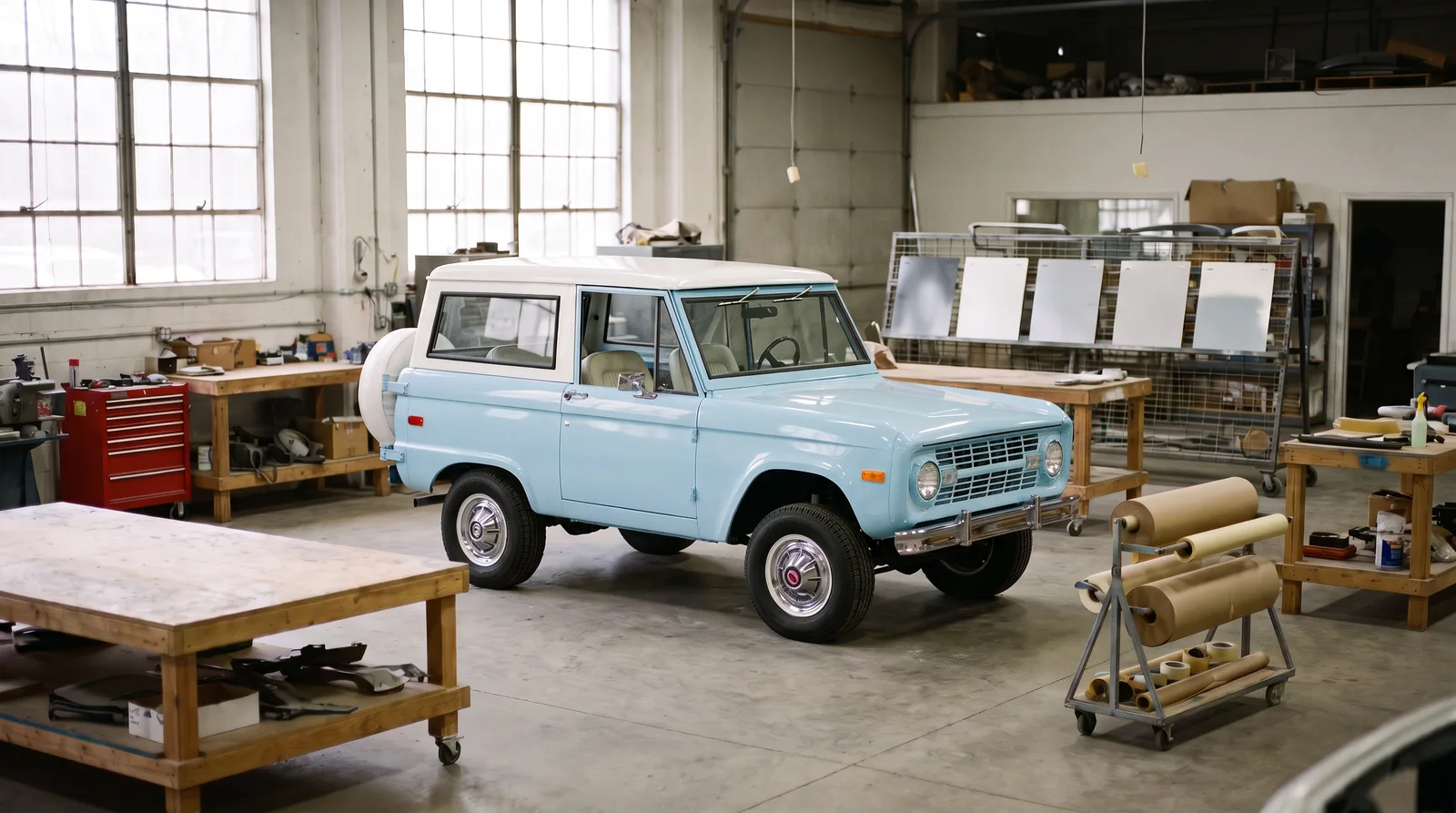
Unlike a lot of enthusiast trends that start as backyard experiments, the modern swap culture around the 1973 Bronco grew up fast around specialty shops. A handful of builders on the West Coast and in Texas developed reputations for turning out finished trucks with the fit and finish of a factory product, and their work spread through social media faster than word of mouth ever could have managed a generation earlier. Photos and video of a freshly finished truck idling in a driveway, exhaust note echoing off a garage door, became its own form of advertising.
That visibility pulled in buyers who never intended to build a truck themselves. Instead they shop for a completed example, paying a premium for a shop's finished work rather than sourcing a donor truck and tackling the labor personally. That shift has changed the economics of the segment considerably, turning what began as a hands-on hobbyist pursuit into something closer to a small manufacturing niche, with waiting lists and deposit structures resembling a custom coachbuilder more than a garage tinkerer.
The fabrication work nobody sees in the photos
The finished trucks that draw a crowd at a show represent only the visible surface of what a proper swap actually demands. Mounting a modern engine into a chassis designed decades before that engine existed requires custom motor mounts, reworked crossmembers, and careful attention to how the added weight and different power delivery interact with the truck's original suspension geometry. None of that shows up in a walk-around photo, but it is where the real skill of a build gets tested, and it is why the price gap between a competent swap and a genuinely well executed one can be substantial.
Cooling systems, exhaust routing, and transmission tunnel modifications all present their own puzzles specific to shoehorning a modern drivetrain into a body that was never drawn with this combination in mind. Builders who have done several of these swaps develop proprietary solutions to these recurring problems, and that accumulated knowledge is a large part of what buyers are actually paying for when they choose a build from an established shop over a lesser known one.
Not everyone is on board
Plenty of Bronco purists view the trend with open skepticism. To them, pulling a numbers-matching drivetrain out of a truck built during the original production run erases something that cannot be put back, regardless of how well the replacement performs. That tension shows up regularly at shows and in online forums, where a modified truck sitting next to a stock, unrestored example draws visibly different reactions from longtime owners versus newer enthusiasts drawn in by the modern builds.
The disagreement rarely gets resolved, and it probably should not be. Both camps are chasing something real. One group wants the truck exactly as Ford built it, engine numbers matching the frame tag, original paint code intact wherever possible. The other wants the shape and the history of the 1973 Bronco paired with mechanicals that can keep up with modern traffic and modern expectations. For the specifications and history that the purist camp is working to preserve, our our complete history covers what these trucks carried when they left the factory.
"I've talked to guys who'd never touch a modified Bronco and guys who wouldn't drive one stock if you paid them. What's interesting is neither side thinks the other one is wrong about the truck. They just want different things from it."
- Patrick Walsh
The mechanical case behind the trend
Beyond the emotional pull of a familiar Ford badge, there is a practical argument builders make for the Coyote specifically. The engine is comparatively modern, still supported by an active aftermarket, and benefits from decades of Mustang and F-150 development that produced a well understood, thoroughly documented platform. That maturity matters to a builder trying to integrate a modern engine into a fifty-year-old chassis, since a well documented engine means fewer surprises during the fabrication and tuning process.
Fuel injection and modern engine management also solve a real problem the original 1973 drivetrain never had to answer for. A stock carbureted engine from this era can struggle with cold starts, altitude changes, and inconsistent idle quality, minor annoyances that a driver tolerated as part of owning an old truck. A modern engine management system largely eliminates those quirks, which is a meaningful part of why owners who actually want to drive their Bronco regularly, rather than trailer it to shows, gravitate toward the swap.
What it means for the broader market
The rise of the ford bronco 1973 coyote swap culture has had a real effect on values across the board. Clean, unmodified originals have become more prized precisely because they are getting rarer as donor trucks get pulled apart for builds. At the same time, well-executed modified examples now command their own premium, distinct from the collector market for stock trucks but no less serious about quality and provenance of the work performed.
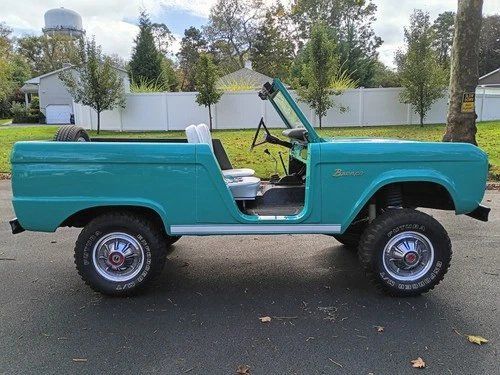
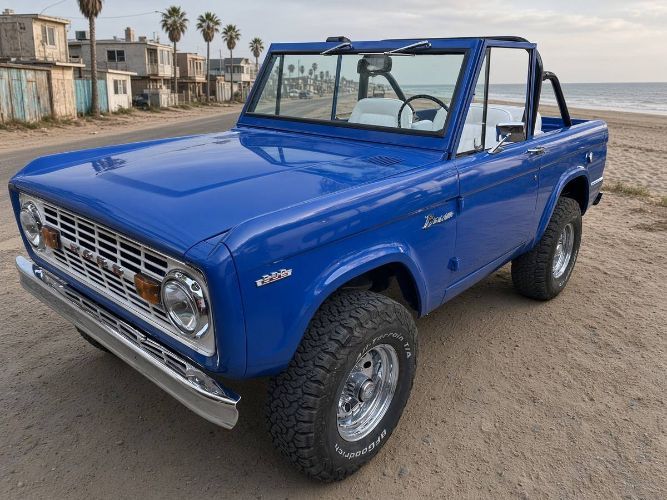
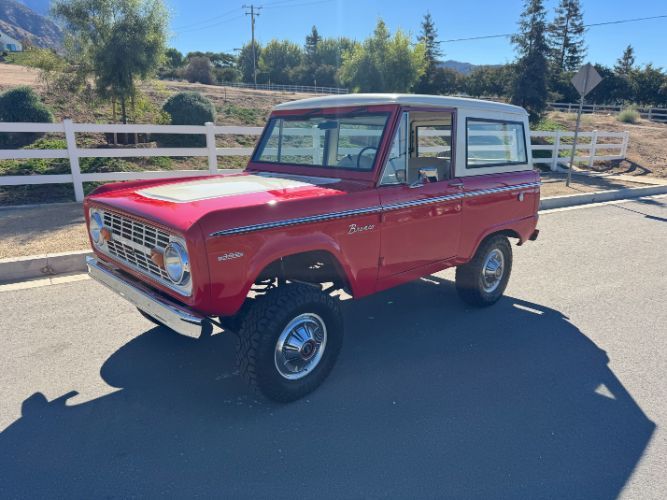
For buyers trying to make sense of where they fit into this picture, the first step is deciding which experience actually matters more, originality or drivability, before shopping starts. Those in the market can browse classic Bronco listings to compare stock and modified trucks side by side, since both categories now share the same broader marketplace even as they appeal to fundamentally different buyers.
Whatever side of the debate a given owner lands on, the truck at the center of it has proven remarkably durable as a platform for reinvention. Fifty years after it left the factory, the 1973 Bronco is still finding new ways to draw a crowd.
Sources and notes
Related Reading
Have a
Ford Bronco
for Sale?
Reach thousands of serious classic car collectors across the US.
Sell It Here →
Selling a classic? Here's how: sell my classic car
Are You a Classic Car Dealer?
List your full inventory and connect with targeted classic car buyers.
Join as a Dealer →

About the author
Patrick Walsh
Automotive journalist covering classic car shows, events, and the enthusiast community across North America.
Related Listings - Ford Bronco
Comments
Be the first to comment on this article.