
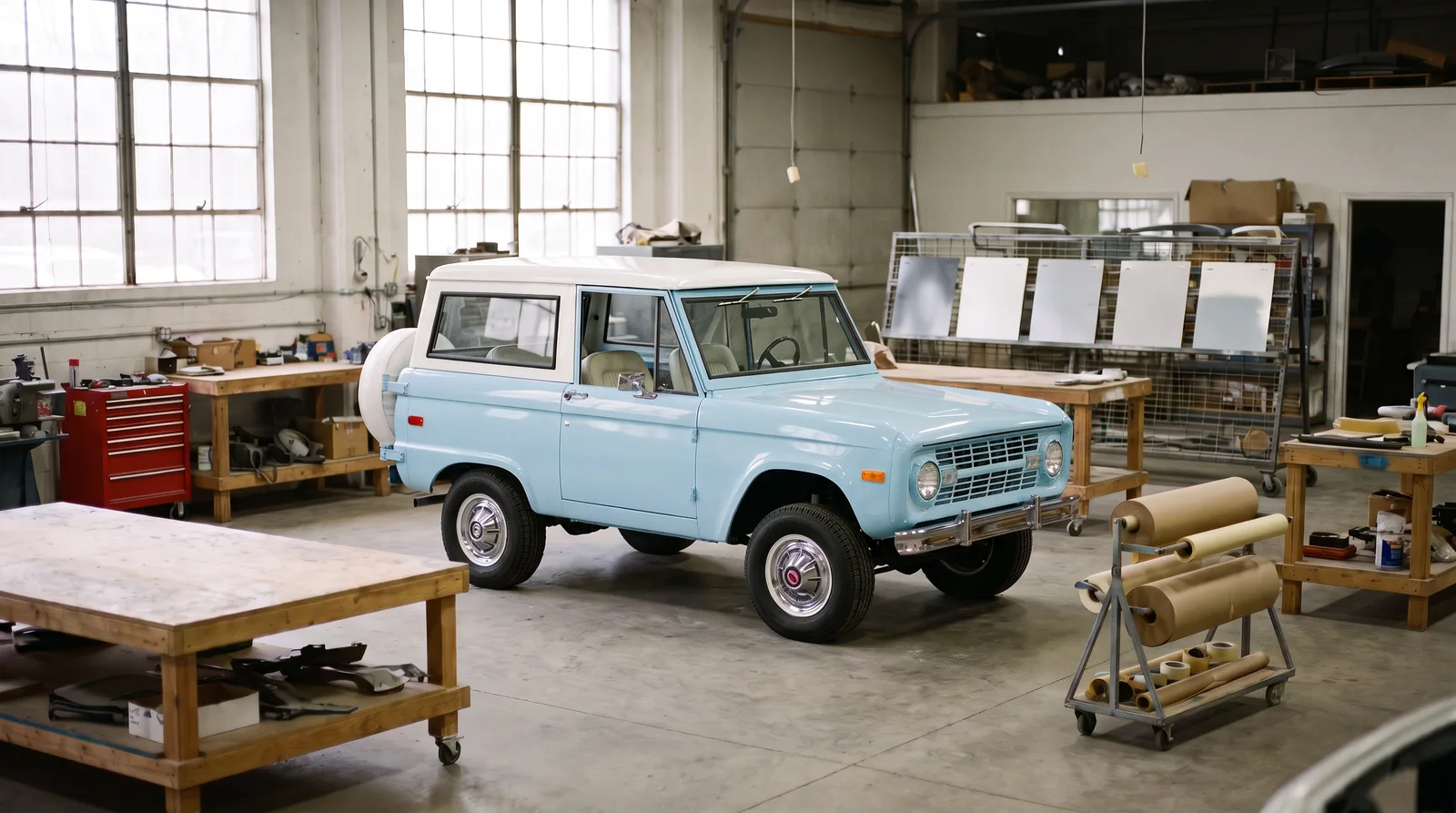
In a garage outside Prescott, Arizona, a 1973 Ford Bronco sits up on jack stands with its original 302 pulled and set aside on an engine stand, still wearing five decades of dust. The owner is not scrapping the truck. He is building it into something that honors what it was while giving it the manners it never had from the factory. That contradiction, reverence paired with reinvention, is the heart of the restomod culture that has grown up around the 1973 Bronco over the last two decades.
Car Features
7 min read
The 1973 Bronco Restomod Movement
Behind the growing restomod scene around the 1973 Ford Bronco are builders driven less by investment and more by memory, community, and a truck worth keeping on the road.
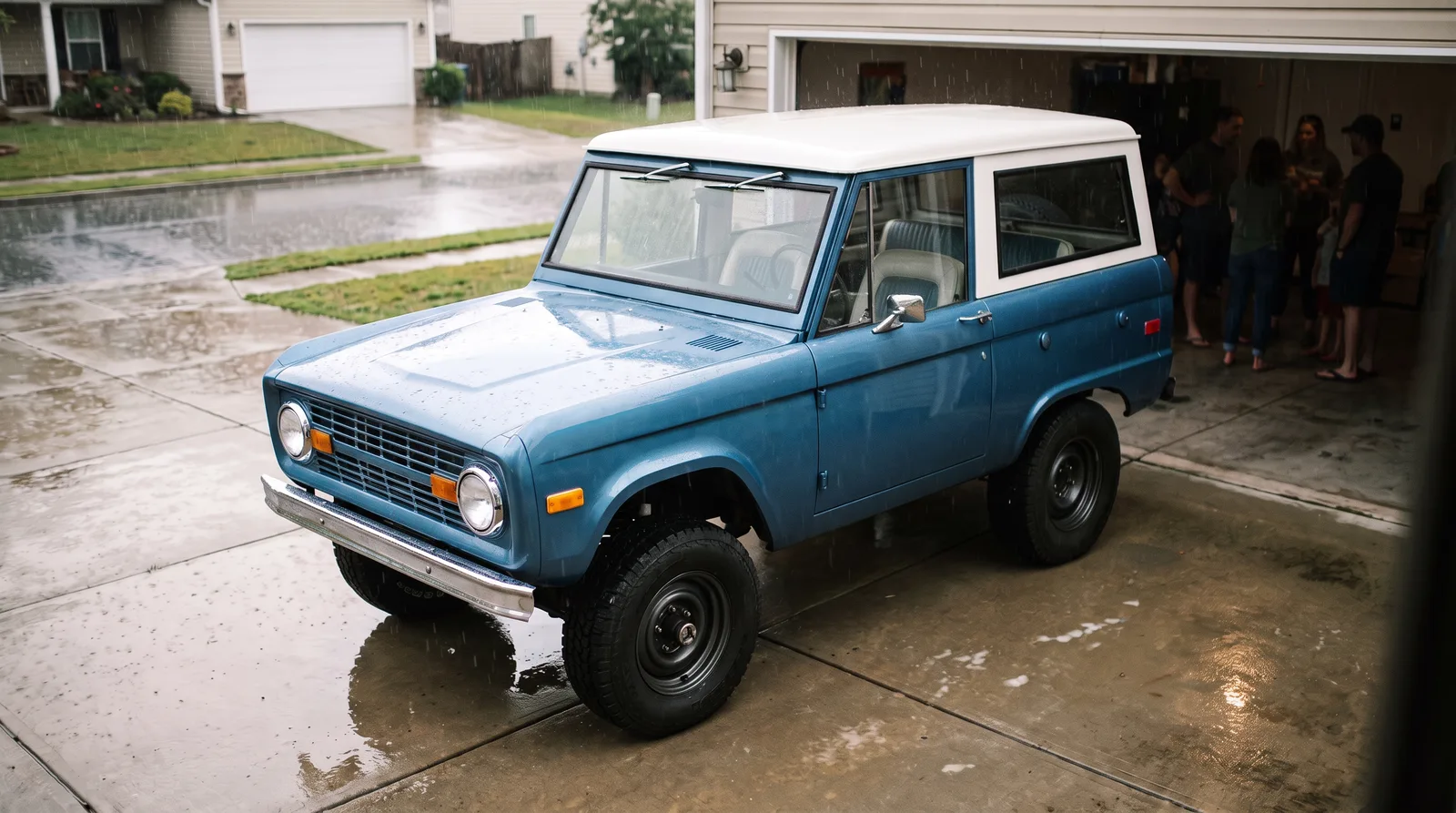
A truck built to be changed
Part of why the 1973 Bronco lends itself so naturally to restomod work is its underlying simplicity. The boxed frame, solid front axle, and straightforward drivetrain layout leave plenty of room for a builder to swap components without fighting the truck's basic architecture. Owners have spent years working out proven combinations, from disc brake conversions to power steering boxes, that keep the truck's classic silhouette intact while making it genuinely pleasant to drive on modern roads.
That accessibility matters because it lowers the barrier for enthusiasts who love the look of the early Bronco but have no patience for the driving experience of a stock 1973 example, with its manual steering, drum brakes, and three-speed gearbox. A restomod bridges that gap, and the community around it has grown large enough to support specialty shops that focus almost entirely on this one truck.
The people behind the builds
Talk to enough owners and a pattern emerges. Many did not grow up wealthy car collectors. They grew up around a Bronco, a father's or grandfather's truck used for hunting trips or hauling firewood, and the restomod build becomes a way of keeping that memory alive in a form they can actually use every day. One owner in Colorado described inheriting his grandfather's 1973 Bronco with a rusted floor and a seized engine, and spending three years turning it into a truck he now drives to work.
That emotional throughline separates the Bronco restomod scene from more purely investment-driven corners of the collector market. The trucks get built to be driven, not simply displayed, and the modifications reflect that priority. Owners choose upgrades that make the truck comfortable for a long weekend trip rather than changes aimed purely at maximizing resale value.
What a typical build actually involves
No two restomod 1973 Broncos look identical, but certain choices recur often enough to count as a pattern. Coil-over front suspension conversions replace the original leaf and coil setup to improve ride quality without sacrificing ground clearance. Disc brakes at all four corners address one of the stock truck's most consistent weak points. Many owners also upgrade the electrical system entirely, since original wiring from this era rarely survives fifty years without at least partial replacement.
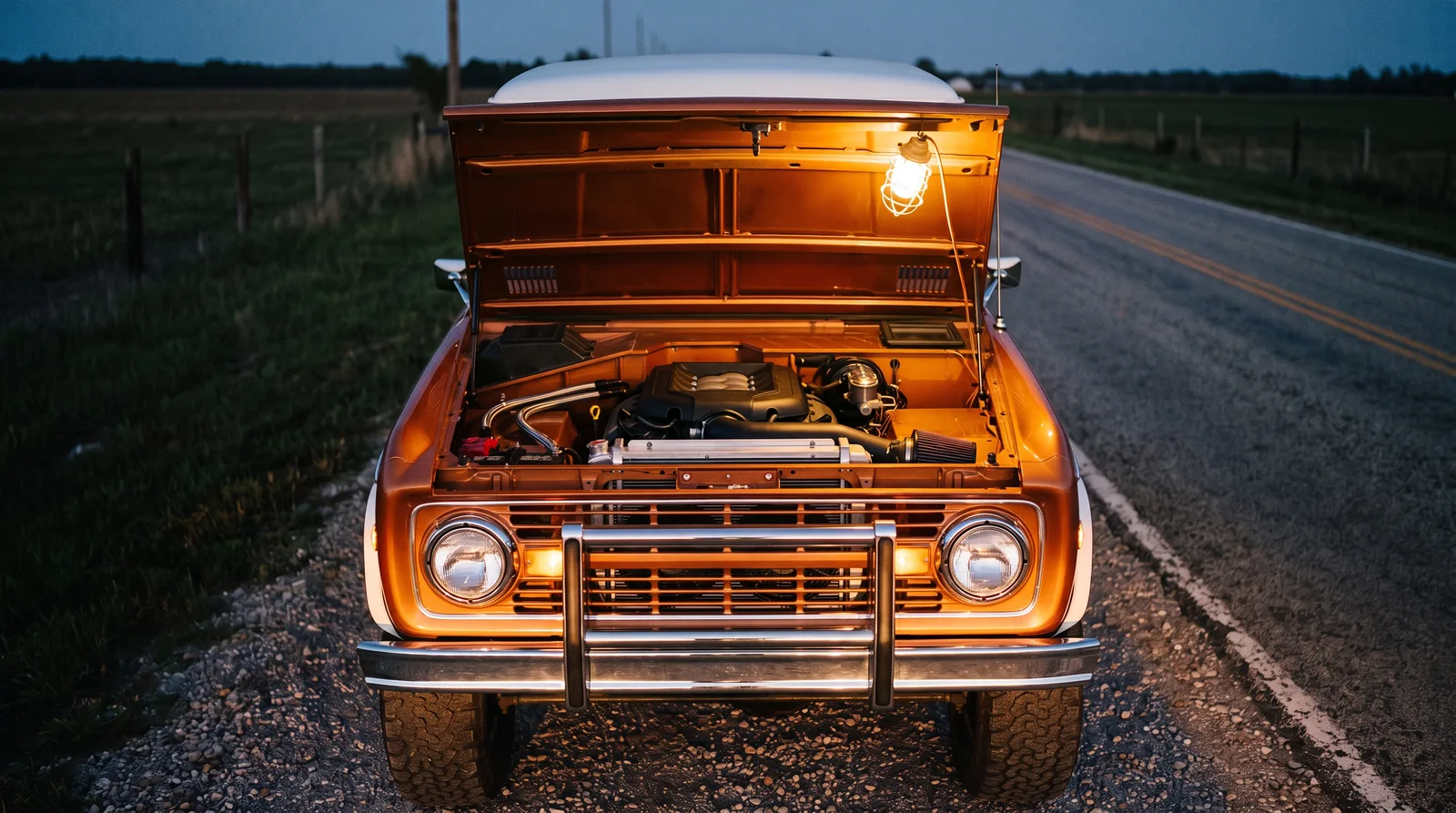
Engine choices vary by budget and philosophy. Some owners rebuild the original 302 or inline six to period-correct specifications, wanting the truck to sound and perform as close to factory as possible while benefiting from modern gaskets and machining tolerances. Others go further, dropping in more contemporary V8s for a meaningful jump in reliability and power, a path that trades some originality for daily usability. For the full history of what the stock 1973 truck offered from the factory before any of these changes, our coverage of the full story covers the original specifications in depth.
Budgeting for a build that never really ends
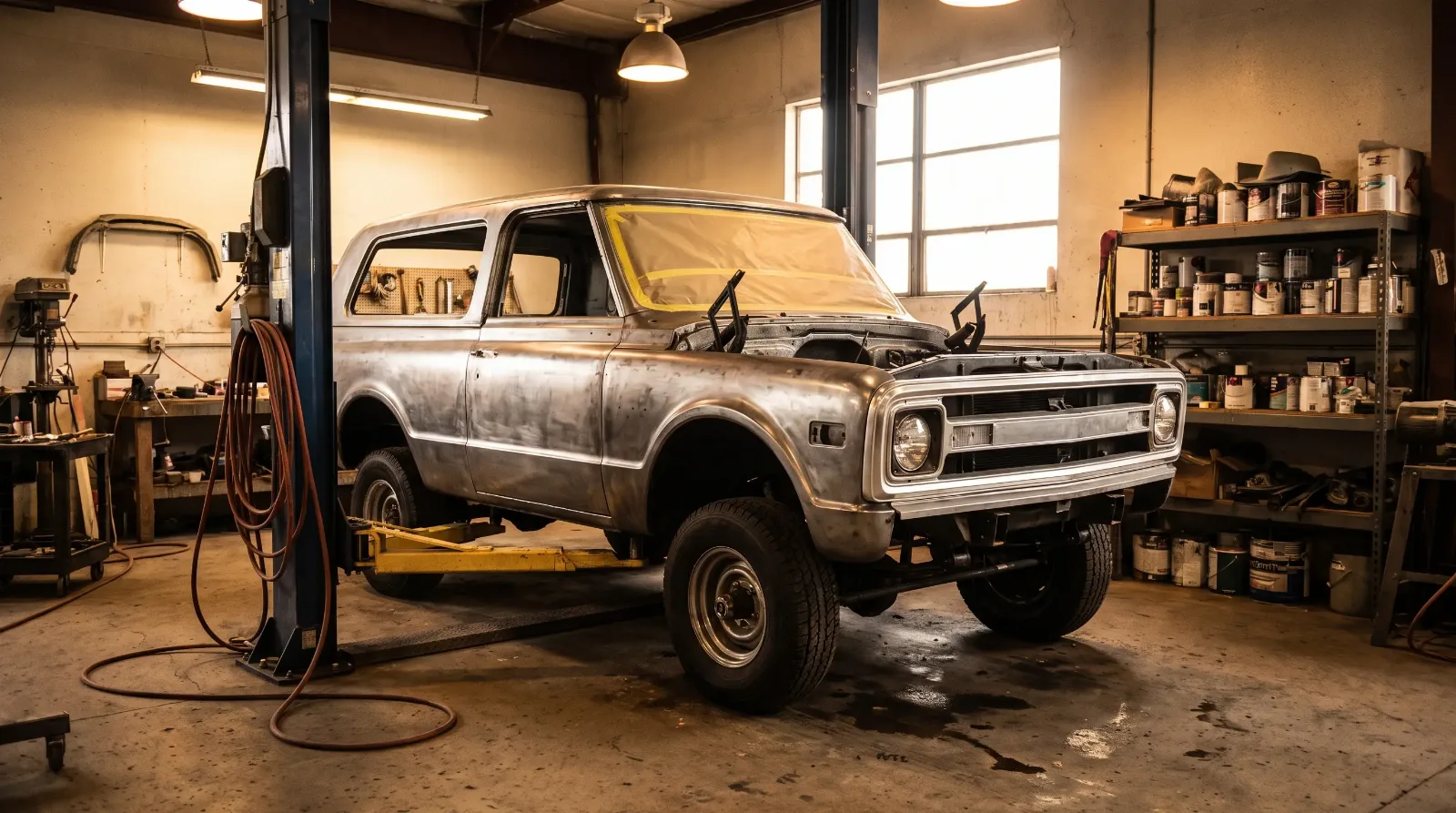
Ask any owner deep into a restomod project about their original budget and you will usually get a rueful laugh. These builds rarely finish on the number a builder starts with, because tearing into a fifty-year-old truck almost always uncovers problems nobody could see from the outside, hidden frame rust, wiring that looks intact until it is tested under load, brackets and mounts long since replaced with something improvised by a previous owner. A realistic budget accounts for that uncertainty from the start, and experienced builders tend to warn newcomers explicitly rather than let them discover it the hard way partway through disassembly.
That unpredictability is part of why the timeline for a home build stretches so much further than a shop quote might suggest. Weekend garage time adds up slowly, and a project that a well staffed shop could finish in months can easily consume two or three years for an owner working alone around a full time job. Most owners who have been through it say the extended timeline becomes part of the experience rather than purely a frustration, a long relationship with one truck rather than a quick transaction.
Community over competition
What stands out most about the restomod scene is how collaborative it tends to be. Online forums and regional Bronco clubs function less like competitive showcases and more like extended workshops, where owners trade parts sources, share fabrication templates, and troubleshoot problems together. A builder in Texas struggling with a fuel system conversion can post detailed photos and get specific guidance from someone who solved the same problem two states away.
That culture of shared knowledge has helped keep the restomod movement accessible rather than exclusive. It is not a scene dominated only by well-funded shops building six-figure trucks for wealthy clients, though those builds exist and draw attention. It is equally populated by weekend builders working in home garages, piecing together a truck over years using whatever time and money they can spare.
"Every build I've documented starts with a story about someone, not something. The truck is almost secondary at first. It's the memory attached to it that gets the whole project moving."
- Nora Beckett
The tools that made this possible
None of this would have spread as fast as it has without the internet lowering the cost of finding good information. A generation ago, a builder working on a 1973 Bronco had to rely on a handful of specialty magazines, a local club newsletter, or whatever a nearby mechanic happened to know about the platform. Today, detailed build threads document entire projects from teardown to first drive, with measurements, part numbers, and fabrication notes that used to stay locked inside one builder's head or one shop's private files.
That openness changed who could reasonably attempt a build. A first-timer with no formal training can now approach a restomod project with a realistic understanding of what is involved, informed by dozens of other owners who documented their own mistakes along the way. The learning curve has not disappeared, but it has flattened considerably, and that alone has pulled a wider range of people into a scene that once belonged mostly to specialists.
Where the movement is heading
The ford bronco 1973 restomod culture shows no sign of slowing. If anything, rising prices for well-preserved original examples have pushed more buyers toward project trucks that need work, since a rough 1973 Bronco remains more attainable than a numbers-matching survivor. That affordability gap has funneled a steady stream of new builders into the community, many of them younger than the collectors who dominated the space a decade ago.
For anyone drawn to this world, the entry point is usually the same: find a truck worth the effort. Buyers researching this segment can browse classic Bronco for sale listings to get a sense of what a starting project actually costs before committing to the years of work a proper build demands. The trucks that come out the other side of that process rarely look factory original, but they carry something the assembly line never could, a direct line back to the person who decided the truck was worth saving.
Sources and notes
Related Reading
Have a
Ford Bronco
for Sale?
Reach thousands of serious classic car collectors across the US.
Sell It Here →
Selling a classic? Here's how: compare the places to sell classic cars
Are You a Classic Car Dealer?
List your full inventory and connect with targeted classic car buyers.
Join as a Dealer →

About the author
Nora Beckett
Automotive features writer and photographer who tells the human stories behind the cars, from show fields to cross-country road trips.
Related Listings - Ford Bronco
Comments
Be the first to comment on this article.