
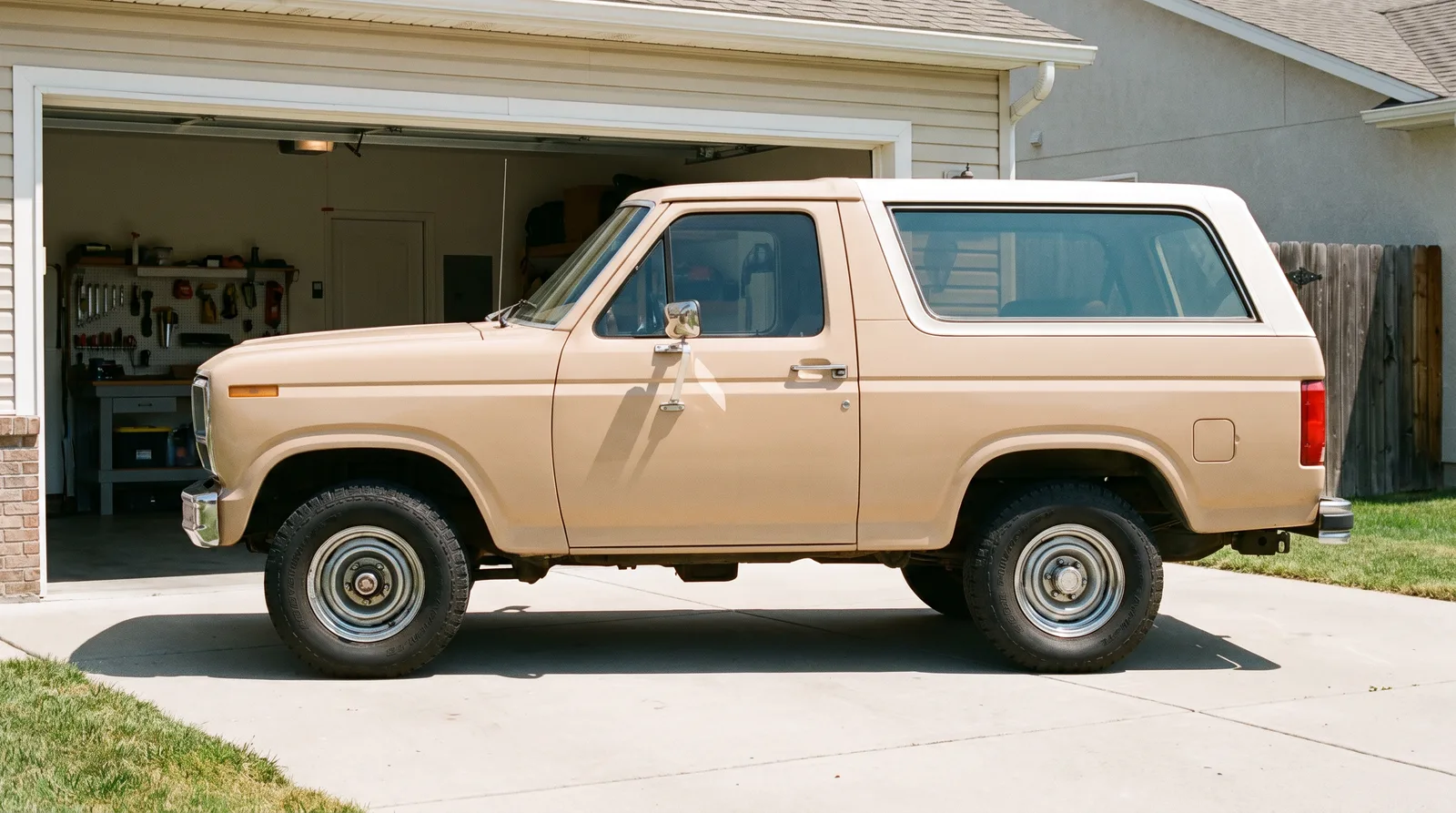
The ford bronco 1978 400 v8 was the biggest engine Ford put in a Bronco up to that point, and it did not deliver the horsepower numbers a "400 cubic inch V8" badge suggests today. That gap between displacement and output tells the real story of what buyers were actually getting when they checked the box for Ford's top Bronco engine in 1978.
Car Features
6 min read
The Big V8s of the 1978 Bronco
The 1978 Bronco's optional 400 cubic inch V8 traded horsepower for torque, a smog-era tradeoff that still shapes which buyers should want one today.
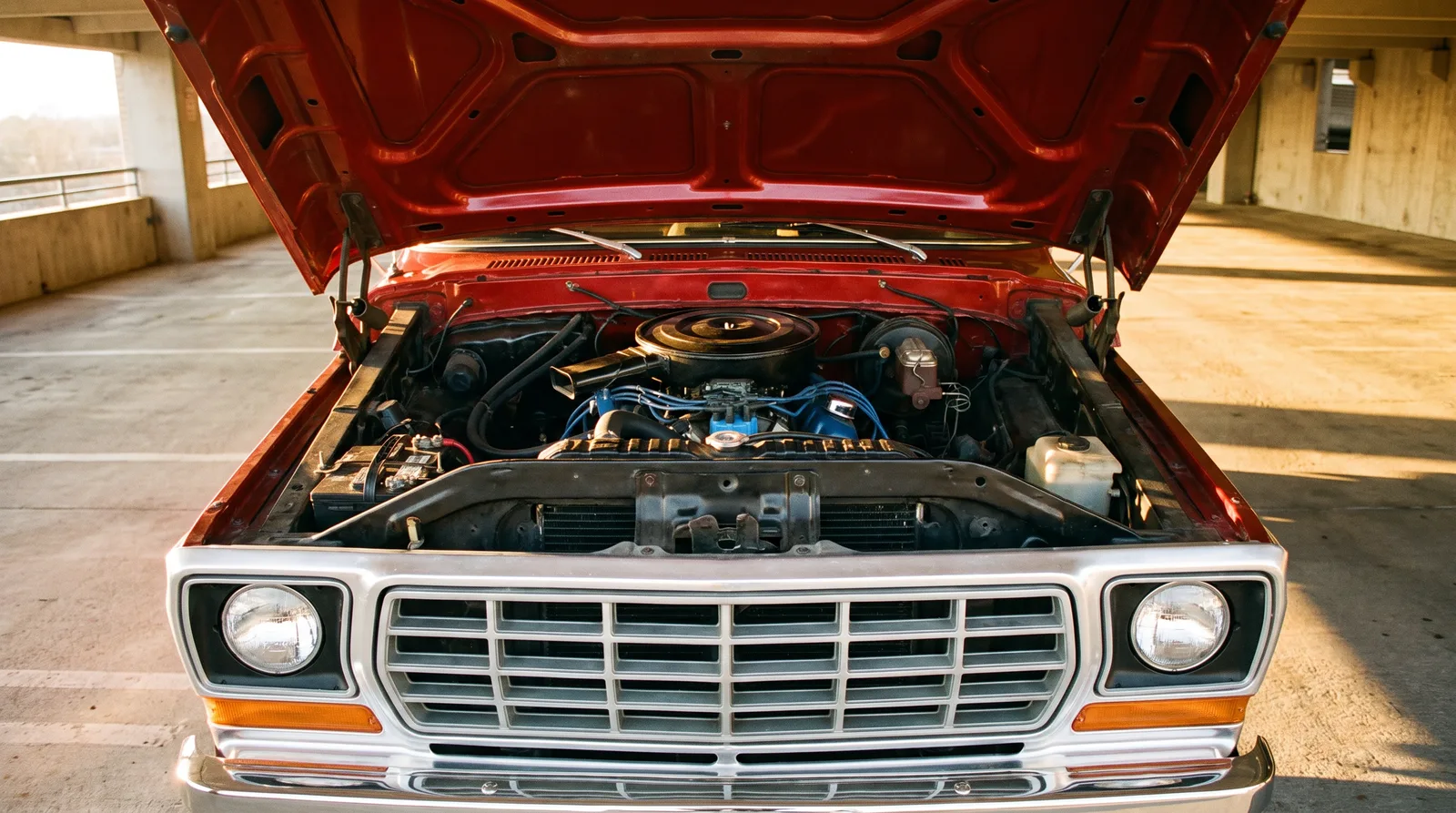
The number that matters: 400 cubic inches
Ford's 400 cubic inch V8, part of the 335 engine family that also produced the 351M, was the largest engine available in the full-size Bronco starting with the 1978 redesign. The full-size Bronco was V8-only from the start, with the 351M standard and the 400 as the sole optional upgrade, so displacement alone made the 400 sound like a serious performance option next to the standard 351M. It was not a performance engine. It was a torque engine, tuned for pulling power at low RPM rather than horsepower at the top end, and by 1978 it was also strangled by emissions equipment that every domestic V8 carried at the time.
Net horsepower for the 400 ran around 158 hp for 1978 and 156 hp for 1979, a fraction of what the same displacement would have produced a decade earlier before catalytic converters, lower compression ratios, and smog-era carburetor tuning took their toll. That is the blunt truth about big-inch domestic V8s in this era. Bigger did not mean faster. It meant more torque, more weight, and worse fuel economy, in exchange for towing capability the smaller engines could not match.
Why buyers ordered it anyway
Torque, not horsepower, is what moves a loaded Bronco up a grade or pulls a trailer away from a stop. The 400's low-end pull made it the engine of choice for buyers planning to tow, haul a camper, or run the truck loaded most of the time. Fuel economy suffered, noticeably, and the 400 was never going to win a stoplight race against much of anything built after 1970. But for the buyer who cared about capability over speed, it was the only engine in the lineup that could deliver.
That tradeoff is why the 400 stayed the minority option rather than the standard choice. Most Broncos left the factory with the standard 351M, which offered a reasonable balance of power and economy without the 400's weight penalty over the front axle. The 400 was a specialist's engine, ordered by buyers who knew exactly why they wanted it.
| Engine | Displacement | Typical role |
|---|---|---|
| 351M V8 | 5.8L | Standard engine, both model years |
| 400 V8 | 6.6L | Optional upgrade, max torque and towing focus |
Weight and balance, the part nobody advertises
Adding the 400 up front shifted the Bronco's weight balance noticeably toward the nose. It was already a truck riding on a shortened F-Series frame, and a bigger iron block made the steering heavier and the front suspension work harder, especially off pavement. None of this shows up on a spec sheet, but anyone who has driven a 400-equipped 1978 Bronco next to a 351 version notices it within the first mile. The 400 pulls harder from a stop and holds gears longer under load. It also asks more of the front tires and the steering box in daily use.
You can trace the full lineup of engines Ford offered across the 1978-79 Bronco run, and how they compared trim by trim, in where this started, which covers the redesign that made the 400 available in a Bronco for the first time.
How the 400 stacked up against the competition
Chevrolet's Blazer offered its own big-block option during this same period, and International Harvester put large-displacement V8s in the Scout lineup as well, so Ford was not alone in offering a torque-heavy flagship engine. The comparison across brands tells the same story every time. Bigger domestic V8s of the late 1970s were tuned around torque and emissions compliance, not horsepower, and buyers across every manufacturer's lineup faced the same tradeoff between towing capability and outright performance. None of these trucks were fast by any era's standard. All of them could pull a trailer that would have stalled a smaller-displacement engine on a grade.
What set the 400 apart within Ford's own lineup was simply how far it sat from the standard 351M in terms of capability, if not outright speed. A buyer moving from the 351M to the 400 V8 was not chasing quicker acceleration. They were buying margin, the ability to keep pulling under load without the engine straining, in conditions where the smaller V8 would need to work much harder to accomplish the same task. That margin is the entire reason the 400 existed in the lineup at all, and it is the number that actually explains the engine's value, more than any horsepower figure printed in a brochure.
Judged purely on the numbers, the 400 was never going to impress anyone chasing bragging rights at a stoplight. Judged on what it was actually built to do, pull weight reliably at low RPM, it did exactly what Ford's engineers designed it to do, and did it about as well as any domestic big-block V8 managed during the emissions-constrained years of the late 1970s.
What this means for buyers today
On the collector market now, a 400-equipped Bronco is not automatically worth more than a 351 version. Fuel economy on the 400 is genuinely bad by any modern standard, and parts for the 335 engine family, while not scarce, are less common than parts for Ford's more widely produced small-block V8s. Buyers focused on towing an actual trailer still value the 400 for the same reason original buyers did. Buyers who mostly want a classic to drive and enjoy often prefer the lighter, more fuel-friendly 351.
The number that should guide a purchase decision is not displacement. It is intended use. A 400 makes sense if you plan to load the truck and pull weight. It is a poor choice if you just want a Bronco to cruise on weekends, where the extra weight and thirst buy you nothing.
"Displacement sells trucks. Torque curves move them. The 400 in a 1978 Bronco is a case study in reading the actual numbers instead of the badge."
- Dan Reeves
Maintenance costs deserve a mention too, since they factor into any honest cost comparison between the two engines. The 400's larger displacement means more fuel burned per mile under any driving condition, and its heavier front-end weight accelerates wear on suspension bushings and steering components compared to a 351-equipped truck covering the same miles. None of that makes the 400 a bad engine. It makes it a specific tool, chosen deliberately by original buyers who needed what it offered and accepted what it cost them at the pump and in upkeep.
If you are shopping and want to compare engine options across surviving examples, you can browse classic Bronco for sale and check which listings still carry their original drivetrain.
Sources and notes
Related Reading
Have a
Ford Bronco
for Sale?
Reach thousands of serious classic car collectors across the US.
Sell It Here →
Selling a classic? Here's how: sell my classic car
Are You a Classic Car Dealer?
List your full inventory and connect with targeted classic car buyers.
Join as a Dealer →

About the author
Dan Reeves
Performance engine builder from North Carolina's motorsports corridor, focused on swaps, forced induction and making real, repeatable power.
Related Listings - Ford Bronco
Comments
Be the first to comment on this article.