
The ford bronco 1978 collector status conversation has changed noticeably over the last several years, and anyone still pricing these trucks off outdated assumptions is going to get an unpleasant surprise at auction. What used to be the overlooked middle child of the Bronco family, wedged between the beloved early Bronco and the long run of downsized full-size Broncos that followed, has quietly become one of the more actively sought full-size trucks from the late 1970s.
Car Features
7 min read
The Second-Gen Bronco's Rising Collector Status
Once overlooked between two more famous generations, the two-year-only 1978-79 full-size Bronco has become a genuine collector target as buyers recognize its scarcity.
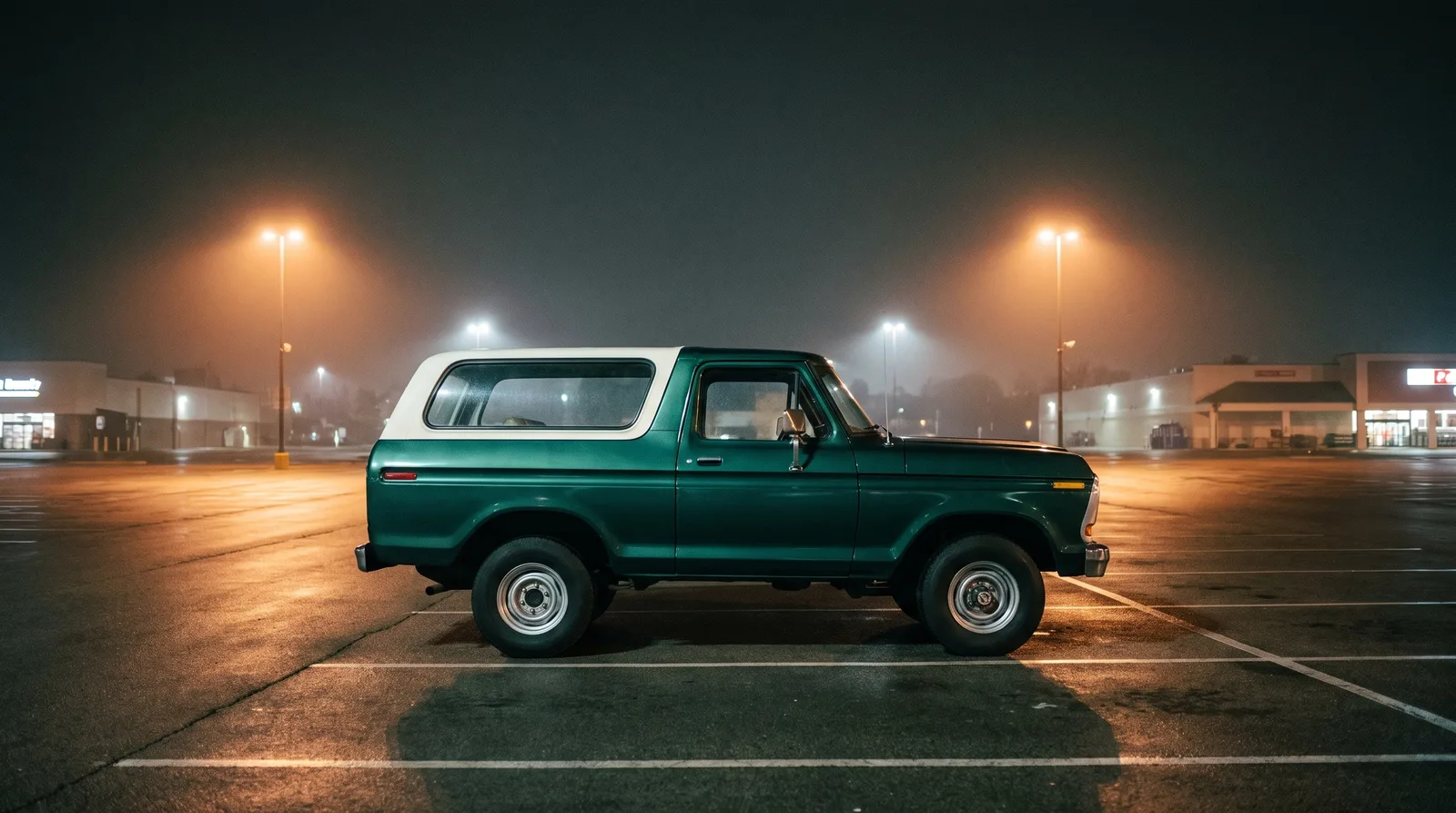
From forgotten to fought-over
For a long time, the 1978-79 full-size Bronco lived in the shadow of two more famous relatives. The compact first-generation Bronco from 1966 through 1977 had already built a devoted following, and the downsized full-size Broncos that followed from 1980 stuck around for another seventeen model years across three generations, giving it far more cultural presence and parts availability. Sandwiched between them, the two-year-only full-size Bronco of 1978-79 got treated as a transitional oddity rather than a collectible in its own right, which kept prices low and drove plenty of trucks straight into daily-driver duty, off-road abuse, or the scrapyard.
That undervaluation is exactly what has flipped in recent years. Buyers who understand the model's short production run have started recognizing that a two-year window naturally limits supply, and decades of hard use have thinned the surviving population further. What remains in genuinely good, unmolested condition is a smaller pool than most people assume, and smaller pools tend to push values upward once demand catches up, which is broadly what recent auction results for clean, documented examples suggest, though exact figures vary widely by condition, originality, and sale venue.
What actually drives value in this generation
Condition and originality separate the trucks worth real money from the trucks worth parts-truck money, and the gap between those two categories is wider than in more common model years. Rust is the primary enemy, particularly around the frame, the rear tailgate area, and the mounting points for the removable fiberglass top, since any compromise there affects both structural integrity and the truck's defining feature. Engine and drivetrain originality matters as well, since these trucks have frequently been swapped or modified over the decades by owners more interested in trail capability than preservation.
Documentation carries outsized weight in this specific market. Because the full-size Bronco's two model years produced a relatively small number of trucks compared to the F-series pickups they were built alongside, original build sheets, window stickers, and dealer paperwork are harder to come by and correspondingly more valuable when a seller can produce them. A well-documented truck with a clear ownership history commands a real premium over an equally clean example with no paper trail, and that gap has only widened as buyers become more sophisticated about what they're purchasing.
Reading the current market correctly
Anyone evaluating a 1978 Bronco purchase today needs to separate genuine appreciation from simple market noise. Values have risen, but they have risen unevenly, with rough or heavily modified trucks lagging well behind clean, original, or professionally restored examples. A truck that looks good in photographs but carries unknown mechanical history, mismatched trim, or undocumented bodywork should be priced accordingly, regardless of what a seller claims it's worth based on a single high-profile auction result elsewhere.
The related story on a related story covers what to look for when hunting a genuinely clean example of this generation, which pairs well with understanding the broader value trends discussed here. Readers newer to this specific Bronco generation should also start with 1978 ford bronco history to understand what made this particular two-year run distinct from both the compact Bronco before it and the long-running downsized trucks after it.
"I tell clients the same thing every time. The 1978-79 Bronco's short production run is finally working in its favor, but that only holds for trucks with the documentation to back up their story."
- Marcus Feld
How this generation compares to its Bronco siblings on the value curve
It helps to put the 1978-79 Bronco's rise in context against the rest of the family. The compact first-generation Bronco built its collector reputation early and has had decades to mature into a mainstream classic, with well-established price tiers for various body styles and condition levels. The downsized full-size Broncos, produced from 1980 through 1996 across three generations, offer buyers far more supply and a wider range of price points because Ford simply built so many more of them over a longer run. The 1978-79 truck sits in an unusual middle position, old enough to carry genuine classic status, scarce enough to command a real premium, but without the decades of established collector infrastructure that the earlier generation enjoys.
That middle position is exactly why savvy buyers have started paying closer attention. A market still working out where a vehicle belongs in the pricing hierarchy tends to offer more opportunity than one that has already settled into predictable, well-documented value bands. Buyers who understand the full-size Bronco's specific scarcity today are, in effect, getting in before the broader collector market fully catches up to what club members and specialists have known for years.
Where this leaves buyers today
The practical takeaway for anyone shopping this generation is that patience beats urgency. Prices have moved up, but they have not moved so far that careful buyers can't still find honest, well-preserved trucks at reasonable numbers, particularly outside the highest-profile auction houses where hype tends to inflate final hammer prices. A private sale or a smaller regional auction often produces better value than a marquee event, provided the buyer does the legwork to verify condition and history independently rather than trusting a seller's description alone.
For readers ready to see what's currently available, Broncos for sale now offers a real snapshot of pricing and condition across the full-size generation and beyond. The 1978-79 Bronco's rising collector status is not a bubble built on hype. It reflects a genuine, overdue recognition that a short production run and a distinctive design deserve more attention than this generation received for its first four decades on the market.
Appraisers who track this specific market segment expect the gap between top-tier documented trucks and average condition examples to keep widening over the next several years, not narrowing. That trend rewards buyers who prioritize condition and paperwork now, while penalizing anyone hoping to flip an undocumented truck quickly based purely on the generation's rising reputation. Real value in this segment is earned through patience and diligence, not speculation, and that has been true of every genuinely appreciating classic vehicle market this industry has watched mature over time.
Insurance valuations have started catching up as well, with several agreed-value classic policy providers now treating well-documented 1978-79 Broncos as a distinct category rather than lumping them in with the more common 1980-96 trucks. That shift matters practically, since it affects what an owner can actually recover if a truck is ever damaged or stolen, and it's a reasonably reliable signal that the broader insurance and appraisal industry now recognizes what club specialists have argued for years.
Sources and notes
Related Reading
Have a
Ford Bronco
for Sale?
Reach thousands of serious classic car collectors across the US.
Sell It Here →
Selling a classic? Here's how: sell my classic car
Are You a Classic Car Dealer?
List your full inventory and connect with targeted classic car buyers.
Join as a Dealer →

About the author
Marcus Feld
Accredited collector-car appraiser who reads the market through hammer prices, condition tiers and risk.
Related Listings - Ford Bronco

Comments
Be the first to comment on this article.