
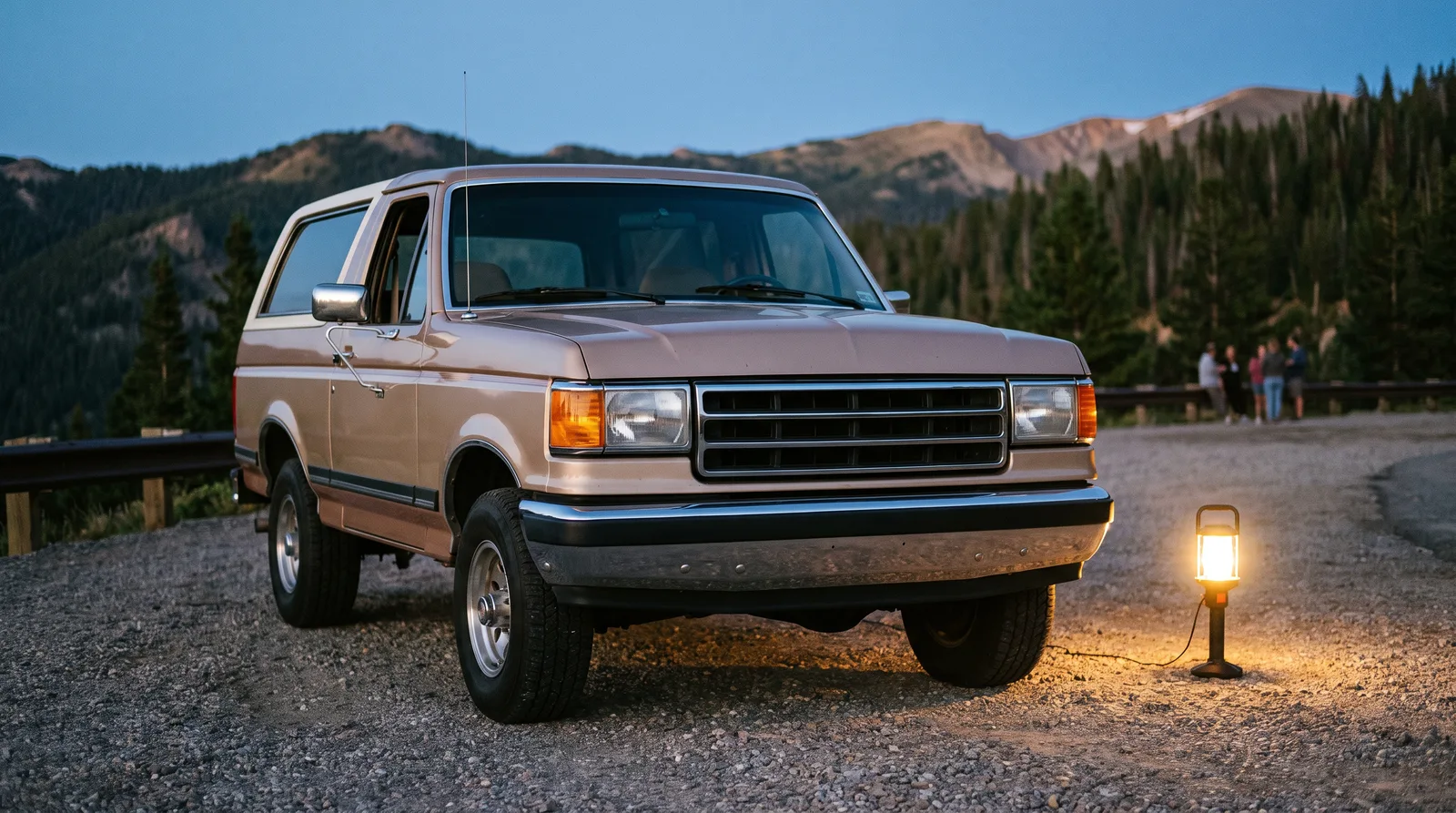
Finding a genuine ford bronco 1978 survivor takes more patience than most first-time shoppers expect. This generation of Bronco occupies a narrow window, built only for the 1978 and 1979 model years before Ford moved to a smaller, lighter platform for 1980, and that short production run means the honest, unmolested trucks left today are genuinely scarce rather than simply advertised as such.
Car Features
7 min read
Finding a Clean 1978 or 1979 Bronco Today
Genuine, unmolested examples of the two-year-only 1978-79 full-size Bronco are scarce, and finding one takes careful inspection and real documentation.
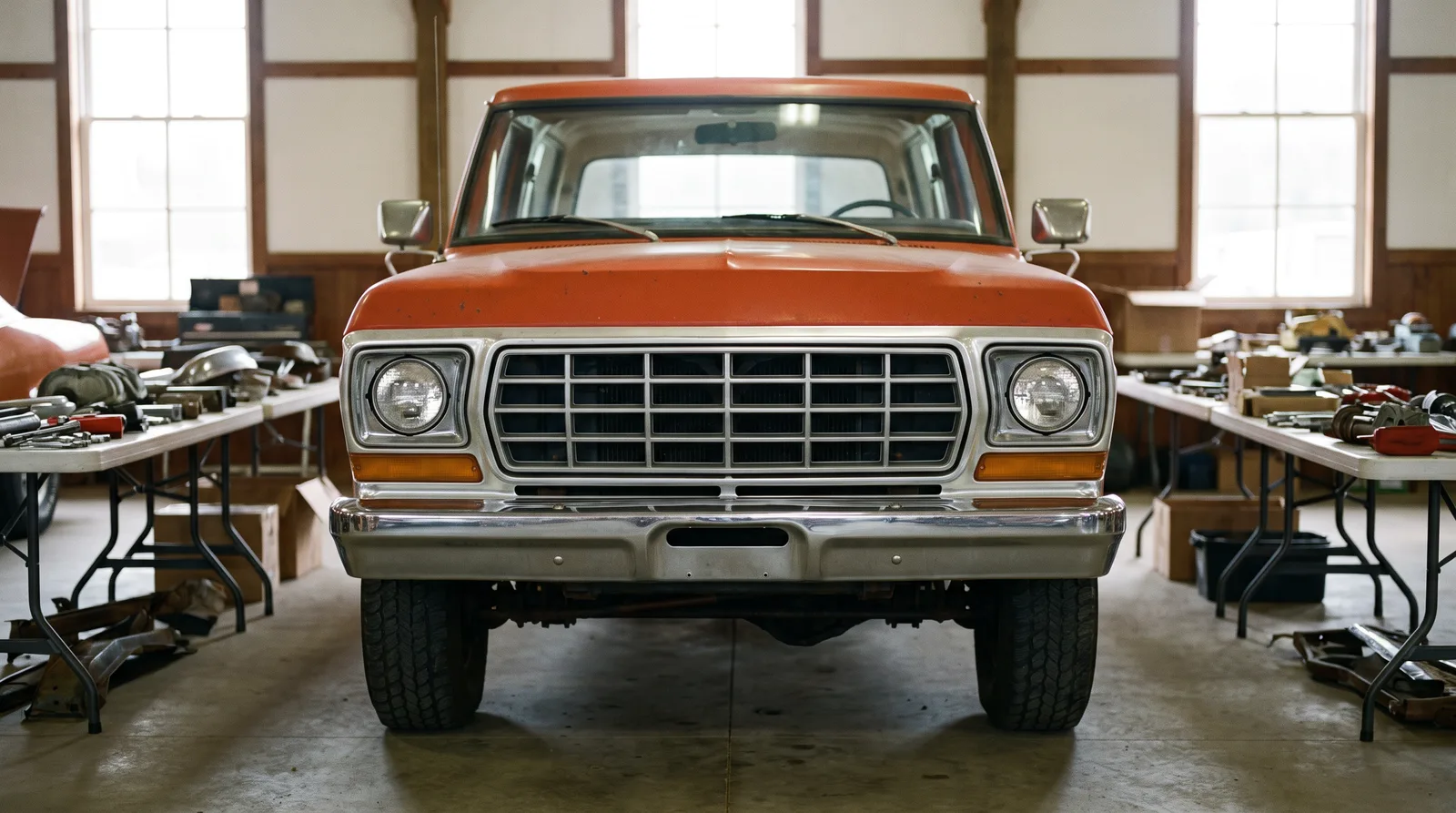
Why this generation is harder to find clean
Full-size Broncos from 1978 and 1979 were built as working trucks first, purchased by buyers who used them for towing, hauling, and off-road duty rather than treating them as future collectibles. Decades of that use took a predictable toll. Rust set into frames and rocker panels in wetter climates, engines were often swapped or rebuilt once the original 351M or 400 V8 racked up hard miles, and the removable fiberglass top, one of this generation's most distinctive features, was frequently damaged, mismatched, or lost entirely over the years.
A genuine survivor, meaning a truck that has avoided major rust, retains its original drivetrain, and still carries its correct top and trim, represents a small fraction of the total production run at this point. That scarcity is precisely why documentation and careful inspection matter more with this generation than with more common Bronco years.
Where to look and what to expect
Dry climate regions tend to produce the best surviving examples, since these trucks were sold and driven nationwide but fared far better in the Southwest and parts of the Mountain West than they did in states that salt their roads every winter. Ranch and farm use, ironically, sometimes preserved trucks better than suburban daily driving did, since a Bronco parked in a dry equipment yard after years of light use can survive in better structural condition than one driven year-round through wet winters.
Buyers should expect to pay a real premium for documented, low-modification examples over trucks advertised loosely as "solid" or "runs and drives." Those vague descriptions usually mean exactly what they imply: a truck that functions but carries unknown history, unverified originality, and potential rust hidden under undercoating or fresh paint.
| Inspection area | What to check | Why it matters |
|---|---|---|
| Frame rails | Rust near rear axle and body mounts | Structural integrity, expensive to repair correctly |
| Top mounting points | Fiberglass top fit and hardware condition | Signature feature, costly to source replacement parts |
| Engine and VIN tags | Match numbers against build sheet if available | Confirms originality, affects long-term value |
| Rocker panels and floors | Rust bubbling under paint, soft spots | Common failure point on trucks driven in wet climates |
| Interior trim | Original upholstery, dash, and XLT woodgrain if equipped | Hard to reproduce accurately, affects authenticity |
What genuine originality is worth paying for
A truck with matching numbers, an intact original interior, and a clean title history will always command more than a nicer-looking but heavily modified example, and that gap has widened as collectors have grown more educated about this specific generation. Paint quality alone tells a buyer very little. A fresh repaint can hide rust repair done poorly just as easily as it can highlight a genuinely well-preserved truck, which is why mechanical and structural inspection has to take priority over how good a Bronco looks in listing photos.
Readers new to this generation should start with the whole picture, which covers how Ford built this two-year-only full-size Bronco and why it sits apart from both the compact first-generation truck and the longer-running third generation that replaced it in 1980. Understanding that context makes it much easier to judge whether a specific truck is a fair-value survivor or an overpriced project wearing a fresh coat of paint.
"With this generation especially, I tell buyers to trust the frame and the paperwork before they trust the photographs. A truck can look wonderful in a listing and still be hiding a decade of poor repairs underneath."
- Sarah Whitfield
Regional differences worth factoring in
Where a truck spent most of its life matters almost as much as how it was driven. A Bronco that lived its entire history in Arizona or New Mexico is statistically far more likely to have survived structurally sound than one that spent decades in the Rust Belt or the Northeast, regardless of how many miles either truck accumulated. Buyers shopping nationally, rather than limiting themselves to local listings, often find better condition trucks for similar money simply by factoring climate history into the search from the start.
That said, a dry-climate truck isn't automatically a good buy. Sun exposure takes its own toll on interior trim, dashboards, and the fiberglass top, sometimes leaving a structurally excellent truck with faded, brittle, or cracked components that a wetter-climate truck might have avoided. The ideal survivor typically combines a dry-climate history with garaged or covered storage for at least part of its life, a combination that narrows the search considerably but rewards the buyer willing to look nationally rather than settling for the nearest available truck.
Making the purchase with confidence
A pre-purchase inspection from someone experienced with full-size Broncos specifically, not just classic trucks generally, is worth the cost given how much variation exists in this generation's surviving population. Ask sellers directly about rust repair history, top replacement, and any drivetrain work, and be skeptical of vague or evasive answers. The best survivors tend to come with a clear, boring ownership history rather than a dramatic story, since dramatic stories usually mean the truck has been through something that left a mark.
It also pays to be realistic about what "survivor" actually means in this context. Very few 1978-79 Broncos left the factory and simply sat untouched for decades. Most genuine survivors were driven, worked, and maintained by owners who cared enough to keep rust at bay and address mechanical issues promptly rather than deferring them. That kind of active, attentive ownership history is worth more than a truck that sat neglected in a barn for thirty years and merely happens to have low mileage, since neglect brings its own set of hidden problems that low odometer numbers can't hide from a careful inspection.
Shoppers ready to start comparing available trucks can find a classic Bronco and evaluate current listings against the inspection points covered here. Patience is the real advantage in this market. A genuine 1978 or 1979 survivor is out there, but finding one worth the price being asked takes real diligence rather than an impulse decision based on a promising set of photos.
Set a realistic budget that accounts for at least some deferred maintenance, since even the cleanest surviving example is approaching fifty years old and will eventually need age-related work regardless of how well it was cared for previously. Buyers who go in expecting a perfect turnkey truck at a bargain price are usually the ones who end up disappointed, while those who budget honestly for a genuinely good survivor tend to come away satisfied with what remains one of the more distinctive Broncos Ford ever built.
Sources and notes
Related Reading
Have a
Ford Bronco
for Sale?
Reach thousands of serious classic car collectors across the US.
Sell It Here →
Selling a classic? Here's how: compare the places to sell classic cars
Are You a Classic Car Dealer?
List your full inventory and connect with targeted classic car buyers.
Join as a Dealer →

About the author
Sarah Whitfield
Third-generation classic car collector specializing in pre-war American and European coachbuilt automobiles. Researcher and concours enthusiast.
Related Listings - Ford Bronco
Comments
Be the first to comment on this article.