
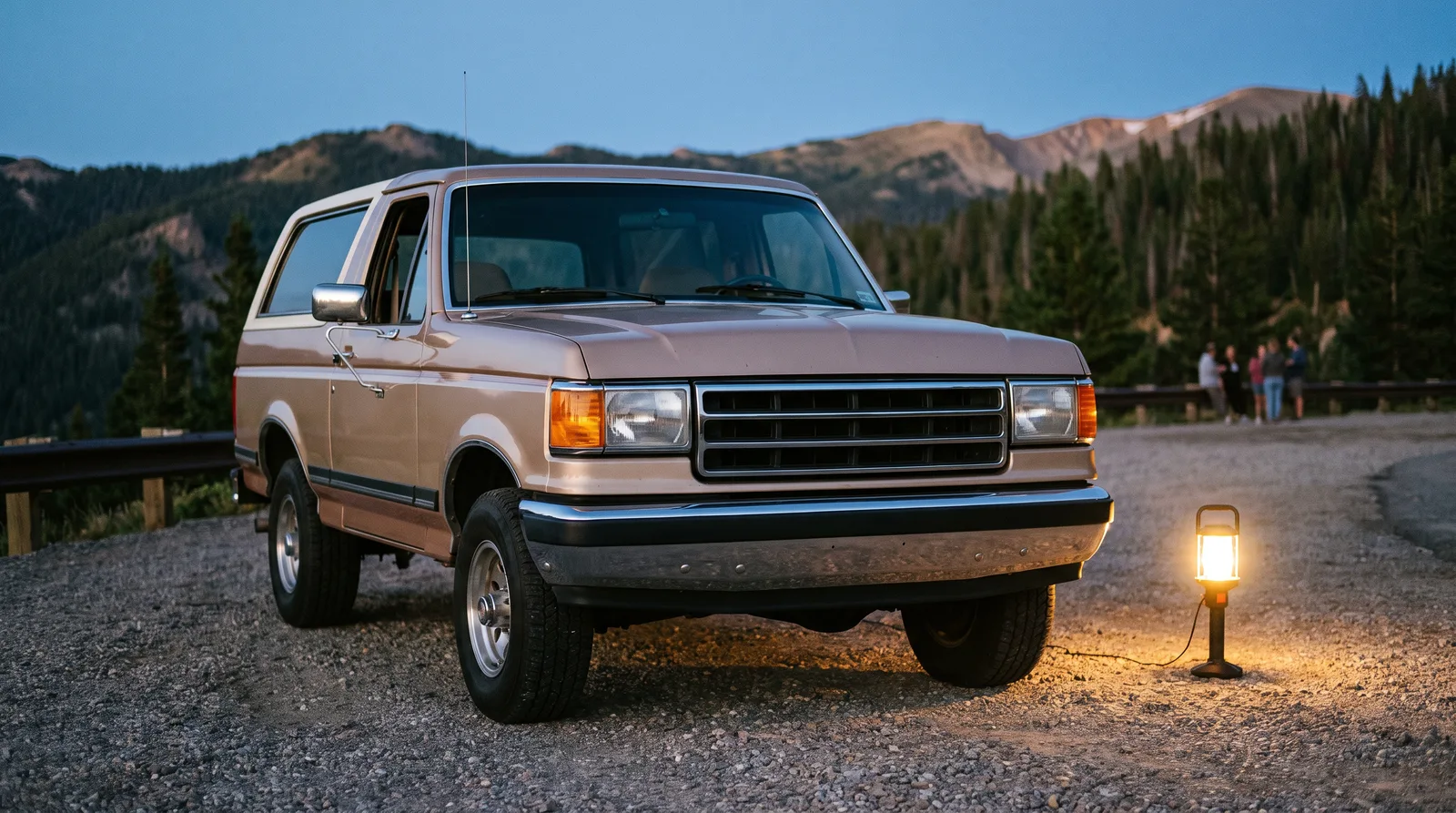
The ford bronco 1978 cult following that exists today would probably surprise the Ford executives who greenlit this truck as a straightforward response to Chevrolet's K5 Blazer. What began as a competitive product decision has, over five decades, turned into a small but genuinely devoted community of owners who treat the two-year-only full-size Bronco as something closer to a specialty interest than a common classic truck.
Car Features
6 min read
The Cult Following of the Big Bronco
The two-year-only 1978-79 full-size Bronco built a small but deeply dedicated ownership community defined by scarcity, documentation, and grassroots preservation.
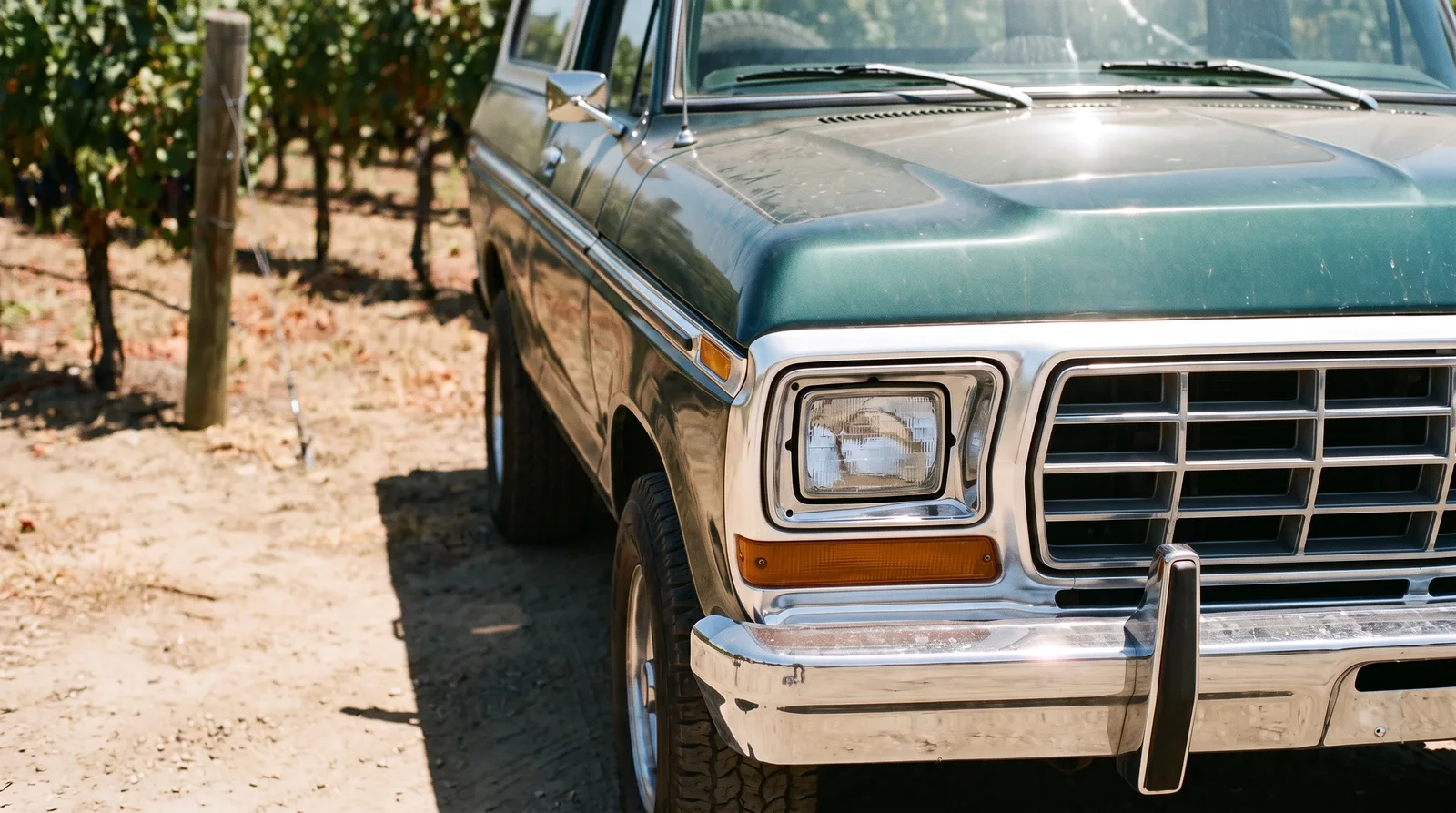
A generation defined by its own limits
Ford built the full-size Bronco for only the 1978 and 1979 model years before downsizing the platform for 1980, which means this generation never had the chance to build the broad, decades-long following that the compact first-generation Bronco or the long-running third-generation trucks eventually earned. That short window could have doomed the 1978-79 Bronco to obscurity. Instead, it did something close to the opposite. Owners of these trucks tend to know exactly how rare their specific truck is within the larger Bronco story, and that awareness has bred a tighter, more research-driven community than you'd find around more common model years.
Ford built 77,917 full-size Broncos for 1978 and 104,038 for 1979, a combined total well short of the hundreds of thousands the company moved with its F-series pickups over the same span. That relatively modest number, spread across two years and thinned further by decades of rust and hard use, is the foundation the current cult following is built on.
How the community organized around scarcity
Full-size Bronco owners from this generation have historically had to work harder for parts, information, and even basic recognition than owners of more common classics, and that difficulty pushed the community toward genuine specialization rather than casual ownership. Regional clubs and online forums dedicated specifically to the 1978-79 trucks emerged as owners realized general Bronco resources, heavily weighted toward the compact first generation, often didn't address the specific quirks of the full-size platform.
That specialization shows up in how seriously these owners treat documentation. Because build sheets, dealer invoices, and factory literature for this generation are harder to find than equivalent paperwork for more common Ford trucks, the community has developed something close to an informal archive, owners sharing scanned documents, VIN decoding knowledge, and parts sourcing tips that would otherwise be lost. This grassroots preservation effort has done more to keep the 1978-79 Bronco's history intact than any official Ford archive.
Why scarcity built loyalty instead of frustration
It would be reasonable to assume that a hard-to-source, poorly documented truck generation would frustrate owners into abandoning the platform for something easier to maintain. Instead, the difficulty seems to have deepened commitment among the people who stuck with these trucks. Finding a correct part or piece of documentation for a 1978-79 Bronco carries a satisfaction that owning a more common classic simply doesn't offer, and that satisfaction has become part of the culture surrounding these trucks.
Readers interested in how this generation fits into the larger Bronco story, including the specific market conditions that led Ford to build a full-size Bronco in the first place, should start with where this started, which covers the truck's origin and launch year in detail. Understanding that background makes the community's dedication easier to appreciate, since it explains exactly what these owners are working to preserve.
"Every generation of Bronco has its defenders, but the 1978-79 crowd operates almost like a research guild. They trade documentation the way other collectors trade parts."
- Tom Ramirez
How the internet changed a niche community
For much of the 1980s and 1990s, staying connected to other 1978-79 Bronco owners meant regional club newsletters, swap meets, and word of mouth, a slow and geographically limited way to trade information about a truck this scarce. The arrival of online forums in the late 1990s and early 2000s changed that dynamic completely, letting owners scattered across the country compare notes, share scanned documentation, and identify parts sources in ways that simply weren't possible before. What had been a fragmented, regional following became a genuinely national community almost overnight.
That shift mattered more for this generation than it did for more common Broncos, precisely because the full-size 1978-79 trucks were rare enough that any given region might only have a handful of active owners. Online connection turned isolated enthusiasts into an actual network, and that network has only grown more sophisticated as photo archives, VIN databases, and specialty parts vendors catering specifically to this generation have matured over the past two decades.
Where the following stands today
The 1978-79 Bronco's cult following remains smaller than the communities built around either the compact first generation or the third-generation trucks that followed it, and it likely always will given the two-year production window. What it lacks in size, it makes up for in depth of knowledge, with owners who can discuss trim codes, engine variations, and dealer options with a specificity that surprises people who assume this generation is simply a footnote between two more famous Broncos.
For anyone drawn into this niche after learning about it, current listings under shop classic Bronco listings offer a starting point to see what's available across the full-size generation and beyond. The cult following around the 1978-79 Bronco proves that a short production run doesn't have to mean a forgotten one. Sometimes scarcity is exactly what turns casual owners into genuine devotees.
Talk to enough of these owners and a pattern emerges. Very few of them describe stumbling into a 1978-79 Bronco by accident. Most sought one out specifically, drawn by the two-year production window, the removable top, or simply the challenge of maintaining something less common than the Broncos most people picture when they hear the name. That deliberate choice, made by owner after owner across decades, is what separates a genuine cult following from a passing trend, and it's why this small corner of Bronco culture shows no signs of fading even as the trucks themselves grow harder to find.
Younger enthusiasts have started entering this community in recent years too, drawn less by nostalgia and more by curiosity about a generation of truck that doesn't get much attention in mainstream classic car coverage. That influx has brought new energy to a following that could easily have skewed older and quieter as its founding members aged. Longtime owners generally welcome the new interest, provided the newcomers show the same respect for documentation and originality that has defined the community since its earliest days, a standard the group enforces more through friendly peer pressure than any formal rule.
Whether that momentum holds as production-year trucks continue to age remains an open question, but the early signs suggest this particular cult following has real staying power rather than being tied purely to the generation of owners who bought these trucks new decades ago.
Sources and notes
Related Reading
Have a
Ford Bronco
for Sale?
Reach thousands of serious classic car collectors across the US.
Sell It Here →
Selling a classic? Here's how: sell my classic car
Are You a Classic Car Dealer?
List your full inventory and connect with targeted classic car buyers.
Join as a Dealer →

About the author
Tom Ramirez
Corvette researcher and historian based in Bowling Green, Kentucky. Two decades documenting Corvette production history from original factory records.
Related Listings - Ford Bronco
Comments
Be the first to comment on this article.