
Ford's full-size Bronco did not arrive in 1978 because that was the plan all along. Internal product timelines at Ford had a bigger, F-Series-based Bronco slated for release as early as the 1974 model year, before world events intervened. The ford bronco 1978 delayed launch is one of those stories where the finished truck looks inevitable in hindsight, but getting it to showrooms took Ford through an energy crisis that upended assumptions about what American buyers would pay to fill a tank.
Car Features
6 min read
The Fuel Crisis That Delayed the Full-Size Bronco
Ford had a bigger, F-Series-based Bronco ready years before 1978, until the 1973 oil embargo forced the company to hold the launch back.
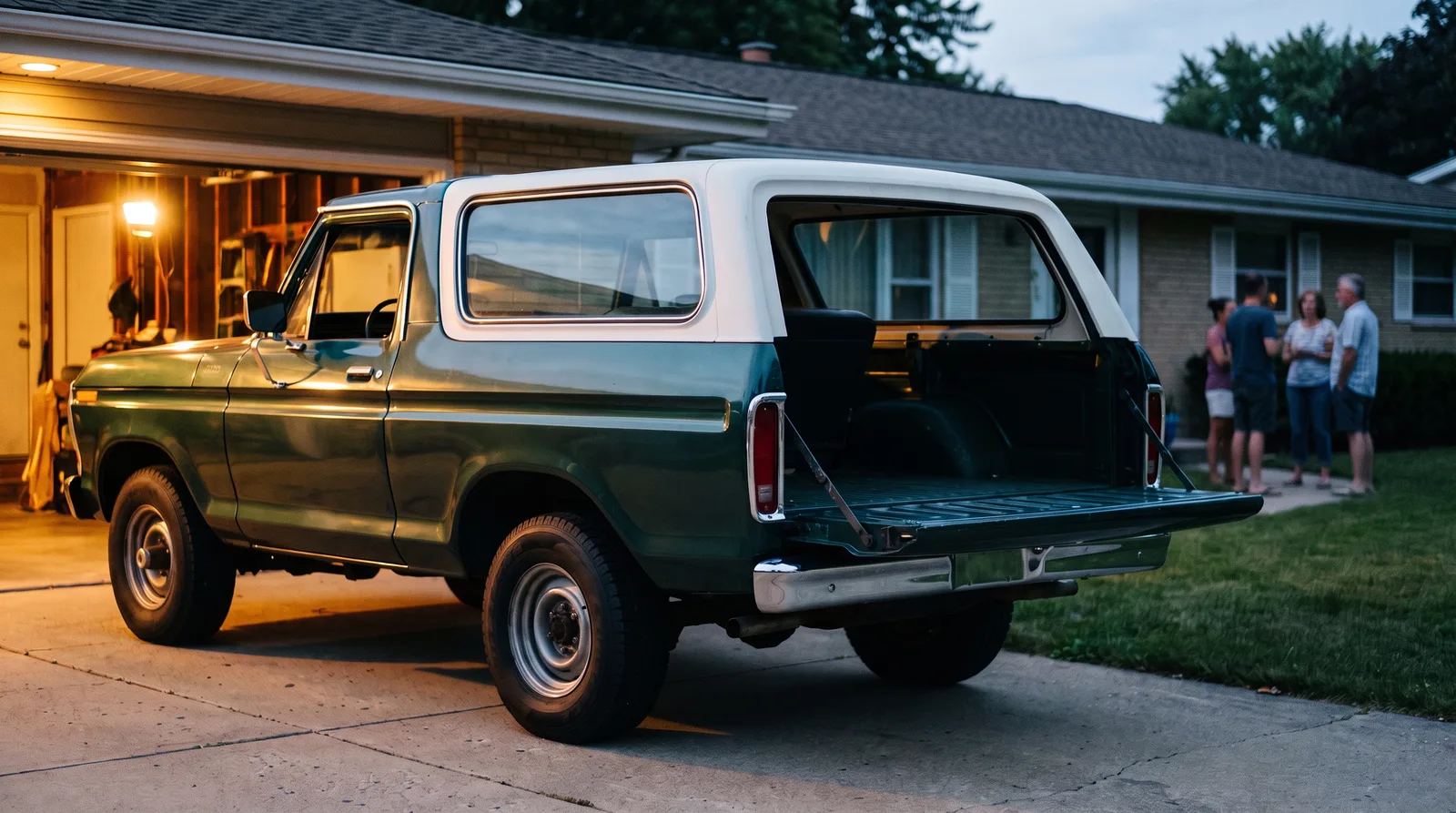
A redesign already in motion
Ford's engineers had been developing the F-Series-based Bronco concept well before 1978, following the same logic that drove Chevrolet to grow the Blazer off its C/K pickup. Prototypes and internal proposals existed showing a bigger, roomier Bronco riding on shortened truck architecture, with the kind of V8 power and towing capacity the compact original could never offer. The direction was set. What was not set was the timing, and that turned out to matter enormously.
Then came October 1973. The OPEC oil embargo, triggered by the Arab-Israeli war and the United States' support for Israel, cut off a significant share of oil exports to America almost overnight. Gas prices spiked, fuel became genuinely scarce at the pump in some regions, and buyers who had been cross-shopping big trucks and land yachts suddenly wanted the opposite. Detroit's product planners watched consumer appetite swing hard toward smaller, more efficient vehicles, and any program built around a bigger, thirstier truck looked like a bet made at exactly the wrong moment.
Why Ford hit pause
A full-size Bronco built on F-Series bones was, by design, heavier and less fuel-efficient than the compact model it would replace. Launching that truck into a market gripped by fuel anxiety risked a rollout that flopped before it had a chance to prove itself. Ford's leadership chose caution. Rather than push the bigger Bronco to market on the original schedule, the company held the program back, continued building the aging compact Bronco with only minor updates, and waited to see how the fuel situation and buyer sentiment would settle.
That wait stretched across several model years. The compact Bronco soldiered on essentially unchanged in its basic architecture from 1966 through 1977, even as the truck around it aged badly against newer competition. Ford was not simply slow to react. It was deliberately holding a finished direction in reserve until the economic picture looked survivable for a bigger vehicle.
The market shifts again
By the mid-1970s the immediate shock of the embargo had faded. Gas was still more expensive than it had been before 1973, but panic buying and shortages eased, and buyers gradually returned to larger vehicles, especially trucks and truck-based SUVs, which carried a different set of expectations than passenger cars when it came to fuel economy. Chevrolet's Blazer kept selling well through this period, proof that a full-size truck-based SUV could still find buyers even in a more fuel-conscious market. That evidence likely gave Ford the confidence to finally move the delayed Bronco program forward.
read the background on what Ford ultimately delivered when the full-size Bronco reached dealers for the 1978 model year, several years later than the original internal timeline had called for.
What the delay cost, and what it saved
The delay meant Ford spent additional years selling a Bronco that was, by 1977, clearly outdated next to the Blazer and the Scout. Ford almost certainly lost sales to Chevrolet during those years, watching buyers who wanted a bigger, more capable truck-based SUV walk into GM showrooms instead. That is a real cost, and it shows up in the sales figures of the period even without precise numbers attached to it here.
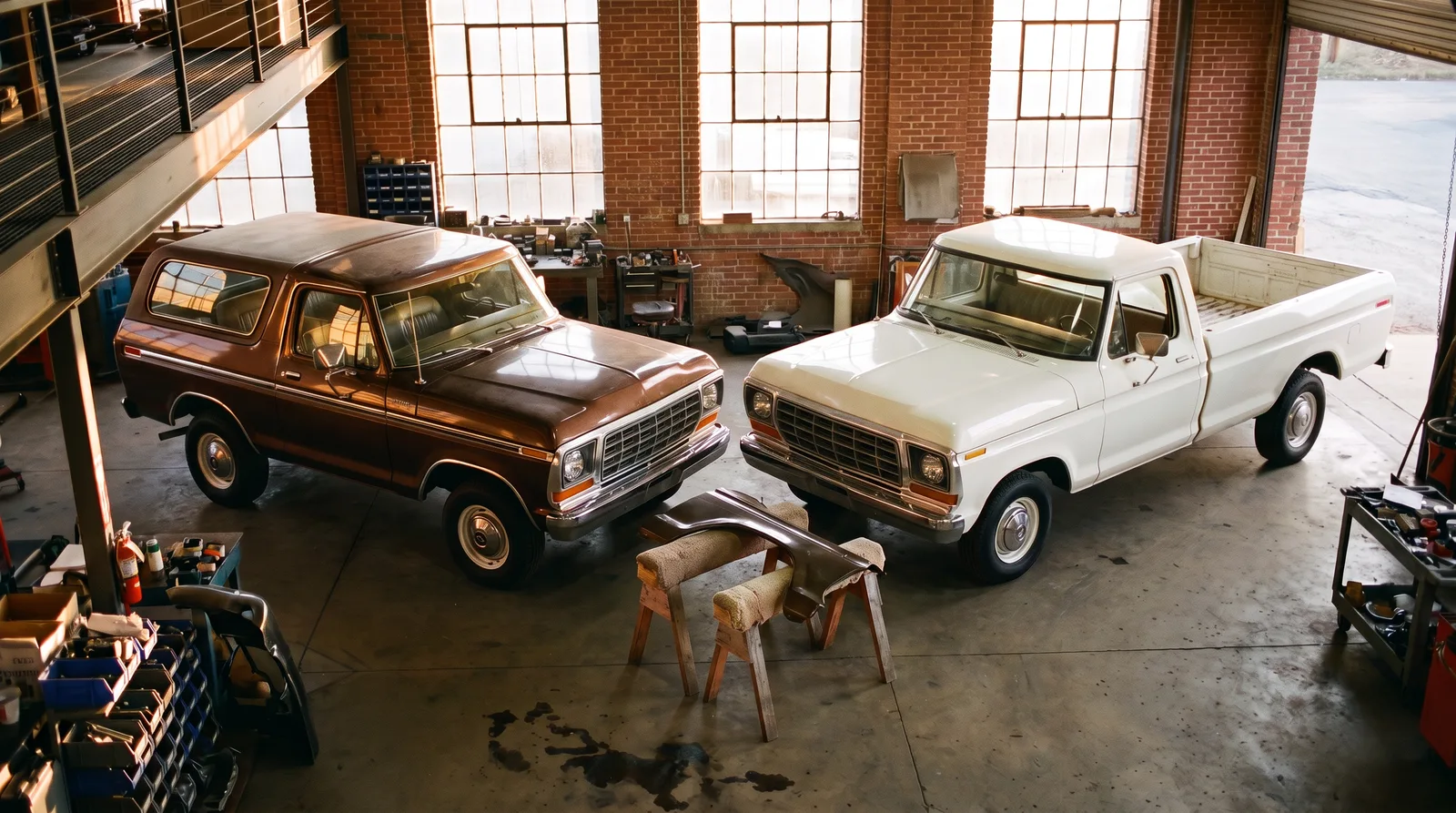
But the delay also protected Ford from a worse outcome. Launching a heavier, less efficient Bronco directly into the fuel crisis could have poisoned the nameplate's reputation at the exact moment buyers were angriest about fuel costs. By waiting, Ford introduced the full-size Bronco once the market had stabilized enough to actually want it. The truck that arrived in 1978 shared its body and chassis heavily with the F-Series pickup already discussed worth a look too for anyone curious how directly the two vehicles were related underneath the sheet metal.
"Factory paperwork does not lie about intent. Ford had the bones of the full-size Bronco worked out well before 1978. What changed was not the design, it was whether the country could stomach a bigger truck at the pump."
- Tom Ramirez
What Ford's rivals did in the meantime
Ford was not the only automaker recalculating its plans after 1973. Every domestic manufacturer with a truck-based SUV program had to weigh the same question, whether buyers spooked by fuel shortages would still want a bigger, heavier vehicle once the immediate crisis passed. Chevrolet, having already launched the full-size Blazer in 1969, was in a different position. Its truck-based SUV was already established in the market, already generating steady sales, and already absorbing whatever fuel-cost anxiety existed among its existing buyers. Chevrolet did not have to make a launch decision under crisis conditions. It simply kept building a truck people were already buying.
That difference in timing gave Chevrolet a real advantage during exactly the years Ford was holding the full-size Bronco program back. International Harvester's Scout occupied a similar position, established well before the embargo, continuing sales through the crisis years without needing to clear the same go or no-go decision Ford faced. Ford, by contrast, was trying to launch a brand-new full-size SUV program from a standing start right as the fuel picture turned uncertain, a much riskier proposition than simply continuing to sell an established model.
This context helps explain why Ford's caution, in hindsight, looks like sound business judgment rather than corporate hesitation. A brand-new product launched into an energy crisis carries far more risk than an established model weathering the same crisis. Ford chose to wait until it could launch from a position closer to Chevrolet's, once fuel anxiety had eased enough that a new full-size truck-based SUV had a reasonable chance to find its market.
Reading the delay into today's market
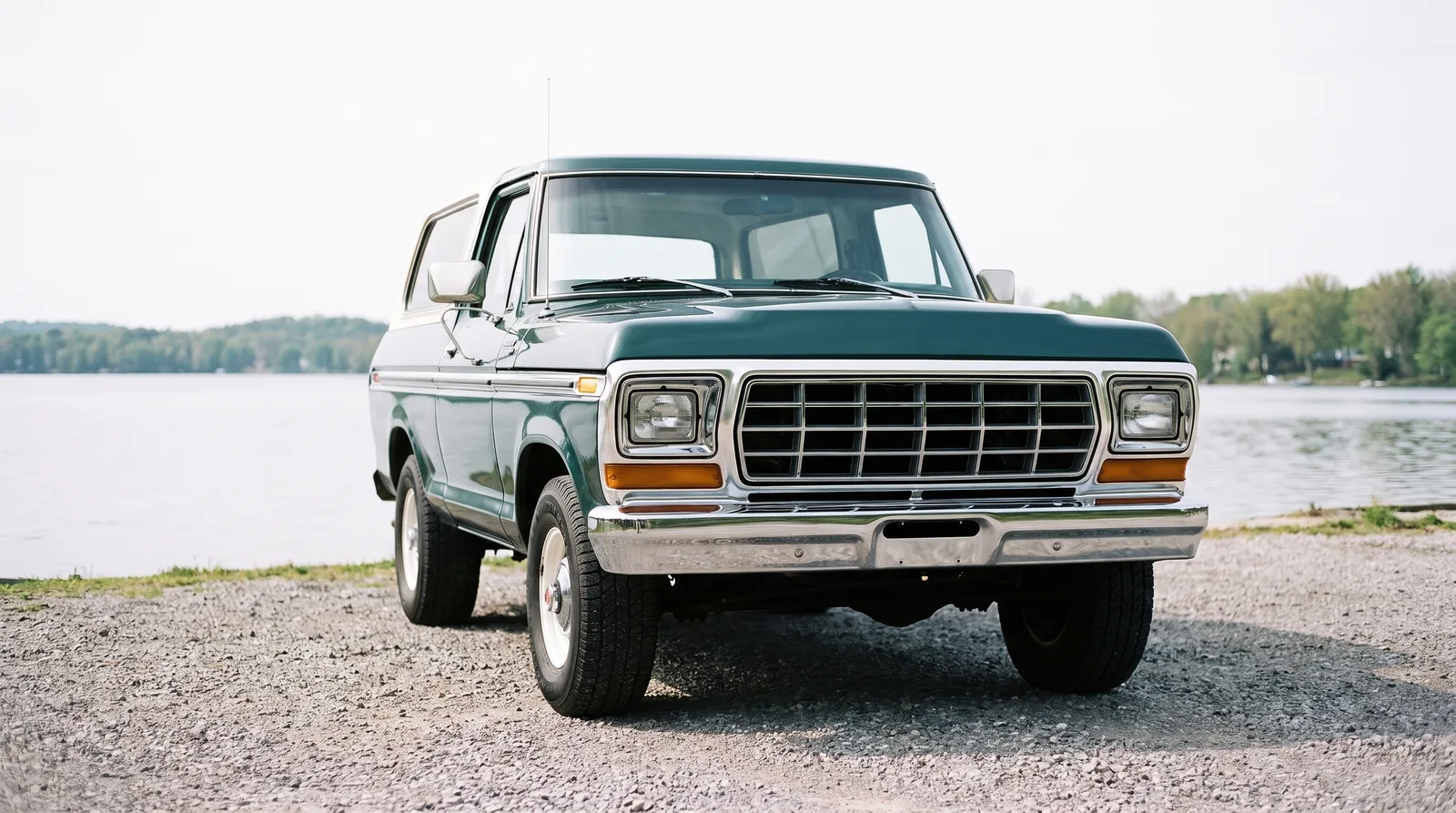
For collectors, the ford bronco 1978 delayed launch explains something that otherwise seems odd: why the compact Bronco ran for such an unusually long production stretch with so little change, and why the full-size model that finally replaced it feels like a fully resolved design rather than an early, tentative attempt. Ford had years to refine the concept internally before it ever reached a dealer lot. That extra development time, forced by circumstances nobody at Ford wanted, arguably made the 1978 Bronco a more complete truck than it might have been on the original schedule.
If you want to see how that finished truck holds up today, you can shop classic Bronco listings and compare examples from the full production run against the compact model it eventually replaced.
Sources and notes
Related Reading
Have a
Ford Bronco
for Sale?
Reach thousands of serious classic car collectors across the US.
Sell It Here →
Selling a classic? Here's how: compare the places to sell classic cars
Are You a Classic Car Dealer?
List your full inventory and connect with targeted classic car buyers.
Join as a Dealer →

About the author
Tom Ramirez
Corvette researcher and historian based in Bowling Green, Kentucky. Two decades documenting Corvette production history from original factory records.
Related Listings - Ford Bronco

Comments
Be the first to comment on this article.