
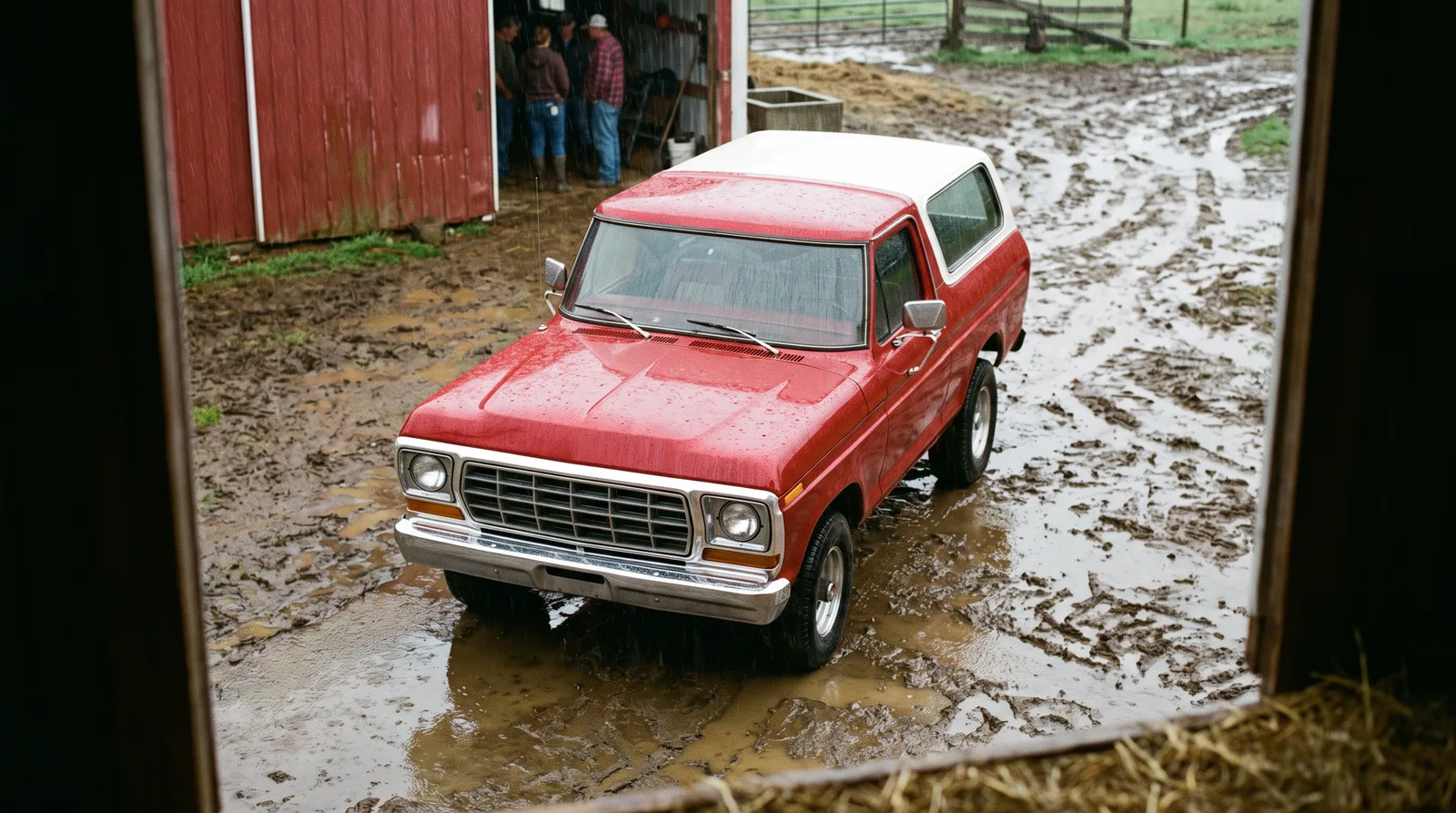
The Ford Bronco that arrived for the 1978 model year looked almost nothing like the truck it replaced. Where the original 1966 Bronco was a tight, upright little thing built on its own dedicated chassis, the 1978 Ford Bronco full size question comes down to one decision Ford made years earlier: put the Bronco on the F-Series truck platform and let it grow into a proper full-size sport utility. Understanding why requires looking at what Ford was actually selling in the mid-1970s, and why the small Bronco had become a problem the company wanted to solve.
Car Features
7 min read
Why Ford Supersized the 1978 Bronco
Ford rebuilt the Bronco on F-Series bones for 1978, trading the compact original's agility for size, power, and a real shot at the Chevy Blazer.
A small truck in a market that wanted bigger ones
By the mid-1970s, the compact Bronco was thirteen years into a design that had barely changed since 1966. It rode on a short 92-inch wheelbase, carried a cramped cabin, and offered limited engine choices compared to what buyers could get in a pickup. Meanwhile, International Harvester's Scout and Chevrolet's Blazer, later joined by GMC's Jimmy, had both grown into roomier, more capable trucks that could tow, haul, and carry a family in reasonable comfort. Chevrolet in particular had built the Blazer directly off its full-size C/K pickup, giving it F-Series-scale interior room, a wide range of drivetrains, and a back seat that could actually fit adults for more than a short errand.
Ford's product planners watched the Blazer eat into territory the compact Bronco could not reach. The math was simple. A Bronco built on a shortened F-Series frame would share body stampings, glass, engines, and much of the interior with the F-100 and F-150 pickups already in production. That commonality lowered tooling costs and let Ford offer a truck with genuine towing capacity and a big-block V8 option, something the old Bronco chassis was never engineered to handle.
Sharing bones with the F-Series
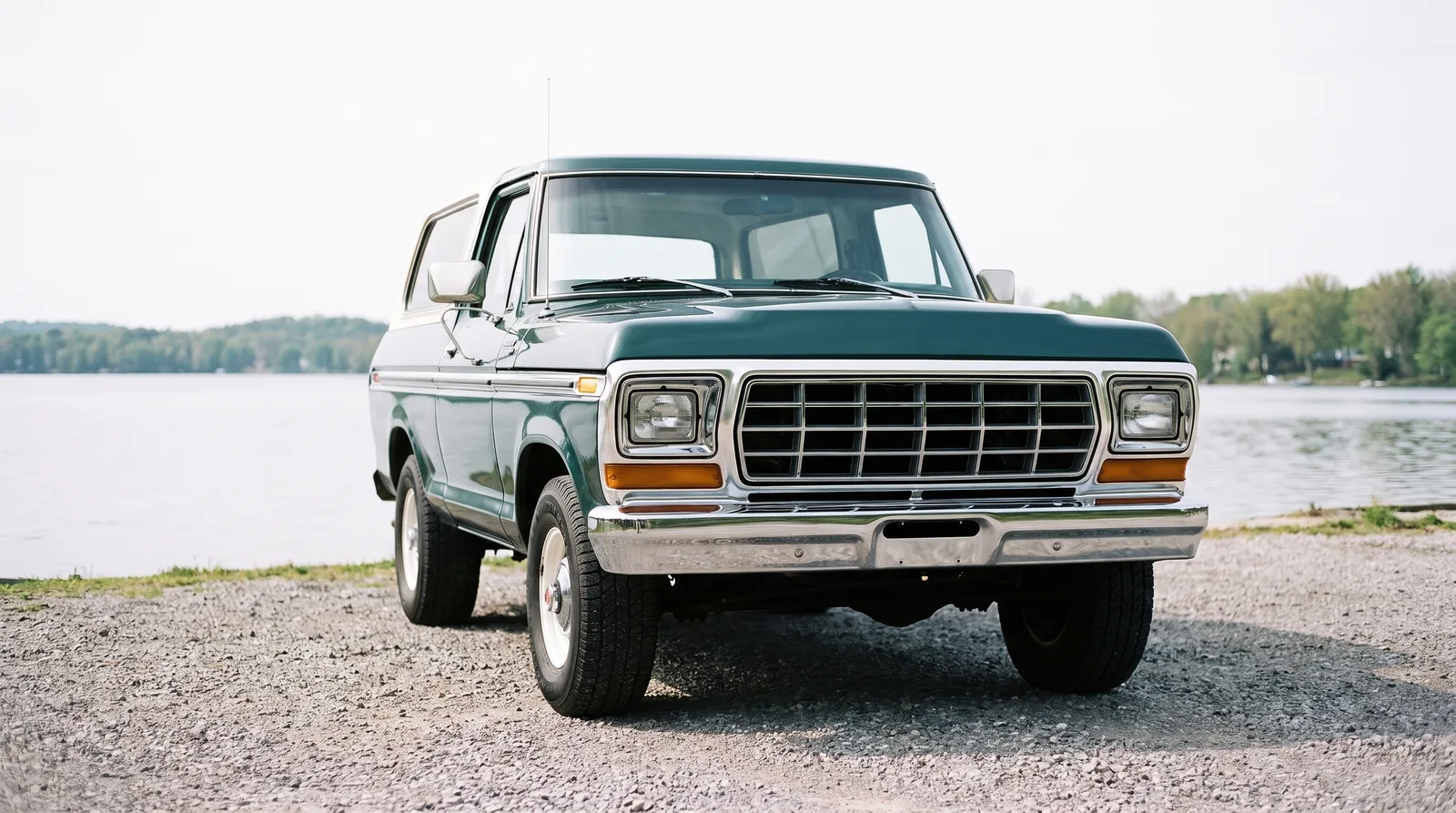
The 1978 Bronco used the F-100 short-bed chassis, shortened further to a 104-inch wheelbase, with the same front sheet metal, doors, and dashboard as the contemporary F-Series pickup. This was not a cosmetic relationship. Suspension components, the Dana 44 front axle on four-wheel-drive models, and the drivetrain lineup all came straight from the truck parts bin. For Ford's engineers, that meant a Bronco that could be built on the same assembly lines as F-Series trucks, using proven hardware rather than a bespoke platform that had to be developed, tested, and tooled from scratch.
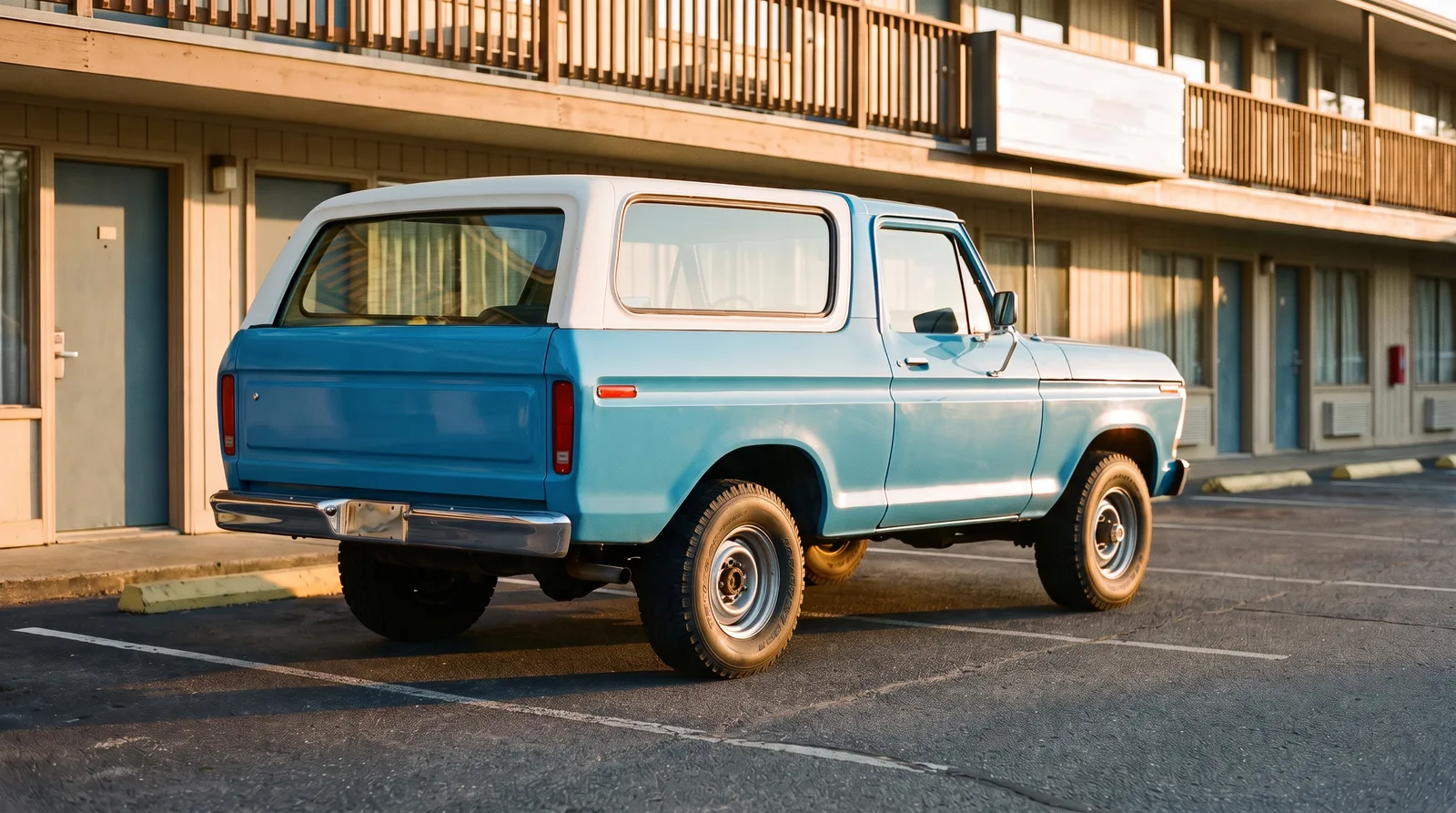
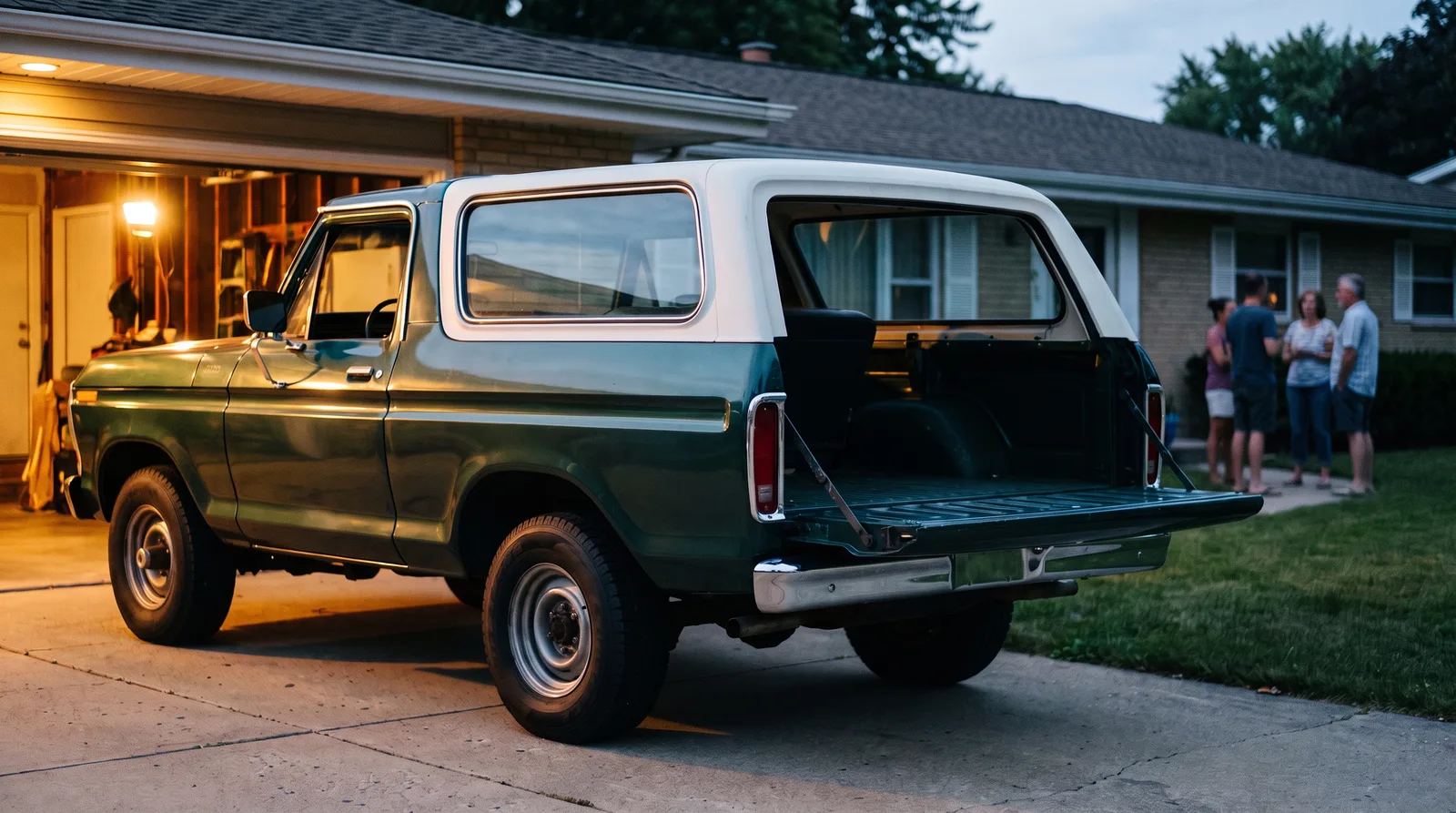
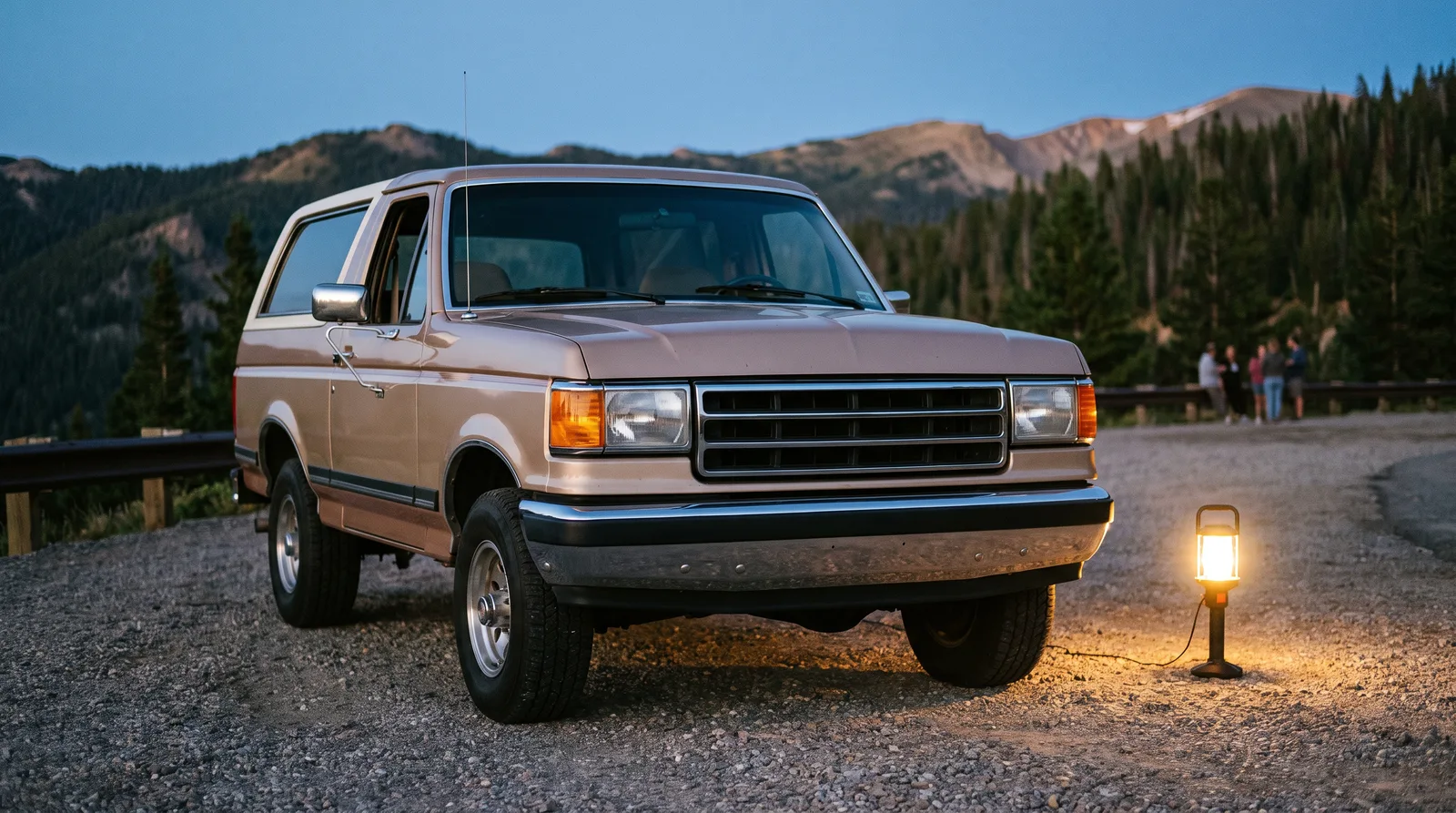
The tradeoff was size. The new Bronco gained roughly a foot in wheelbase and hundreds of pounds over the outgoing model. It was no longer a nimble trail rig in the mold of the original. It was a full-size truck with a removable fiberglass hardtop, closer in spirit to a shortened Blazer than to the Bronco that had built the nameplate's reputation a decade earlier. our complete history covers how that transformation played out across the full 1978 to 1979 production run, including the trim levels and engine choices Ford offered once the bigger truck reached dealers.
What Ford gained by going bigger
The payoff for Ford was a Bronco that finally competed on paper with the Blazer and the Scout. Buyers could option a standard 351M V8 or the 400 cubic inch big-block, which produced noticeably more torque than the 351M for a similar horsepower figure, and get a truck rated to tow a trailer or carry a full camper shell without straining. The interior, borrowed from the F-Series cab, offered real shoulder room and a dashboard buyers already recognized from Ford's pickup lineup. Dealers could sell a Bronco to a customer cross-shopping an F-150, using the same financing conversation and much of the same parts and service infrastructure.
There was also a manufacturing logic that mattered more than most buyers ever considered. Building the Bronco on F-Series architecture meant Ford's plant in Michigan could flex production between pickups and Broncos depending on demand, rather than dedicating a separate line to a low-volume specialty vehicle. That flexibility helped justify the investment in a redesign that otherwise might have been hard to approve internally.
| Spec | 1966-77 Bronco | 1978-79 Bronco |
|---|---|---|
| Wheelbase | 92 inches | 104 inches |
| Base platform | Dedicated Bronco chassis | Shortened F-100 chassis |
| Top engine option | 302 cid V8 | 400 cid V8 (351M standard) |
| Body style | Standalone design | Shares cab and front clip with F-Series |
A truck built for a different kind of buyer
The full-size Bronco was aimed at someone who wanted one vehicle that could tow a boat on Saturday and haul the family to church on Sunday, not a stripped-down trail machine. That shift disappointed some early Bronco loyalists who missed the compact truck's agility, but it made commercial sense in a market where the Blazer had already proven buyers wanted room and power over nimbleness. Ford essentially conceded that the small Bronco could not win that fight on its own terms, so it built a bigger truck that could.
Two model years later, Ford would revise the formula again with the 1980 Bronco, moving to the Twin Traction Beam front suspension and a slightly different F-Series generation underneath. But the core decision, that a Bronco needed to ride on truck bones to compete, was set in 1978 and never really reversed for the rest of the classic Bronco's run through 1996.
"People remember the 1978 Bronco as a bigger truck, but the real story is Ford deciding it could no longer sell a Bronco that wasn't built like one of its own pickups. Once you see the shared door stampings next to an F-100, the whole decision makes sense."
- Sarah Whitfield
How dealers pitched the change
Ford's sales literature for the 1978 model year leaned hard into the comparison with the F-Series pickup, framing the new Bronco as a truck that finally matched what customers already trusted from Ford's commercial line. Dealers could point to the same engine choices, the same basic maintenance intervals, and the same parts counter that already served every F-100 and F-150 owner in the area. That was a deliberate sales pitch, not an accident of engineering. A customer nervous about buying an unfamiliar specialty vehicle could be reassured that underneath the Bronco badge sat hardware the dealership already knew how to service.
That pitch mattered because the compact Bronco, for all its off-road reputation, had never been a huge seller compared to Ford's core truck lineup. Positioning the new model as essentially an F-Series variant, rather than a standalone product, made it easier for dealers to build confidence with buyers who might otherwise have been unsure what they were getting. It also meant Ford's advertising could quietly borrow credibility the F-Series had already earned over years of truck sales, rather than building trust in a full-size Bronco from scratch.
Early reception bore this strategy out to a degree. Buyers cross-shopping the Blazer now had a Ford alternative that matched the Chevrolet on size, power, and towing capacity, closing a gap that had left Ford at a genuine disadvantage for most of the 1970s. Whether every one of those buyers preferred the Bronco to the Blazer is a separate question, but Ford at least had a truck in the conversation again, which the compact Bronco increasingly was not by the mid-1970s.
Why this matters to collectors today
For anyone shopping the classic market now, the ford bronco 1978 full size why question is not just trivia. It explains why parts interchange so readily with F-Series trucks of the same years, why the cab and door glass are relatively easy to source compared to the earlier Bronco, and why these trucks tend to be more usable as daily drivers than their smaller predecessors. That practicality is part of why the 1978-79 Bronco still draws steady interest from buyers who want classic looks without giving up modern-feeling road manners.
If you are considering one for your own garage, it helps to know what to look for before you commit. You can find a classic Bronco currently listed and compare trim levels, engine options, and condition across the full production run.
Sources and notes
Related Reading
Have a
Ford Bronco
for Sale?
Reach thousands of serious classic car collectors across the US.
Sell It Here →
Selling a classic? Here's how: where to sell your classic car online
Are You a Classic Car Dealer?
List your full inventory and connect with targeted classic car buyers.
Join as a Dealer →

About the author
Sarah Whitfield
Third-generation classic car collector specializing in pre-war American and European coachbuilt automobiles. Researcher and concours enthusiast.
Related Listings - Ford Bronco
Comments
Be the first to comment on this article.