
The ford bronco 1978 ranger xlt package deserves more credit than it usually gets in Bronco histories. When Ford launched its first full-size Bronco for 1978, the base truck was already a capable, purposeful machine built on F-series bones. The Ranger XLT trim took that same truck and dressed it for a different kind of buyer, one who wanted four-wheel drive capability without giving up carpet, chrome, and a properly finished cabin.
Car Features
7 min read
The Ranger XLT and the Plush 1978 Bronco
The Ranger XLT trim turned the new full-size 1978 Bronco into a comfort-focused alternative to the base work truck, and today it is one of the rarer trims collectors chase.
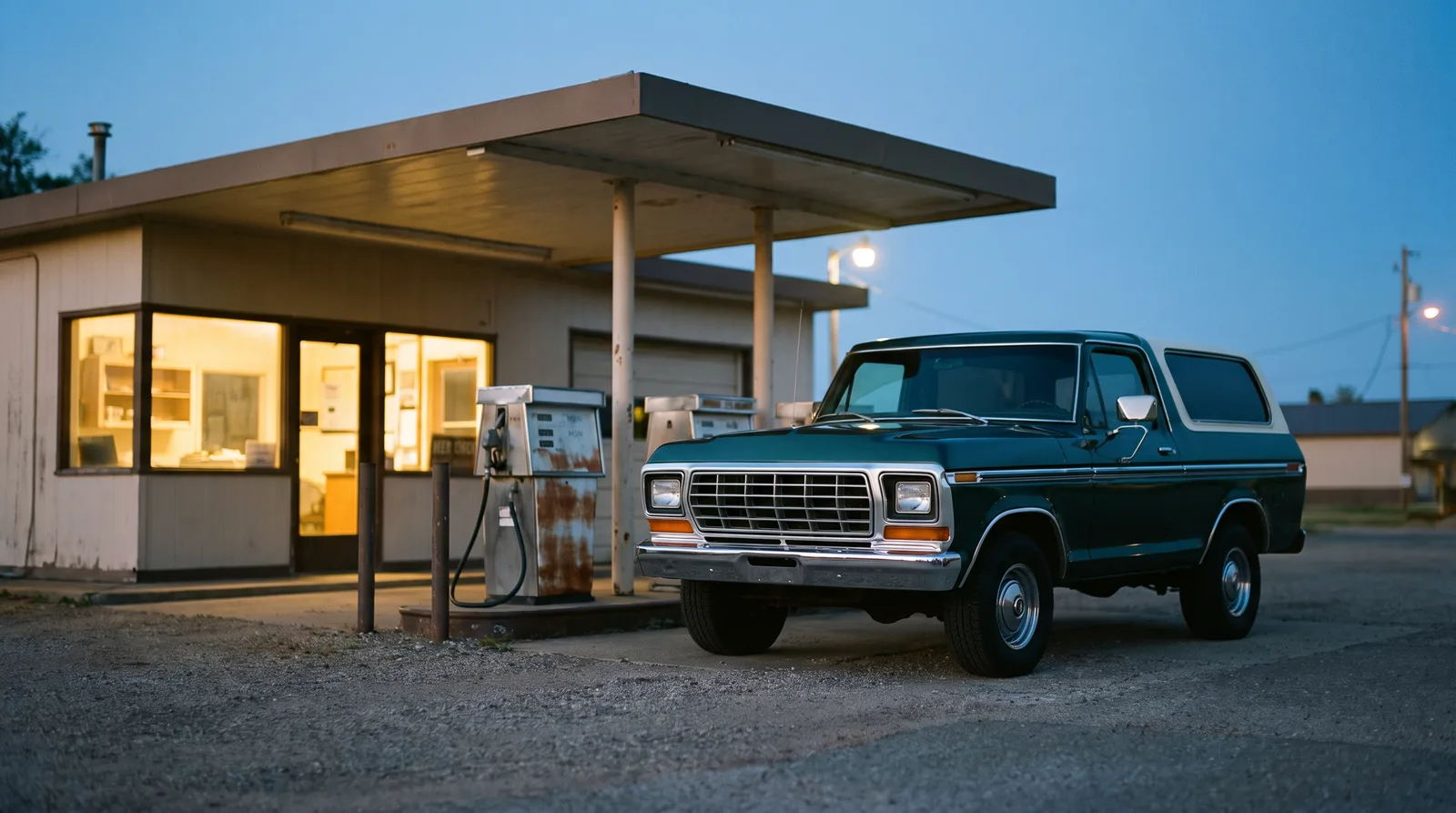
Ford's trim strategy for the new full-size Bronco
Ford's F-series pickups had used the Ranger name as a trim designation since the late 1960s, and by the time the full-size Bronco arrived, Ranger and Ranger XLT were established shorthand for buyers who understood the hierarchy. Custom was the working truck. Ranger stepped up the brightwork and interior trim. Ranger XLT sat at the top, adding features that would have seemed almost indulgent on a working four-wheel-drive rig a decade earlier. Period Ford literature shows the XLT package generally layered woodgrain-look interior trim, upgraded seating, additional sound insulation, and brighter exterior chrome onto the same rugged chassis and driveline used across the Bronco lineup, though exact content varied by year and dealer-installed options.
This mattered because it repositioned the Bronco in the market. A base Custom Bronco was a tool. A Ranger XLT Bronco was closer to a lifestyle vehicle, something a family could drive to church on Sunday and still take up a fire road the next weekend. That dual identity, work truck underneath and comfortable cruiser on top, became one of the defining traits of the full-size Bronco line through its entire run.
What the XLT interior actually delivered
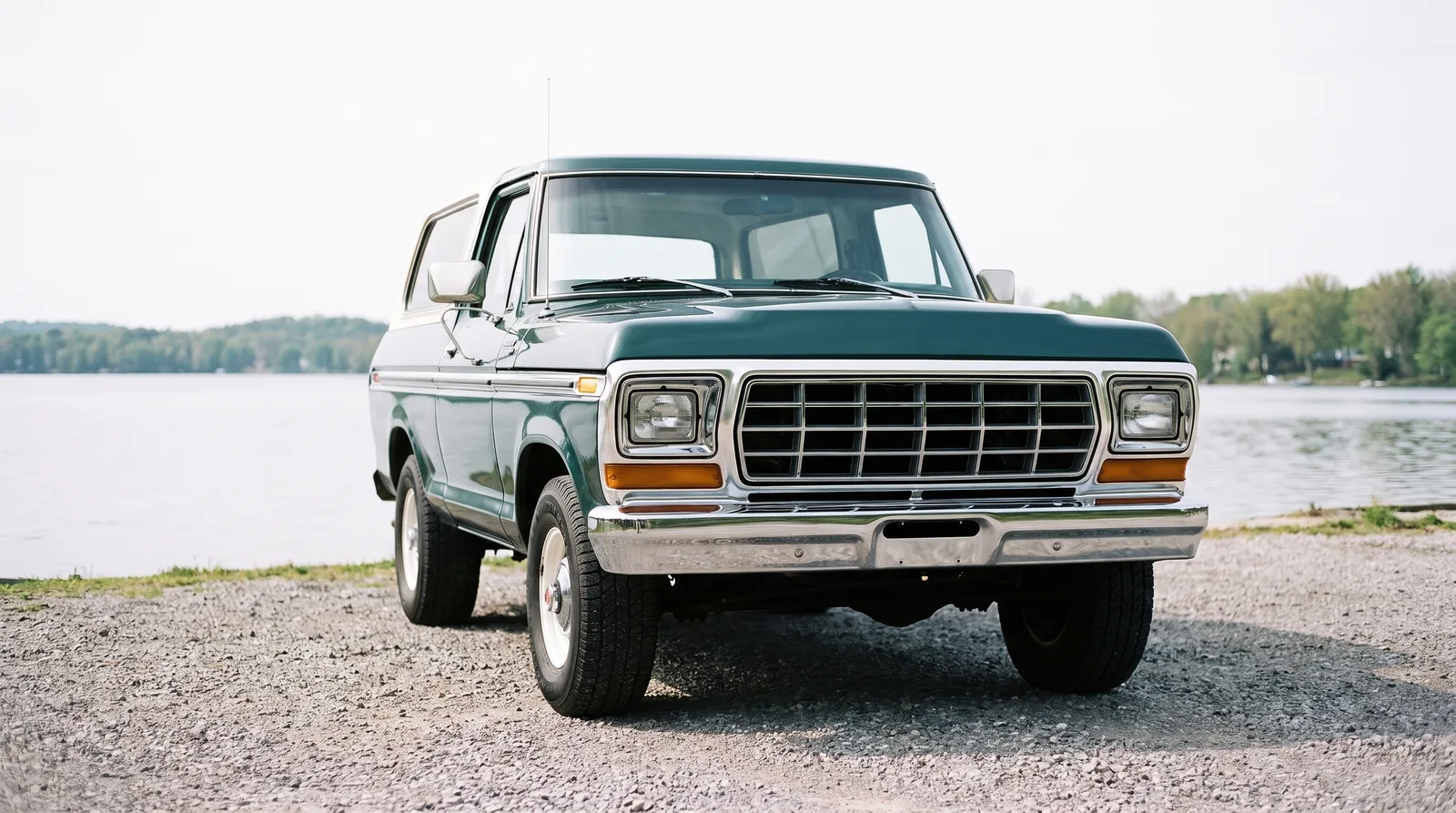
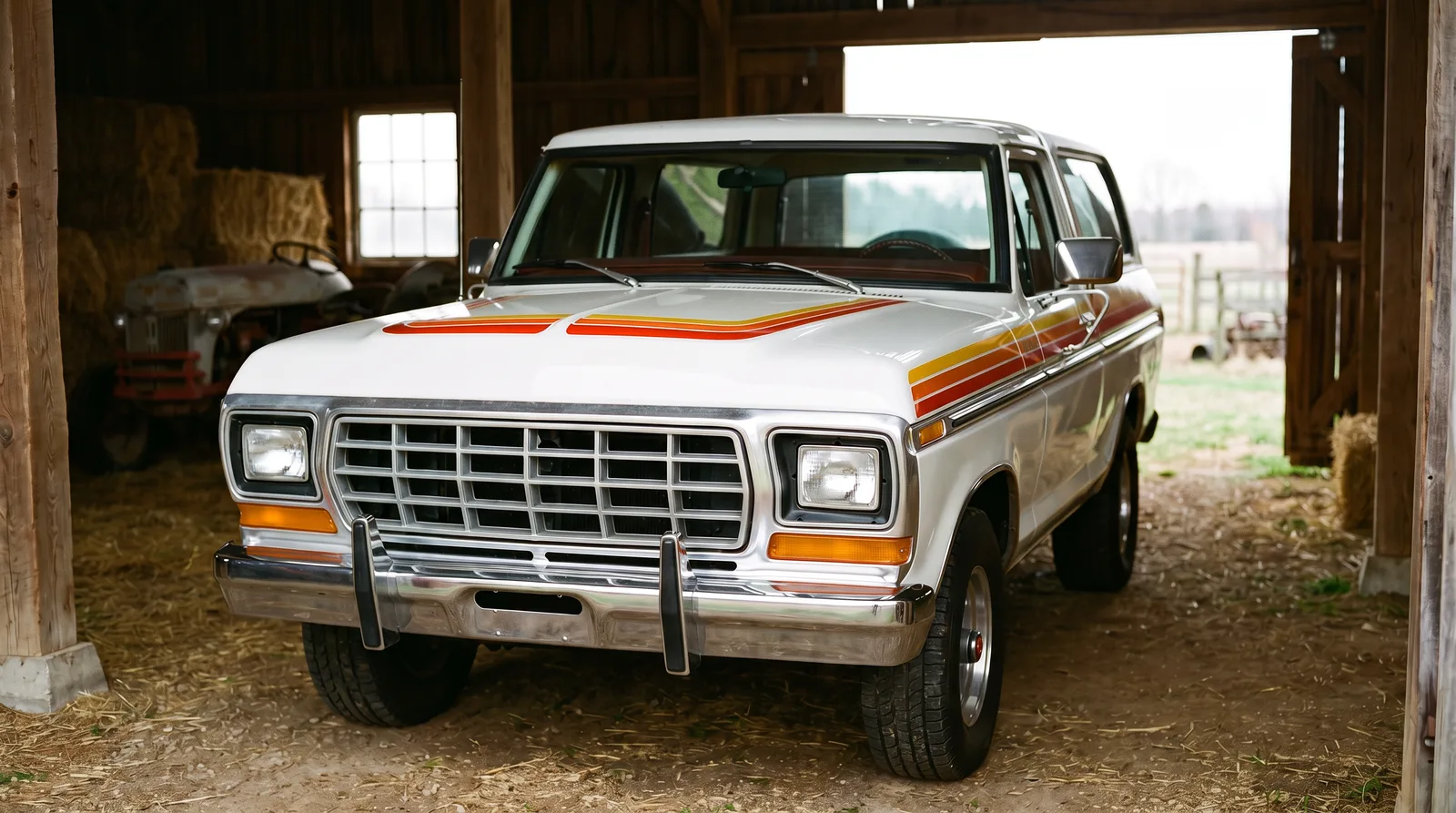
Inside, the Ranger XLT swapped the base truck's vinyl bench for cloth or vinyl bucket-style seating in nicer trims, added door panel upgrades, and generally softened the truck-cab feel that came standard on lesser Broncos. Exterior cues included additional brightwork around the windows and grille, along with XLT-specific badging that dealers used heavily in advertising to signal the top-tier truck on the lot. Buyers who wanted the removable fiberglass top, and most did, paired it with the XLT trim more often than not, since the two together represented the fullest expression of what a 1978 Bronco could offer a family buyer rather than a strictly utilitarian one.
Color and interior combinations followed the broader Ford truck palette of the era, with earth tones, tans, and woodgrain accents that read distinctly late-1970s today. Surviving brochures and dealer literature from the period show Ford marketing the XLT Bronco directly at buyers cross-shopping wagons and full-size SUVs, not just traditional truck customers, a clear sign the company saw comfort trim as a genuine sales lever rather than an afterthought.
Rarity and what it means for collectors now
Because the full-size Bronco's first generation lasted only the 1978 and 1979 model years before Ford's 1980 downsizing, XLT-trimmed examples from this window occupy a narrow production slice that collectors have started to take seriously. Well-optioned trucks with intact woodgrain trim, working XLT badging, and documented build sheets are increasingly scarce, since decades of daily use and off-road duty were not kind to interior trim pieces that were never designed to survive fifty years of sun and abuse.
Readers who want the complete account of how the full-size Bronco came together, including the engineering decisions behind the chassis and the market conditions that pushed Ford toward building it at all, can find the full story covering that entire launch year. The Ranger XLT is best understood as one chapter within that larger 1978 debut, the trim level that let Ford compete on comfort as well as capability.
"Ford's factory records make it clear the XLT package was never a throwaway option code. It was a deliberate bet that Bronco buyers wanted comfort just as much as they wanted a low-range transfer case."
- Tom Ramirez
How the XLT compared to rival trim packages
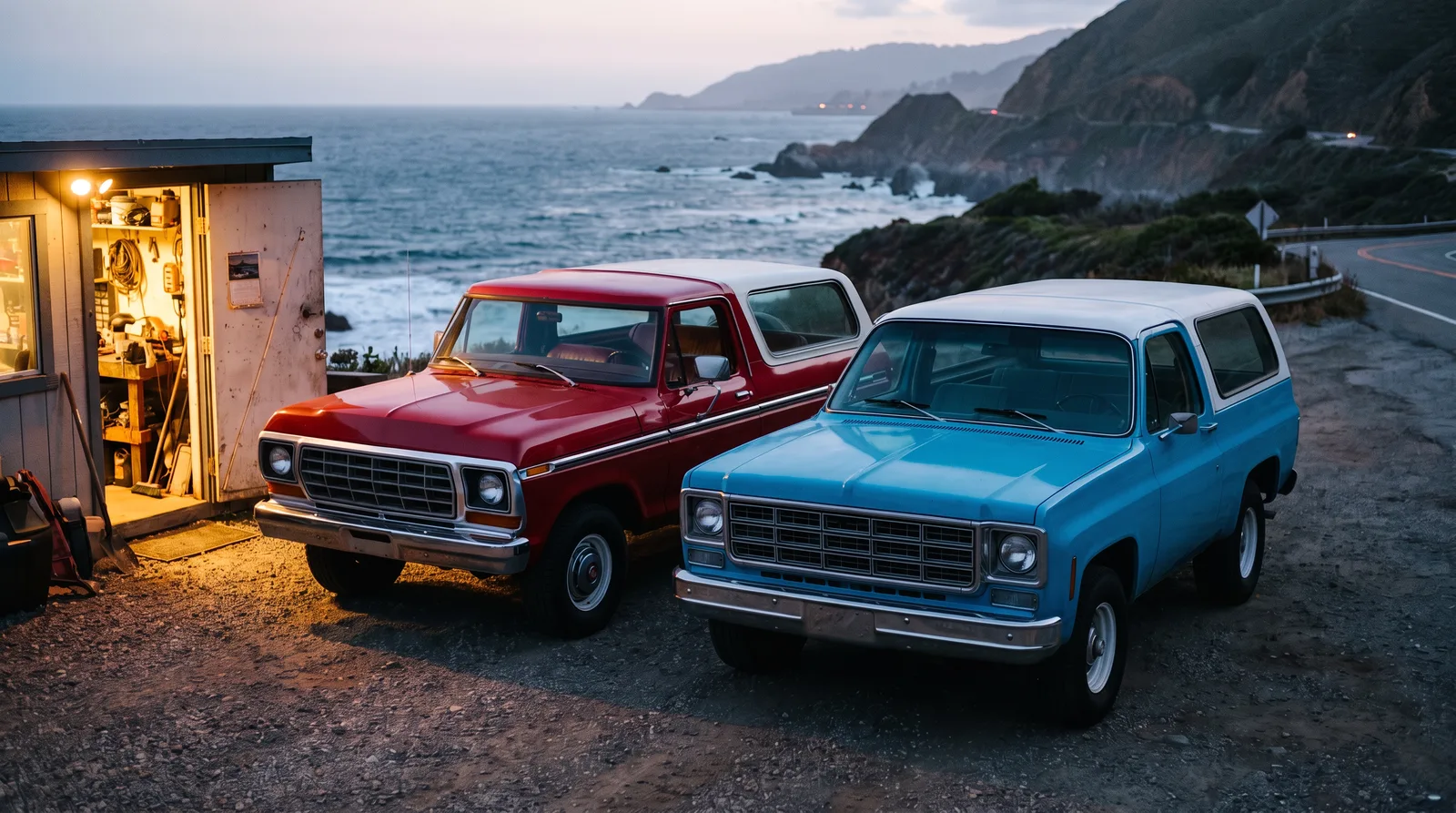
Chevrolet and Dodge were both running their own upper-trim strategies on the K5 Blazer and Ramcharger during the same period, and the comparison is instructive. Chevrolet's Cheyenne trim on the Blazer pursued a similar formula, extra brightwork and softer seating layered over the same mechanical package, while Dodge leaned on its own trim ladder to differentiate base Ramchargers from better-equipped versions. What set Ford's approach apart was how thoroughly the Ranger XLT name had already been established with truck buyers through years of use on the F-series lineup, giving the Bronco version instant credibility rather than requiring Ford to build recognition from scratch.
That existing brand equity meant dealers didn't have to explain what Ranger XLT meant to a customer already familiar with Ford trucks. A buyer who had cross-shopped an F-150 XLT the year before understood immediately what the same badge promised on a Bronco, which almost certainly helped move XLT-trimmed trucks off dealer lots faster than an unfamiliar new trim name would have.
Buying an XLT today
Shoppers hunting for a genuine Ranger XLT Bronco from 1978 should verify trim codes against Ford's build sheet data rather than trusting badging alone, since XLT emblems have a long history of being swapped between trucks over the decades. Interior condition tends to be the deciding factor in value, since woodgrain trim pieces and specific XLT upholstery patterns are difficult to source and even harder to reproduce accurately. A truck with its original interior intact, even if worn, is generally worth more to serious collectors than a nicely restored example wearing incorrect replacement parts.
For buyers ready to start that search in earnest, current listings of classic Bronco for sale offer a real sense of what XLT-trimmed trucks are commanding in today's market, along with the range of condition and originality still available to patient shoppers. The 1978 Ranger XLT remains one of the more underrated full-size Broncos on the market, a truck that quietly did more for the model's reputation as a comfortable four-wheel-drive vehicle than most enthusiasts give it credit for.
Restoration shops that specialize in this generation report that XLT interior work tends to be the single most expensive part of bringing one of these trucks back to original condition, simply because so few suppliers still produce correct reproduction trim. Buyers planning a full restoration should budget accordingly and, where possible, seek out a truck with a salvageable original interior rather than one that requires a complete rebuild from scratch. A truck with worn but original XLT trim is, in most cases, a better long-term investment than one with missing or incorrect replacement parts, even if the worn original looks less impressive on day one.
Parts sourcing has become a small industry of its own around this specific trim, with a handful of specialty vendors now reproducing woodgrain appliques and XLT-specific badging that were unavailable just a decade or two ago. That growing supply has made restoration more realistic than it once was, though prices for genuine, correctly patterned trim remain high enough that many owners choose to preserve original material for as long as possible rather than replace it prematurely.
Sources and notes
Related Reading
Have a
Ford Bronco
for Sale?
Reach thousands of serious classic car collectors across the US.
Sell It Here →
Selling a classic? Here's how: compare the places to sell classic cars
Are You a Classic Car Dealer?
List your full inventory and connect with targeted classic car buyers.
Join as a Dealer →

About the author
Tom Ramirez
Corvette researcher and historian based in Bowling Green, Kentucky. Two decades documenting Corvette production history from original factory records.
Related Listings - Ford Bronco
Comments (1)
R
Ray Staubach
28 minutes ago
In 1979 my father priced a Ranger XLT Bronco against a Cheyenne K5. He bought the Blazer. I still remember the woodgrain dash he walked away from.