
Park a 1966 Bronco and a 1978 Bronco side by side and it takes a moment to believe they share a name at all. The ford bronco 1978 vs first gen comparison is really a study in what a single model can become over twelve years when a manufacturer decides the original formula no longer fits the market. Ford did not tweak the compact Bronco into something bigger. It replaced the entire concept, chassis and all, and the differences run deeper than most casual comparisons acknowledge.
Car Features
7 min read
The 1978 Bronco vs the Early Bronco It Replaced
The 1978 Bronco traded the original compact truck's nimble chassis for F-Series size and power, a complete philosophy change, not a facelift.
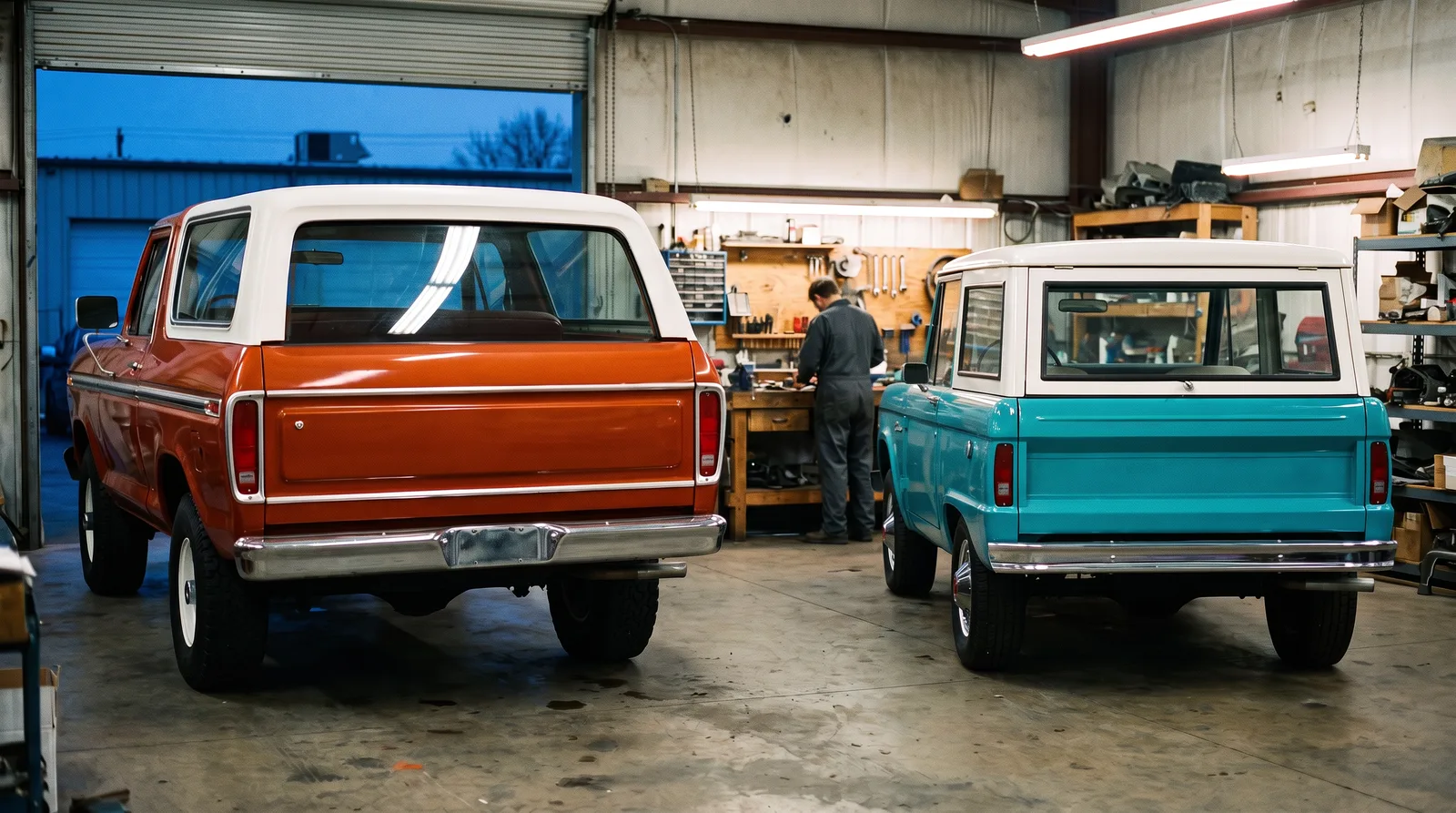
Two different chassis philosophies
The original 1966 Bronco rode on a purpose-built 92-inch wheelbase chassis, developed specifically for the model with no direct relationship to any other Ford product. That independence gave the compact Bronco a tight turning radius and a light, maneuverable feel that made it genuinely capable on tight trails, a trait enthusiasts still praise decades later. It was, in engineering terms, its own thing.
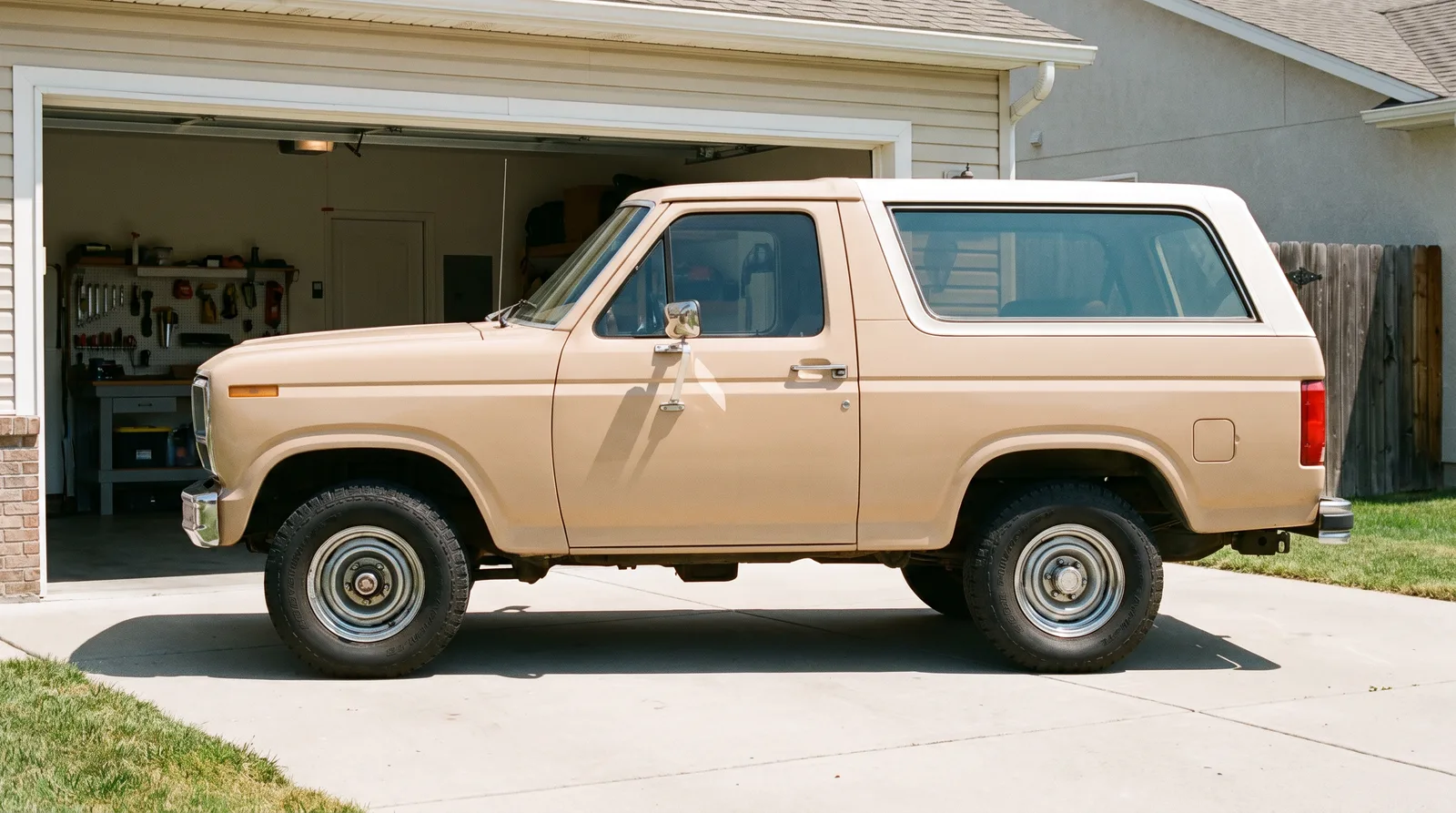
The 1978 Bronco abandoned that independence entirely. It rode on a shortened F-100 pickup frame, stretched to a 104-inch wheelbase, sharing its doors, cab, dashboard, and much of its suspension with the contemporary F-Series truck. This was not a minor platform update. It was a wholesale change in what kind of vehicle the Bronco fundamentally was, moving from a dedicated small SUV to a truck-based full-size SUV built from largely the same parts as Ford's pickup line. the whole picture covers how that redesign came together and what it meant for buyers who cross-shopped the new truck against the F-Series pickup sitting next to it on the lot.
Size, weight, and what buyers gave up
The size difference between the two generations is not subtle. The 1978 Bronco was longer, wider, and heavier than the compact truck it replaced by a significant margin, roughly 28 inches longer, 11 inches wider, 4 inches taller, and 1,100 to 1,600 pounds heavier depending on configuration, with more interior room and a completely different driving character as a result. What buyers gained was genuine towing capacity, a roomier cabin that could comfortably seat a family, and V8 options, including the 400 cubic inch engine, that the small original chassis was never engineered to accommodate.
What buyers gave up was the compact Bronco's nimbleness. The original truck's tight dimensions made it easy to place on narrow trails and in tight parking situations in a way the bigger, F-Series-based truck simply could not match. Enthusiasts who prized that agility, and who had spent a decade associating the Bronco name with exactly that kind of scrappy capability, sometimes felt the 1978 redesign traded away the truck's original personality in exchange for size and power.
| Trait | 1966-77 Bronco | 1978 Bronco |
|---|---|---|
| Wheelbase | 92 inches | 104 inches |
| Chassis origin | Dedicated Bronco design | Shortened F-100 frame |
| Top engine | 302 cid V8 | 400 cid V8 (351M standard) |
| Interior width | Compact, narrow | F-Series cab, full width |
| Reputation | Nimble trail truck | Capable, family and tow focused |
Two different market positions
These were not competing for exactly the same buyer. The compact Bronco appealed to someone who wanted a small, honest off-road vehicle without much interest in towing capacity or family-hauling space. The 1978 truck aimed at a buyer already looking hard at Chevrolet's Blazer, someone who wanted an SUV with genuine truck-scale capability and was willing to accept a larger footprint to get it. Ford essentially conceded that the small Bronco could no longer compete for that second buyer on its own terms, and built an entirely different truck to chase that market instead of trying to stretch the original design past what it could reasonably do.
Both approaches had merit, and both generations found buyers who wanted exactly what each truck offered. The comparison only becomes unfair when someone tries to judge one generation by the standards the other generation was built to meet. A compact Bronco was never going to tow like a 1978 truck. A 1978 Bronco was never going to thread a tight trail the way the original could.
Comfort, cabin, and the everyday driving difference
Beyond the numbers on a spec sheet, the two generations felt entirely different from behind the wheel in ways that mattered to everyday owners. The compact Bronco's narrow cabin put driver and passenger close together, with limited room for gear or a third rider, and its ride quality reflected a lighter, simpler suspension tuned more for trail work than highway comfort. It was a truck you drove actively, feeling every input through a direct, unassisted steering setup that rewarded attention on rough terrain but demanded more effort on a long highway stretch.
The 1978 Bronco, by contrast, drove much closer to the F-Series pickup it was built from, with a wider cabin, more relaxed highway manners, and available power steering and power brakes that made the truck noticeably easier to live with day to day. Long trips that would have tired out a compact Bronco driver became genuinely comfortable in the bigger truck. That comfort came at the direct cost of the compact model's tighter, more connected feel, a tradeoff that different owners weighed very differently depending on how they actually planned to use the vehicle.
Pricing at launch reflected the added capability as well. A 1978 Bronco commanded a higher base price than a comparable late compact model had, a difference buyers accepted in exchange for the extra size, power, and comfort Ford had built into the redesign. That pricing gap between the two generations persists in a rough sense on today's collector market, where clean examples of both trucks draw real interest but for somewhat different reasons and often from different types of buyers.
How this plays out in the collector market now
Today, both generations have their own dedicated followings, and prices for well-preserved examples of each have moved independently based on what each truck's specific strengths appeal to. Compact Broncos, particularly early two-door examples, have drawn strong attention from buyers chasing the original truck's cult status and off-road pedigree. The 1978-79 truck, being rarer simply due to its short two-year production run, has its own smaller but dedicated collector base that values the F-Series connection and the added capability that came with it.
"I do not think Ford was trying to replace the original Bronco's spirit in 1978. I think they were trying to replace its sales numbers, and those are two very different goals that happened to require the same decision, a completely new chassis."
- Tom Ramirez
Neither generation should be judged the definitive Bronco. Each represents a different answer to the same underlying question, what should this truck be, asked at two very different points in Ford's history and under two very different sets of market pressures. That the nameplate could stretch to cover both answers, a scrappy compact trail truck and a full-size, F-Series-based family and tow vehicle, says something about how much room Ford saw in the Bronco name itself, even if the two trucks wearing it would barely recognize each other.
If you want to see how both generations compare in person, you can shop classic Bronco listings spanning the compact original and the full-size truck that replaced it.
Sources and notes
Related Reading
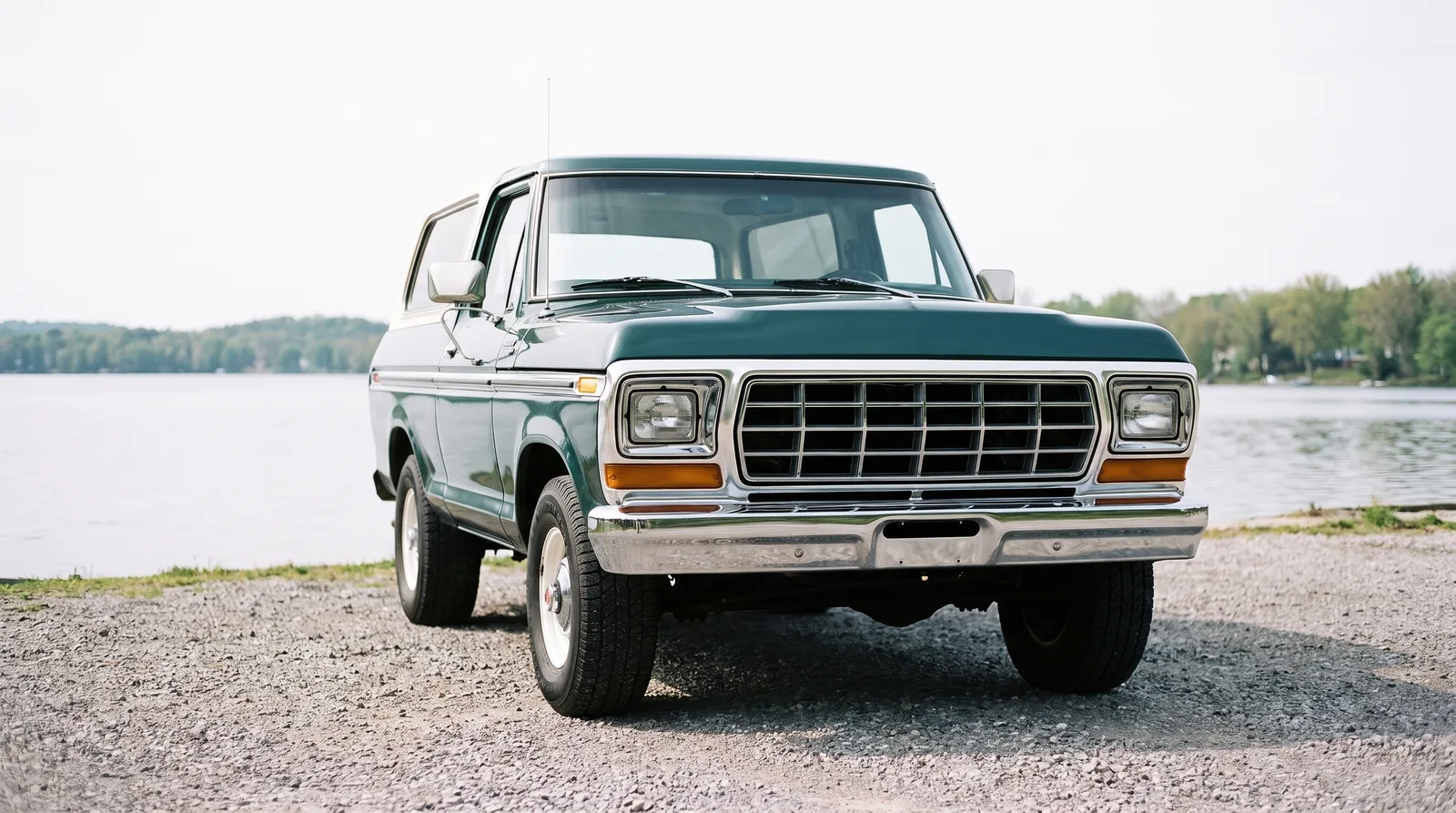
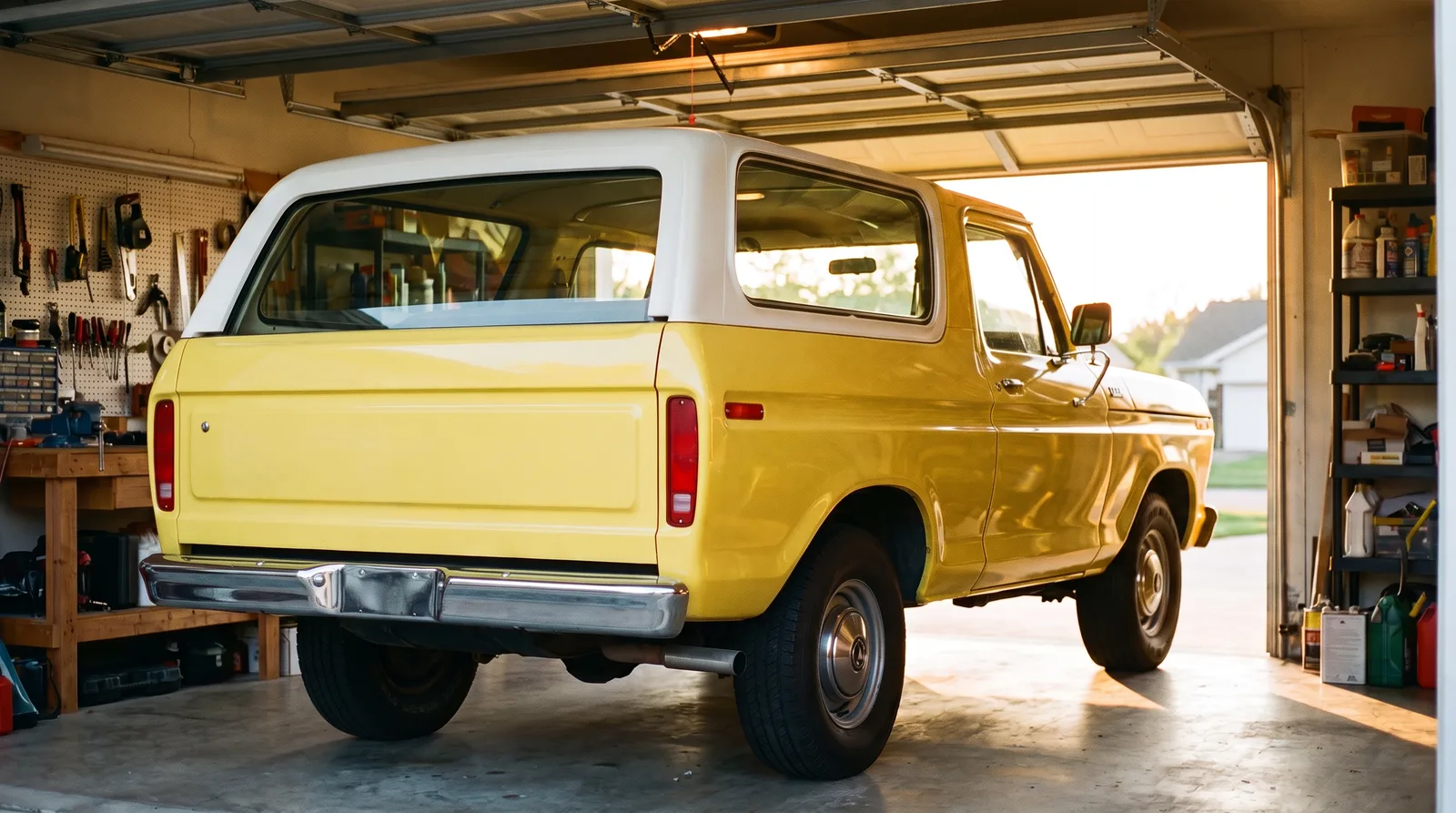
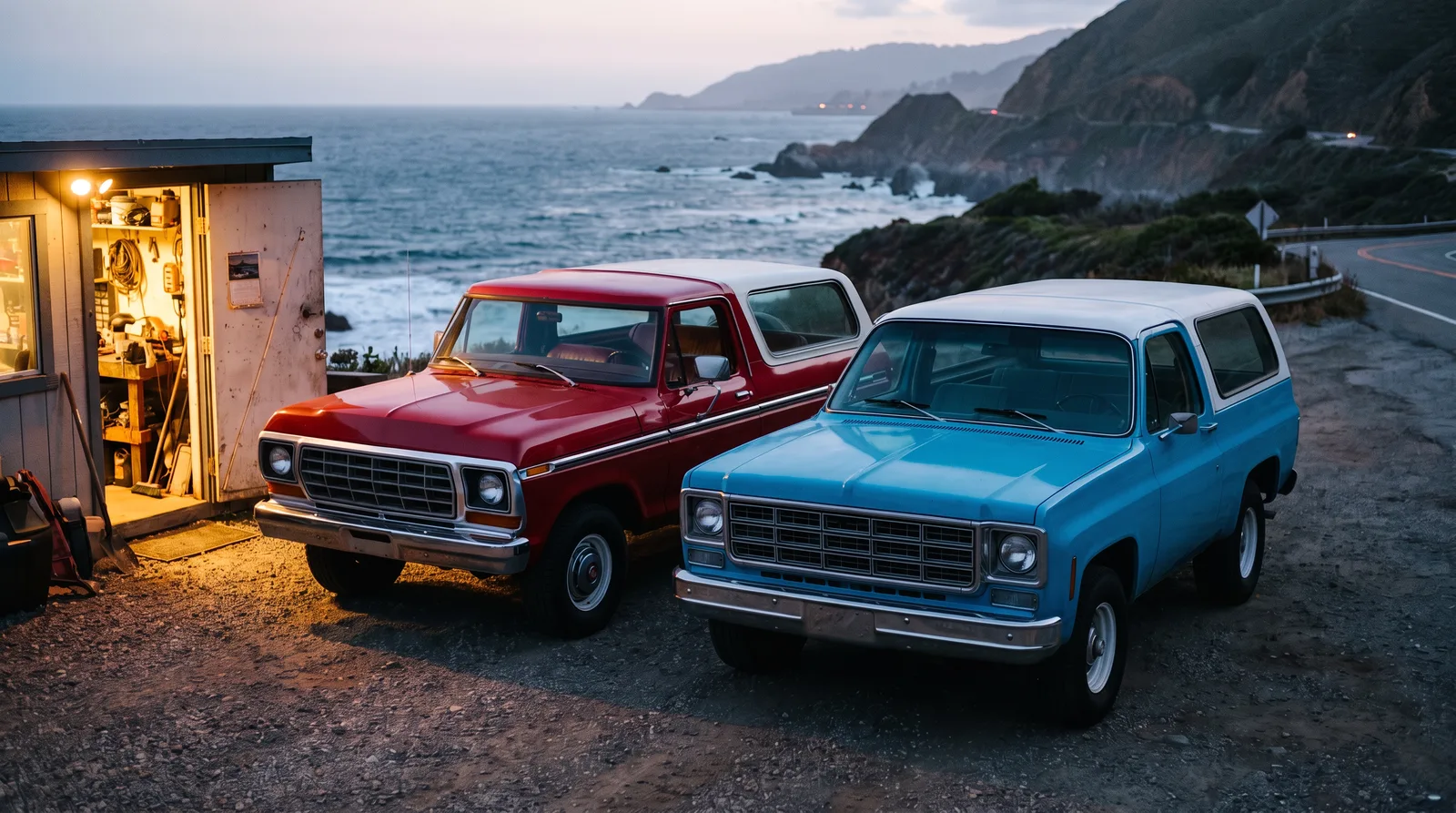
Have a
Ford Bronco
for Sale?
Reach thousands of serious classic car collectors across the US.
Sell It Here →
Selling a classic? Here's how: the best sites to sell a classic car
Are You a Classic Car Dealer?
List your full inventory and connect with targeted classic car buyers.
Join as a Dealer →

About the author
Tom Ramirez
Corvette researcher and historian based in Bowling Green, Kentucky. Two decades documenting Corvette production history from original factory records.
Related Listings - Ford Bronco
Comments
Be the first to comment on this article.