
The 1979 Bronco lasted exactly one model year before Ford moved on, and that short run is exactly what makes it worth understanding on its own terms rather than lumping it together with the 1978 truck it so closely resembled. The ford bronco 1979 final year sits in an odd position in Bronco history, the closing chapter of a generation that itself only ran for two years, sandwiched between the redesign that created it and the 1980 truck that would carry the nameplate through the next decade and a half.
Car Features
6 min read
The 1979 Bronco, a One-Year Wonder
The 1979 Bronco closed out the shortest generation in Bronco history, a two-year bridge between the 1966-77 compact truck and the 1980-96 redesign.
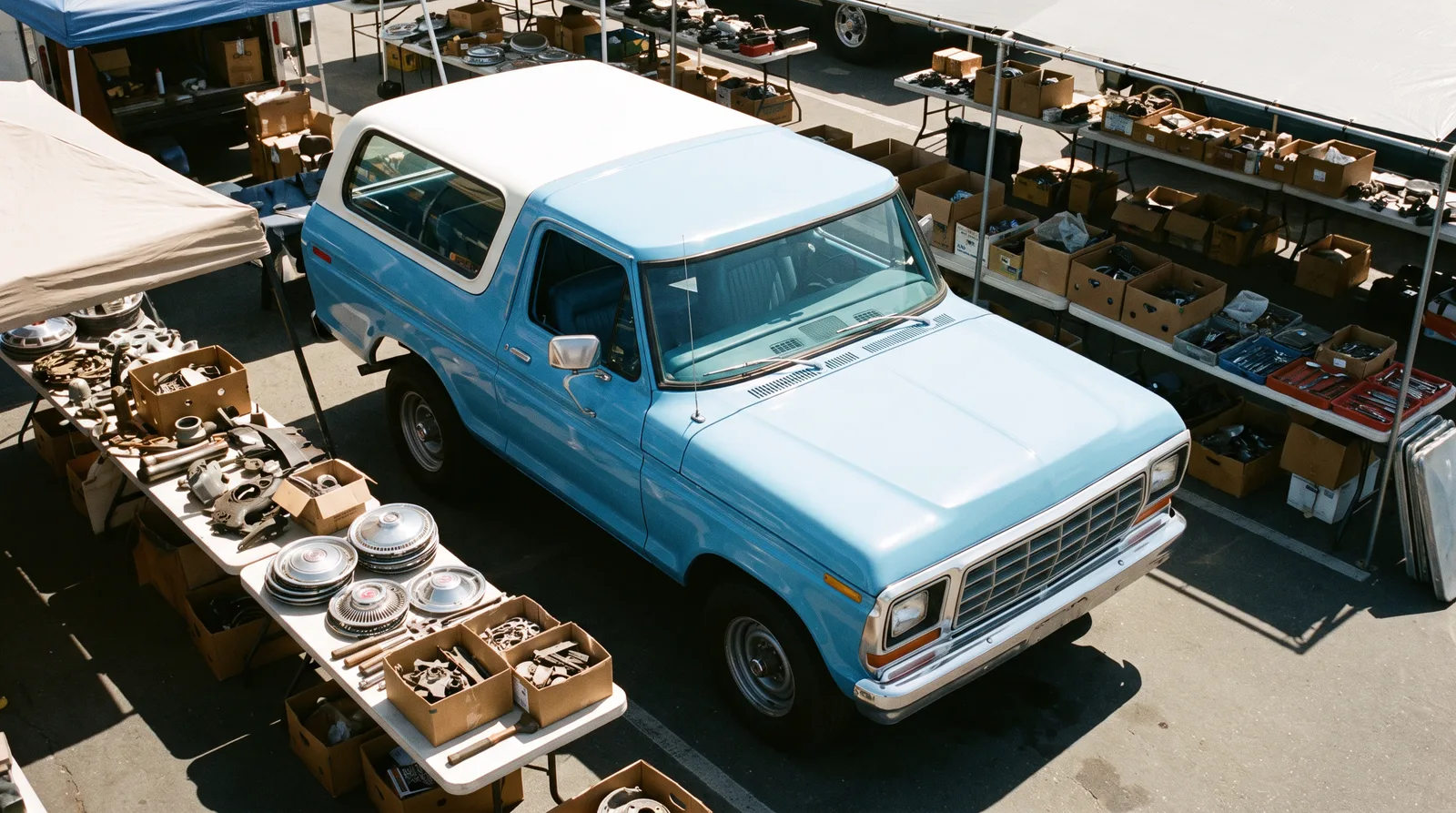
What actually changed for 1979
Visually and mechanically, the 1979 Bronco was close to a carryover from 1978. Ford had just invested heavily in the F-Series-based redesign the year before, and there was no appetite for a second major overhaul so soon after. The changes that did arrive for 1979 were mostly under the hood and in the emissions system, driven by tightening federal regulations that touched nearly every domestic vehicle of the period. Buyers shopping a 1979 Bronco against a 1978 example would have noticed few differences from the driver's seat.
That is not a criticism of the 1979 truck. It reflects how Ford's product cycle worked at the time. A major redesign like the 1978 platform change was expected to run for several years before the next overhaul, and the fact that 1979 turned into the final year of this particular Bronco generation was determined by Ford's broader truck strategy, not by any weakness specific to the 1979 model itself.
Why the generation ended so soon
Ford was already planning the next Bronco revision before the 1979 model year even finished, and that next truck, arriving for 1980, would introduce the Twin Traction Beam independent front suspension across the F-Series and Bronco lineup together. That suspension change was a big enough shift that Ford treated it as the start of a new Bronco generation rather than a running update to the one built for 1978-79. Once that decision was made, the 1978-79 truck's fate as a short two-year generation was effectively sealed.
There is a useful comparison here to how briefly this generation existed relative to what came before and after. The compact Bronco that preceded it ran essentially unchanged for twelve model years, from 1966 through 1977. What followed for 1980 through 1996 was not one long-running truck but three further Bronco generations built across those seventeen years, the third generation from 1980-86, the fourth from 1987-91, and the fifth from 1992-96. The 1978-79 truck, by contrast, was a two-year bridge, significant for what it introduced but never given a production run anywhere near that long. our 1978 ford bronco retrospective covers how that bridge generation began, before this final 1979 chapter closed it out.
| Bronco generation | Model years | Production span |
|---|---|---|
| First generation | 1966-1977 | 12 years |
| Full-size second generation | 1978-1979 | 2 years |
| Third generation | 1980-1986 | 7 years |
| Fourth generation | 1987-1991 | 5 years |
| Fifth generation | 1992-1996 | 5 years |
Telling a 1979 apart from a 1978
Because the two model years share nearly identical sheet metal, distinguishing a 1979 Bronco from a 1978 example usually comes down to the details rather than anything visible from across a parking lot. Emissions labels under the hood, VIN sequencing, and a handful of running production changes are the most reliable markers a researcher or buyer typically relies on, since exterior styling and the basic interior layout carried over without meaningful alteration between the two years. Anyone trying to date an example with confidence generally needs to look past the obvious badges and into the details that changed quietly during that single year.
This is a different kind of research challenge than owners of other classic Broncos usually face. The compact Bronco's twelve-year run left plenty of documented year-to-year changes to anchor a date against. The 1980-96 truck's long production life did the same. The 1978-79 generation's brief window means fewer obvious visual anchors exist, and buyers serious about verifying an exact model year often need to dig into factory documentation and build sheets rather than relying on appearance alone.
Rarity that came from timing, not intent
Because the full-size second-generation Bronco only ran two model years, and 1979 was the shorter of those two in terms of the changes it introduced, surviving examples from this specific year are less common on the collector market than either the 1978 truck or the far more numerous 1980-96 trucks that followed. This is not the kind of rarity that came from limited production runs or special editions. It came simply from Ford moving its product cycle forward faster than buyers today might assume, closing out a full platform generation after just two years.
That short window also means fewer 1979-specific documentation resources exist compared to longer-running model years, which can make identifying an exact 1979 example, versus a very similar-looking 1978 truck, more of a research project than owners of later Broncos typically face. Emissions equipment and a handful of running changes are often the clearest markers, a subject covered in more depth in a related story that walks through what actually separated the two model years mechanically.
A closing chapter worth its own attention
It would be easy to treat 1979 as simply "1978 with a different sticker," and in many respects the truck earns that comparison. But treating it that way misses what makes it interesting to collectors and historians now. It is the last word on a Bronco generation that fundamentally changed what the nameplate stood for, moving it from a compact trail truck to a full-size, F-Series-based SUV. Whatever comes next in Bronco history builds on the foundation this short two-year run established, and the 1979 truck is the version of that foundation Ford considered finished before moving on to Twin Traction Beam suspension and the next chapter.
"A short production run does not mean a small story. The 1979 Bronco closes out a generation that changed what this truck was, and factory records show Ford already had the next redesign locked in before that final year even started."
- Tom Ramirez
None of this diminishes the truck itself. A 1979 Bronco drives, tows, and lives day to day almost identically to its 1978 sibling, and the mechanical similarities that make the two years hard to distinguish visually also mean owners benefit from the same parts commonality with the F-Series pickup that defines the whole generation. The extra research effort required to pin down an exact model year is a curiosity for historians and serious collectors more than a practical burden for someone who simply wants to drive and enjoy the truck.
If you are researching or shopping this specific model year, you can browse Broncos for sale now and compare available 1979 examples against the broader classic Bronco market. Take the time to ask a seller for any surviving build sheet or dealer paperwork before assuming a truck's model year based on appearance alone, since the visual overlap with 1978 examples is close enough that documentation remains the most reliable way to settle the question.
Sources and notes
Related Reading
Have a
Ford Bronco
for Sale?
Reach thousands of serious classic car collectors across the US.
Sell It Here →
Selling a classic? Here's how: the best sites to sell a classic car
Are You a Classic Car Dealer?
List your full inventory and connect with targeted classic car buyers.
Join as a Dealer →

About the author
Tom Ramirez
Corvette researcher and historian based in Bowling Green, Kentucky. Two decades documenting Corvette production history from original factory records.
Related Listings - Ford Bronco
Comments
Be the first to comment on this article.