
Cataloging the final year of any long running production vehicle carries a particular weight, and the ford bronco 1996 last full size model is exactly that kind of artifact, the closing entry in a run that began three decades earlier with a small, simple off roader in 1966. By the time the 1996 model year arrived, the full-size Bronco had grown, refined, and reinvented itself several times over, and its final iteration represents the most complete, most modern expression of everything Ford had learned across thirty years of building trucks under this name.
Car Features
6 min read
The 1996 Bronco, the End of the Full-Size Line
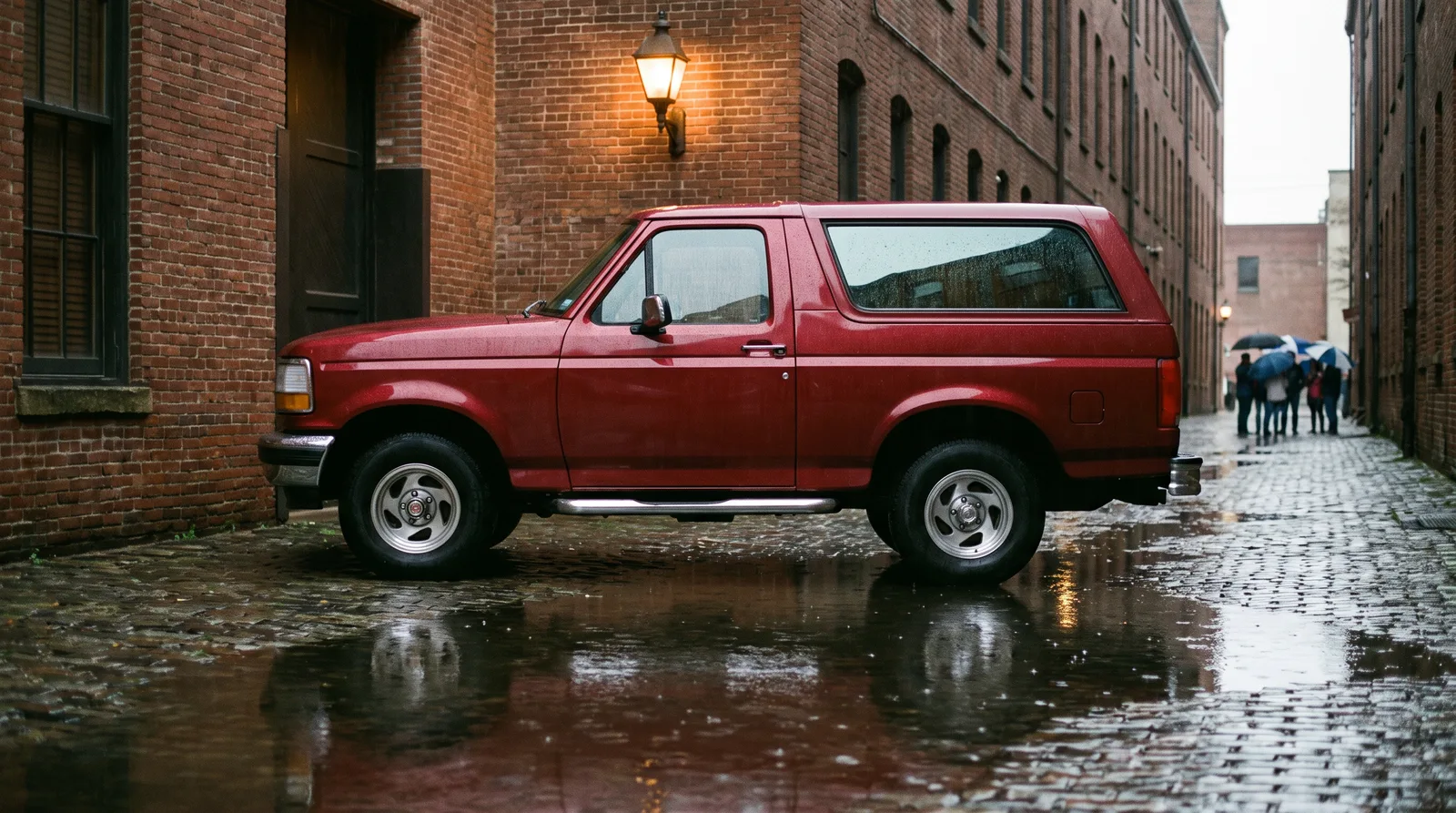
The ford bronco 1996 last full size model closed a thirty year lineage quietly, carrying over the OBS design unchanged before Ford handed the segment to the Expedition.
A quiet ending, not a dramatic one
Unlike some discontinued nameplates that go out with a special commemorative edition and heavy marketing fanfare, the 1996 Bronco's final year passed with relatively little ceremony from Ford. The truck carried over largely unchanged from the OBS generation that had debuted in 1992, with the familiar Custom, XLT, and Eddie Bauer trim structure still available and the same fuel injected engine lineup under the hood. Ford's attention by 1996 was already turning toward the Expedition, the larger, more car like SUV that would take over the full-size Bronco's position in showrooms for the 1997 model year, and that shift in corporate focus is visible in how little changed on the Bronco itself during its last season.
That lack of fanfare is itself a useful historical marker. It tells researchers that Ford did not treat the Bronco's discontinuation as a major event internally, at least not in terms of product planning, even though in hindsight the decision closed out one of the most recognizable nameplates in the company's truck history. Documentation from this period should be read with that context in mind. A 1996 Bronco is mechanically and cosmetically very close to its 1992 through 1995 siblings, and claims of unique final year features should be verified carefully rather than assumed.
Why the Bronco name disappeared from full-size trucks
The market forces behind the discontinuation were larger than any single design decision. American buyers were shifting steadily away from truck based, relatively utilitarian SUVs toward vehicles that offered more car like comfort, more interior space, and less of the compromise that came with a body on frame off roader. Ford's own Explorer, built on a smaller platform, had already demonstrated how much demand existed for that kind of vehicle, and the Expedition was designed from the outset to capture the full-size segment of that same shift. The Bronco, for all its capability and history, occupied a shrinking part of the market by the mid 1990s, and Ford's decision to retire the name reflected where consumer preference had actually moved rather than any failure of the truck itself.
Documenting an authentic final year truck
For a researcher or serious collector, confirming a truck's status as a genuine 1996 model matters, both for historical accuracy and for the modest premium these final year examples sometimes command among buyers drawn to the closing chapter symbolism. VIN decoding remains the most reliable method, since visual differences between a 1994, 1995, and 1996 Bronco are minimal enough that trim and options alone cannot reliably distinguish them. Original window stickers, dealer invoices, and title documentation showing a 1996 model year designation are the strongest evidence a buyer can ask for. For the complete arc this final year closes out, the bullnose ford bronco story documents the full run from the 1980 redesign through this last season, and the truck that started the entire lineage decades earlier is worth understanding too, since the full story explains how a simple 1966 off roader eventually grew into the truck that closed out in 1996.
"There's a temptation to treat a final year truck as automatically special, and sometimes it is, but sometimes it's just a well kept ordinary Bronco that happened to be built in the last season Ford offered the platform. The documentation is what separates the two."
- Sarah Whitfield
What survives from the final production run
Surviving 1996 Broncos today range widely in condition, from museum quality examples that have covered only a few thousand miles to working trucks that spent decades in daily service before finding their way to a collector. Production volume in the truck's final season was modest compared to peak years earlier in the platform's run, since demand had already begun shifting toward the Expedition even before the Bronco officially left the lineup, and that lower volume is part of why final year examples occasionally draw extra interest from buyers who specifically want a truck from the closing chapter. The last full-size Bronco rolled off the line on June 12, 1996, a date that has become a small point of pride among owners of genuine final production trucks. That interest should be weighed carefully against the reality that mechanically and cosmetically these trucks are nearly identical to the several model years immediately before them, meaning the premium is largely about the calendar rather than any meaningful engineering difference.
Researchers cataloging surviving examples also note that many 1996 Broncos left the factory with the same regional variations that had characterized full-size trucks throughout the decade, including different rust protection packages and towing equipment depending on where a given truck was originally sold. A careful buyer researching a specific example should treat these regional details as part of the documentation trail, not as inconsistencies to dismiss, since they often help confirm a truck's authentic history when other paperwork has gone missing over the years.
The 1996 Bronco in context
| Detail | 1996 model year |
|---|---|
| Generation | Final year of the OBS design introduced in 1992 |
| Trim levels | Custom, XLT, Eddie Bauer |
| Successor | Ford Expedition, introduced for the 1997 model year |
| Historical position | Closes a full-size production run stretching back to 1978, and a nameplate history back to 1966 |
A final year truck like this deserves to be cataloged carefully, not romanticized into something it was not. It is not a special edition and it did not receive unique engineering, but it does carry the genuine historical distinction of being the last full-size Bronco Ford ever built, and that alone makes accurate documentation worthwhile for anyone researching or preserving one. If you are exploring what survives today, there are usually classic Broncos on the market spanning every year of this final generation, and comparing a documented 1996 example against its immediate predecessors is the clearest way to understand exactly what, and what did not, change in the platform's last season.
Thirty years after the original Bronco debuted, and now several decades removed from the 1996 model itself, the closing truck in this lineage has earned its place in the historical record on its own terms, not simply as a footnote to the models that preceded it. A well documented example belongs in any thorough collection of the platform's history, standing as the final, fully evolved answer to a question Ford first asked back in 1966.
Sources and notes
Related Reading
Have a
Ford Bronco
for Sale?
Reach thousands of serious classic car collectors across the US.
Sell It Here →
Selling a classic? Here's how: where to sell your classic car online
Are You a Classic Car Dealer?
List your full inventory and connect with targeted classic car buyers.
Join as a Dealer →

About the author
Sarah Whitfield
Third-generation classic car collector specializing in pre-war American and European coachbuilt automobiles. Researcher and concours enthusiast.
Related Listings - Ford Bronco




Comments
Be the first to comment on this article.