
Ford let a race shop put its name on a production truck exactly once during the Bronco's original run, and the result was the Baja Bronco. Built from 1971 through 1975 in partnership with Bill Stroppe's shop, the ford bronco baja bronco edition took the desert-racing image Stroppe had built in actual Baja competition and translated it into a street-legal truck ordinary buyers could park in a driveway. It sold in small numbers, cost more than a standard Bronco, and looked nothing like anything else Ford had in showrooms that decade.
Car Features
7 min read
The Baja Bronco, Stroppe's Street-Legal Racer
How Ford and Bill Stroppe turned a desert racing reputation into a limited-production street truck buyers could actually own.
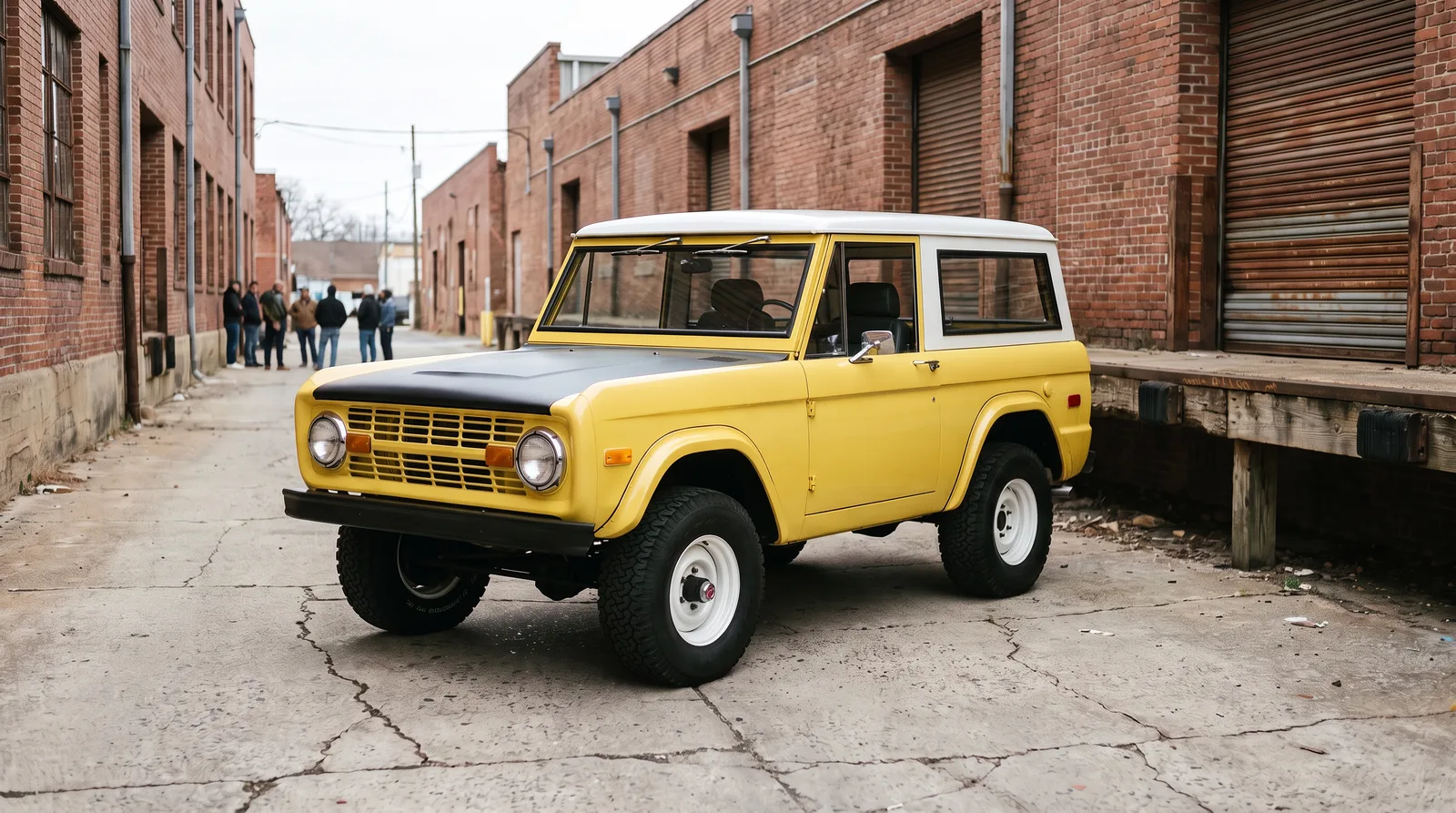
A truck built for a specific kind of buyer
Ford and Stroppe were not chasing volume with this program, and the dealer network treated it accordingly. Baja Broncos were not stocked on every lot the way a standard XLT would have been, and buyers who wanted one often had to seek out a dealer specifically willing to order the modification package or locate a truck already built. That scarcity by design, rather than scarcity by accident, is a meaningful distinction for collectors today. Plenty of limited editions across the industry become limited simply because a model sold poorly. The Baja Bronco was limited because Ford and Stroppe deliberately kept it that way, preserving the sense that owning one meant something beyond just buying whatever happened to be on the lot that week.
A limited-production truck with a real pedigree
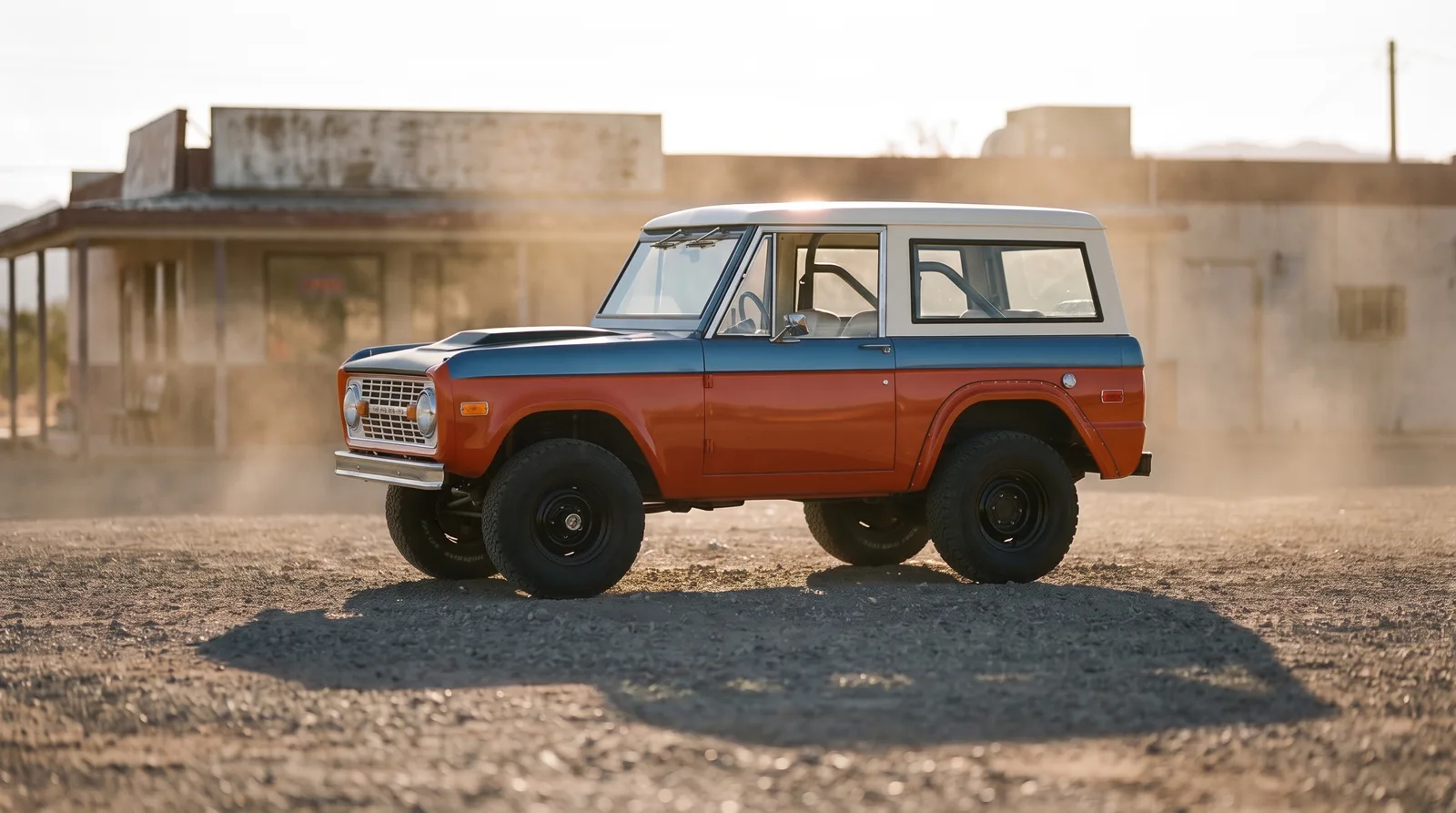
The Baja Bronco started life as a standard Bronco pulled aside for Stroppe's shop to modify before it reached a dealer lot. Modifications included wider off-road tires, a roll bar, upgraded shock absorbers borrowed from the lessons Stroppe's race team had learned in actual desert competition, and a distinctive paint scheme that set it apart from every other truck on the lot at a glance. Ford built roughly 650 of these over the model's run, a number small enough that genuine, documented examples are treated as a distinct and scarce category within the wider Bronco collector world today.
Why buyers paid extra for it
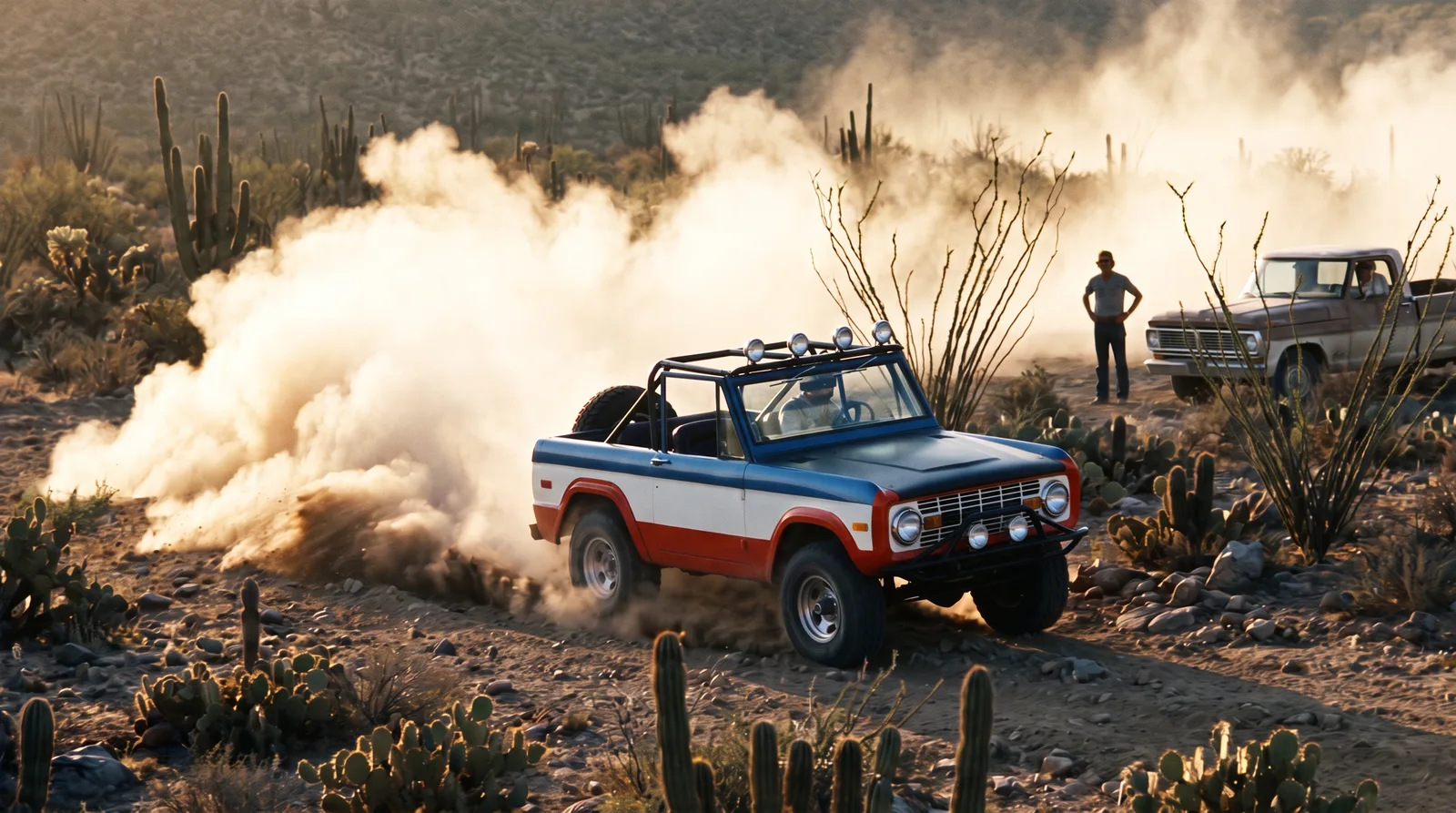
A standard Bronco in the early 1970s already handled off-road use reasonably well, so the Baja Bronco was not selling raw capability that a base truck lacked. It was selling a story, the same story that had made Stroppe's name mean something in the desert racing world, packaged into a truck a buyer could actually own without ever entering a race. That distinction, buying the image of competition rather than the competition itself, is not unique to the Bronco, but few manufacturers pulled it off with a builder as legitimately credentialed as Stroppe attached to the badge.
What set the Baja Bronco apart from a standard truck
| Feature | Standard Bronco | Baja Bronco |
|---|---|---|
| Production years | 1966-1977 (first generation) | 1971-1975 |
| Shock absorbers | Factory standard | Upgraded, race-derived tuning |
| Roll bar | Not standard | Included |
| Paint scheme | Standard factory colors | Distinctive Stroppe-associated livery |
| Builder involvement | Ford factory only | Stroppe shop modification |
"The Baja Bronco worked because it wasn't pretending. Stroppe's trucks actually raced Baja, so when Ford sold a street version with his name on it, buyers were getting a real connection, not a marketing department's idea of one."
- Patrick Walsh
Why Ford agreed to the deal at all
Manufacturer leadership in the early 1970s was not automatically comfortable putting a truck's fate in the hands of an outside shop, and Ford's willingness to do exactly that with Stroppe says something about how much credibility his racing results had already earned inside the company. The Baja Bronco program came together because Ford's own product planners had watched Stroppe's team win in genuinely difficult conditions for several seasons running, and they concluded the association was worth more as a retail story than it would cost in lost control over quality and branding. That is not a decision companies make lightly, then or now, and it reflects just how thoroughly Stroppe had proven himself before Ford agreed to attach his name to a product buyers could walk into a dealership and order.
Collectibility today
Genuine Baja Bronco examples, meaning trucks that were actually modified by Stroppe's shop rather than later builds dressed up to look the part, command a significant premium over standard first-generation Broncos in similar condition. Documentation matters enormously here because the visual cues, wide tires, a roll bar, distinctive paint, are all things a later owner can replicate without the truck ever having passed through Stroppe's shop. Buyers serious about a genuine example should expect to verify chain of ownership and any factory or shop paperwork before paying the premium the name commands. For the background on how this partnership came together in the first place, read the background, and the specific color schemes used across the run are their own story, worth a look too.
How the deal with Stroppe actually worked
Ford's arrangement with Stroppe was not a simple licensing check written once a year. Broncos destined to become Baja editions were built at the factory to a standard specification and then routed to Stroppe's shop for the modification work before being shipped on to dealers, which means every genuine Baja Bronco carries a documented path through two separate facilities rather than a single factory build sheet. That two-stage process is unusual for the era. Most manufacturer tie-ins with outside builders in the 1970s amounted to little more than a badge and a paint option selected from a factory list. The Baja Bronco actually left the assembly line, traveled to an independent shop with real racing credentials, and came back different, which is part of why buyers and appraisers alike treat the truck as something closer to a genuine collaboration than a marketing exercise dressed up with a famous name.
That process also explains why fakes and later replicas are such a persistent problem in this corner of the market. Recreating the paint scheme and bolting on a roll bar is well within reach for anyone with a body shop and a parts catalog. Recreating an actual factory-to-Stroppe-shop paper trail is not, and that gap between what is easy to fake and what is hard to fake is exactly where buyers get burned if they do not do their homework before paying a premium for the name.
The short run that left a long shadow
Five years is not a long production run, and the Baja Bronco never came close to the volume of the standard trucks it was built alongside. What it did instead was cement a connection between the Bronco name and genuine off-road racing credibility that outlasted the model itself by decades. Every later Bronco variant that leaned on a rugged, desert-capable image owes something to what Stroppe and Ford built together in that short stretch of the early 1970s. If that history has you looking for one, there are shop classic Bronco listings worth comparing against documented Baja examples before buying.
Sources and notes
Related Reading
Have a
Ford Bronco
for Sale?
Reach thousands of serious classic car collectors across the US.
Sell It Here →
Selling a classic? Here's how: compare the places to sell classic cars
Are You a Classic Car Dealer?
List your full inventory and connect with targeted classic car buyers.
Join as a Dealer →

About the author
Patrick Walsh
Automotive journalist covering classic car shows, events, and the enthusiast community across North America.
Related Listings - Ford Bronco




Comments
Be the first to comment on this article.