
A man at a car show in Nevada once told me he bought his Baja Bronco for the color before he ever asked what was under the hood. He had seen a photograph of one racing across the desert as a boy, a streak of red, white, and blue against pale sand, and forty years later that image was still the reason he wanted the truck sitting in his own garage. Ford bronco baja bronco colors were never just paint. They were a signal, visible from a distance, that told anyone watching exactly what kind of truck was coming.
Car Features
7 min read
The Red White and Blue of the Baja Bronco
A human-interest look at why the Baja Bronco's red, white, and blue scheme still pulls people in decades after they first saw a photograph of one.
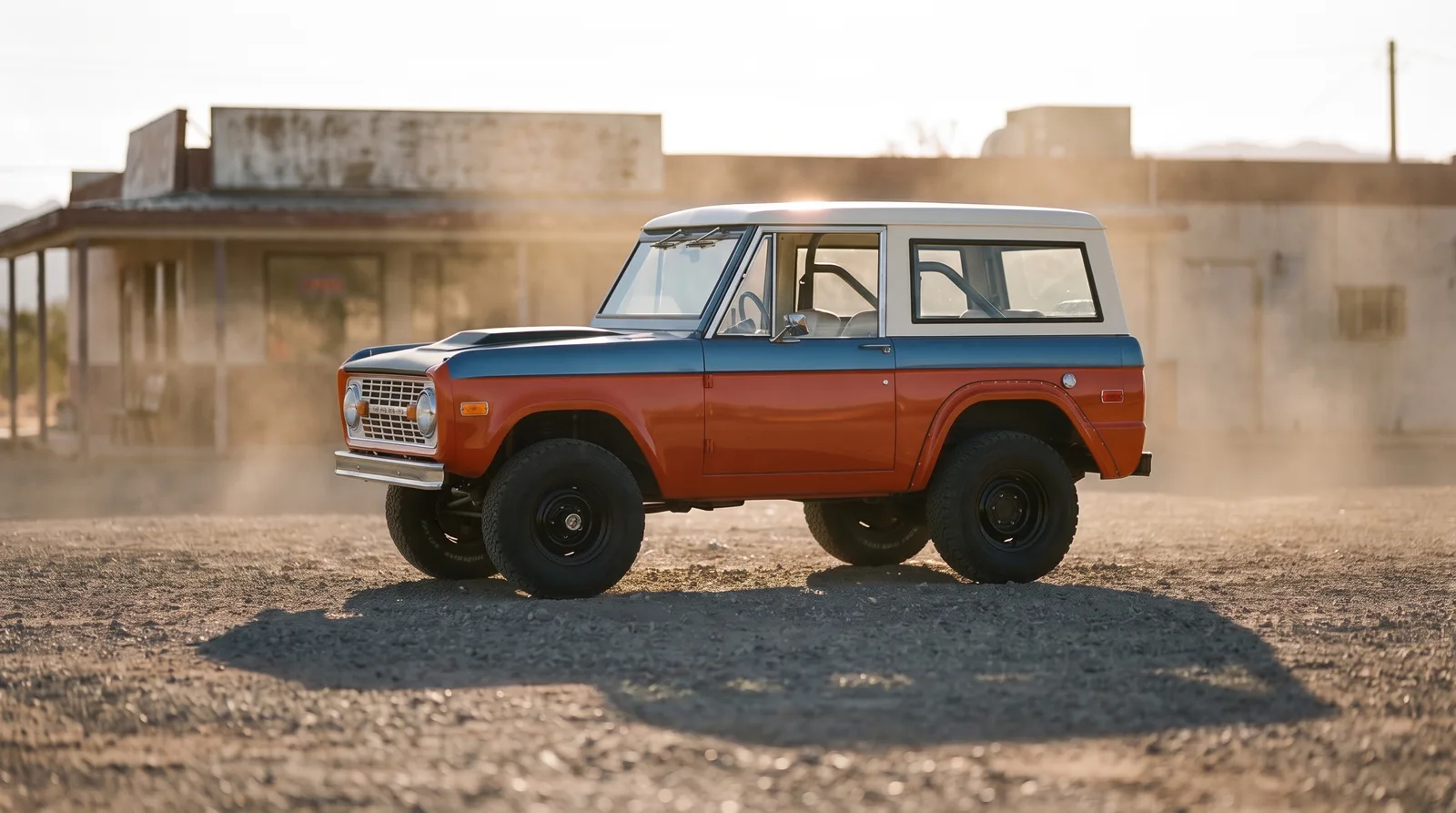
The moment before the memory
I keep thinking about the specific detail he mentioned, that the photograph he saw as a boy was not posed, not a dealership brochure shot, but a snapshot of a truck genuinely mid-race, dust already climbing off the tires. That distinction matters more than it might seem. A brochure photograph sells a product. A race photograph sells a moment, something that happened once and cannot be recreated on demand, and the color scheme became inseparable from that sense of witnessing something real rather than something staged. Decades later, restoring that exact palette on his own truck was not really about matching paint codes. It was about closing the distance between a photograph he could not stop thinking about and a truck he could actually put his hand on.
A palette built to be seen in the desert
The Baja Bronco's signature scheme paired white as the dominant body color with bold red and blue accent striping, a combination chosen for a very practical reason before it ever became an aesthetic one. Desert racing meant spectators, chase crews, and photographers needed to identify a specific truck at speed, kicking up dust, from a considerable distance. A loud, high-contrast scheme did that job better than a subtle one ever could. What started as a functional choice for visibility on the Baja peninsula became, once the truck reached showrooms, a color story that buyers wanted attached to their own vehicles regardless of whether they ever raced a mile of desert themselves.
Red, white, and blue as more than a flag reference
It is tempting to read the scheme as a patriotic gesture, and for some buyers at the time it probably read that way. But the timing and the source point somewhere more specific. Bill Stroppe's race team used bold, legible color schemes on its competition vehicles across multiple programs, not just the Bronco, because legibility on a racecourse was a genuine competitive consideration. The Baja Bronco's street version inherited that logic rather than starting from a patriotic design brief, even if the finished look happened to echo the American flag closely enough that plenty of owners embraced that reading anyway.
Reading the scheme at a glance
| Element | Purpose |
|---|---|
| White body | High contrast against desert terrain for visibility at speed |
| Red striping | Bold accent tied to Stroppe race team livery conventions |
| Blue striping | Completed the high-contrast, easily identified scheme |
| Overall effect | Legible from a distance, later read by owners as patriotic |
"People fall for these trucks through a photograph long before they understand the mechanics of what made them good in the desert. The color did that work. It still does, honestly, every time one rolls into a parking lot."
- Nora Beckett
What the color means to owners now
Talk to enough Baja Bronco owners and a pattern emerges that has little to do with horsepower or chassis specifications. They talk about the truck the way that man in Nevada did, through memory first. A photograph seen young, a truck spotted at a show decades before they could afford one, a color combination that stuck in a way plain white or factory green never would have. The scheme turned a modestly produced special edition into something instantly recognizable across generations of people who never saw a Baja race in person and never will. For the fuller account of how this partnership between Ford and Stroppe came together, more on the ford bronco baja covers the racing program behind the paint. And where this started traces the truck back to its 1966 origins, long before anyone had painted one red, white, and blue.
How the scheme survived changing tastes
Automotive color trends shift constantly, and plenty of once-popular factory paint schemes from the 1970s look dated or even a little embarrassing to modern eyes. The Baja Bronco's scheme largely escaped that fate. Part of the reason is the simplicity of it, white with red and blue accents does not carry the same era-specific baggage that a shag-carpet interior color or a metallic avocado paint job does, since high-contrast color blocking has remained a viable design language across decades of automotive and industrial design. But part of the reason is also the story attached to it. A color scheme tied to nothing in particular fades from fashion the moment tastes move on. A color scheme tied to a specific, documented racing history has something else keeping it relevant even after the original design trend it emerged from has long since passed.
What the man in Nevada actually bought
I asked him, eventually, whether the mechanics underneath ever mattered to him once he owned the truck. He laughed and said of course they did, that he had spent plenty of weekends since chasing down the right shocks and confirming the drivetrain was original before he felt good about the purchase. But the sequence stuck with me. The color got him to look. The history and the documentation are what made him commit. That order, image first and substance second, is not a flaw in how people collect cars. It is closer to how most of us form any attachment worth keeping, through something we saw before we understood why it mattered, and then a slower process of learning the reasons afterward.
Talk to Baja Bronco owners at enough shows and a version of that same order comes up again and again. Almost nobody describes falling for the truck through a spec sheet. They describe a photograph, a toy version they had as a kid, a truck glimpsed once at a gas station decades ago that they never forgot. The color did the work of making the memory stick long before most of these owners understood the racing history behind it, and by the time they went looking for a real one to buy, the history was just confirmation of something they already felt.
A color that outlasted the era it came from
Paint fades, and plenty of surviving Baja Broncos wear a scheme that has softened considerably from the sharp contrast it carried new. But the memory the colors created did not fade at the same rate. Owners restore that scheme deliberately, chasing the exact shade and stripe placement rather than settling for something close, because the color is inseparable from what the truck represents to them. If a photograph from childhood is enough to send someone searching decades later, there are classic Broncos on the market today for anyone chasing a color memory of their own.
Sources and notes
Related Reading
Have a
Ford Bronco
for Sale?
Reach thousands of serious classic car collectors across the US.
Sell It Here →
Selling a classic? Here's how: the best sites to sell a classic car
Are You a Classic Car Dealer?
List your full inventory and connect with targeted classic car buyers.
Join as a Dealer →

About the author
Nora Beckett
Automotive features writer and photographer who tells the human stories behind the cars, from show fields to cross-country road trips.
Related Listings - Ford Bronco




Comments
Be the first to comment on this article.