
Ford Bronco Eddie Bauer collectibility is the question I get asked most often by buyers who have already decided they want a full-size Bronco and just need to know which trim to chase. The Eddie Bauer package launched in late 1984 as a 1985 model and ran through the end of full-size production in 1996, and the data on what these trucks actually sell for tells a clearer story than most sellers realize when they list one.
Car Features
7 min read
Chasing a Clean Eddie Bauer Bronco Today
A market analyst runs the auction numbers on the Eddie Bauer Bronco and gives a straight buy or no-buy read.
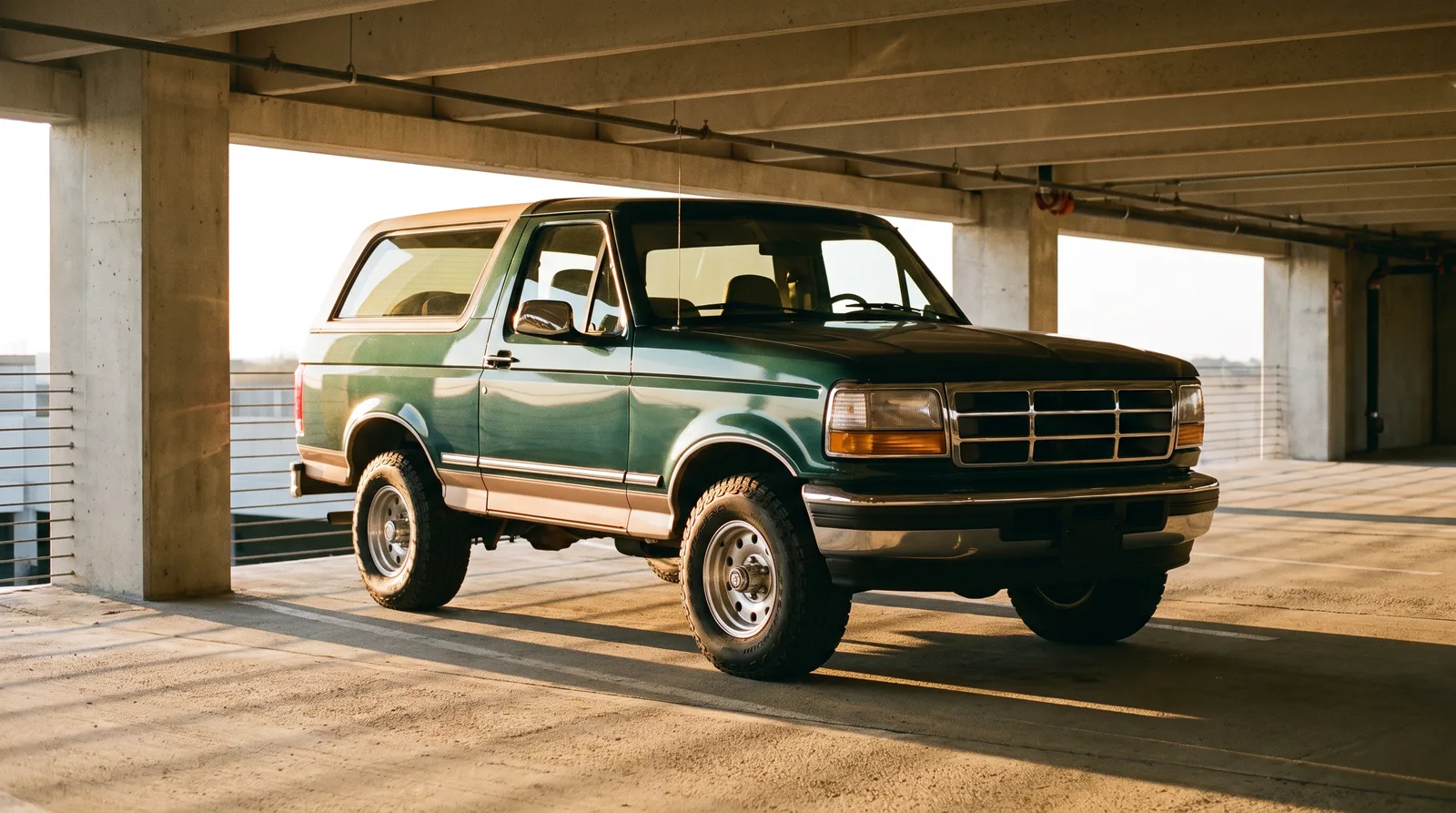
What the Eddie Bauer package actually added
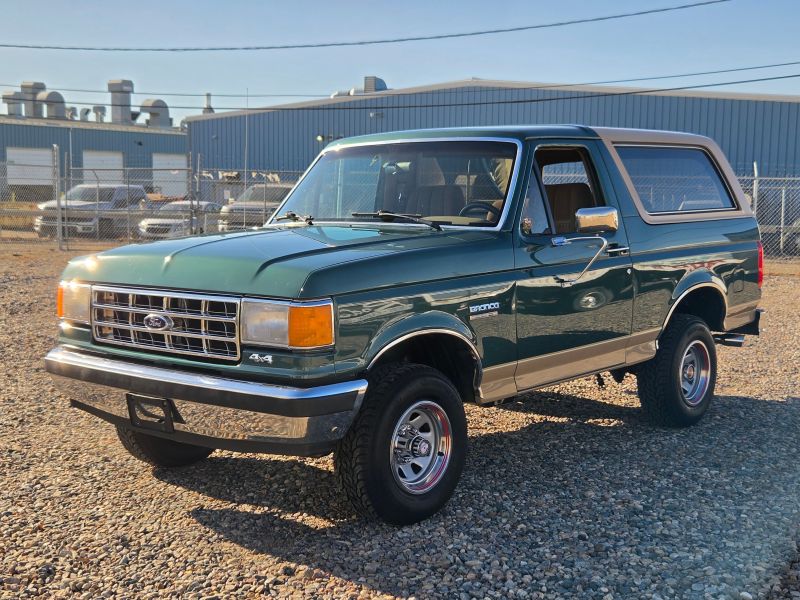
The Eddie Bauer edition paired the Bronco with two-tone paint, plusher cloth or leather seating, badging tied to the outdoor outfitter brand, and a features list that ran ahead of the base XLT in every model year it was offered. It was never a mechanical upgrade. The engine and chassis underneath an Eddie Bauer are the same 302 or 351 Windsor setup you would find in a plain XL. What buyers are paying for is trim, color, and the badge itself, and in a collector market that badge does a surprising amount of work.
The auction numbers, plain
Pulling recent public sale results, a rough-condition Eddie Bauer with mismatched paint and unknown mileage tends to land between nine and fourteen thousand dollars. A clean, driver-quality example with service records moves into the eighteen to twenty-six thousand range. The top of the market, meaning low-mile trucks with original two-tone paint intact and no accident history, has cleared thirty-five thousand more than once in the last eighteen months, with a small number of exceptional 1996 trucks pushing past forty. Compare that to a plain XLT of the same year and condition, which usually runs twenty to thirty percent lower across every tier. That gap is the collectibility premium, and it has widened rather than narrowed.
Price bands at a glance
| Condition | Typical sale price | Notes |
|---|---|---|
| Rough / needs work | $9,000 - $14,000 | Paint mismatch, unknown history, drivable |
| Clean driver | $18,000 - $26,000 | Service records, original two-tone paint, minor wear |
| Low-mile / documented | $28,000 - $38,000 | Original drivetrain, complete paperwork trail |
| Exceptional 1996 | $40,000+ | Last-year production, near-original condition |
Where the money is and is not justified
The premium makes sense for early clean examples and for the last-year 1996 trucks, which carry an end-of-production story on top of the trim story. It makes less sense in the middle years, roughly 1989 through 1993, where Eddie Bauer production was high enough that scarcity is not really part of the pitch. A buyer paying top-tier money for a mid-run truck with no documentation is paying for a badge and a color scheme, not for rarity, and that distinction matters if resale is part of the plan.
Where this started is worth reading if you want the full production history behind why this generation split into so many trim levels in the first place, since the Eddie Bauer story only makes sense in that wider context.
How the interior and options list affect resale
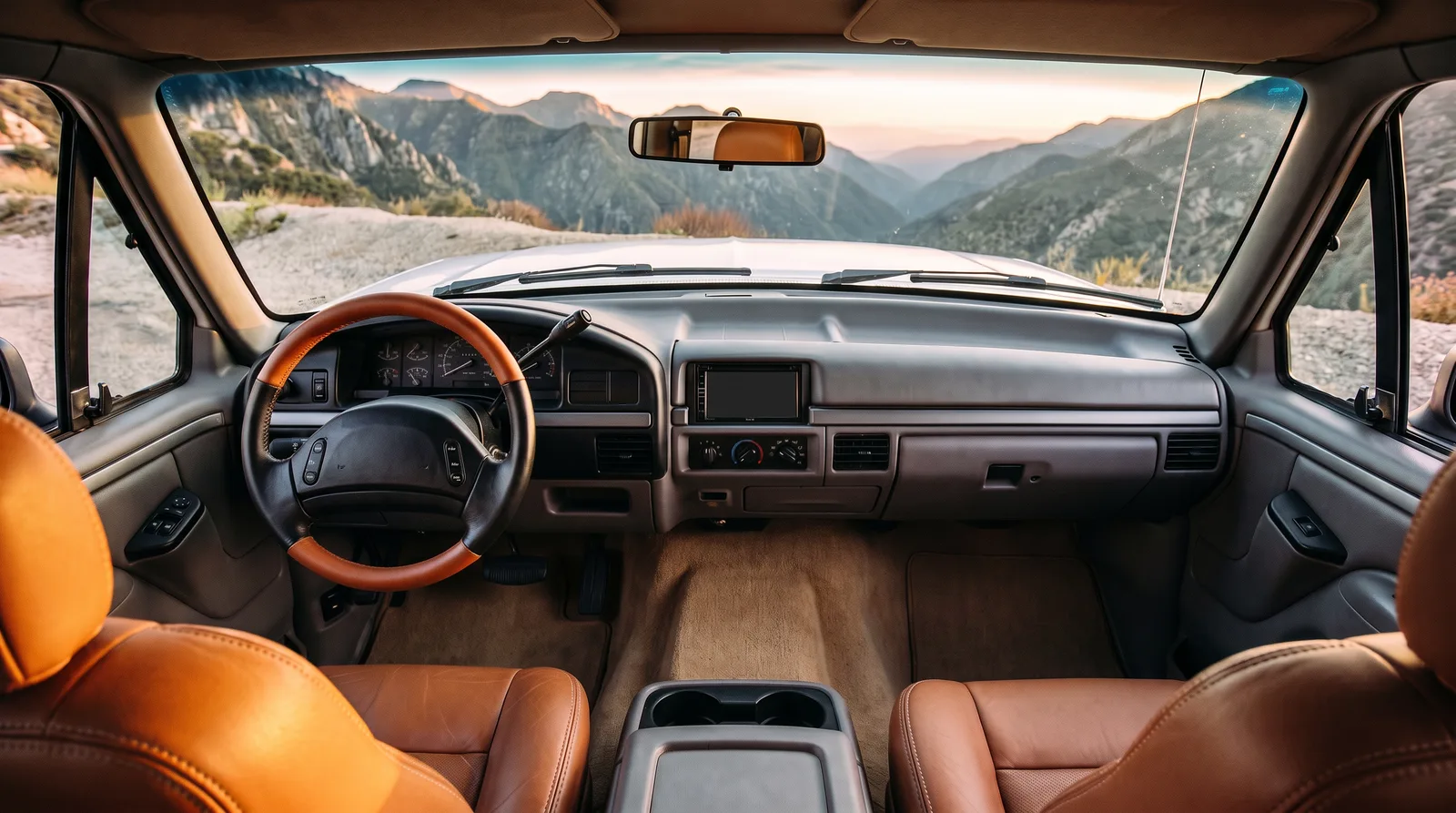
Trim details inside the cabin move price more than most sellers expect. Leather seating, a factory center console, and the upgraded gauge cluster Ford offered on later Eddie Bauer trucks all show up as measurable bumps in sale price when I run comparisons across recent listings. Cloth-seat early Eddie Bauer trucks from 1985 and 1986 trade closer to a well-optioned XLT than to the leather-equipped trucks from the 1990s, which surprises buyers who assume the badge alone carries a flat premium regardless of year. It does not. The premium tracks the actual content of the package, and that content grew steadily richer as the run went on, which is part of why later trucks command more even before factoring in the end-of-production story.
Air conditioning working correctly is a bigger factor than it sounds like on paper. A non-functional system on an Eddie Bauer knocks real dollars off a sale price because buyers shopping this trim tend to want the truck as a comfortable weekend driver rather than a stripped-down off-roader, and a dead AC compressor undercuts exactly the use case the trim was built to sell. I have watched two otherwise identical trucks split by nearly two thousand dollars purely on whether the air conditioning blew cold during a test drive.
Comparing Eddie Bauer against other special trims
Ford was not shy about badge-engineering trim packages onto the full-size Bronco, and Eddie Bauer had to share shelf space with the Silver Anniversary edition, various XLT Lariat configurations, and a handful of dealer-installed appearance packages that came and went across the run. None of those competing trims built the same lasting brand recognition. Eddie Bauer had a company name behind it that buyers already associated with quality outdoor gear before they ever looked at a truck, and that outside brand equity is doing real work in the collector market today. A Silver Anniversary Bronco with equivalent options and condition typically sells for noticeably less than an Eddie Bauer, not because the truck underneath is any different, but because the badge carries less recognition outside the Bronco community specifically. Collectibility, in this corner of the market, tracks brand memory as much as it tracks rarity.
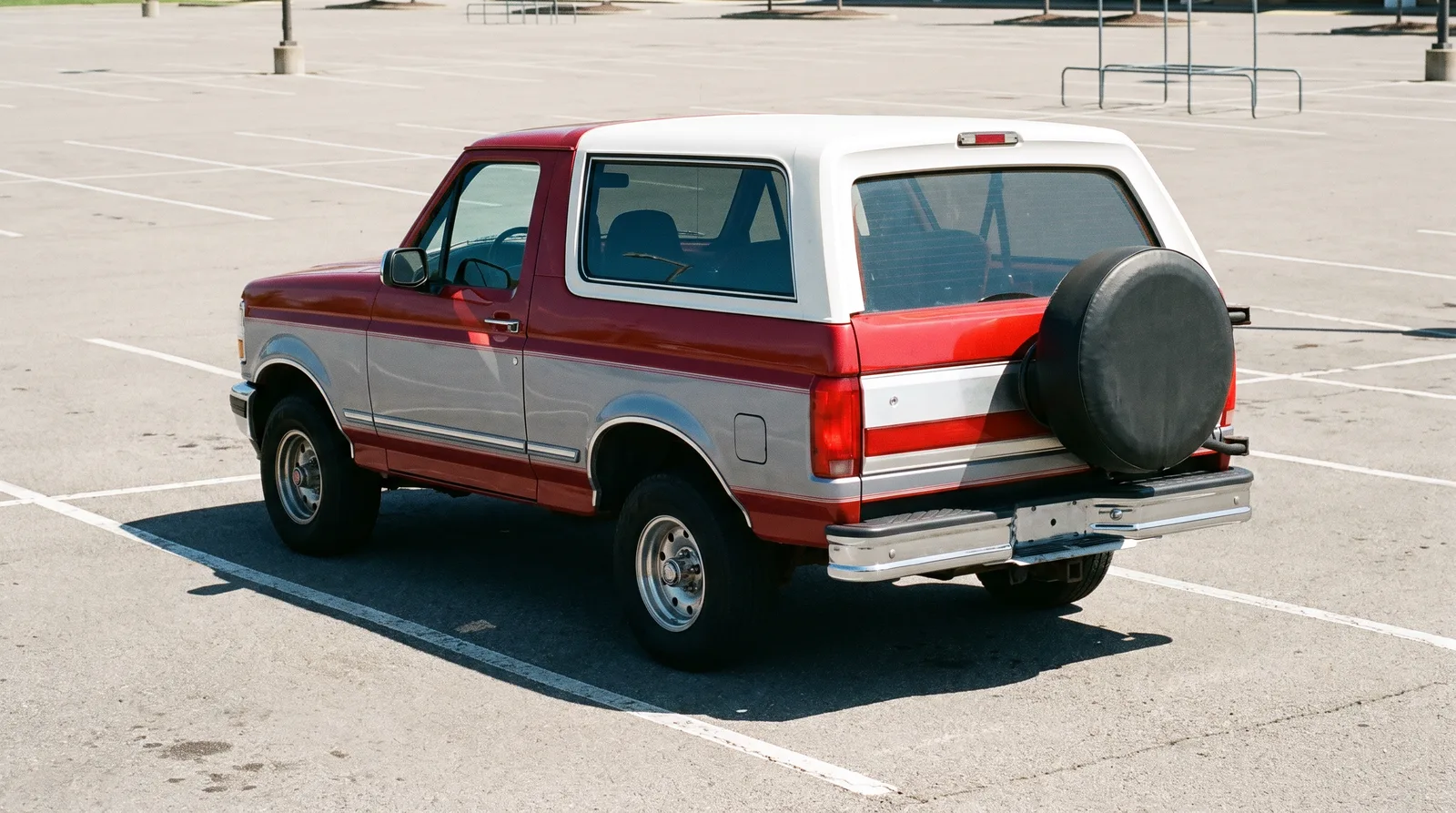
That said, rarity within the Eddie Bauer line itself is not evenly distributed. Certain color and interior combinations were ordered far less often than others, and a buyer chasing an unusual pairing, say a dark exterior color with the tan leather interior rather than the far more common two-tone white combination, is chasing a genuinely scarcer truck even within a trim that was never rare as a whole. Sellers who understand this distinction price accordingly. Buyers who do not understand it end up either overpaying for a common combination or underpaying for a genuinely uncommon one because neither side did the homework on what was actually ordered in what numbers.
"The badge does real work in this market. It should not do all the work. I want service records and a compressor that blows cold before I care what name is on the fender."
- David Mercer
My buy or no-buy read
Buy: a documented Eddie Bauer with service records and clean sheet metal, priced in the clean-driver band or below. That truck has room to appreciate and a trim story that keeps demand steady even if the broader OBS market cools off. Buy with caution: anything priced at the top of the range without paperwork to back it up, because you are paying peak price for a story you cannot verify. No-buy: a repainted truck wearing Eddie Bauer badges and two-tone paint that was not original to the build. Re-trimmed clones exist, and they trade at a real discount to genuine examples once a buyer figures out what they actually bought.
Where the market goes from here
Ford bronco eddie bauer collectibility looks durable rather than speculative, mostly because the trim has a built-in identity that survives generational shifts in taste. It is not a flashy pick the way a Baja-badged truck is, but it is a steady one, and steady tends to age better than flashy once a market matures. If you are shopping rather than just reading the numbers, you can find a classic Bronco and compare listings against the price bands above before you make an offer.
Sources and notes
Related Reading
Have a
Ford Bronco
for Sale?
Reach thousands of serious classic car collectors across the US.
Sell It Here →
Selling a classic? Here's how: the best sites to sell a classic car
Are You a Classic Car Dealer?
List your full inventory and connect with targeted classic car buyers.
Join as a Dealer →

About the author
David Mercer
Classic car market analyst with two decades of experience tracking collector car valuations, auction results, and investment trends.
Related Listings - Ford Bronco




Comments
Be the first to comment on this article.