
Somewhere between Malibu and Ventura, sometime around 1969, a photograph exists of a white early Bronco parked nose out on a stretch of sand, roof panel off, a pair of longboards leaning against the tailgate. Nobody remembers who took it or who owned the truck. It does not matter. That image, or one nearly identical to it, repeats itself across thousands of family photo albums up and down the California coast, and it is the clearest visual shorthand for the ford bronco first gen beach culture story that exists.
Car Features
7 min read
The Early Bronco and Coastal Surf Culture
Ford never marketed the early Bronco as a beach truck, but California surf culture claimed it anyway, and the association has never really faded.
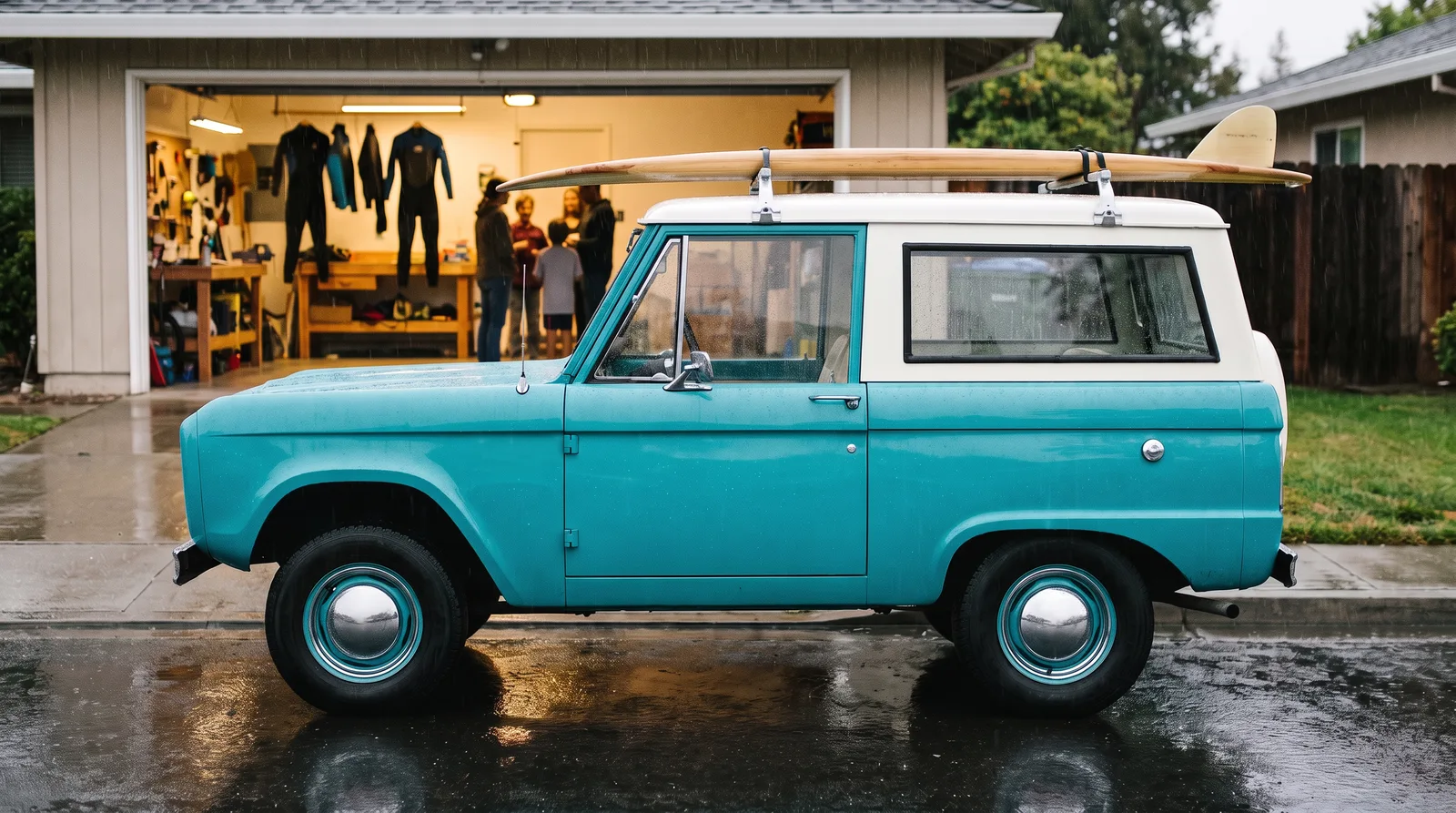
A truck built for a coastline it never advertised for
Ford designed the early Bronco to compete with the Jeep CJ-5 and the International Scout, and the target buyer in the sales literature was a rancher, a hunter, a rural utility customer. Nobody at Ford's Dearborn offices was drafting brochures with surfers in mind. But the truck's specifications, short wheelbase, removable roof panels on the wagon body, a bed long enough and low enough to slide a board into without much fuss, made it accidentally perfect for a use case the engineers never planned around. Southern California's surf culture adopted the Bronco the way it adopted a lot of things in the late 1960s, quickly, informally, and without asking permission from the manufacturer's marketing department.
The half cab and roadster body styles, in particular, suited the beach lifestyle in a way the wagon did not quite match. An open bed meant boards, coolers, and wetsuits could be tossed in without worrying about scratching interior trim, and the removable doors on some configurations turned the whole cabin into something closer to an open air buggy once you cleared the parking lot and hit the sand access roads that still existed on many California beaches through the 1970s.
Sand tires, roof racks, and a look that stuck
Owners modified their Broncos for beach use in fairly consistent ways across the era, wider tires for flotation on soft sand, roof mounted board racks on the wagon variants, and a general tolerance for the salt air and sand that would eventually rust out floor pans and rocker panels on trucks that were never garaged. That same salt exposure is part of why genuinely clean, rust free examples with documented coastal California history carry a premium today, and also why buyers should expect to find hidden corrosion on any Bronco with a confirmed beach town ownership history, even one that looks clean on the surface.
Photography, film, and the image that outlived the decade
Surf photography and early lifestyle magazines from the period regularly used Broncos and similar compact trucks as background elements, and that repeated visual association did real work over time. By the mid 1970s, the early Bronco had become shorthand in advertising and film for a certain kind of relaxed, outdoor, coastal identity, whether or not the actual truck in frame had ever seen sand. That borrowed cultural weight has proven durable. It shows up today in how the truck gets photographed for auction listings, in how restoration shops market their finished builds, and in the persistent pairing of the Bronco silhouette with beach and desert imagery across decades of print and digital advertising that has nothing directly to do with Ford.
"Nobody sold the Bronco as a beach truck, the beach just decided to claim it, and the claim never really let go."
- Nora Beckett
The soundtrack that came with the truck
Culture rarely spreads through specification sheets, it spreads through images and sound, and the early Bronco picked up both. Regional surf rock and the broader California sound of the late 1960s and early 1970s used beach and open road imagery constantly, and the Bronco's open cabin and low bed made it a natural fit for that visual language even when no band ever mentioned it by name. Weekend caravans down the coast, tailgates lowered at overlooks, a truck bed doubling as a place to sit and watch the swell, none of it required a factory option or a marketing campaign. It just happened because the truck fit the lifestyle people were already building, and once enough photographs and home movies captured that fit, the association hardened into something closer to folklore than fact.
That informality is part of why so little of this history exists in any official archive. Ford's own corporate records have almost nothing to say about surf culture adoption because Ford was not involved in it. This entire chapter of the Bronco's story was written by owners, not by the company that built the truck, which makes it harder to document with certainty but no less real for anyone who lived through it or grew up hearing the stories secondhand from an older relative who did.
What the culture left behind for today's owners
The practical legacy of this history is mixed. On one hand, it built an enduring, romantic association that keeps demand for early Broncos strong among buyers who have never been near a surfboard in their lives. On the other hand, it means a meaningful share of the surviving population spent decades near salt air, and that matters enormously when evaluating a truck for purchase. Frame and floor condition deserve more scrutiny than paint condition on any Bronco with coastal history, documented or suspected, no matter how good the truck looks in photographs.
For readers who want to go back further, our complete history of the first generation model covers the engineering and market context behind the truck that the beach later adopted as its own. If the collector angle interests you more than the cultural one, it is worth continuing on to see why buyers still chase these trucks decades later, and you can keep exploring that side of the story. Those ready to look at an actual truck rather than another photograph of one can browse classic Bronco for sale listings to see current condition, pricing, and provenance across the market.
The beach never owned the Bronco. It just borrowed it, indefinitely, and the culture that grew out of that borrowing outlasted the decade that started it.
Sources and notes
- Ford Bronco - Wikipedia
- Hagerty: First-generation Ford Bronco profile
- Curbside Classic: Ford Bronco archive
- Motor Trend: Ford Bronco history
- Mecum Auctions: Ford Bronco results
What is worth remembering, too, is that this borrowed identity never fully replaced the truck's original working purpose. The same Bronco that spent a Saturday hauling boards down Pacific Coast Highway might spend Monday morning hauling feed on a ranch two hours inland, because the truck itself never changed, only the context around it did. That dual life, equally comfortable as a beach cruiser and a working utility vehicle, is part of what made the cultural adoption so seamless in the first place. Nothing about the truck had to be altered or reinterpreted to fit the beach lifestyle. It simply already fit, the way a good pair of work boots turns out to also be the right thing to wear on a long hike, without anyone redesigning the boots for that purpose.
Related Reading
Have a
Ford Bronco
for Sale?
Reach thousands of serious classic car collectors across the US.
Sell It Here →
Selling a classic? Here's how: compare the places to sell classic cars
Are You a Classic Car Dealer?
List your full inventory and connect with targeted classic car buyers.
Join as a Dealer →

About the author
Nora Beckett
Automotive features writer and photographer who tells the human stories behind the cars, from show fields to cross-country road trips.
Related Listings - Ford Bronco

Comments (1)
C
camaro_kev69
3 days ago
how bad do the floors get on those beach trucks... honestly?