
Ask a dozen early Bronco owners why they bought theirs and you will get a dozen different first sentences, but the conversation almost always ends up in the same place. It is small enough to feel personal, simple enough to actually understand, and old enough to matter without being so old that it feels untouchable. That combination is the real ford bronco first gen buying appeal, and it explains why demand for these trucks has held up so consistently across a collector market that changes its mind about almost everything else.
Car Features
6 min read
Why Collectors Fall for the Early Bronco
Manageable size, honest mechanicals, and a still accessible price of entry explain the lasting ford bronco first gen buying appeal among collectors.
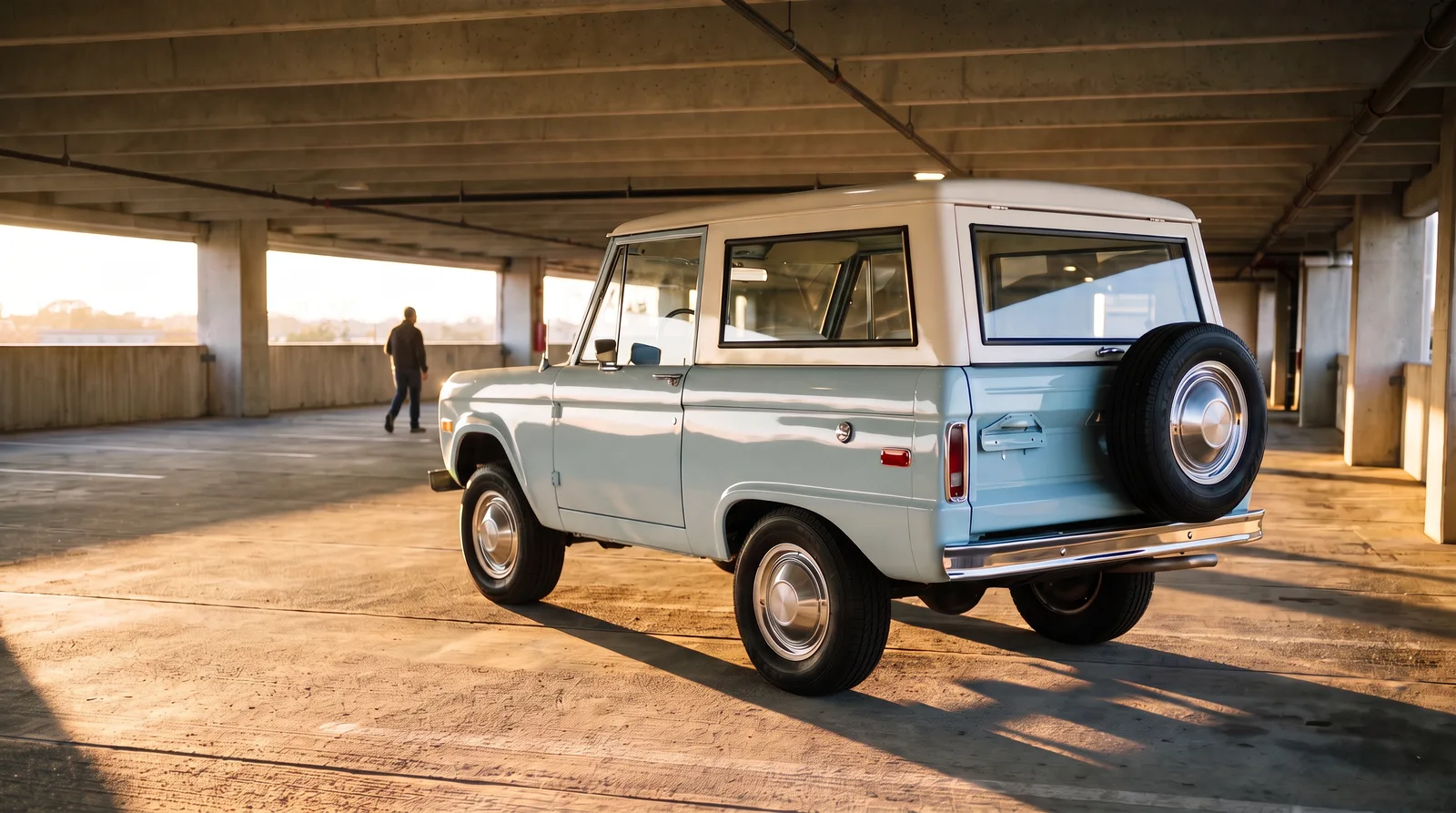
A size that reads as approachable, not intimidating
The first generation Bronco rides on a 92 inch wheelbase, noticeably shorter than the full size trucks and even the mid size SUVs that came after it. That dimension matters more than it sounds like it should. A truck this compact does not loom over a driveway or dominate a garage the way a later Bronco or a full size pickup does, and it does not require the same confidence to drive, park, or maneuver in tight spaces. New collectors, including plenty who have never owned an older vehicle before, consistently describe the early Bronco as the classic truck that felt least intimidating to take on as a first project or first daily driver from another era. That accessibility, both physical and psychological, is a real part of the appeal, not a minor footnote to it.
Mechanical simplicity that rewards ownership
Early Broncos were built with straightforward, well documented drivetrains, and the engineering underneath the body is not mysterious in the way some later classics can be. Parts availability has improved steadily over the past two decades as the reproduction market matured around this specific model, to the point where a determined owner can now source reproduction sheet metal, trim, and mechanical components without hunting through salvage yards the way earlier generations of owners had to. That combination, straightforward engineering plus a healthy parts supply, lowers the practical barrier to ownership in a way that matters enormously to buyers who want to actually drive the truck rather than trailer it to shows.
Three body styles, three different kinds of collector
Part of the buying appeal is that the early Bronco was never just one truck. The wagon, with its removable hardtop, appeals to buyers who want year round usability and weather protection. The half cab, with its open bed behind an enclosed front section, splits the difference for owners who want some utility without fully committing to an open vehicle. The roadster, stripped down and open, appeals most directly to purists chasing the earliest, most unadorned version of the concept. That range means the model accommodates genuinely different collector priorities under one nameplate, and it is part of why the early Bronco market has multiple healthy price tiers rather than one narrow band of demand.
"Most classic trucks ask you to pick a lane, restore it stock or build it wild. The early Bronco lets you do either without feeling like you are fighting the platform."
- Sarah Whitfield
Buying appeal is not just about the truck, it is about who you join when you buy it. The early Bronco community, built up over decades of regional clubs, online forums, and informal meet ups, has a reputation among newcomers for being unusually welcoming to first time owners compared with some other classic vehicle communities that can feel closed off to anyone without decades of prior experience. Established owners regularly help newer buyers evaluate a prospective purchase, point them toward trustworthy parts suppliers, and talk through basic maintenance questions without the gatekeeping attitude that discourages people from getting into other corners of the classic market. That social accessibility compounds the physical and mechanical accessibility discussed above, and it genuinely affects buying decisions. People are more likely to commit to a purchase when they can picture themselves supported afterward rather than left to figure everything out alone.
This welcoming culture did not happen automatically. It reflects, in part, the truck's own history as an everyman's off roader rather than an exclusive status symbol, and that founding identity has carried forward into how the ownership community treats itself today. A collector shopping for a first classic vehicle purchase would be hard pressed to find a community more actively invested in helping a stranger succeed.
Cultural weight without the exclusivity
The early Bronco carries genuine cultural history, tied to off road racing, to outdoor recreation, to a specific era of American design, without ever becoming so rarefied that ownership feels out of reach for a working collector. Compare that to certain muscle cars or European classics from the same decades, where six figure price tags have pushed ownership into a narrower band of buyers. Clean, solid early Broncos still exist across a wide range of price points, which keeps the community broad and the market genuinely active rather than frozen at the top end. That accessibility, again, keeps showing up as the throughline in why people choose this particular truck over its rivals.
What actually drives buying decisions today
When collectors describe what tipped them from admiring the truck to actually buying one, three things come up repeatedly, a manageable size, an honest and well documented mechanical layout, and a price of entry that has not yet closed the door on newer collectors the way some other classics have. None of that requires nostalgia for the era the truck was built in. A thirty year old buyer with no personal memory of 1968 can walk up to an early Bronco and understand, almost immediately, why people want it. That is a rarer quality in the classic market than it sounds.
Readers who want the full mechanical and historical context behind these trucks should read the background on the first generation platform before making a purchase decision. When you are ready to compare actual examples on the market, you can browse classic Bronco listings to see current pricing and condition across the range.
One more thing worth saying plainly, the buying appeal here has held up under actual market pressure, not just in casual conversation. Through periods when other segments of the classic market cooled, demand for solid early Broncos kept moving, and that resilience tends to matter more to a first time buyer weighing a purchase than any amount of enthusiast praise. A truck people talk about fondly is nice. A truck people keep actually buying, year after year, through different economic conditions, is a stronger signal that the appeal is real rather than a passing trend, and it is the single best piece of evidence I can point to when a skeptical first time buyer asks whether this is a truck worth committing real money to.
Sources and notes
Related Reading
Have a
Ford Bronco
for Sale?
Reach thousands of serious classic car collectors across the US.
Sell It Here →
Selling a classic? Here's how: sell my classic car
Are You a Classic Car Dealer?
List your full inventory and connect with targeted classic car buyers.
Join as a Dealer →
#classic truck collecting
#Ford Bronco
#first generation bronco
#Ford heritage
#buying classic trucks

About the author
Sarah Whitfield
Third-generation classic car collector specializing in pre-war American and European coachbuilt automobiles. Researcher and concours enthusiast.
Related Listings - Ford Bronco

Comments
Be the first to comment on this article.