
Not every early Bronco model year carries the same weight at auction, and treating the whole 1966 to 1977 run as one undifferentiated pool is a mistake I see buyers make constantly. Production changes, trim shifts, and simple survivor scarcity separate these years more than most casual shoppers realize. Ranking the ford bronco first gen most collectible years is not sentiment, it is a function of what actually moves price at the point of sale.
Car Features
6 min read
The Most Collectible Early Bronco Years Ranked
An appraiser's breakdown of the ford bronco first gen most collectible years, from scarce early production trucks to the strongest all around buys.
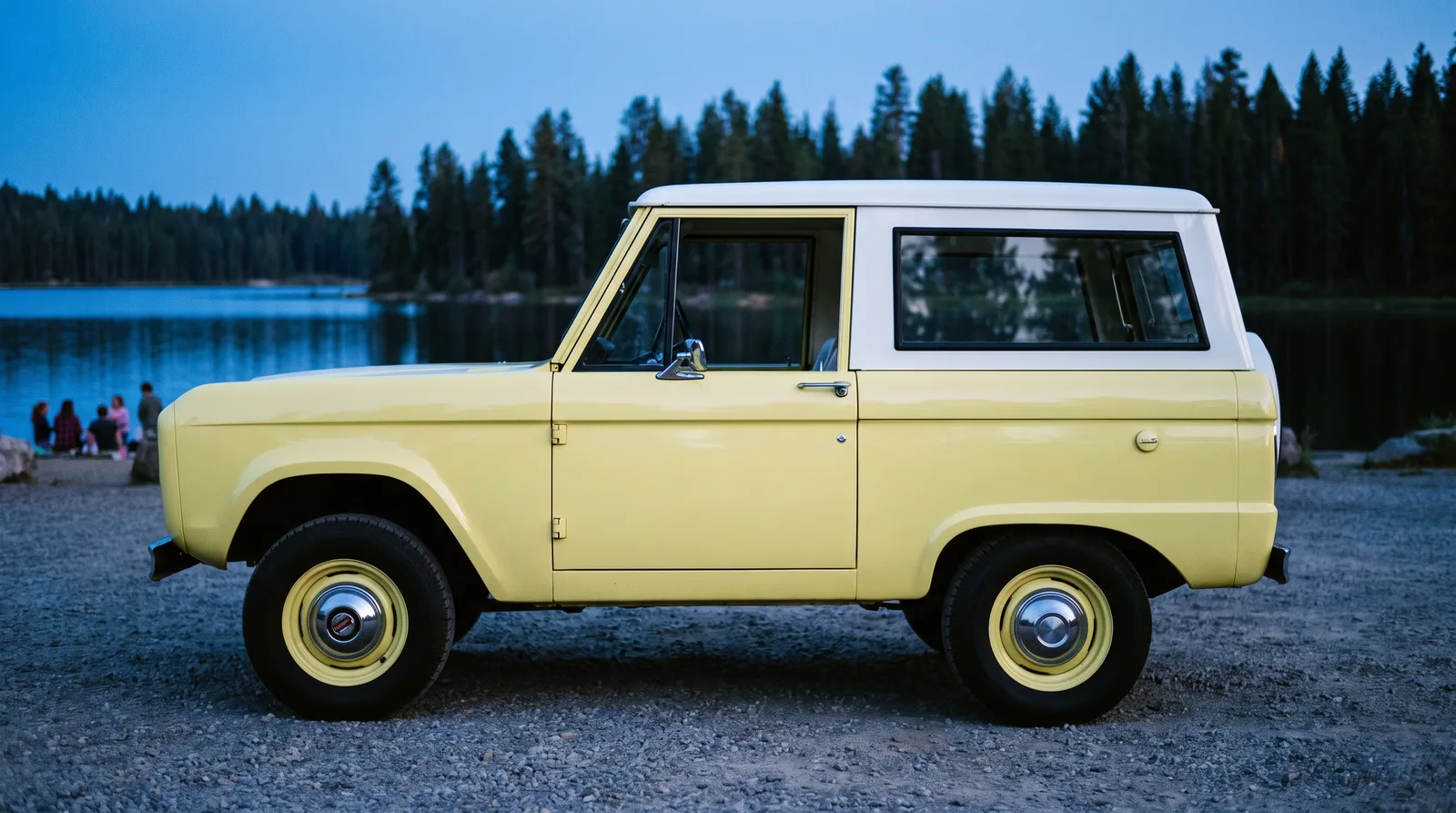
1966 to 1968, the earliest and the rarest
The first three model years get a premium mainly for being first. Early production trucks carry features that changed within a couple of years, including early badging details and interior trim that later years dropped, and any documented 1966 example with a verifiable early production date tends to draw serious attention regardless of condition. That said, rarity alone does not carry a sale. Buyers still discount heavily for rust, incorrect drivetrains, and undocumented history, so an early year with no paper trail often sells for less than a well documented 1971 or 1972 truck. First is not automatically best. First with proof is what actually commands the premium.
1969 to 1972, the sweet spot for usable collectibility
These middle years get less romantic attention than the earliest trucks but they are, in my experience, the strongest overall buys for someone who wants both collectibility and a truck they can actually drive without babying it constantly. Parts support is strongest for this window because reproduction suppliers built their catalogs around the most commonly surviving configurations, which tend to cluster here. Values have climbed steadily for well kept examples from this range without spiking into the speculative territory that the earliest and rarest years occasionally see at high profile auctions.
| Model years | Collector standing | Main value driver |
|---|---|---|
| 1966 to 1968 | High, condition dependent | First production status, provenance |
| 1969 to 1972 | Strong, most liquid | Parts support, usable daily condition |
| 1973 to 1975 | Moderate to strong | Factory options, color combinations |
| 1976 to 1977 | Moderate | Final year scarcity, transitional trim |
1973 to 1975, where factory options start to matter
By the early 1970s Ford was offering a wider spread of factory options and trim packages on the Bronco, and this is where option sheets start meaningfully separating value between two otherwise similar trucks. A well optioned example with power steering, a desirable engine, and a documented factory color combination can outsell a plainer 1969 or 1970 truck even though the earlier year is technically scarcer on paper. This is the range where appraisers spend the most time actually reading build sheets rather than relying on model year as a shorthand for value, because the spread inside these three years is wider than the spread between them and the years on either side.
1976 to 1977, the closing chapter
The final two years of first generation production carry a scarcity argument that is real but often overstated. Yes, these are the last trucks before Ford moved to the larger, redesigned 1978 body, and that final year status draws interest from buyers who want to own the end of an era. But collectibility here rides more on individual truck condition and documentation than on any inherent late production premium, and I would not pay a meaningful surcharge for a 1977 over a comparable 1971 purely on the basis of it being closer to the end of the run. The market mostly agrees with that assessment, which is why 1976 and 1977 trucks trade in a similar band to the mid production years rather than commanding a standalone premium.
"Model year tells you what to expect. It does not tell you what to pay. That still comes down to the truck in front of you."
- Marcus Feld
I want to be direct about something that gets lost in year by year rankings like this one. A build sheet, a title history, and photographic documentation of a truck's condition over time will move an appraisal further than the model year printed on the data plate almost every single time. I have seen a plainly documented 1970 outsell an undocumented 1966 at the same auction, on the same day, in front of the same buyers, because one truck came with a paper trail an insurer and a future buyer could actually trust and the other came with a seller's word. Rankings like the ones in this piece are useful for setting expectations before you start shopping, but they are not a substitute for doing the paperwork homework on any specific truck you are seriously considering.
That homework includes checking data plate codes against known production patterns for the claimed year, verifying that the engine and drivetrain in the truck match what the paperwork claims, and asking directly about any prior restoration work and what records exist from it. A seller unwilling or unable to produce basic documentation should move a truck down your list regardless of how desirable its stated model year happens to be.
What this means for a buying decision
If the goal is maximum collectibility with acceptable downside risk, the 1969 to 1972 window offers the best combination of parts support, market liquidity, and price stability. If the goal is bragging rights and a willingness to pay for scarcity, an early documented 1966 or 1967 truck is the play, provided the paperwork actually backs up the claim. Either way, condition and documentation outweigh model year in almost every individual transaction I have appraised, and any buyer treating year alone as a value shortcut is skipping the step that actually determines the number. For a fuller look at how this generation developed across its production run, our first generation bronco retrospective covers the engineering and market context in more depth, and buyers ready to compare current inventory can see what is available among Broncos for sale now.
One last note for anyone using a ranking like this to shop with. Treat these year bands as a starting filter, not a final verdict. I have appraised trucks from the supposedly weaker years that outperformed their band because everything else about the vehicle, condition, documentation, and honest history, lined up better than a nominally stronger year with a spottier record. Year sets your baseline expectation. The individual truck still has to earn its number, and no ranking table, mine included, should ever be the last thing you check before signing a check or wiring a deposit on a specific truck. Walk the truck, read the paperwork, and only then let the model year context inform the number you are willing to pay. That order of operations has saved more than one buyer from overpaying for a story instead of a documented, well cared for truck.
Sources and notes
Related Reading

Have a
Ford Bronco
for Sale?
Reach thousands of serious classic car collectors across the US.
Sell It Here →
Selling a classic? Here's how: the best sites to sell a classic car
Are You a Classic Car Dealer?
List your full inventory and connect with targeted classic car buyers.
Join as a Dealer →

About the author
Marcus Feld
Accredited collector-car appraiser who reads the market through hammer prices, condition tiers and risk.
Related Listings - Ford Bronco

Comments (1)
A
Amanda Brooks
2 days ago
New to this, but I keep seeing 1977 Broncos priced right next to 1971s. Is that normal?
Yes, and it should be. The 1976 and 1977 trucks carry a final-year story, but buyers have not paid a standalone premium for it. When a 1977 and a 1971 are both #2 condition with comparable paper, they tend to trade in the same band. The exceptions come with documentation, not with the model year.