
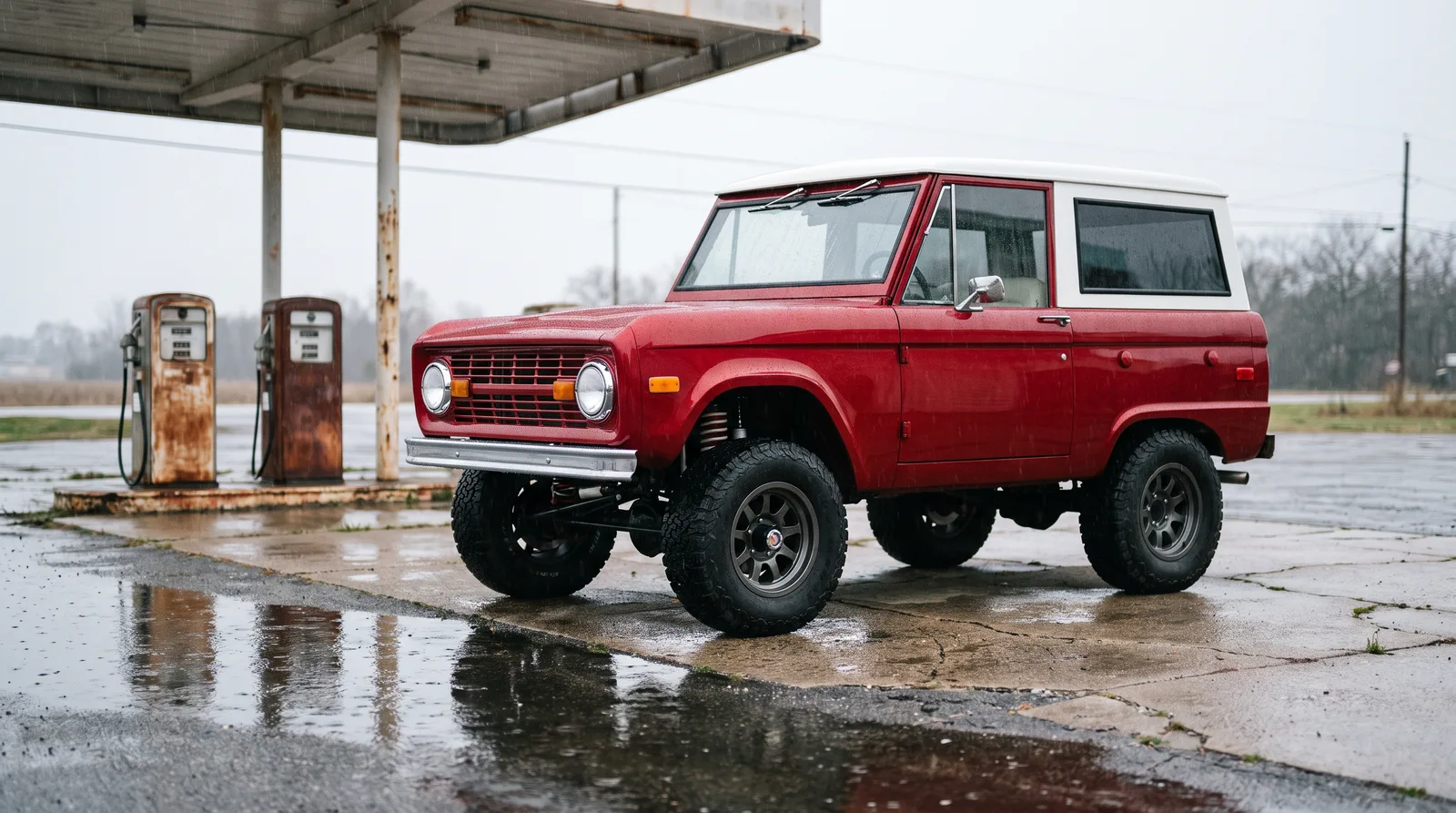
The ford bronco first gen restomod scene has grown into one of the most well-funded corners of the entire classic truck world, and as someone who spends a lot of time tracing documentation on original trucks, I find the restomod industry both fascinating and slightly bittersweet. Shops across the country now build early Broncos with modern coil-over suspensions, fuel-injected V8s, and interiors that would look at home in a six-figure luxury SUV, charging six figures for the privilege. It is a genuine industry now, not a hobbyist niche, and it has changed how the entire early Bronco market behaves.
Car Features
7 min read
The Early Bronco Restomod Empire
High-end shops now build six-figure early Broncos on modern chassis and drivetrains. Here is how that industry grew and what it means for original trucks.
How a niche became an industry
Restomodding early Broncos is not new; enthusiasts have been swapping engines and upgrading suspensions on these trucks since not long after Ford stopped building them in 1977. What changed over roughly the last fifteen years is scale and polish. A handful of specialist shops, several of them building fewer than fifty trucks a year, established reputations for museum-quality fabrication work and started commanding prices that rival low-production supercars. Waiting lists at the top shops now stretch well past a year, and depending on specification, a full custom build can cost more than double what a pristine, unmodified original Bronco brings at auction.
This matters for the broader market because these builds use real, numbers-matching original Broncos as their starting point. A donor truck that might have sold as a driver-quality original for modest money a decade ago is now potentially worth far more as restomod raw material, which has pulled a meaningful number of trucks out of the pool of preserved originals. For readers who want the full engineering background on the truck these builders start with, our complete history covers the original 1966 design, including the coil-spring Mono-Beam front suspension that restomod builders still work around today.
What actually changes under the skin
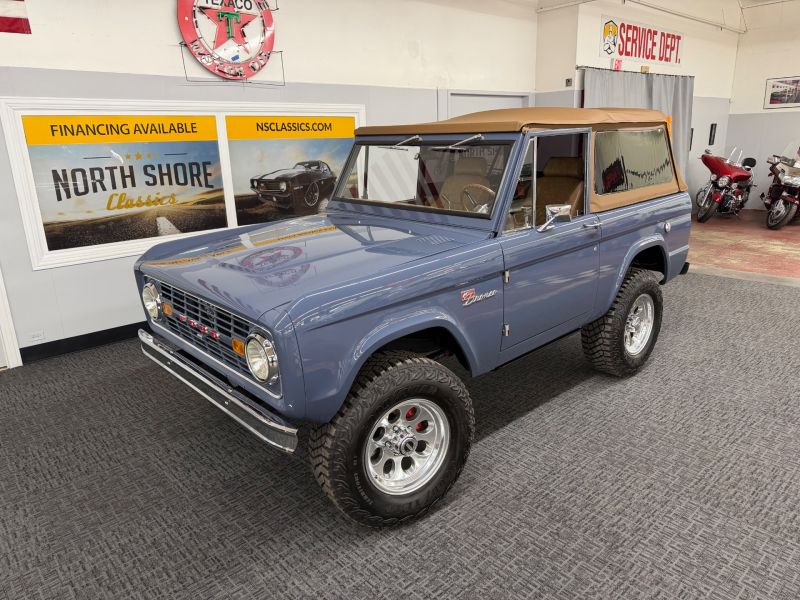
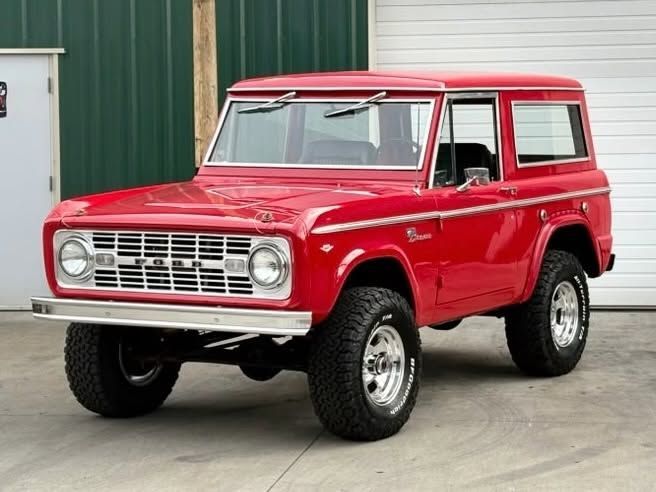
A typical high-end restomod keeps the original Bronco's body, cab, and general proportions, since that recognizable silhouette is the entire point, but replaces nearly everything mechanical. Coil-over shocks and a fully custom four-link suspension replace the leaf and coil setups of the period. Fuel-injected V8s, frequently Ford's own modern Coyote engine or a well-built crate small block, replace the original carbureted six or 289/302 V8. Interiors gain leather, modern climate control, sound deadening, and infotainment systems tucked behind period-look gauges. Some shops go further, widening the body slightly or fitting portal axles for extreme ground clearance, moving the truck further from anything Ford originally engineered.
The best shops treat this as genuine engineering, not just a parts swap, with custom chassis fabrication and careful attention to how the modern drivetrain's weight and power interact with the Bronco's original body mounts. The result is a truck that drives nothing like a 1970 original and looks, from twenty feet, exactly like one.
A divided collector community
The restomod boom has not been universally welcomed. Purists argue that consuming numbers-matching original trucks as restomod donors erodes the pool of historically significant vehicles available to future generations, and that argument carries real weight given how finite the supply of surviving early Broncos actually is. Restomod builders and their customers counter that a beautifully executed modern-drivetrain Bronco keeps the nameplate relevant, funds a skilled trade that might otherwise disappear, and gives buyers who want daily-drivable reliability a legitimate way into Bronco ownership without sacrificing all of it to a museum-piece original.
Both sides have a point, and the market has effectively settled the argument by pricing the two categories as genuinely separate products rather than direct competitors. A documented, unmodified original and a world-class restomod now serve different buyers with different priorities, and auction houses increasingly list them in distinct categories rather than head to head.
| Category | Typical starting point | Price range signal |
|---|---|---|
| Documented original | Numbers-matching, unmodified | Premium tied to originality and paperwork |
| Quality restomod | Original body on modern chassis/drivetrain | Premium tied to build quality and shop reputation |
| Unbuilt donor | Rough or incomplete original | Rising, driven by restomod raw material demand |
What to look for if you are shopping this scene
Buying a restomod is a different exercise from buying an original, and the questions that matter change accordingly. Shop reputation and build documentation matter more than badge originality here, since two trucks that look nearly identical from photos can differ enormously in fabrication quality, chassis design, and long-term reliability depending on who built them. Ask for build sheets, dyno documentation where applicable, and a clear account of what components are custom versus off-the-shelf. A truck built by a shop with a track record and a waiting list carries resale value that an unknown or amateur build simply cannot match, regardless of how good the paint looks in photos.
"A donor truck used to be worth less because it was incomplete. Now it can be worth more because a builder sees a blank canvas, and that shift alone has reordered how the whole early Bronco market prices condition."
- Sarah Whitfield
What a restomod build actually costs and takes
Pricing at the top of this industry has grown steadily as demand has outpaced the small number of shops capable of the fabrication work involved. A ground-up build from a leading shop, covering a custom chassis, a fuel-injected V8, a fully redone interior, and paint and bodywork finished to a standard that can compete at concours-adjacent events, routinely runs into six figures once a customer's specification list grows past the basics. Turnaround time compounds the cost problem for buyers in a hurry, since the same handful of shops building at this quality level cannot simply scale production the way a factory could, and a rushed build from a less experienced shop tends to show its shortcuts within a few years of hard use.
Buyers entering this market for the first time are often surprised that the donor truck itself, the part that would have been the main expense a decade ago, is now frequently the smallest line item in the total build cost. Labor, custom fabrication, and a shop's accumulated reputation account for the majority of what a completed restomod actually costs, which is part of why shop selection matters as much as, or more than, which specific original Bronco a buyer starts with.
The scene's next chapter
The ford bronco first gen restomod scene shows no sign of slowing, and if anything it has professionalized further as demand from buyers who want classic looks with modern reliability keeps growing. That growth puts continued pressure on the dwindling supply of unmodified original trucks, which in turn keeps pushing documented-original values upward even as restomod builders compete for the same finite donor pool. Anyone curious how the two markets compare in person, an untouched original next to a fully built restomod, can start by browsing browse classic Bronco listings and comparing what is actually available at each end of this now firmly established industry.
Sources and notes
Related Reading

Have a
Ford Bronco
for Sale?
Reach thousands of serious classic car collectors across the US.
Sell It Here →
Selling a classic? Here's how: compare the places to sell classic cars
Are You a Classic Car Dealer?
List your full inventory and connect with targeted classic car buyers.
Join as a Dealer →

About the author
Sarah Whitfield
Third-generation classic car collector specializing in pre-war American and European coachbuilt automobiles. Researcher and concours enthusiast.
Related Listings - Ford Bronco

Comments
Be the first to comment on this article.