
The ford bronco first gen values boom is one of the clearer stories in the collector truck market of the last fifteen years, and it is worth walking through calmly rather than treating it as magic. A truck that traded for the price of a used sedan through most of the 1990s and 2000s now regularly clears six figures at major auctions when the example is right. That is not hype. It is a documented shift in supply, demand, and cultural context, and understanding the mechanics matters more than repeating the headline number.
Car Features
7 min read
The First Generation Bronco Value Explosion
Early Broncos went from used-truck money to six-figure auction results in about fifteen years. Here is what actually drove it and where the risk sits now.
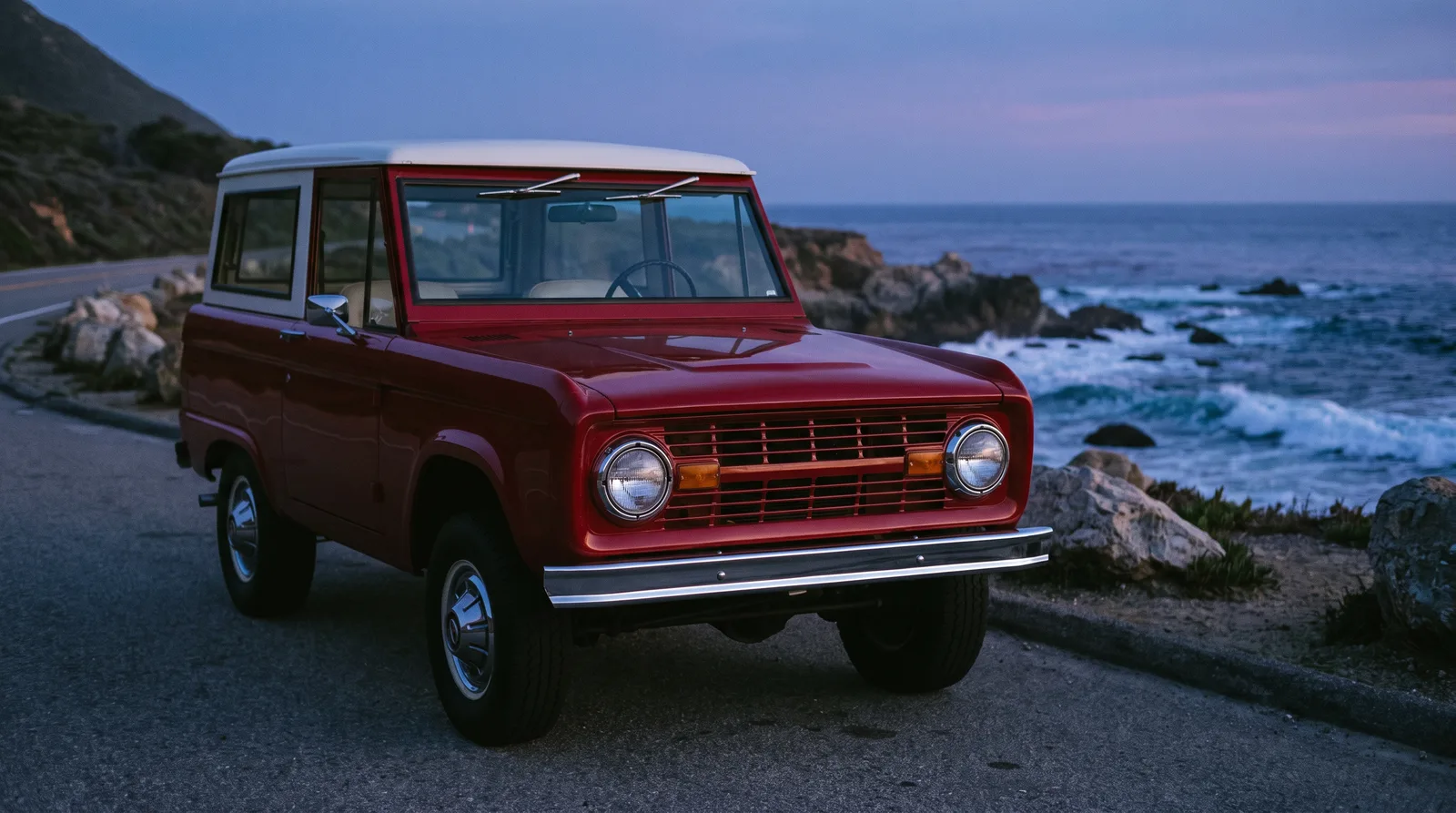
Where the early Bronco started, price-wise
Through the 1980s and into the 2000s, early Broncos (1966-77) were treated by most of the market as used trucks, not collectibles. They were cheap, plentiful relative to today's supply, and frequently modified for trail use rather than preserved for originality. Values sat in the low five figures for clean examples and often lower for project trucks. That baseline matters because it is the floor the current boom launched from, and it explains why percentage gains over the last decade look so dramatic even though absolute dollar figures in the early 2000s were modest.
For the full history of how the truck was engineered and built in the first place, including its 1966 debut under product planner Donald N. Frey, see the full story. Understanding the engineering helps explain why the truck has aged into something collectors want, rather than just something old.
What actually moved the needle
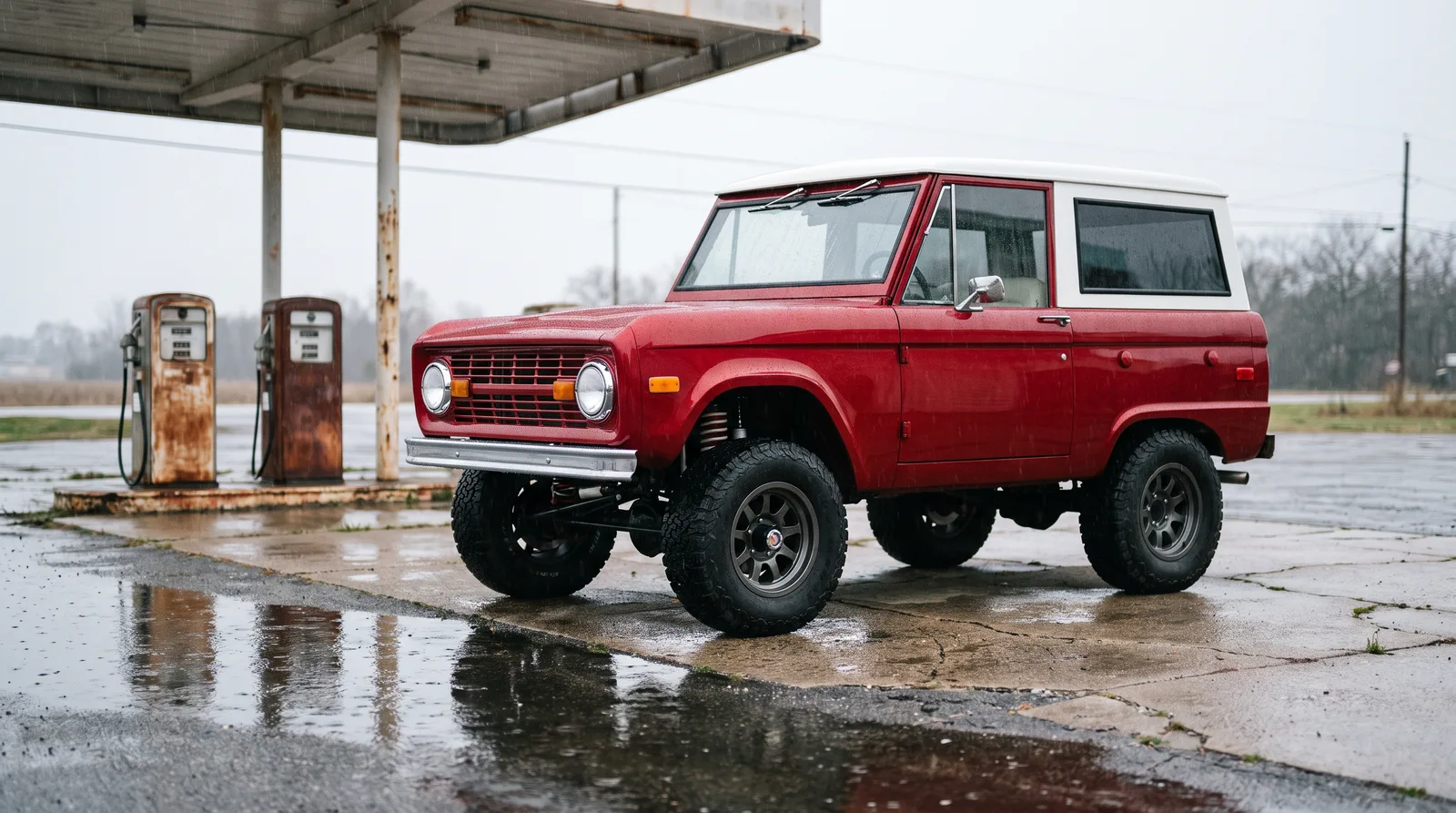
Three forces did most of the work. First, restomod culture matured into a legitimate high-end business, with shops building six-figure early Broncos on modern chassis and drivetrains, which pulled attention (and comparison pricing) toward the donor trucks those builds start with. Second, Ford's 2021 revival of the Bronco nameplate put the model back in front of a mainstream car-buying audience for the first time in a generation, and a meaningful share of that renewed interest flowed backward into the original trucks rather than staying with new inventory. Third, and less discussed, the compact size and coil-spring ride of the early truck aged well relative to competitors, making it a genuinely pleasant classic to drive rather than a nostalgia purchase that disappoints on the road.
None of those three factors alone would have produced this scale of movement. Together they created sustained demand against a supply that, unlike most collector vehicles, cannot grow. Ford built early Broncos for eleven years and stopped. The number of surviving, unmodified, documented examples is finite and shrinking as attrition and parts-donor cannibalization continue.
Condition and documentation set the real price, not the badge
The number that gets repeated in headlines, whatever the current auction record happens to be, is not the number most sellers should anchor to. A trailer-queen 1969 Bronco with a documented ownership chain, matching-numbers drivetrain, and a body free of structural rust sits in an entirely different pricing tier than a driver-quality 1972 with replaced floor pans and an unknown history, even though both wear the same badge. I have watched sellers quote the record-sale number and get genuinely confused when their truck, which needs floor pan work and has three owners nobody can fully account for, does not come close.
Documentation is the single highest-leverage thing an owner can do to protect value in this market. Build sheets, original window stickers, verified mileage, and a clean title history separate a strong sale from a mediocre one more reliably than cosmetic condition does, because buyers at the top of this market are paying for certainty as much as they are paying for the truck itself.
| Condition tier | What it typically requires | Market position |
|---|---|---|
| Concours / documented original | Matching numbers, verified history, minimal rust repair | Top of market, low liquidity risk |
| Quality restoration | Correct parts, professional bodywork, clear paper trail | Strong demand, moderate liquidity |
| Driver / project | Mixed originality, unknown history, needed repairs | Wide price range, higher risk |
How this boom compares to other classic truck segments
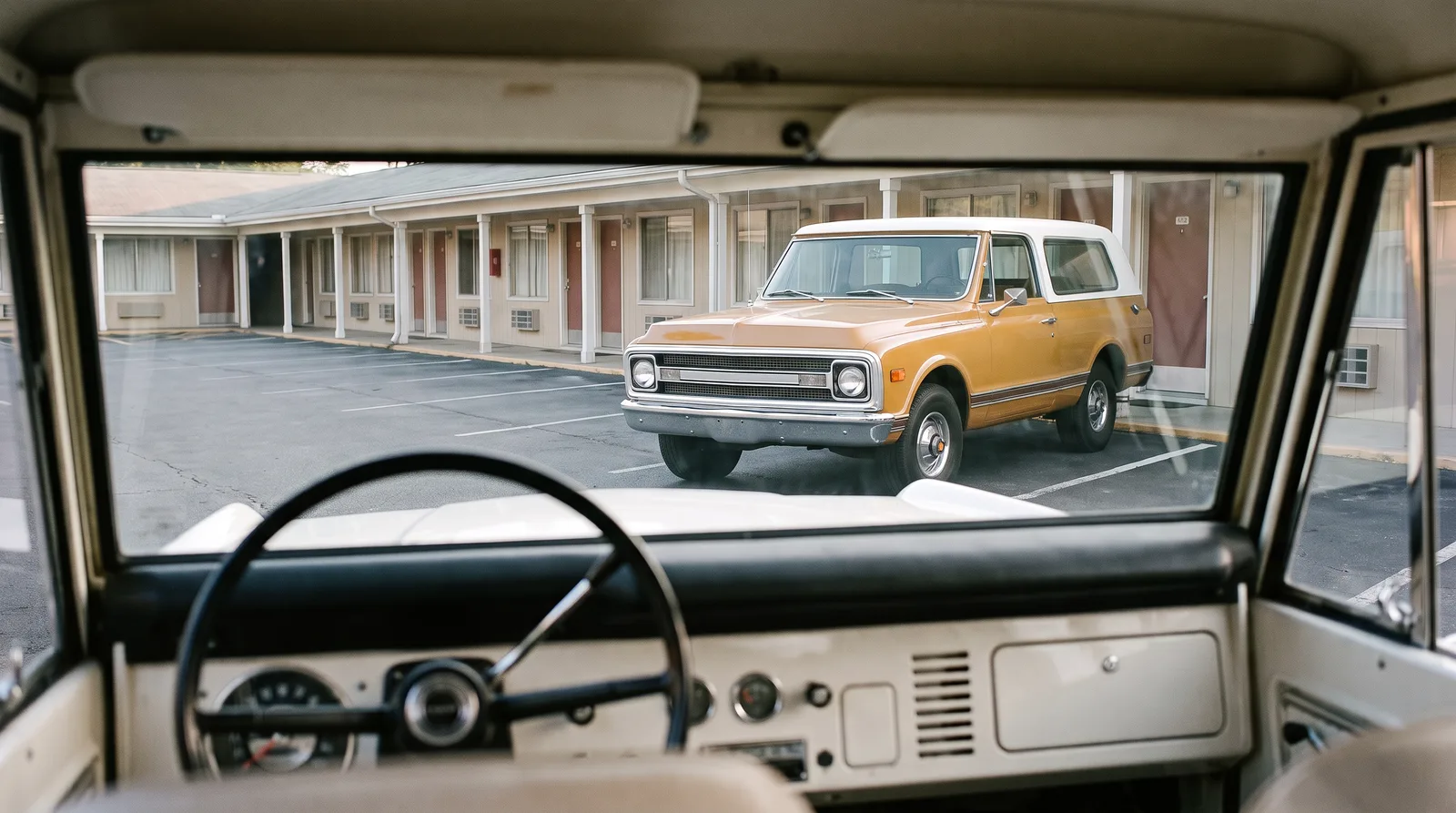
It helps to put the early Bronco's run in context against other American classic trucks that have seen similar attention over the same period. Early Chevrolet C/K pickups and K5 Blazers have both seen meaningful appreciation, but neither has matched the early Bronco's percentage gains at the very top of the market, largely because neither carries the same combination of a short, closed production window and a restomod industry actively consuming original examples as raw material. The early Bronco's scarcity is structurally different, not just perceptually different, and that distinction matters when comparing this boom to segments that simply became more fashionable without an equivalent supply story behind them.
I bring this up because collectors sometimes assume every appreciating classic vehicle segment is following the same script, chasing generational nostalgia as buyers with disposable income reach the age where they can afford the trucks their parents drove. That story explains part of the early Bronco's rise, but it does not explain all of it, and treating this boom as purely nostalgia-driven leads buyers to underestimate how much of the price movement is tied to genuinely irreplaceable supply.
The downside case, because every boom has one
I would be doing readers a disservice if I only described the upside. Rapid value appreciation attracts speculative capital, and speculative capital is not loyal to any one segment. If restomod demand cools, or if the broader collector car market corrects the way it periodically does, early Bronco prices at the speculative top of the market are more exposed than prices in the documented, historically significant tier. Liquidity also thins out fast once you move past the handful of blue-chip early years and configurations; a heavily modified or poorly documented truck can sit on the market far longer than its asking price would suggest, even in a boom.
My working rule for anyone buying into this market now is simple: buy the documentation and the structural integrity first, and treat the badge and the current headline number as context, not as a guarantee. A boom built on scarcity and genuine engineering merit has more staying power than one built purely on hype, and the early Bronco has real arguments for the former, but that does not make every individual truck in this market a safe bet.
"The record sale is not the price. It is the ceiling for a very specific truck with a very specific paper trail. Confusing the two is how buyers overpay and sellers get disappointed."
- Marcus Feld
Where this leaves buyers and sellers today
The ford bronco first gen values boom is real, grounded in genuine scarcity, and unlikely to fully reverse given how few unmodified originals remain. It is not, however, a market where every truck floats on the same tide. Buyers who do the documentation work and prioritize structural condition over cosmetic shine are the ones who will hold value through whatever correction eventually comes, because corrections in this segment tend to compress speculative pricing far more than they compress prices on genuinely documented, historically significant trucks. Anyone shopping this market can compare current inventory directly by browsing classic Bronco for sale and applying exactly this framework, condition and paperwork first, headline numbers second, to whatever they find.
Sources and notes
Related Reading

Have a
Ford Bronco
for Sale?
Reach thousands of serious classic car collectors across the US.
Sell It Here →
Selling a classic? Here's how: sell my classic car
Are You a Classic Car Dealer?
List your full inventory and connect with targeted classic car buyers.
Join as a Dealer →

About the author
Marcus Feld
Accredited collector-car appraiser who reads the market through hammer prices, condition tiers and risk.
Related Listings - Ford Bronco
Comments
Be the first to comment on this article.