
The Ford Bronco first gen vs early Blazer comparison is really a story about who blinked first. Ford launched the Bronco in 1966 and had the compact SUV segment largely to itself for three years. Then in 1969, Chevrolet answered with the K5 Blazer, a truck built on a different philosophy entirely, and the two nameplates spent the next decade fighting for the same driveway. As a researcher who spends a lot of time with period documentation, I find the contrast between how each company approached the segment more interesting than either truck's raw specifications.
Car Features
7 min read
Early Bronco vs Early K5 Blazer, Collector Face-Off
Ford built a dedicated platform for the Bronco while Chevrolet adapted its C/K pickup for the K5 Blazer. Here is how those two strategies still shape values today.
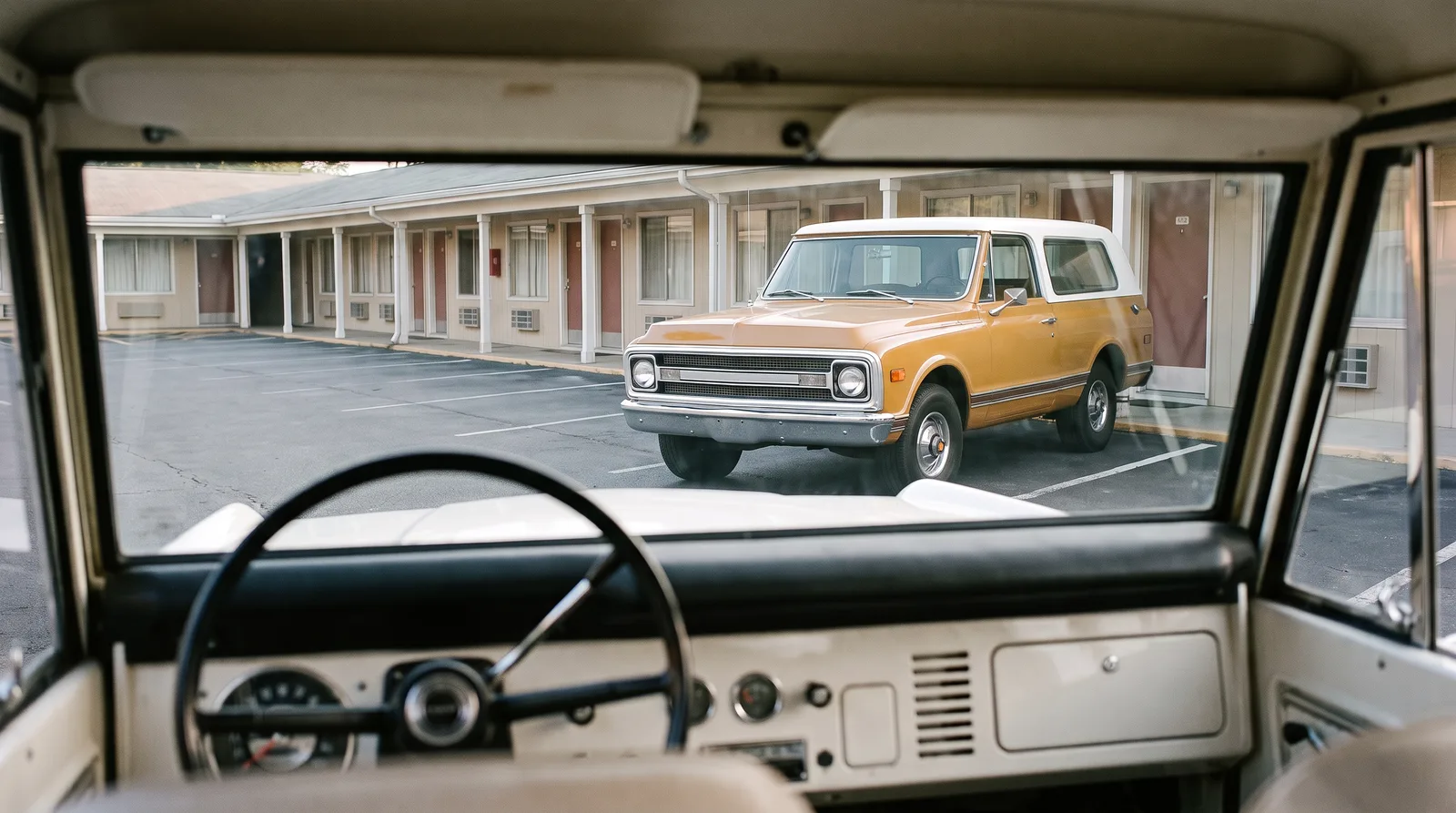
Ford built a dedicated platform, Chevrolet adapted an existing one
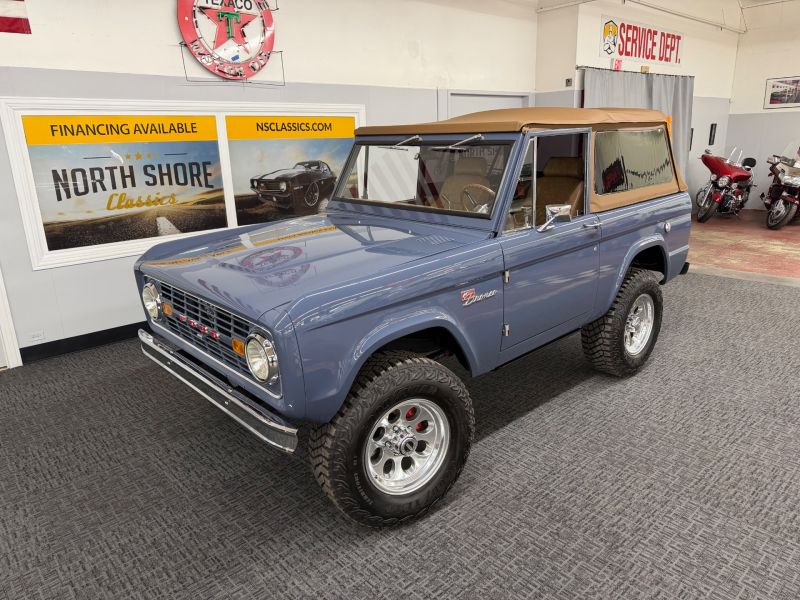
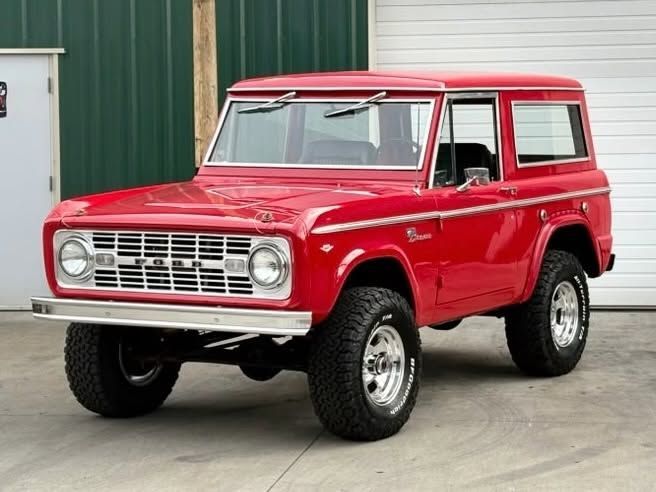
The early Bronco used a purpose-built frame and Ford's own Mono-Beam coil-spring front suspension, a design with no direct parts-bin relative elsewhere in Ford's lineup. Chevrolet took the opposite approach with the K5 Blazer, building it on a shortened version of the existing C/K pickup platform. This gave the Blazer a longer 104-inch wheelbase right out of the gate, twelve inches longer than the Bronco's 92 inches, and it meant the Blazer inherited the pickup's leaf-sprung suspension and general road manners rather than anything engineered specifically for the SUV segment. The full account of Ford's original engineering approach, from Donald N. Frey's brief through the truck's 1966 debut, is covered in the first generation bronco story.
The platform-sharing strategy gave Chevrolet a real advantage in one respect: the Blazer could be built and serviced through the same dealer network and parts pipeline as the enormously popular C/K pickup line, which meant faster nationwide rollout and simpler parts logistics for owners. Ford's dedicated Bronco platform gave up some of that economy of scale in exchange for a tighter, more purpose-built off-road package.
The removable top became the Blazer's signature move
Where the Bronco offered buyers a choice between a fully enclosed wagon, an open half-cab, and a doorless roadster as distinct models, the K5 Blazer took a different route: a single body with a full-width removable fiberglass top that let one truck serve as both an open-air off-roader and an enclosed daily driver depending on the owner's mood and the weather. This flexibility proved influential, and Ford itself would eventually move toward a similar removable-top concept for later Bronco generations. In the moment, though, it gave Chevrolet a genuine selling point: the Bronco's tops unbolted too, but the Blazer's single full-length top turned one truck from enclosed wagon to open-air rig in a single step.
Engine output favored the Blazer as the 1970s wore on
At launch, the two trucks were closely matched in base engine output, with the Bronco's 170 cubic inch six and the Blazer's 250 cubic inch six delivering broadly similar real-world performance despite the displacement difference. Where the Blazer pulled ahead was V8 availability and displacement ceiling. Chevrolet offered a 307 cubic inch V8 at launch and a 350 cubic inch small block V8 as the range-topping option through this generation, giving buyers meaningfully more power than the Bronco's contemporary 302 V8 could match until Ford's own displacement grew in later generations. For period buyers cross-shopping the two trucks primarily on towing capacity and highway passing power, the Blazer's bigger-displacement V8 options were a real consideration.
| Spec | Early Ford Bronco (1966-77) | Early K5 Blazer (1969-72) |
|---|---|---|
| Wheelbase | 92 in | 104 in |
| Platform | Dedicated Bronco frame | Shortened C/K pickup frame |
| Base engine | 170 ci inline six | 250 ci inline six |
| Top V8 option (period) | 302 ci | 350 ci |
What each company's approach means for restorations now
The platform-sharing decision that helped Chevrolet in period sales now cuts both ways for restorers. K5 Blazer owners benefit from the enormous aftermarket support built around the C/K pickup family, since many chassis, suspension, and drivetrain components cross-reference directly. Early Bronco owners face a smaller, more specialized parts pool tied to a truck that shared its underpinnings with nothing else Ford built, though decades of surging collector demand have pushed reproduction manufacturers to fill many of those gaps with new sheet metal, brackets, and trim that simply did not exist a generation ago.
Body condition tends to separate the two trucks in the current market more than mechanical originality does. Early Broncos with intact, rust-free tubs command significant premiums because rebuilding that small body tub on its separate frame is labor-intensive and expensive to do correctly. K5 Blazers, with a larger, simpler pickup-derived body, can sometimes tolerate more extensive floor and rocker repair without the same structural complications, though rust in the removable top's mounting points and the rear cargo area remains a common inspection point for both trucks.
"Chevrolet built the Blazer to slot into an existing production line. Ford built the Bronco to be its own thing entirely. Both decisions were rational, and both trucks are worth serious money today because of choices made almost sixty years ago."
- Sarah Whitfield
Interior space told buyers who each truck was really for
Step inside both trucks from the same model year and the wheelbase difference becomes immediately obvious. The Blazer's extra twelve inches translated into genuinely more usable rear cargo space and a cabin that felt closer to a full-size truck than a compact off-roader, which mattered to buyers cross-shopping family-friendly options. The early Bronco's tighter cabin kept it feeling more like a dedicated trail vehicle that happened to seat passengers, a distinction period reviewers noted regularly when comparing the two trucks back to back. Neither configuration was accidental. Ford's own market research pointed toward buyers who valued the Bronco's agility and lower price point, while Chevrolet chased a buyer willing to pay a bit more for a roomier, more truck-like package.
That size difference persists as a practical consideration for collectors today. A K5 Blazer accommodates modern-day family outings and long highway trips with noticeably less compromise than a Bronco built on the tighter 92-inch wheelbase, which is part of why some buyers choose the Blazer specifically for usability even when their nostalgia points toward the Bronco nameplate.
A rivalry that never really settled
Neither truck decisively won the sales race across their overlapping production years, and neither has decisively won the collector market today. Auction results for both nameplates have climbed sharply over the past decade, with early Broncos generally commanding higher prices in top condition and early Blazers offering a slightly more accessible entry point for buyers building their first classic 4x4 collection. For a broader look at how the Bronco nameplate evolved across all three of its structural eras, from the compact original through the full-size 1980-96 trucks, readers can turn to the full story of the model's three-decade run.
Buyers ready to compare a real early Bronco against whatever K5 Blazer alternative they have been considering can browse classic Broncos on the market and judge the proportions, the ride, and the fit and finish in person. Spec sheets can explain the engineering differences between these two trucks, but sitting in both is still the fastest way to understand why this rivalry has lasted more than half a century.
Sources and notes
Related Reading

Have a
Ford Bronco
for Sale?
Reach thousands of serious classic car collectors across the US.
Sell It Here →
Selling a classic? Here's how: compare the places to sell classic cars
Are You a Classic Car Dealer?
List your full inventory and connect with targeted classic car buyers.
Join as a Dealer →

About the author
Sarah Whitfield
Third-generation classic car collector specializing in pre-war American and European coachbuilt automobiles. Researcher and concours enthusiast.
Related Listings - Ford Bronco

Comments (1)
B
Bernie Klein
25 minutes ago
Look, on the money side it depends on the tier. The accessible entry point is a top-of-market story. In driver condition the two trade far closer than people assume, and once you price a Bronco's tub repairs the Blazer is not the cheap seat. Treat them like two bonds with different coupons: compare the total cost to own, not the hammer price.