
The Ford Bronco first gen vs CJ comparison is one of the oldest arguments in American 4x4 circles, and it began the moment Ford's engineers sat down in 1963 to study exactly what made the Jeep CJ-5 sell so well. Ford did not disguise its intent. Internal planning documents from the period describe the goal plainly: a rig that could match the CJ's trail capability while offering a more comfortable, more civilized daily driver underneath it. The result, launched in 1966, was the first generation Bronco, and the rivalry it started with Jeep has never fully cooled.
Car Features
7 min read
Early Bronco vs Jeep CJ, the Enduring Debate
Ford designed the first Bronco with the Jeep CJ-5 as its benchmark. Here is how the two trucks' engineering and reputations diverged after 1966.
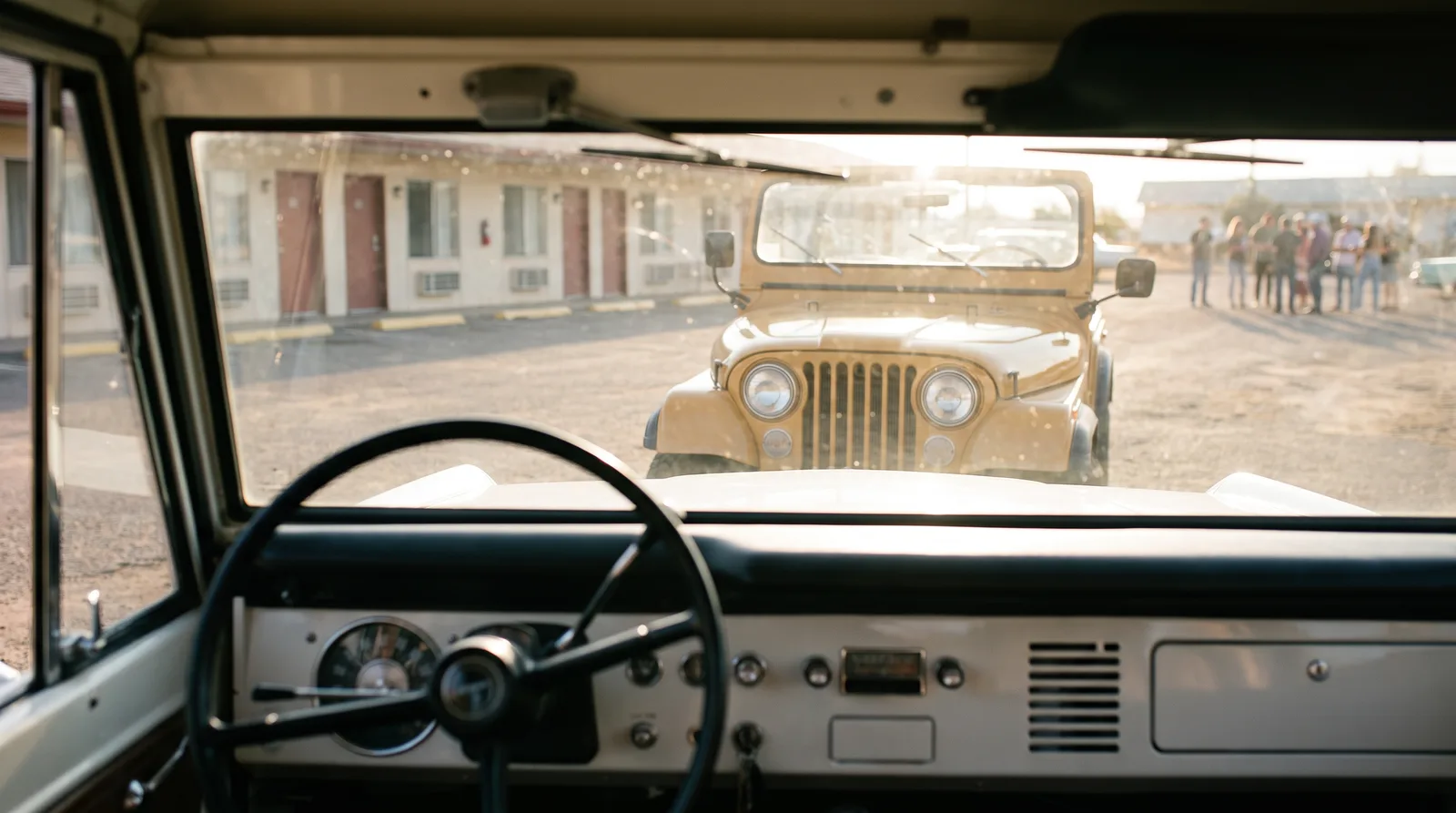
Two companies, two very different starting points
Jeep's CJ line traced its lineage directly back to the World War II Willys MB, a wartime design that prioritized simplicity and repairability above all else. By the mid-1960s the CJ-5, introduced in 1954, was a known quantity: a short-wheelbase, leaf-sprung utility vehicle with a loyal following among farmers, hunters, and military surplus buyers who valued its no-frills mechanicals. Ford, by contrast, entered the segment from a position of engineering ambition. The Bronco used a coil-spring front suspension, a design the CJ would not adopt in comparable form for years, and Ford built the Bronco on a dedicated frame rather than adapting an existing platform, giving engineers room to tune ride quality without sacrificing articulation.
The wheelbase numbers tell part of the story. The CJ-5 rode a tight 81-inch wheelbase, shorter and more nimble in tight terrain. The Bronco stretched to 92 inches, a difference that gave it a steadier highway ride at the cost of some rock-crawling agility. Neither company considered this an accident. Ford wanted buyers cross-shopping a truck for the highway commute as much as the trail, while Jeep's core customer base still leaned toward pure utility.
Engines and drivetrains diverged early
At launch, the 1966 Bronco offered a 170 cubic inch inline six making roughly 105 horsepower, with a 289 cubic inch V8 added as an option within the model year, a power option the CJ-5 could not match until Jeep began offering V8 conversions later in the decade. Jeep's own V6, the Dauntless 225, did not arrive as a CJ option until 1965, sourced initially from Buick. For a stretch in the late 1960s, the Bronco held a clear horsepower advantage over a stock CJ-5, which mattered to buyers who wanted a utility vehicle that did not struggle to keep pace with highway traffic.
Transfer cases and axle choices reflected the same philosophical split. Ford equipped the Bronco with a Dana 30 front axle and a Ford 9-inch or Dana 20-equipped rear setup depending on year, components chosen for durability under a heavier, more comfort-oriented vehicle. Jeep kept its running gear lighter, prioritizing the weight savings that made the CJ so capable in technical terrain. Readers who want the fuller account of how the Bronco's underpinnings came together, including Donald N. Frey's original engineering brief, should read the background on the truck's 1966 debut.
Body styles gave buyers real choice
The early Bronco launched in three configurations: a fully enclosed wagon, a half-cab pickup with an open bed, and a doorless roadster aimed at the most trail-focused buyers. The CJ-5 offered comparable openness as standard, since its canvas top and removable doors were part of its basic character rather than a distinct model. This meant a Bronco buyer in 1966 could choose how much weather protection they wanted within a single nameplate, while a CJ buyer generally accepted the open-air format as the price of entry into that world. By the early 1970s, Ford had trimmed the lineup toward the wagon body as buyer preference shifted toward more enclosed, comfortable vehicles, a trend that mirrored the broader utility vehicle market's move away from stripped-down trail rigs.
| Spec | 1966 Ford Bronco | 1966 Jeep CJ-5 |
|---|---|---|
| Wheelbase | 92 in | 81 in |
| Base engine | 170 ci inline six | 134 ci Hurricane four |
| Front suspension | Coil-spring Mono-Beam | Leaf spring solid axle |
| Body styles | Wagon, half-cab, roadster | Open utility body |
Collector demand tells its own story
In today's market, both trucks command serious money when they are documented and unrestored or well restored, but the demand curves are not identical. Early Bronco values have climbed steeply over the last decade, driven partly by nostalgia and partly by the truck's compact proportions translating well to modern tastes. Clean CJ-5s, especially early flat-fender-adjacent examples and well-preserved 1960s trucks, have followed a similar trajectory, though the CJ's much longer production run, stretching into the 1980s under the CJ-7 and CJ-8 names, means overall supply is larger and pricing is more spread out across condition tiers.
What has not changed is the character difference buyers describe when they drive the two trucks back to back. The Bronco rides noticeably smoother on pavement thanks to its coil-spring front end, while the CJ rewards a driver who wants direct, unfiltered feedback from the trail. Neither trait makes one truck definitively better. It makes them different tools built for overlapping but distinct audiences.
"Ford did not set out to copy the Jeep. They set out to build a Jeep-shaped truck that rode like nothing else in the class, and the coil-spring front end is the proof."
- Sarah Whitfield
Steering, brakes, and the everyday feel
Beyond the headline suspension and engine differences, the day-to-day driving experience separated these two trucks more than most period buyers expected walking into a dealership. The Bronco's steering box and standard front drum brakes, later joined by front disc options, gave it a more predictable feel at speed than the CJ-5's quicker, more direct manual steering, which rewarded a driver comfortable with constant small corrections on the highway. Jeep's approach kept the CJ lighter on its feet in tight trail sections, where the shorter wheelbase and lower curb weight let it pivot around obstacles the longer Bronco had to work around instead.
Fuel economy told a similar story of trade-offs. The Bronco's larger frame and available V8 came with a real weight penalty, and period owners reported noticeably worse economy than the lighter, four-cylinder-based CJ-5 could deliver, especially before either truck commonly carried a V8. For buyers cross-shopping the two in 1966, the decision often came down to a simple question: was the truck primarily a trail tool that occasionally saw pavement, or a daily driver that occasionally left it. The CJ answered clearly in favor of the trail. The Bronco tried to answer both questions at once, and largely succeeded, which is a meaningful part of why it built such a broad following.
What the rivalry means for buyers now
Anyone weighing a ford bronco first gen vs cj purchase today is inheriting a debate that started in period road tests and never really ended. Documentation matters enormously for both trucks, since decades of trail use and amateur modification have left the collector pool full of vehicles with altered drivetrains, replaced sheet metal, and murky ownership histories. A Bronco or CJ with a clean paper trail, matching numbers where applicable, and a restoration history from a known shop will always command a premium over an equivalent truck with gaps in its story.
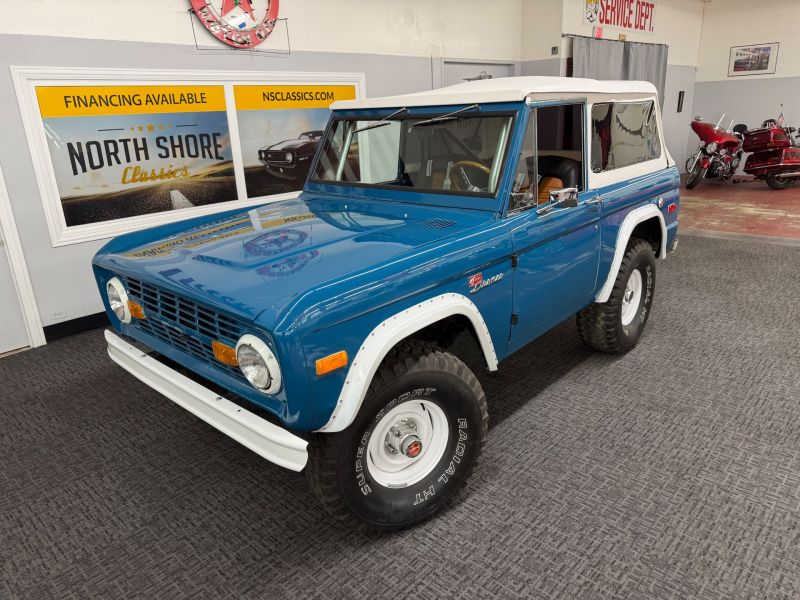
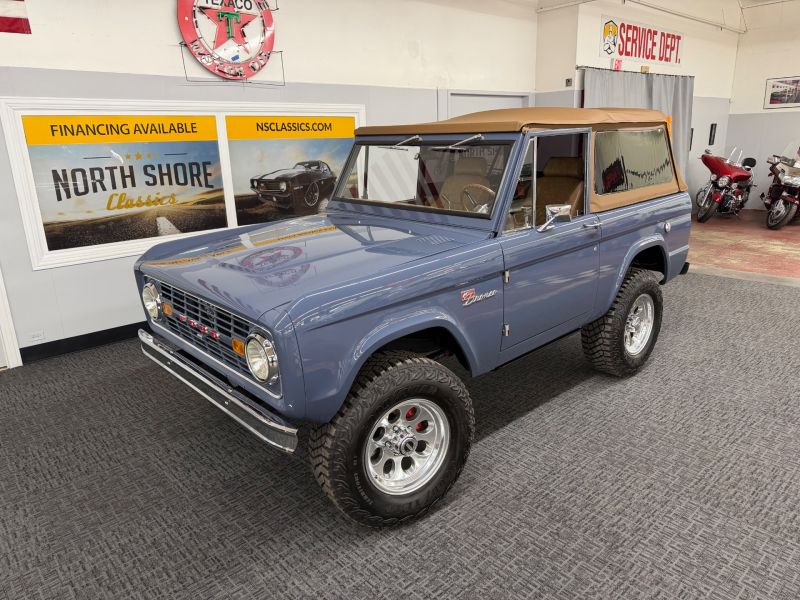
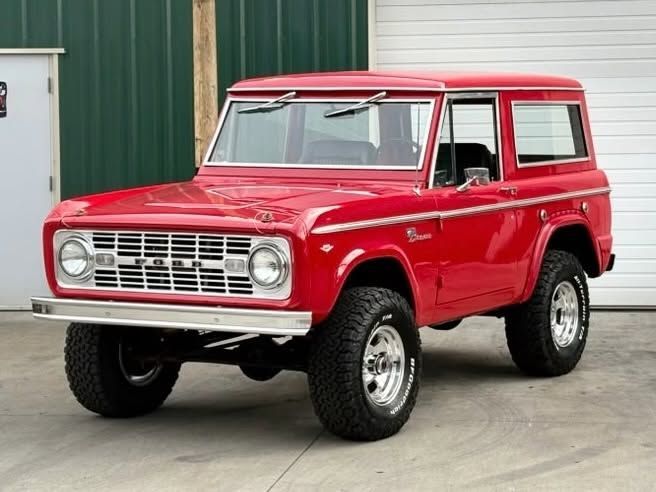
For buyers ready to compare real examples rather than spec sheets, it helps to see current inventory side by side. Shoppers who want to find a classic Bronco can weigh a wagon, half-cab, or roadster against whatever CJ they are considering and judge the ride and proportions in person, which remains the fastest way to settle a rivalry that has outlasted both companies' original engineering teams by half a century.
Sources and notes
Related Reading
Have a
Ford Bronco
for Sale?
Reach thousands of serious classic car collectors across the US.
Sell It Here →
Selling a classic? Here's how: the best sites to sell a classic car
Are You a Classic Car Dealer?
List your full inventory and connect with targeted classic car buyers.
Join as a Dealer →

About the author
Sarah Whitfield
Third-generation classic car collector specializing in pre-war American and European coachbuilt automobiles. Researcher and concours enthusiast.
Related Listings - Ford Bronco

Comments
Be the first to comment on this article.