
By the late eighties, Ford's full-size Bronco had a new kind of competitor showing up on dealer lots, and it was not another domestic truck. The ford bronco later gen vs 4runner comparison is a different animal than Bronco versus Blazer, because Toyota was not trying to out-muscle Ford. It was aiming at a buyer who wanted something smaller, more efficient, and built with a different set of priorities entirely.
Car Features
7 min read
The Later Bronco vs the Rising 4Runner Threat
Toyota's 4Runner offered a smaller, more efficient alternative to the full-size Ford Bronco, and the two trucks ended up defining different corners of the market.
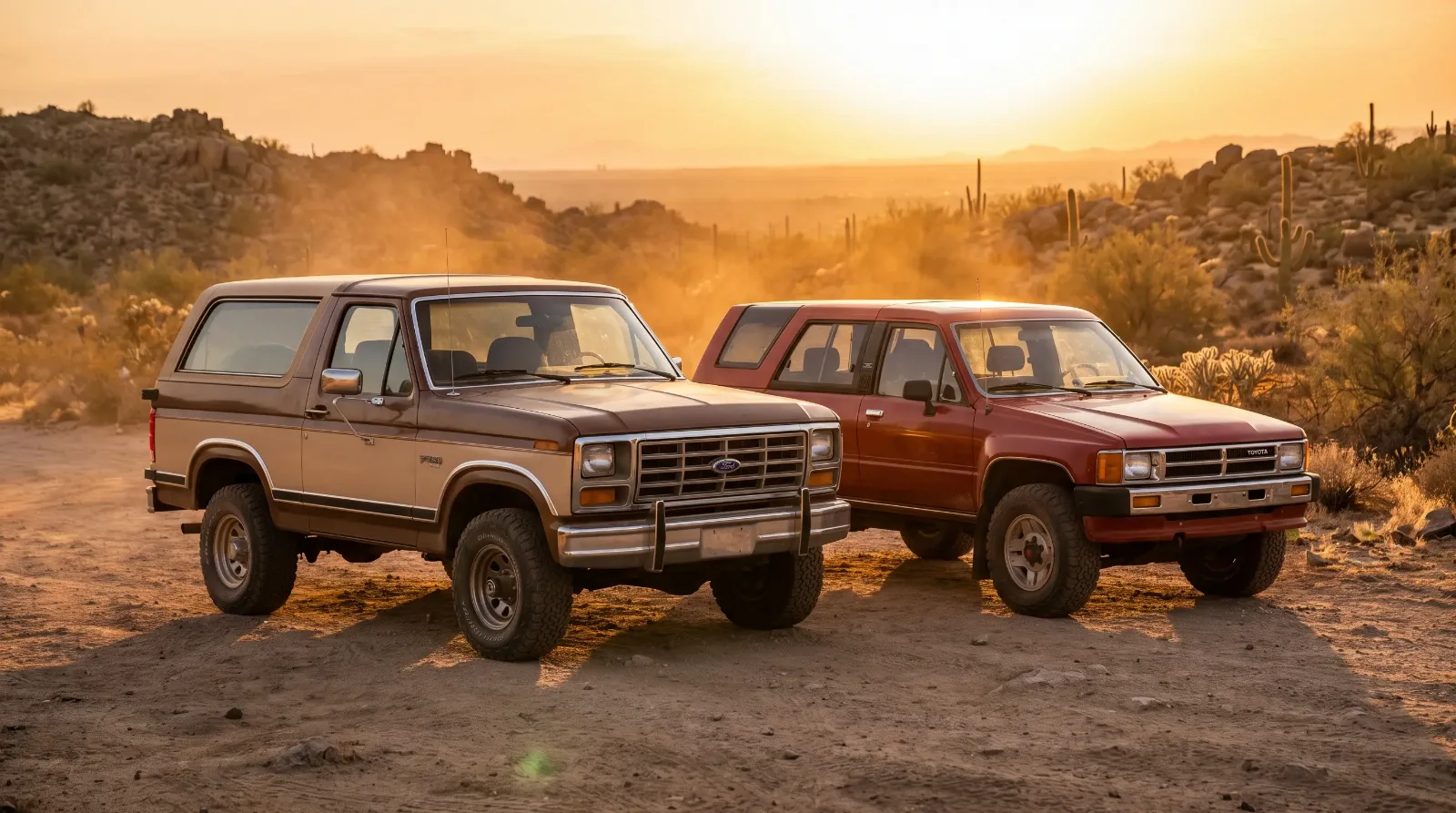
Two trucks with completely different philosophies
The full-size Bronco was, by design, a big truck. It shared its frame and much of its running gear with the F-150 pickup, rode on a wheelbase built for a family and cargo, and offered V8 power as its bread and butter engine choice through the 302 and later the 351. Toyota's 4Runner, which arrived in the US market in 1984 and grew through subsequent generations into the nineties, started life as a truck-based compact SUV, built off the Hilux pickup platform and originally offered with a removable fiberglass top on early models before Toyota moved to a fixed roof design.
Where the Bronco offered size and V8 torque, the 4Runner offered efficiency and a reputation for mechanical reliability that Toyota was already building across its truck lineup during this period. The two trucks were not really cross-shopped by every buyer, since someone who needed to tow a horse trailer regularly was not likely to seriously consider a 4Runner, and someone prioritizing fuel economy and a smaller footprint for daily driving was not likely to end up in a full-size Bronco. But there was real overlap too, especially among buyers who wanted an off-road capable daily driver without committing to a truck the size of the Bronco.
Where the Bronco won the argument
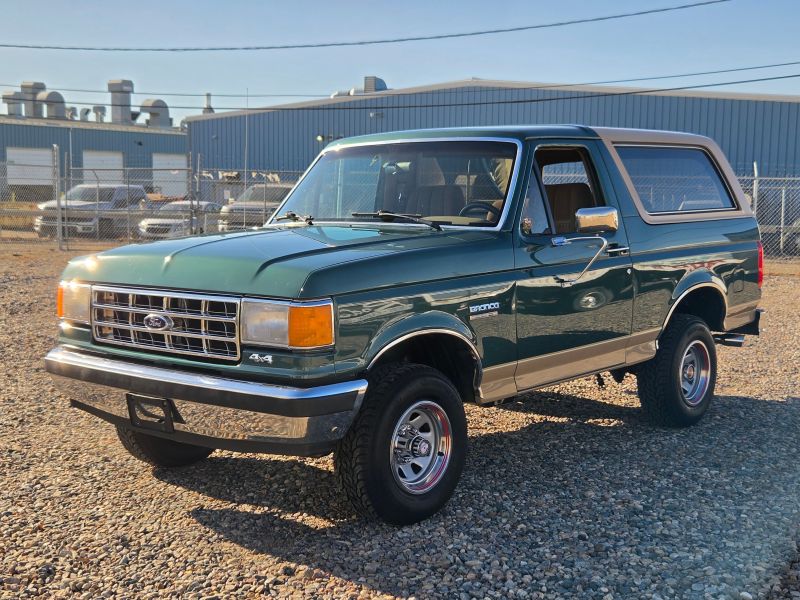
Capability is where the full-size Bronco simply outclassed the early 4Runner on paper. V8 power, a heavier duty frame, and a wider stance gave the Bronco more towing capacity and more room for gear, passengers, and aftermarket equipment. The Twin Traction Beam front suspension gave later Broncos a comfortable highway ride for a truck of its size, and the sheer physical presence of a full-size Bronco next to a compact 4Runner made the size difference obvious at a glance. For buyers who genuinely needed a big truck's capability, the Bronco simply did more.
Parts and service access also favored the Bronco domestically, at least during this era. Ford dealers and independent shops across the country knew these trucks inside and out, and the shared components with the F-150 meant a huge parts network kept repair costs reasonable. That mattered to owners who put real miles on these trucks rather than treating them as weekend vehicles.
Where the 4Runner started to pull ahead
Fuel economy is the obvious one. A V8 full-size truck was never going to compete with a four or six cylinder compact SUV at the pump, and as gas prices fluctuated through the eighties and into the nineties, that gap mattered more to some buyers than raw capability did. Toyota's reputation for reliability was also building fast during this exact window, and the 4Runner rode that wave into a segment that eventually became the modern compact and midsize SUV market, a category the full-size Bronco was never really built to compete in long term.
The bigger signal came after both trucks left the market in their original forms. Ford discontinued the full-size two-door Bronco after 1996 and did not bring the nameplate back until the modern Bronco arrived decades later in a completely different, smaller format. Toyota kept the 4Runner in continuous production, evolving it generation after generation into the truck-based SUV it remains today. That continuity tells you something about which direction the market ultimately moved, even if it does not settle which truck was better for any individual buyer back when both were new.
"I have wrenched on both trucks and they are not really solving the same problem. A Bronco owner wanted a big American V8 truck. A 4Runner owner wanted something smaller that would not quit on them. Both got what they paid for."
- Mike Sullivan
Two different ownership experiences
Owning a full-size Bronco day to day feels like owning a truck. You sit up high, the V8 makes its presence known under load, and the whole vehicle has a mass to it that you notice in corners and under braking. Owning an early 4Runner feels closer to owning a tall car with real off-road hardware underneath, lighter on its feet, easier to park, and considerably less thirsty at the pump. Neither experience is better in any objective sense, they are just different answers to the question of what a truck owner actually needs most out of a vehicle.
That difference shows up clearly in how each truck aged into its current collector status too. Bronco buyers today tend to want the V8 rumble and the size, the same qualities that made the truck appealing new, while 4Runner buyers are chasing Toyota's reliability reputation and a more manageable footprint for regular use. Both groups are shopping for the same basic idea, a capable older SUV they can actually enjoy owning, they are just arriving at different trucks because they are weighting the tradeoffs differently.
What this means if you are shopping now
Today the comparison matters less than it did new, because both trucks have settled into their own collector niches with different buyers chasing them for different reasons. If you want V8 torque, a big cabin, and a truck built off genuine full-size pickup bones, the Bronco is still the answer, and thirty-plus years later the parts network and shop familiarity that favored it originally still hold up reasonably well. If fuel economy and a smaller footprint matter more to you, that is a different truck and a different search entirely.
What I would not do is let the 4Runner's reputation talk you out of a Bronco if a big American V8 truck is actually what you want. These are simple, well documented trucks with a strong parts network, and a well maintained example will give you decades of service just like it did the first owner. For read the background on how the full-size Bronco developed across its production run, that history explains a lot of what made the truck what it was by the time the 4Runner showed up as a real alternative. And when you are ready to compare actual trucks instead of specs on a page, you can browse classic Bronco listings and see what condition and pricing look like in the current market.
The rivalry between these two trucks never really produced a winner, it produced two separate collector markets that both stayed healthy for different reasons. That is a better outcome than most old truck comparisons end up with, and it means buyers today are not forced into a compromise. Figure out which philosophy actually matches how you plan to use the truck, then shop that category with confidence instead of chasing whichever name sounds more impressive at a cruise-in.
Sources and notes
Related Reading
Have a
Ford Bronco
for Sale?
Reach thousands of serious classic car collectors across the US.
Sell It Here →
Selling a classic? Here's how: compare the places to sell classic cars
Are You a Classic Car Dealer?
List your full inventory and connect with targeted classic car buyers.
Join as a Dealer →
#Ford Bronco
#Ford truck history
#full-size bronco
#classic SUV comparison
#Toyota 4Runner
#Bronco vs 4Runner

About the author
Mike Sullivan
Detroit-area muscle car enthusiast and restoration specialist with three decades of hands-on experience working on American iron.
Related Listings - Ford Bronco




Comments
Be the first to comment on this article.