
Walk into any parking lot meetup for old Ford trucks these days and you will hear the letters OBS thrown around like everyone already knows what they mean. They do, mostly, but the ford bronco obs culture that grew up around these trucks did not happen overnight, and it did not happen because anyone at Ford planned it. It happened because a generation of truck buyers grew up, got some disposable income, and went looking for the trucks their fathers drove.
Car Features
7 min read
The OBS Bronco Community and Its Rise
The Old Body Style label grew out of online forums into a genuine culture around late full-size Broncos, and that community is a big part of why values climbed.
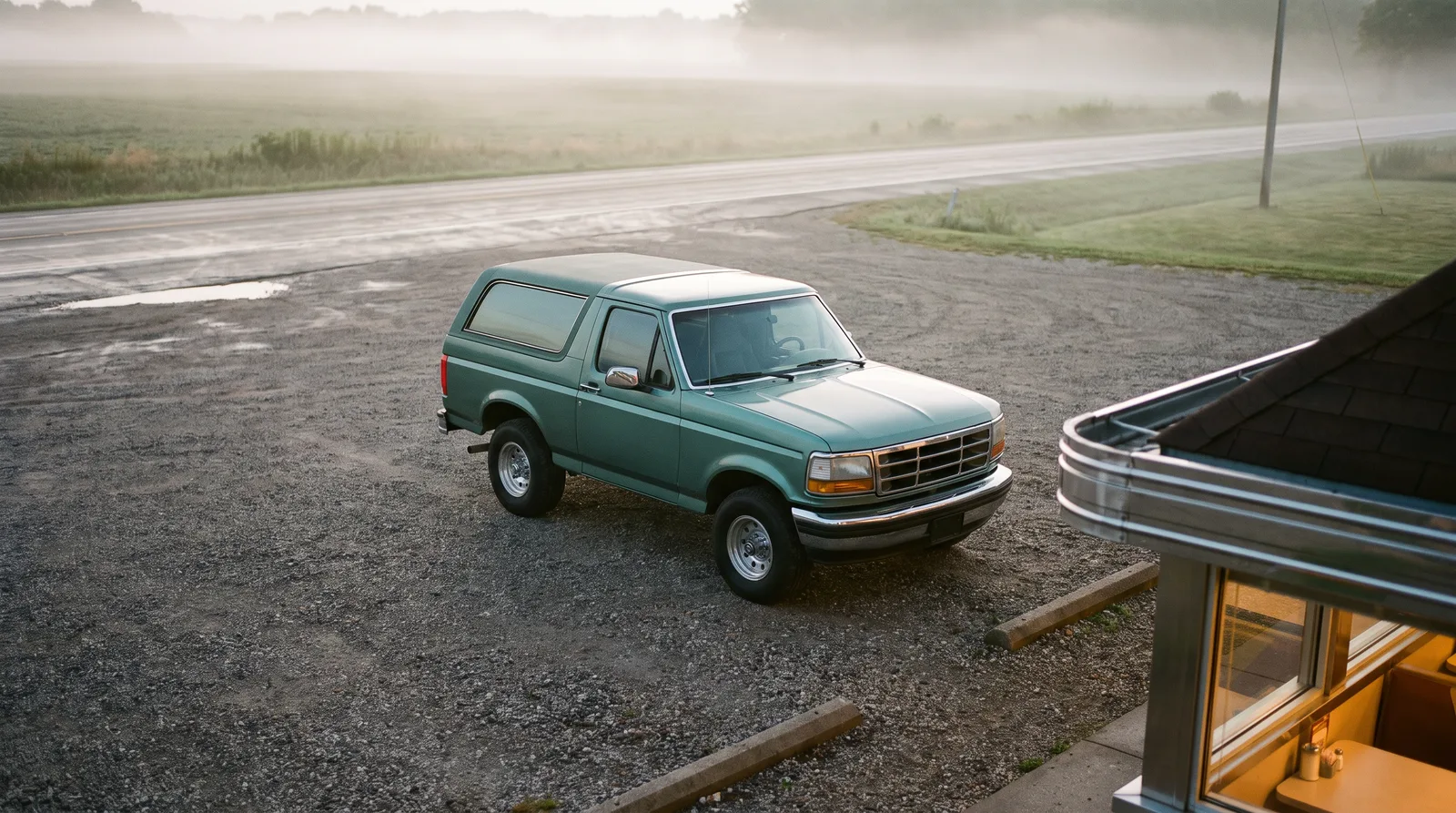
What OBS actually means
OBS stands for Old Body Style, a term that truck enthusiasts started using informally once Ford redesigned the F-150 and full-size Bronco for the 1997 model year, a change that gave the new trucks a rounder, more aerodynamic look compared to the boxier, squared-off trucks that came before. Suddenly there needed to be a shorthand for the previous generation, the trucks built roughly from 1980 through 1996, and OBS stuck. It is a term born entirely from enthusiasts rather than Ford's own marketing, which tells you something about how organic this whole scene has been from the start.
The Bronco stopped production in 1996, right at the edge of that OBS window, which puts every full-size Bronco Ford ever built squarely inside the era that community claims as its own. That matters because the OBS label did not originally belong to Broncos specifically. It started with F-150 fans talking about their trucks, and Bronco owners folded themselves into that same community because the platforms overlapped so heavily. Ask an OBS forum today and you will find Bronco threads sitting right alongside F-150 and F-250 discussions, all trading parts advice and swap meet leads across the same shared architecture.
How the internet built a scene the factory never planned
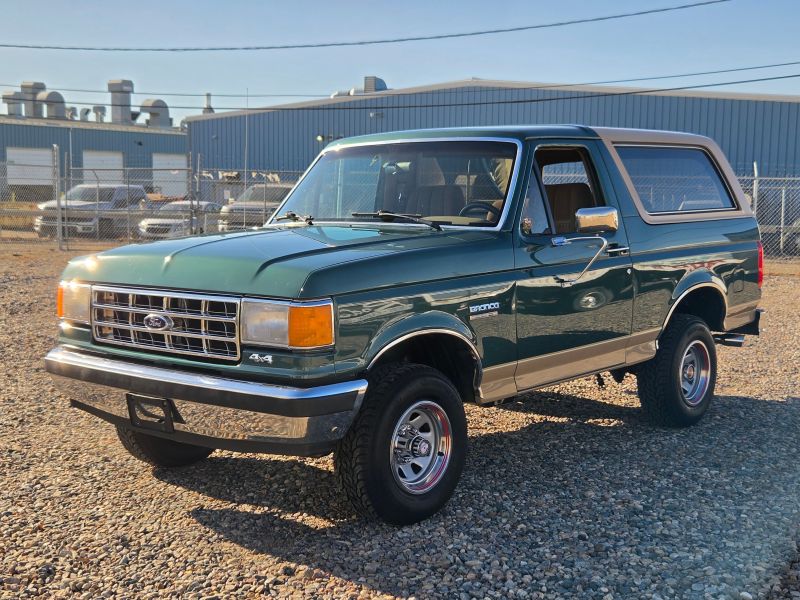
None of this existed as an organized community when these trucks were new. In the eighties and early nineties a Bronco was just a truck, bought to do a job or haul a family around, not a cultural artifact. The shift happened gradually through the 2000s and accelerated hard once online forums and later social media gave scattered owners a place to actually find each other. A guy with a rusty 1988 Bronco in rural Ohio suddenly had access to the same knowledge base as a collector with a pristine Eddie Bauer example in California, and that leveling effect did more to build the culture than any single event or magazine feature could have.
What grew out of those forums was not just a parts-and-repair community, though that is a huge part of it. It became a genuine aesthetic movement. OBS trucks started showing up lowered on custom wheels, built as show trucks, restored to stock with obsessive attention to period-correct detail, or turned into serious off-road rigs. The same base truck supported wildly different subcultures within the broader OBS world, and Broncos sat at an interesting intersection of all of them because the truck had both a work-truck heritage and, thanks to things like the Eddie Bauer and Silver Anniversary special editions, a built-in premium image that other OBS trucks did not always carry.
Why values climbed once the culture caught on
Values for clean full-size Broncos have climbed noticeably as the OBS scene matured, and the timing is not a coincidence. Once a dedicated community exists to document, restore, and actively bid on these trucks, prices respond. A Bronco that might have sold for a few thousand dollars in the early 2000s, treated as just an old used truck, now draws real competition among buyers who understand exactly what they are looking at and what a clean, unmolested example is worth. The culture created the demand, and the demand created the market that exists today.
That shift changed buyer behavior too. Sellers who once would have parted out a rough truck for scrap now know there is a market for project trucks, since OBS builders often want a solid frame and body to start from rather than a numbers-matching original. The community absorbed trucks at every condition level, which kept a wider range of Broncos circulating instead of disappearing to junkyards the way so many did in the decades before anyone organized around saving them.
"I have covered a lot of truck communities over the years and the OBS scene stands out because it is genuinely cross generational. You get guys in their sixties who bought these new standing next to twenty five year olds who never saw one in a showroom, and they are talking the same language."
- Patrick Walsh
What the culture actually looks like in practice
Spend any real time around OBS gatherings and a few patterns become obvious fast. There is always a contingent obsessed with keeping trucks bone stock, down to the correct paint codes and original wheel styles for a given model year, treating restoration almost like archival work. There is another contingent doing the opposite, building trucks on aggressive suspension lifts and oversized tires meant purely for weekend trail use, with little concern for factory originality. And there is a third group somewhere in the middle, keeping a truck mostly stock but swapping in a few tasteful upgrades, a nicer stereo, updated shocks, maybe a repaint in the original color rather than anything custom.
What ties all three approaches together is a shared respect for the platform itself, even when the end goals differ wildly. A stock-obsessed restorer and a trail-focused builder will still swap parts leads and trade advice at the same meetup, because both understand the underlying truck the same way. That mutual respect across different build philosophies is part of what has kept the OBS scene from splintering into rival factions the way some enthusiast communities do, and it has helped keep demand broad based rather than concentrated on just one narrow style of build.
Where a Bronco buyer fits into this today
If you are new to this and just Bronco curious rather than deep into the broader OBS truck world, the community is worth tapping into anyway. Forums and local meetups are full of people who know exactly which years had which issues, which parts interchange, and which sellers in a given region have a reputation worth trusting. For the truck-specific history behind all of this, more on the bullnose ford bronco covers the model years that define the OBS Bronco specifically, and if you want to go back even further, our complete history traces the nameplate all the way to its 1966 origins.
Whatever direction your interest runs, from stock restoration to a full custom build, the OBS community has a lane for it, and that variety is part of why the scene has stayed healthy rather than narrowing into one rigid idea of what a proper Bronco should look like. There are plenty of classic Broncos on the market right now for anyone ready to join in, whether the plan is a weekend cruiser or a ground-up build project.
Sources and notes
Related Reading
Have a
Ford Bronco
for Sale?
Reach thousands of serious classic car collectors across the US.
Sell It Here →
Selling a classic? Here's how: compare the places to sell classic cars
Are You a Classic Car Dealer?
List your full inventory and connect with targeted classic car buyers.
Join as a Dealer →

About the author
Patrick Walsh
Automotive journalist covering classic car shows, events, and the enthusiast community across North America.
Related Listings - Ford Bronco




Comments
Be the first to comment on this article.