
The ford bronco six vs v8 debate has been running in club meetings and comment sections for as long as I have been covering this market, and most of the arguments miss the actual point. This is not a question with one correct answer. It is a question about what you are going to do with the truck, and buyers who skip that step usually end up regretting the engine they picked.
Car Features
6 min read
Six or V8, the First-Gen Bronco Engine Debate
The ford bronco six vs v8 debate has no universal winner. A numbers-first breakdown of what each engine trades away, and how to pick based on real use.
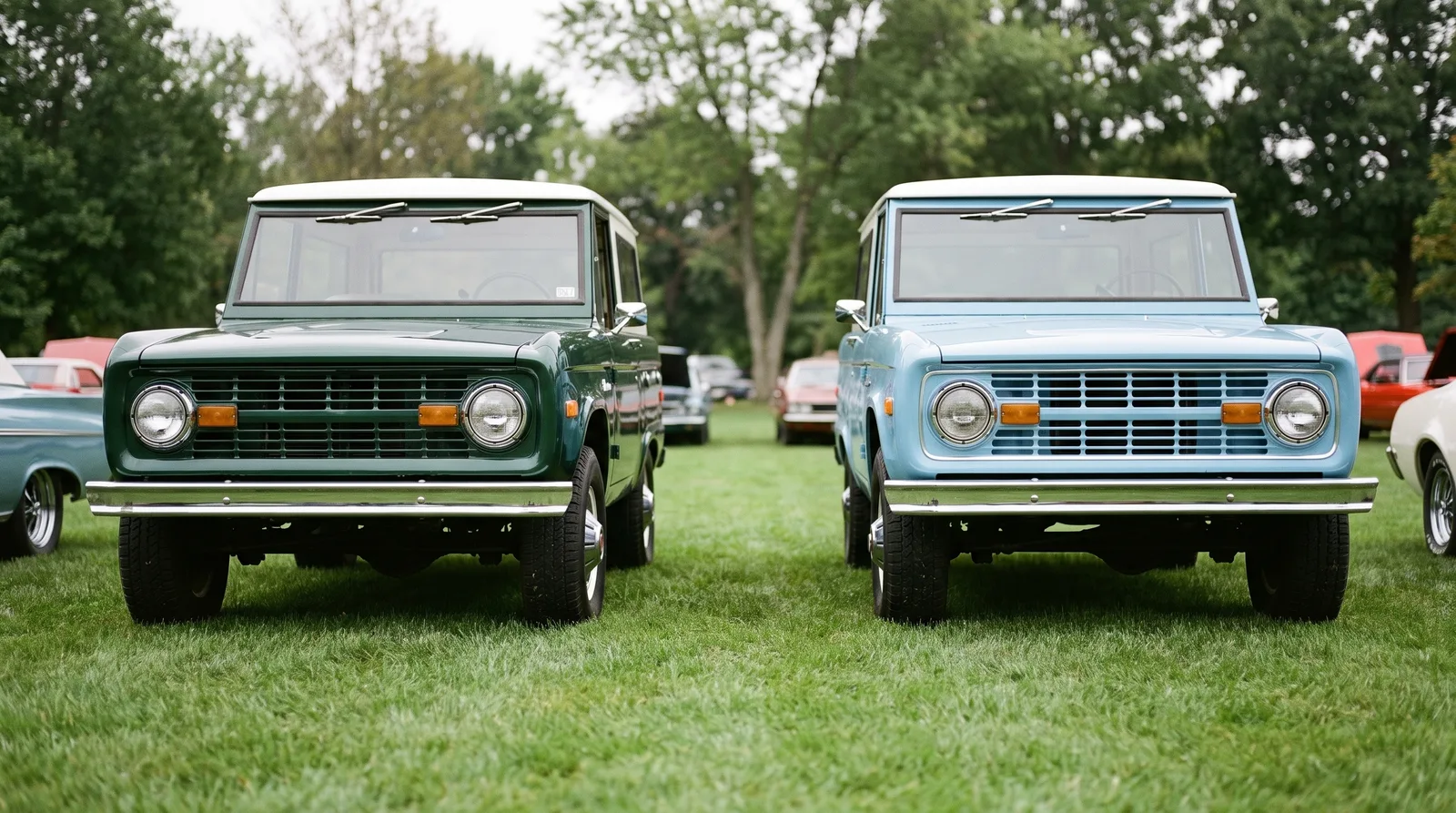
The case for the six, stated plainly
Ford offered the 170 and later the 200 cubic inch inline six as the standard, base engines across most of the first-generation Bronco's run. Both are simple, low-stressed engines that were never built to impress anyone on a spec sheet. What they deliver instead is a lighter front end, generally better fuel economy, and a lower cost of ownership over the long haul. For a buyer who wants the truck as originally configured for most owners, the six is not a compromise. It is the honest, mainstream version of the early Bronco.
I have said it before and I will say it again here. A documented, unmolested six-cylinder Bronco is rarer today than most buyers assume, because so many six-cylinder trucks got V8 swaps over the decades once owners wanted more power. Originality cuts both directions in this debate, and the six often loses that argument to nobody but assumption.
The case for the V8, stated just as plainly
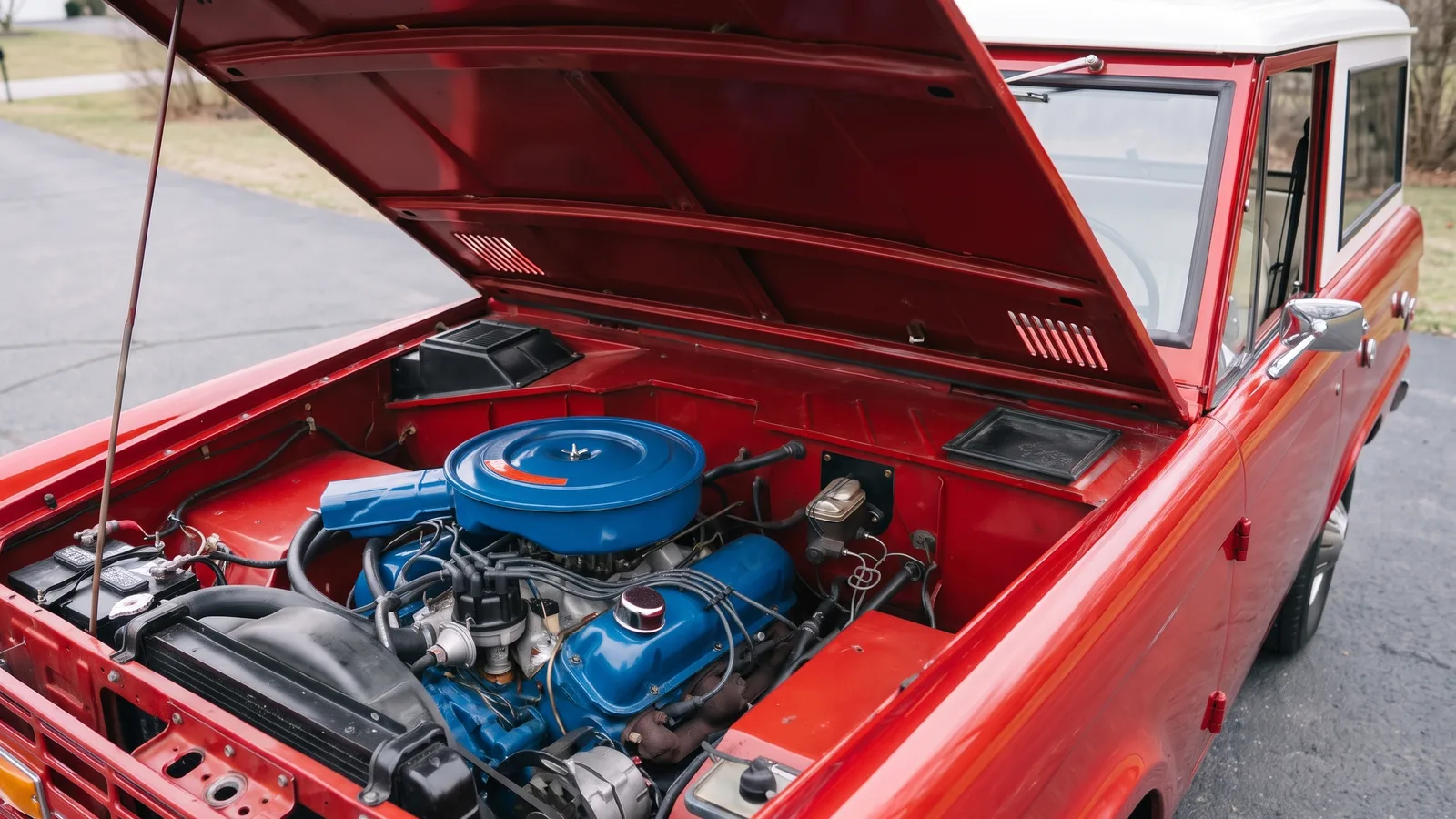
Ford's 289 and later 302 cubic inch V8 options gave buyers real, usable acceleration that neither six could match. These engines came from Ford's already-proven small-block family, so the V8 upgrade did not sacrifice reliability to gain performance, a rare combination in any era of automotive history. A well-sorted V8 Bronco is a genuinely quick small truck, and that capability built a real following that persists in the collector market today.
The tradeoff is added front-axle weight, which changes steering feel and accelerates wear on front suspension components compared to a six-cylinder truck of similar age and mileage. That is not a knock on the V8. It is simply the physics of putting a heavier engine over the front wheels of a light truck, and any buyer choosing the V8 side of this debate should walk in with that tradeoff understood, not discovered later during an inspection.
Where the debate actually gets decided
Here is the number that should settle most of these arguments before they start: how the truck is actually going to be used. A buyer who wants a weekend trail truck, an easy daily driver, or the lightest, most economical version of the early Bronco should stop arguing and buy the six. A buyer who wants a truck with real acceleration, a stronger collector following, and does not mind a bit more front-end maintenance should buy the V8. Neither choice is a mistake. The mistake is buying one because of internet consensus instead of your own actual use case.
Resale liquidity tends to favor the V8 slightly, simply because it draws interest from a wider pool of buyers who never cared much about six-cylinder trucks in the first place. That is a real factor if you plan to sell in a few years. It is a much smaller factor if you plan to keep the truck for the long haul, in which case originality and documentation matter more than which engine happens to be under the hood.
"People ask me to pick a side in the six versus V8 argument like there's a right answer. There isn't. There's a right answer for what you're going to do with the truck, and that's a completely different question."
- Dan Reeves
| Factor | Six-cylinder (170/200) | V8 (289/302) |
|---|---|---|
| Front-end weight | Lighter | Heavier, faster suspension wear |
| Fuel economy | Better | Lower |
| Acceleration | Modest | Strong for the era |
| Documented originality today | Rarer than expected due to past swaps | More commonly found original |
| Resale liquidity | Solid, smaller buyer pool | Slightly stronger, wider buyer pool |
What I tell buyers who ask me directly
Figure out your actual use case before you look at a single listing. Write it down if you have to. Weekend trail driving, daily commuting, long-distance touring, static collection, each of those answers points toward a different engine, and none of them are wrong answers. What is wrong is buying a V8 because it sounds more impressive and then complaining about front suspension wear two years later, or buying a six because it is cheaper and then feeling underpowered every time you merge onto a highway.
For more on how the engine lineup developed alongside the Bronco's body configurations, the full story covers the background in detail. When you are ready to shop for real, look at classic Bronco for sale listings with your use case already decided, and let that decision filter out half the trucks before you waste time inspecting them.
The maintenance question nobody asks upfront
Buyers spend a lot of time debating power and almost no time debating what it actually costs to keep either engine running well for the next decade. The six is simpler and generally cheaper to maintain over time, fewer components under load, less strain on the front suspension, and a lower parts bill for routine service in most cases. The V8 costs more to keep in top condition, particularly the front suspension components that wear faster under the added weight, but it also benefits from a huge, well-documented Ford small-block support network that keeps parts affordable and widely available.
Neither engine is going to bankrupt a careful owner. The difference shows up gradually, in slightly higher front-end maintenance bills on the V8 side versus a marginally less exciting driving experience on the six side. Weigh that honestly against your budget and your patience for wrench time, not just against which engine sounds better at a cookout.
A word on mixed opinions inside the same family of trucks
I have talked to plenty of long-time Bronco owners who switched sides on this debate more than once over the years, six to V8 and back again, as their use case changed. That flexibility is actually a strength of this platform. Both engine families slot into the same chassis without a dramatic mismatch, which is part of why the swap market has stayed active for decades. If your needs change down the road, the truck itself does not force you into a permanent decision the way some platforms do.
Bottom line
This debate does not need a winner, and anyone who tells you it does is selling something. The six and the V8 both did their jobs well when new, and both hold up as legitimate choices today, provided you buy the one that actually matches how you plan to use the truck. Get that part right and the engine debate stops mattering nearly as much as people online make it sound.
Sources and notes
Related Reading
Have a
Ford Bronco
for Sale?
Reach thousands of serious classic car collectors across the US.
Sell It Here →
Selling a classic? Here's how: sell my classic car
Are You a Classic Car Dealer?
List your full inventory and connect with targeted classic car buyers.
Join as a Dealer →
#Ford Bronco
#classic truck buying guide
#first-gen Bronco
#Bronco values
#Bronco engines
#six vs V8

About the author
Dan Reeves
Performance engine builder from North Carolina's motorsports corridor, focused on swaps, forced induction and making real, repeatable power.
Related Listings - Ford Bronco
More in Car Features

Comments
Be the first to comment on this article.