
Put a Model T driver in a Model A for the first time and watch his left foot. It goes looking for a low-gear pedal that isn't there anymore, finds a clutch instead, and the car lurches. That moment is the whole story of model A vs model T driving in one twitch. The two Fords sat only a few months apart on the showroom floor in 1927, yet they ask completely different things of the person behind the wheel. One you learn like a dance. The other you could hand to a driver from 1960 and he'd get it home.
Car Features
8 min read
Driving a Model T vs a Model A: How Different They Feel
Three pedals and a hand throttle against a clutch, a gas pedal and four-wheel brakes: how a Model T and a Model A really feel from the driver's seat.
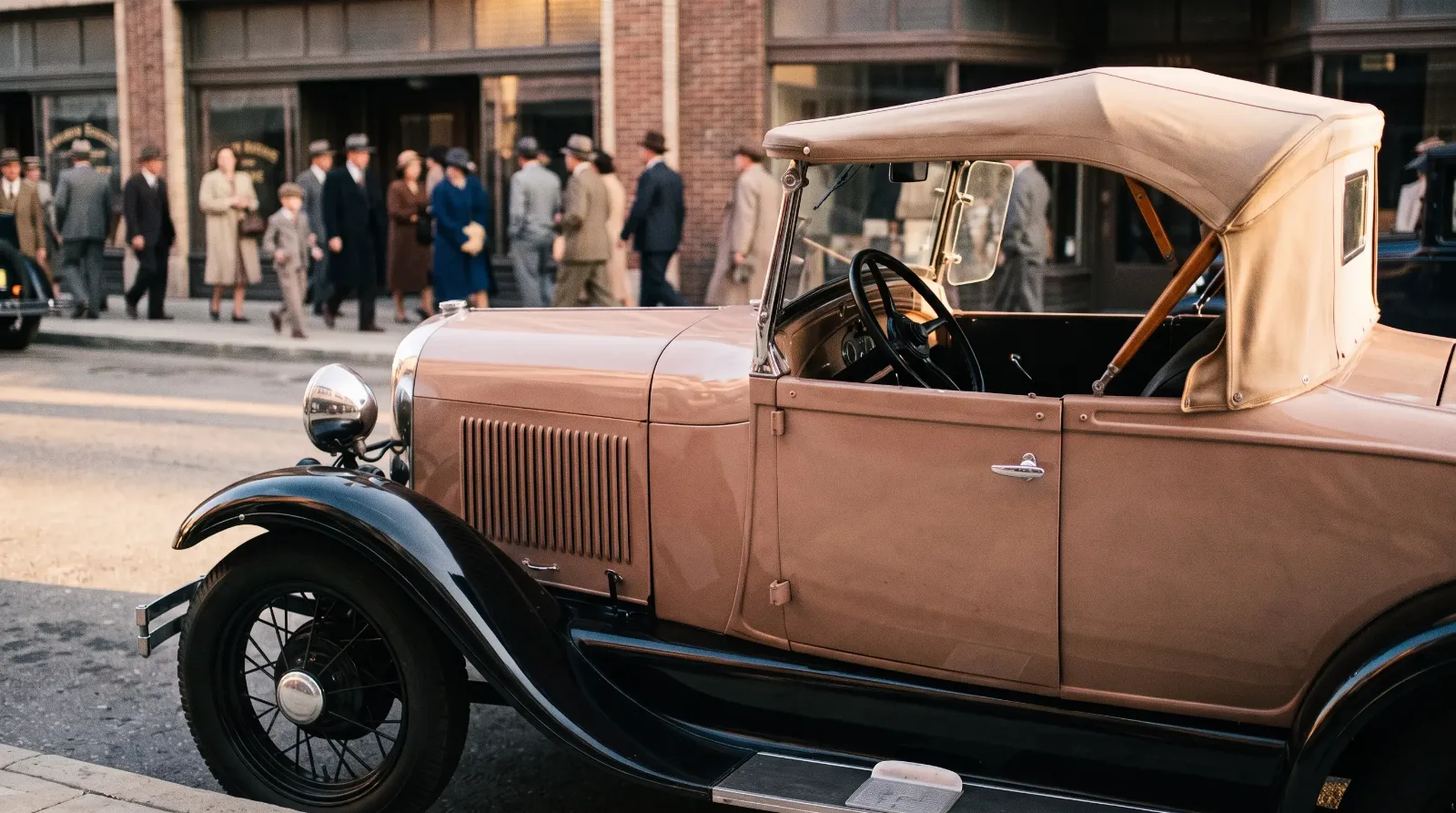
If you want the factory side of the changeover, the dates and the parts, our T to A story covers it. This piece is about the seat of the pants: what your hands and feet do, how each car pulls, how it stops, and how tired you are after an hour.
Three pedals that mean different things
The Model T has three pedals and no gas pedal at all. The left one is the gearbox. Push it to the floor and you are in low; let it halfway up and you are in neutral; let it all the way up, with the hand lever forward, and you are in high. The middle pedal is reverse. The right pedal is the brake, and it does not touch the wheels: it tightens a band inside the transmission. Speed comes from your right hand, on the throttle lever on the steering column, while your left hand minds the spark-advance lever on the other side.
The Model A cleaned all that up. Clutch on the left, brake in the middle, gas pedal on the right, a floor starter button next to the gas, and a gearshift lever growing out of the floor. It still kept a spark lever and a hand throttle on the column, so the old habits had somewhere to go. But the feet now worked the way they still work in any manual car built since.
| At the wheel | Model T (1908 to 1927) | Model A (1928 to 1931) |
|---|---|---|
| Gearbox | Two-speed planetary plus reverse, pedal-shifted | Three-speed unsynchronized sliding gear, one reverse, floor lever |
| Gas | Hand throttle lever only, no pedal | Gas pedal plus hand throttle |
| Service brake | Band in the transmission (right pedal) | Four-wheel mechanical drum brakes (center pedal) |
| Rated power | 20 hp | 40 hp at 2,200 rpm |
| Top speed | About 40 to 45 mph | About 60 to 65 mph |
| Curb weight | 1,200 to 1,650 lb | 2,265 to 2,465 lb |
| Wheelbase | 100 in | 103.5 in |
Getting it moving: model A vs model T driving from a standstill
Pulling away in a T is mostly left foot and right hand. You crack the throttle, push the low pedal down and hold it, and the car pulls in a gear of 2.75:1. When it is rolling, you ease off the throttle, let the pedal float up through neutral into high, and open the throttle again. There is no clutch pedal to feather and no sliding gear to grind. Old-timers will tell you that is why a farm kid could drive one at twelve, and they are not wrong. What the planetary forgives in technique, it takes back in leg strength: hold that low pedal down on a long hill and your calf will file a complaint.
Pulling away in an A means the clutch. First gear is 3.12:1, second is 1.85:1, third is direct. The box has no synchronizers, so the club advice is to double-clutch and to go into second at around 10 mph. Get it wrong and the gears tell everyone on the street. Get it right and the car steps off with a shove the T never had, because 40 hp is twice the T's rating. A Model A also starts on a button. Every model came with a starter as standard equipment; on the T, a starter was standard only on the closed cars by 1926, and the cheapest open cars still came without one.
On the road: speed, steering and ride
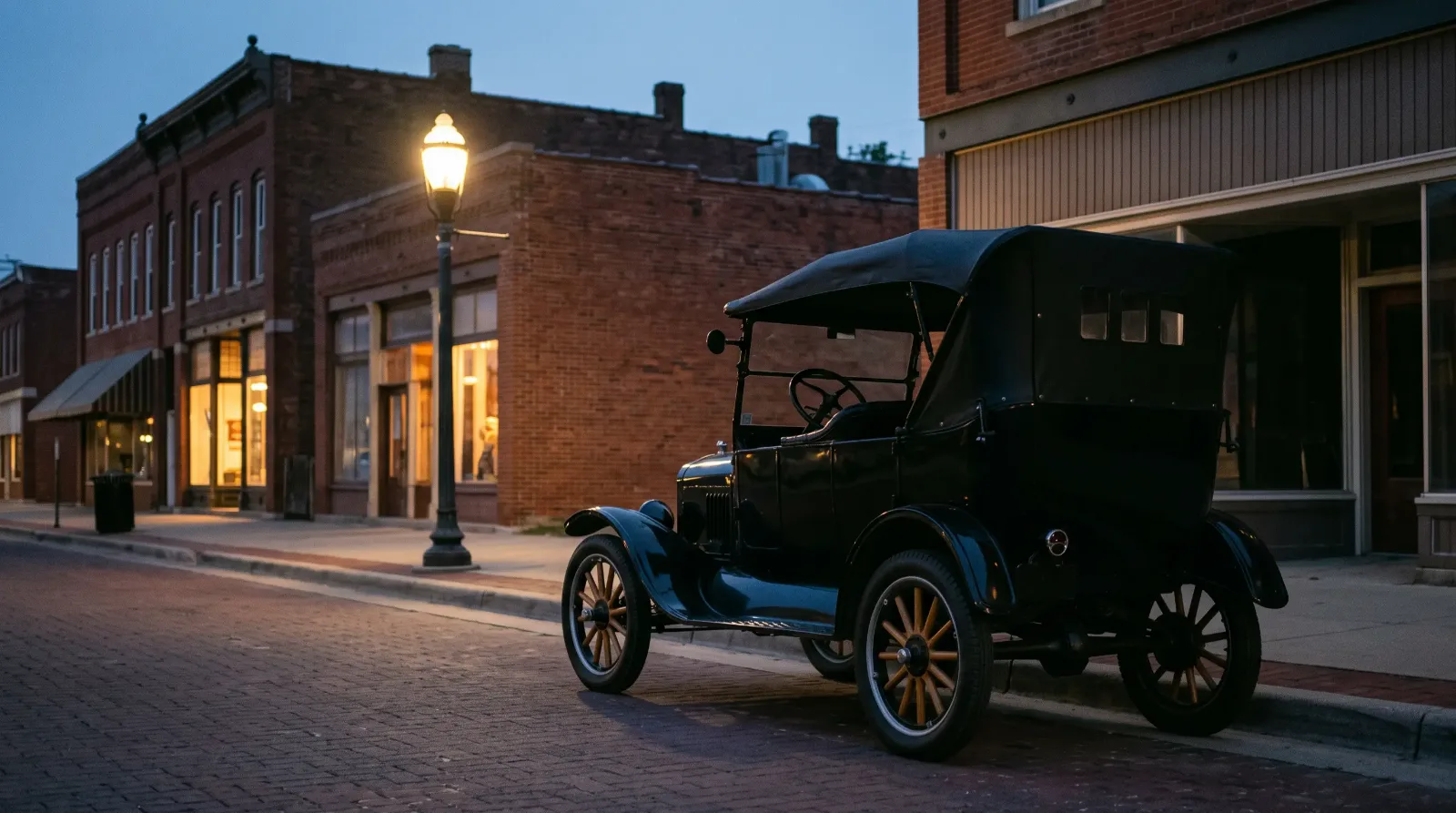
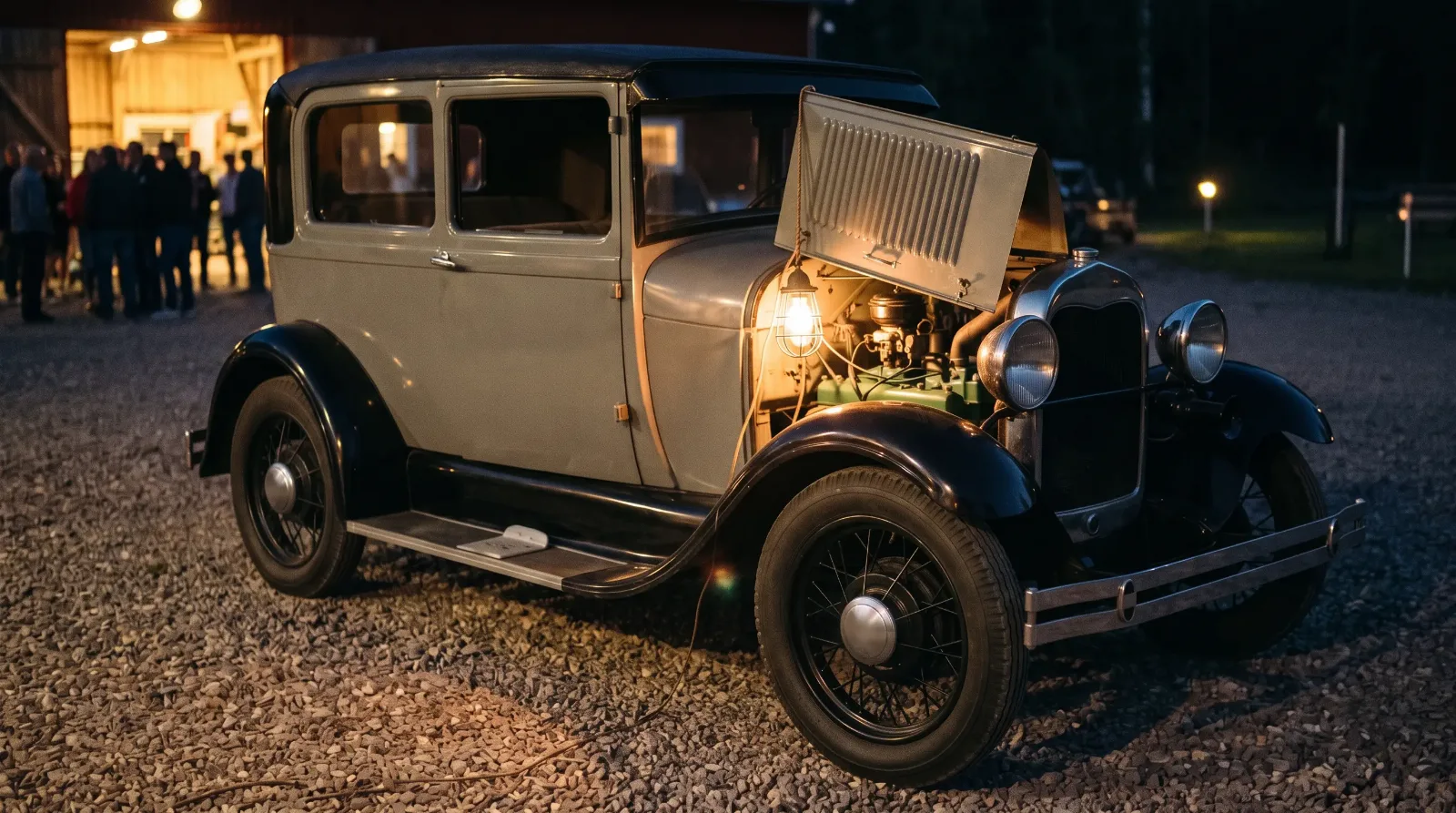
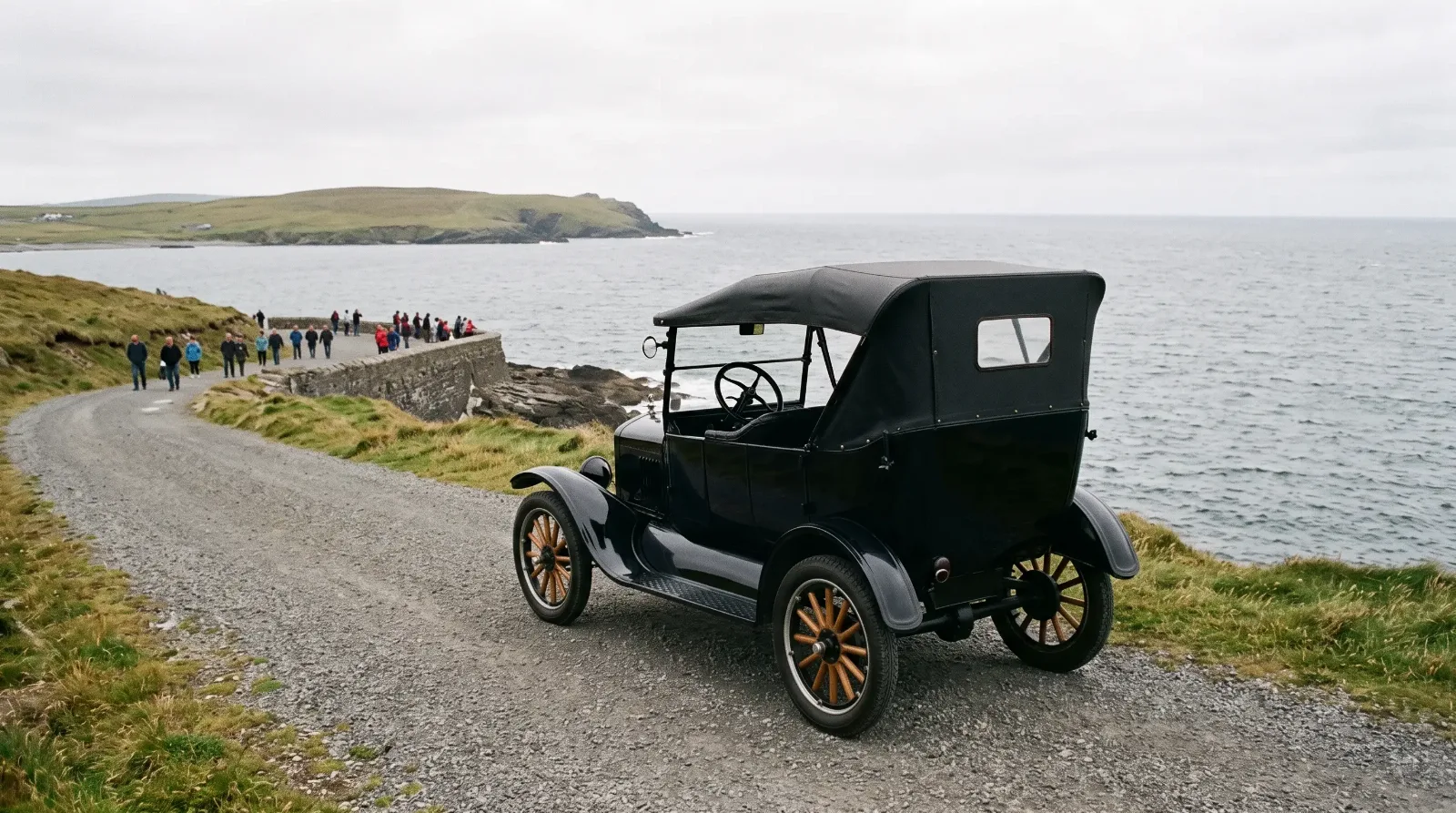
Here is where the two cars stop being cousins. A good T will lope along at 40 to 45 mph on its standard 3.64:1 axle, and it feels like it is giving you everything it has. It is light, between 1,200 and 1,650 lb, so it darts on a crowned road and a gust can move it. You steer it more than you aim it.
The A weighs the better part of half a ton more and rides on a slightly longer wheelbase, and you feel that weight as calm. A stock Model A cruises at 45 to 50 mph all day and will reach 60 to 65 mph. Both cars hang their axles on transverse leaf springs, a Ford habit, but the A added Houdaille hydraulic lever shocks, which the T never had from the factory. The difference over a rough patch is plain: the T bounces and keeps bouncing, the A bumps once and settles. Steering on the A is 11.25:1 on the 1928 to 1929 cars and slower, 13:1, from 1930, when the wheels also shrank from 21 in to 19 in. The later cars steer lighter and sit lower.
"A Model T asks for your attention every second. A Model A asks for it every time you shift. That is the difference between driving a machine and driving a car, and the old guys who learned on both will tell you they missed the T for about a week."
Gary Nowak
Stopping, which is where the A earns its keep
The T's foot brake squeezes a band around a drum inside the transmission, and that slows the rear wheels through the driveline. The hand lever works small drums at the rear wheels for parking and emergencies. In practice you plan your stops, keep your distance, and use the low pedal and engine to help. Nobody who drives a T in modern traffic forgets that the car in front can stop faster than they can.
The Model A has four-wheel mechanical drum brakes, rod-operated, with 11 in drums and a bias of about 40% front, 60% rear. That is not modern braking either, and a tired set will pull or fade. But it is a real brake on every corner, worked by your right foot in the place your right foot expects. If you are going to share a road with pickup trucks, this matters more than anything on the spec sheet.
Which one should you learn on?
If you are new, the A is the easier car to live with. It goes faster, stops better, and the controls will not ambush you in traffic. A driver who already knows a manual gearbox needs an afternoon to get the double-clutch rhythm, and that is about it. Club tours and the people who run them are the best place to get seat time on both; you can read more here about how to find them.
The T is a different kind of fun. It is slower, louder in its own way, and more involving, because you are running the engine with your hands while your feet run the gearbox. People who love Ts love them for that. It is also why the launch week of the Model A drew such crowds: the public was ready for a Ford that drove like other cars. For the bigger arc of how the Tin Lizzie and its successor fit together, start there.
My advice is plain. Drive a T to understand where Ford started. Drive an A if you want to go somewhere. And if you end up wanting one to keep, take a look at the Model As for sale and bring someone who has owned one along for the test drive. He will hear the gearbox before you do.
Sources and notes
- SAHB Technical Talk 14: the Ford Model T (planetary gear ratios)
- Christie's lot notes on a Model T (3.64:1 axle and cruising pace)
- Motor Sport, April 1962: The Model A Ford (weight, brakes, steering)
- Model A Ford Club of Great Britain: specifications
- Old Cars Weekly: Q&A with Kit Foster (Houdaille shock absorbers)
- Wikipedia: Ford Model T engine (fuel tank and gravity feed)
Related Reading
Have a
Ford Model T
for Sale?
Reach thousands of serious classic car collectors across the US.
Sell It Here →
Selling a classic? Here's how: sell my classic car
Are You a Classic Car Dealer?
List your full inventory and connect with targeted classic car buyers.
Join as a Dealer →

About the author
Gary Nowak
Lifelong Midwest rodder who has been building and driving traditional pre-war hot rods since the 1970s.
Related Listings - Ford Model T


More in Car Features
Comments
Be the first to comment on this article.