
Down at the club meet, somebody always asks why Ford never built a four door Bronco back in the day, and the answer to ford bronco two door identity is simpler than most folks expect. It was not an oversight. Ford looked at what the truck was for, looked at the competition, and decided two doors was the right call for thirty years running, even as the market around it kept changing.
Car Features
7 min read
The Two-Door Bronco and Why It Stayed That Way
From the 1966 original to the last full-size trucks in 1996, Ford never built a four-door Bronco, and that choice is central to the truck's identity.
What the truck was built to compete with
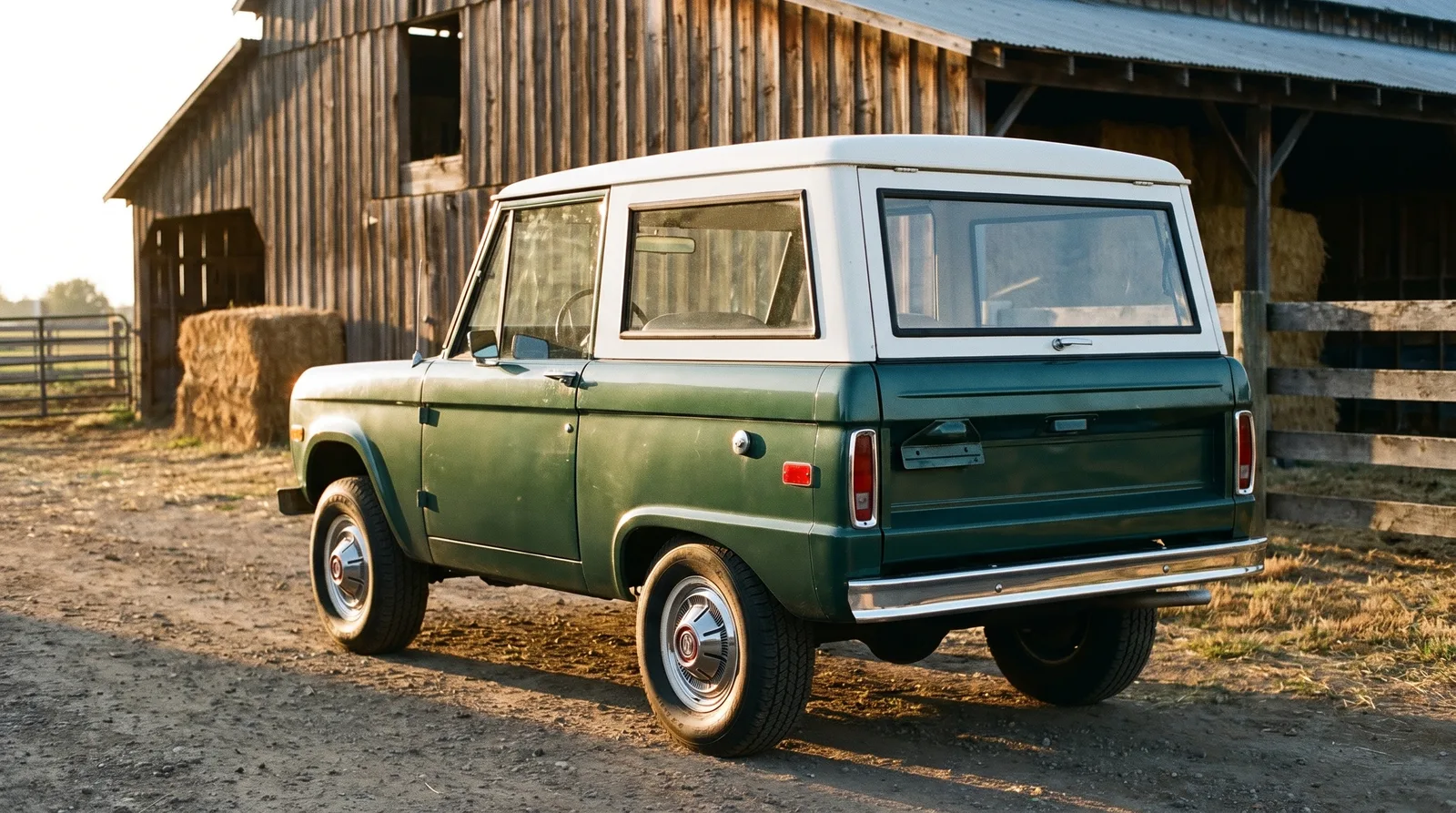
When the Bronco launched in 1966, it was aimed square at the Jeep CJ and the International Scout, both of which were compact, no nonsense two door rigs built for farm work, hunting camps, and light duty off roading. Nobody buying in that segment was cross shopping a family sedan. They wanted something short, maneuverable, and simple, and a two door body did all three better than a longer four door layout ever could.
I have talked with old timers at swap meets who bought their Broncos new off the lot in the late sixties, and not one of them ever mentioned wanting a back seat door. They wanted a truck that could turn around in a farm lane without three point turns, and the short two door body delivered exactly that.
The full size trucks kept the tradition going
When Ford moved the Bronco onto the full size F-Series platform starting in 1978, the truck grew considerably in every dimension, and that would have been the natural moment to add rear doors if Ford ever wanted to. They did not. The 1978 to 1996 Broncos stayed two door trucks straight through the end of that generation, even while Chevy was already selling four door Suburbans and Blazers were creeping toward more practical family duty.
That decision kept the Bronco positioned as a rugged, slightly sporty alternative rather than a family hauler, which is exactly the identity that built its reputation. Ford had four door trucks in the lineup already if a buyer wanted one. The Bronco was never trying to be that truck.
What two doors cost the Bronco, and what it bought
Being a two door truck for its entire run meant the Bronco eventually lost ground to four door SUVs as families started wanting easier access to back seats for kids and gear. That is part of why Ford eventually killed the classic Bronco in 1996 and why the replacement Expedition came standard with four doors from day one. The market had moved, and Ford moved with it rather than forcing the two door format to keep competing where it no longer fit.
But for the decades it did stay two door, that choice is exactly what gave the Bronco its identity as a driver's truck rather than a hauler. Folding front seats forward to load gear, climbing over a wheel well to get in back, none of that reads as an inconvenience to somebody who bought the truck to go camping or wheeling rather than to shuttle a soccer team.
"Fellas ask me why Ford never bothered with rear doors on the big Bronco. I tell them the same thing every time. It was never supposed to be your grandmother's grocery getter. Two doors kept it honest about what it was for."
- Wayne Coburn
What almost happened, and what did not
Ford never put a factory four door Bronco into development, even as the full size Suburban and Blazer crowd kept growing more family focused through the seventies and eighties. The closest anyone came was an aftermarket conversion company, Centurion, which took F-Series crew cab front ends and grafted them onto Bronco rear bodies between 1987 and 1996 to build unofficial four door Broncos outside the factory. Nothing like that ever reached production as a genuine Ford model. Instead Ford let the Bronco keep its lane as the sportier two door option while building out four door capability elsewhere in the truck lineup, which by the eighties included both the Bronco II compact and eventually the standard F-Series crew cab trucks.
That decision to keep the Bronco itself two door, even while offering four door practicality under other nameplates, tells you Ford understood exactly what the Bronco name meant to buyers. It was never going to be diluted into a generic family hauler just because the market wanted more back seat access somewhere in the lineup. If a customer wanted that, Ford had another badge for it.
How the identity shows up in the collector market today
Because the classic Bronco was always a two door truck, that body style is baked into what collectors expect when they picture one. Nobody hunting a classic Bronco today is disappointed to find a two door, because there was never a factory four door alternative to compare it against. That is different from a lot of other classic trucks where buyers actively seek out the rarer body configuration. With the Bronco, two doors is simply what the truck is, and that consistency across three decades of production has kept the silhouette instantly recognizable.
For the full arc of how body styles and engine choices developed together across the truck's life, the whole picture lays it out generation by generation. If you are ready to go find one wearing that two door identity in person, you can find a classic Bronco currently listed and see the range of condition and price out there right now.
Two doors and the accessory workaround
Owners who genuinely needed easier rear access found workarounds without Ford ever building them a fourth door. Fold down front seats, wide opening front doors, and a relatively low step-in height on the early trucks made getting gear and passengers into the back seat less of a chore than the two door layout might suggest on paper. It was never as convenient as a real rear door, but Ford engineered around the limitation well enough that it rarely showed up as a top complaint in period reviews or owner letters.
Club members today still debate whether that tradeoff was worth it, and honestly it depends entirely on what you use the truck for. A guy hauling camping gear for two does not miss the extra door. A family with three kids in car seats absolutely would, which is exactly the buyer who eventually moved on to something else once four door SUVs became the norm.
Why it still reads as the right call
Plenty of classic trucks got body styles added and dropped as manufacturers chased sales numbers. The Bronco stuck with what it started as. That kind of stubbornness does not always age well in the market, but for this truck it did, because the two door layout is inseparable from why people fell for the Bronco in the first place. It was never trying to be everything. It was trying to be one honest, compact, capable truck, and it stayed that truck for thirty years without apologizing for it.
Sources and notes
Related Reading
Have a
Ford Bronco
for Sale?
Reach thousands of serious classic car collectors across the US.
Sell It Here →
Selling a classic? Here's how: sell my classic car
Are You a Classic Car Dealer?
List your full inventory and connect with targeted classic car buyers.
Join as a Dealer →

About the author
Wayne Coburn
Longtime Corvette owner, judge and club figure who knows the cars, the records and the people behind them.
Related Listings - Ford Bronco
More in Car Features
Comments
Be the first to comment on this article.