
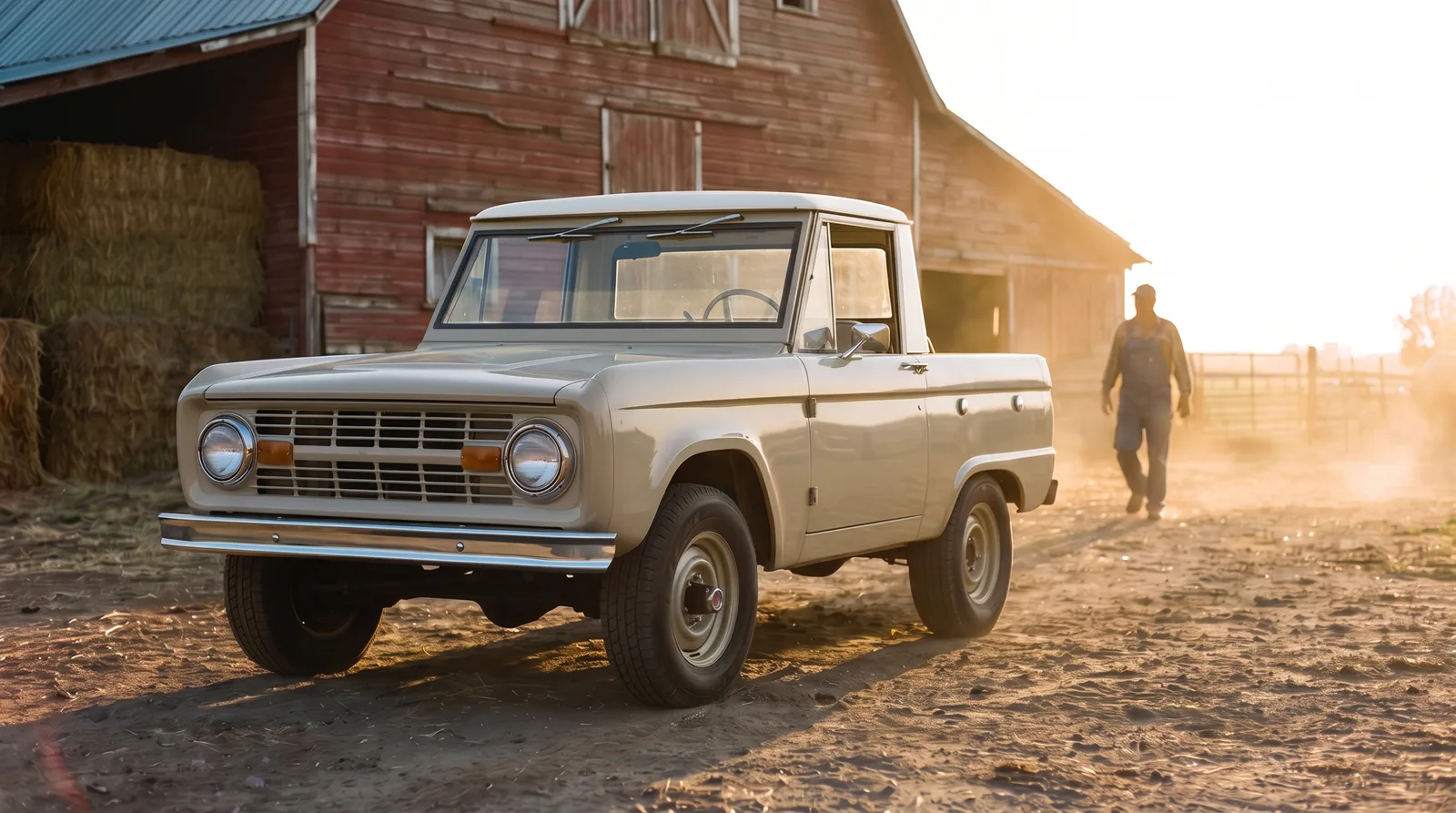
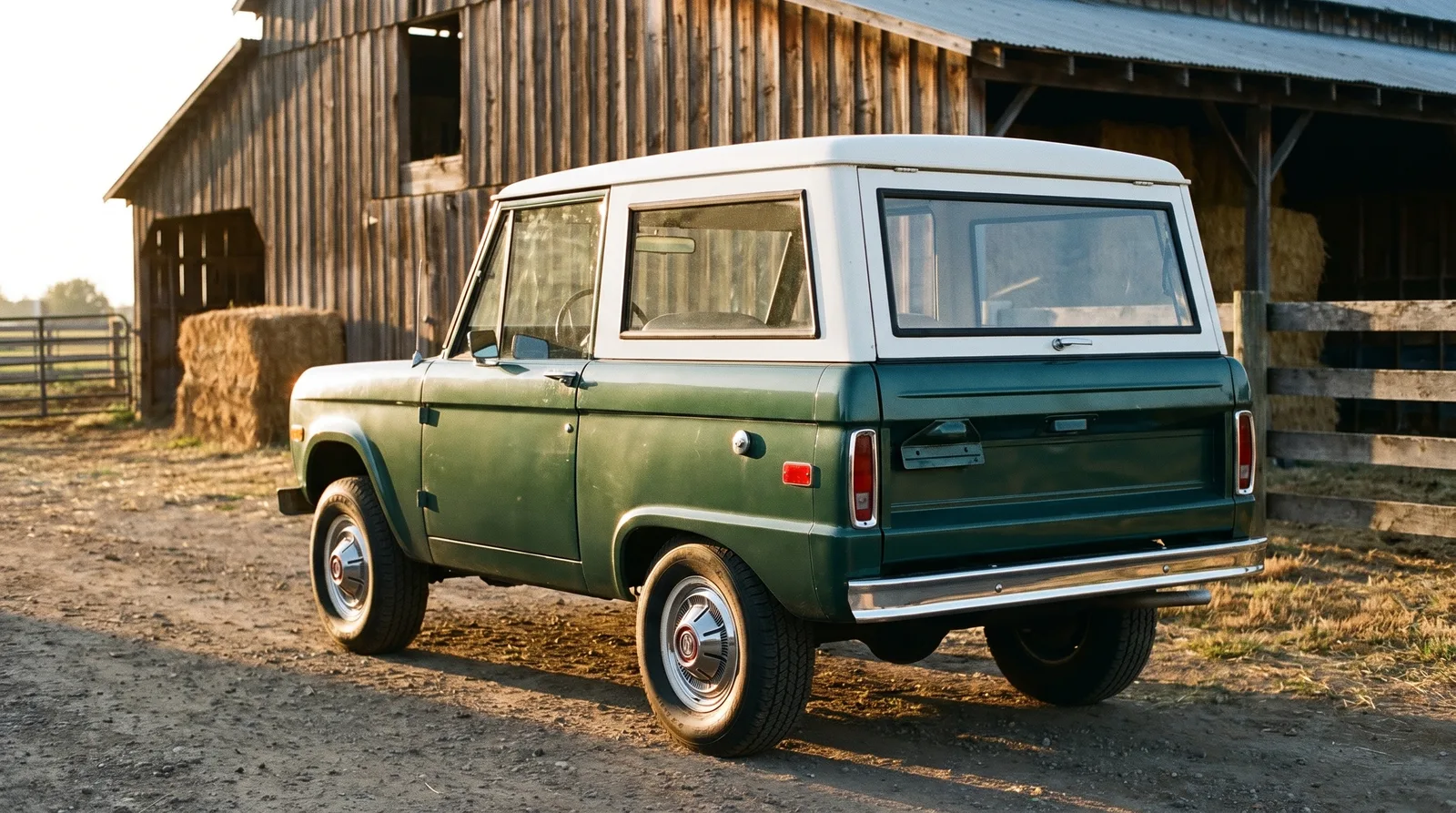
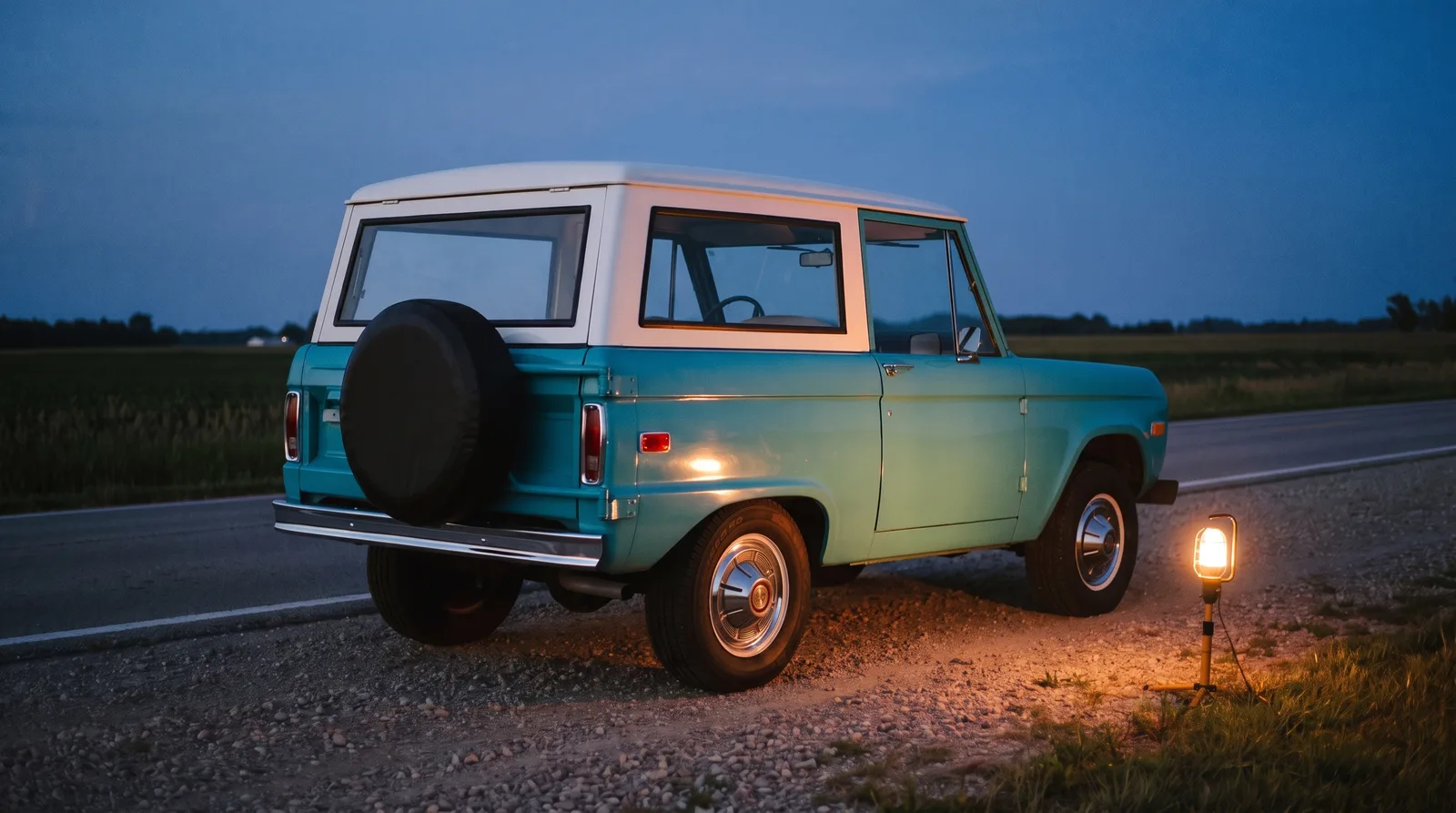
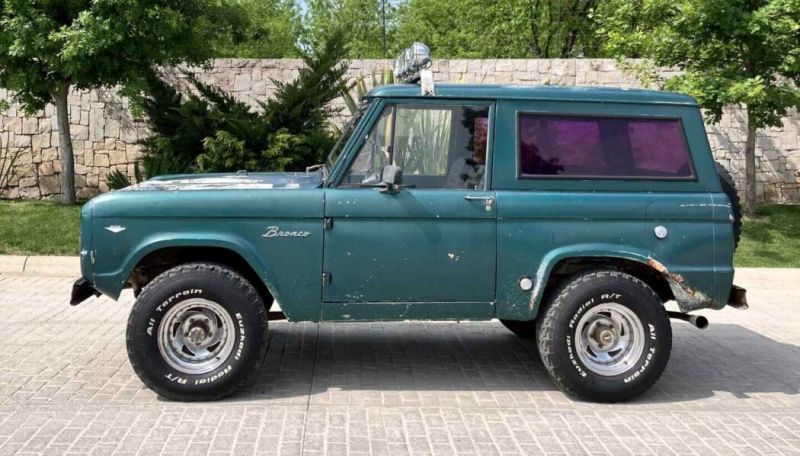
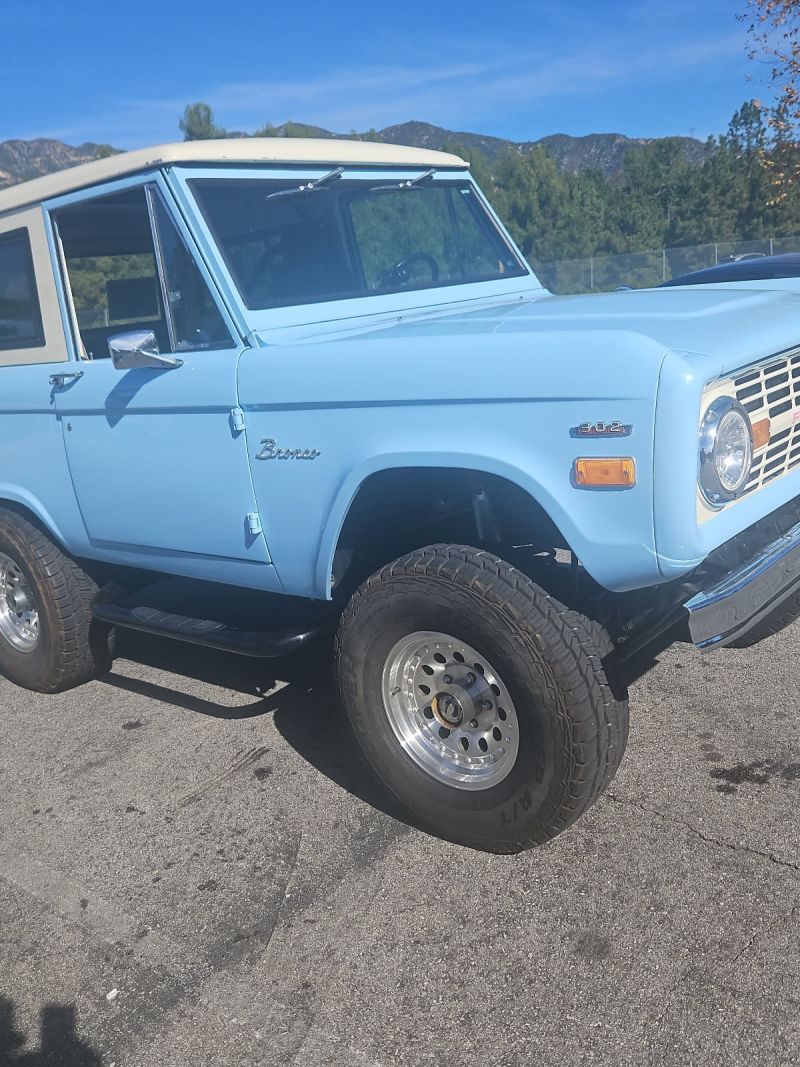
The ford bronco wheelbase is 92 inches on every early truck built between 1966 and 1977, and that one number explains more about how the truck drives than any spec sheet entry Ford ever printed. Short wheelbase trucks feel different on a trail than they do on a highway, and the early Bronco was engineered around that tradeoff on purpose.
Car Features
7 min read
The Short Wheelbase That Defined the Early Bronco
The 92 inch wheelbase on the original Bronco gave it a tight, trail-ready feel that the later full-size trucks traded away for stability and towing capacity.

Why 92 inches, specifically
Ford's engineers were not picking a wheelbase in a vacuum. They were building a truck to go head to head with the Jeep CJ-5, which rode on an 81 inch wheelbase, and the International Scout 80, which sat closer to 100 inches. The Bronco landed in between, short enough to twist through tight trails and turn in a farm lane, long enough to ride better on pavement than the shorter Jeep and to fit a proper bench seat and cargo area without feeling cramped.
That middle ground was deliberate. Ford wanted a truck that could do real off road work without being miserable to drive to the feed store and back, and wheelbase length is one of the biggest levers an engineer has to hit that balance.
What a short wheelbase actually does on a trail
A shorter wheelbase gives a vehicle a tighter turning radius and lets it clear steeper breakover angles without the frame or belly pan hanging up on the crest of a hill. That is the whole reason short wheelbase trucks have always had a following among serious off roaders, from the original CJ to the early Bronco to short bed pickups converted for trail use. You are trading ride comfort and straight line stability for maneuverability, and on tight technical terrain, that is usually the right trade.
Anybody who has driven both an early short wheelbase Bronco and a later full size 1978 and up truck back to back can feel the difference immediately. The early truck darts and pivots. The full size truck, riding on a considerably longer wheelbase, tracks straighter at speed but needs more room to work a switchback.
The tradeoff nobody advertises
Short wheelbase also means a rougher ride, plain and simple. Less distance between the axles means the suspension has less leverage to smooth out bumps, and the early Bronco was never going to ride like a full size sedan no matter how the springs were tuned. Owners who drive these trucks daily know this going in. It is part of the character, not a defect, but it is worth setting expectations correctly before somebody buys one expecting a cushy highway cruiser.
"People ask why the early Bronco feels so different from the big trucks that came after. It comes down to that short wheelbase. Same basic idea as a short bed pickup versus a long bed. One turns on a dime, the other rides like it means it."
- Mike Sullivan
How wheelbase changed when the Bronco grew up
When Ford moved the Bronco onto the full size F-Series platform for 1978, the wheelbase jumped to 104 inches for the 1978 to 1986 trucks, then grew slightly to 104.7 inches for the 1987 to 1996 trucks. That is a significant stretch from the original 92 inches, and it changed the truck's whole character. The later Broncos are more stable at highway speed and better suited to towing, but they gave up some of the tight quarters trail agility that made the early truck famous.
This is one reason serious rock crawlers and vintage off road racers still gravitate toward the original short wheelbase trucks even decades later, while buyers who want a comfortable daily driver with real towing capacity tend to look at the full size trucks instead. Neither is wrong. They were engineered for different priorities.
| Generation | Years | Wheelbase | Character |
|---|---|---|---|
| First generation | 1966-1977 | 92 inches | Tight, trail focused, rougher ride |
| Big Bronco transition | 1978-1986 | 104 inches | More stable, more truck |
| Full size | 1987-1996 | 104.7 inches | Highway comfortable, towing capable |
How wheelbase affects everyday driving decisions
Wheelbase does more than set the turning radius, it shapes how a truck rides and handles at every speed. A shorter wheelbase means the front and rear axles react to bumps closer together in time, which tends to produce a choppier, more pitching motion over rough pavement compared to a longer truck that spreads the same bump impact out over a greater distance. Drivers coming from modern vehicles, almost all of which ride on comparatively long wheelbases for stability, often need a few weeks behind the wheel of a 92 inch Bronco before the shorter, quicker feeling ride stops surprising them.
There is also a towing and payload angle worth knowing. A shorter wheelbase generally means less leverage for the frame to resist twisting under heavy loads, which is part of why the early Bronco was never rated for the kind of towing capacity the later full size trucks handled comfortably. Buyers cross shopping wheelbase length should factor in what they actually plan to do with the truck, not just how it looks parked in the driveway.
Comparing wheelbase to the competition, then and now
It helps to put the 92 inch figure in context against what else was on the market at the time. The Jeep CJ-5 at 81 inches was noticeably twitchier on pavement but even more capable in the tightest trail sections. The International Scout at closer to 100 inches split the difference in the other direction, riding a bit more comfortably but giving up some of the Bronco's agility on technical terrain. Ford's engineers were threading a needle between two established competitors, and the 92 inch number is the result of that specific competitive positioning rather than an arbitrary round figure.
That context matters today because collectors sometimes compare a short wheelbase Bronco unfavorably to a CJ-5 on tightness or to a Scout on ride quality without acknowledging that the Bronco was never trying to win either contest outright. It was built to be the reasonable middle ground, and on that specific goal, it succeeded well enough to build a following that has outlasted both direct competitors in modern collector demand.
What this means if you are shopping
If tight trail work and that classic short, stubby silhouette are what draw you to a Bronco, the 92 inch first generation trucks are the ones to focus on, and the market treats them accordingly with a strong premium over the later full size trucks. If your priority is a truck you can drive comfortably on longer trips and tow a decent trailer with, the full size Broncos are the more sensible daily proposition even if they give up some of that original nimbleness. For the fuller story on how body styles and drivetrains evolved alongside the frame dimensions, where this started covers the whole timeline in one place. Whichever wheelbase suits your plans, you can shop classic Bronco listings and compare what is actually on the market right now.
Ninety two inches does not sound like much to argue over, but it is the number that made the early Bronco feel like nothing else on the road, and it is still the number serious off road buyers ask about first.
Sources and notes
Related Reading
Have a
Ford Bronco
for Sale?
Reach thousands of serious classic car collectors across the US.
Sell It Here →
Selling a classic? Here's how: compare the places to sell classic cars
Are You a Classic Car Dealer?
List your full inventory and connect with targeted classic car buyers.
Join as a Dealer →

About the author
Mike Sullivan
Detroit-area muscle car enthusiast and restoration specialist with three decades of hands-on experience working on American iron.
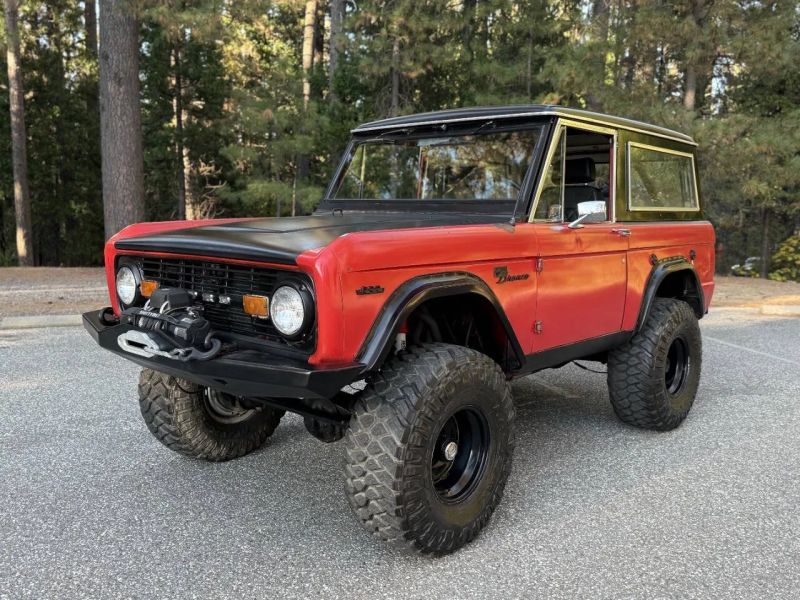


Picked up a '74 Bronco last year to sort out for a customer's son before he drove it. That 92 inch wheelbase is no joke on I-25, it wanders. Body was the bigger story though: filler a quarter inch thick on the quarters and door gaps all over the place. Measure the gaps before you test drive. Just my 2 cents.