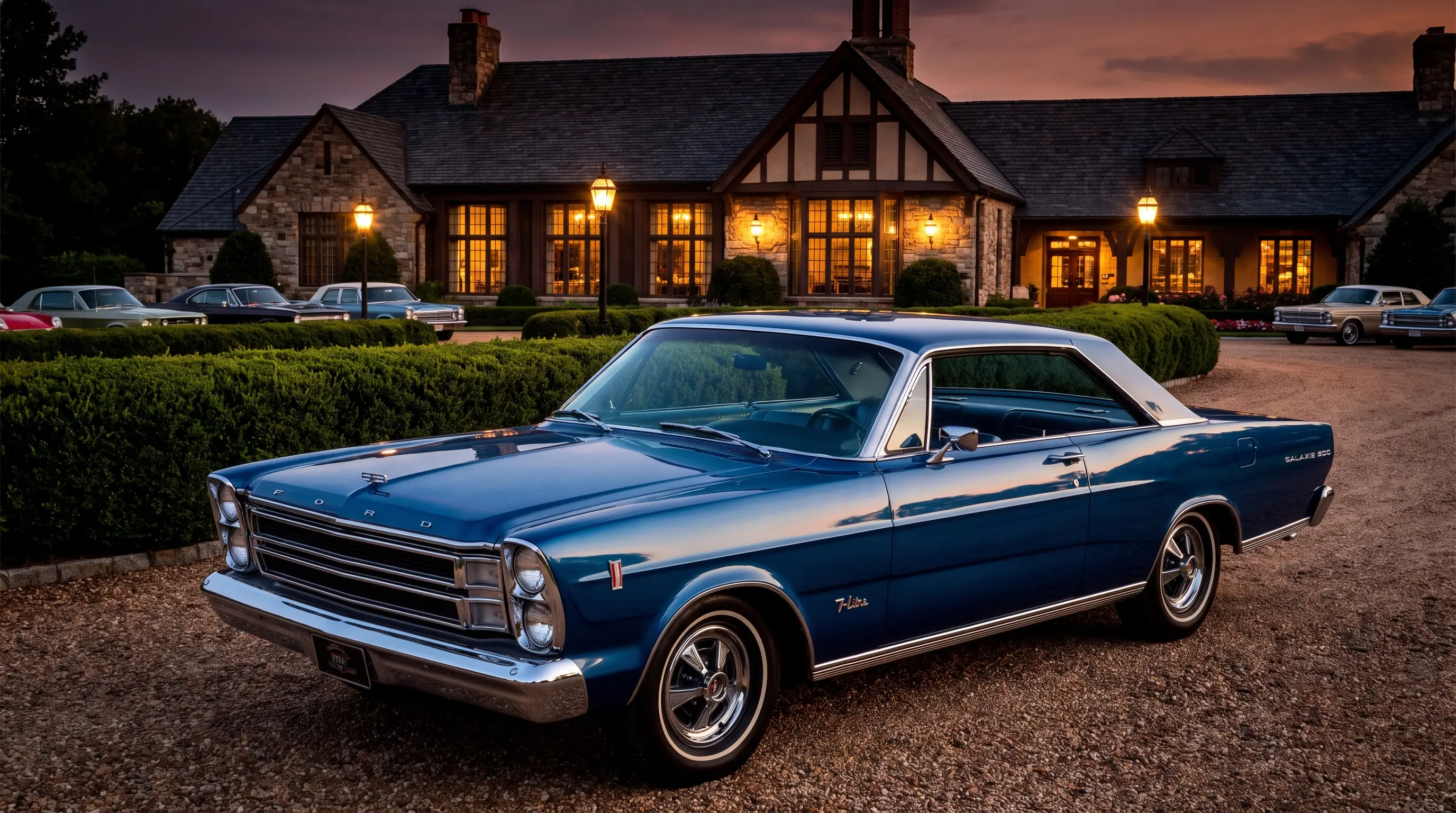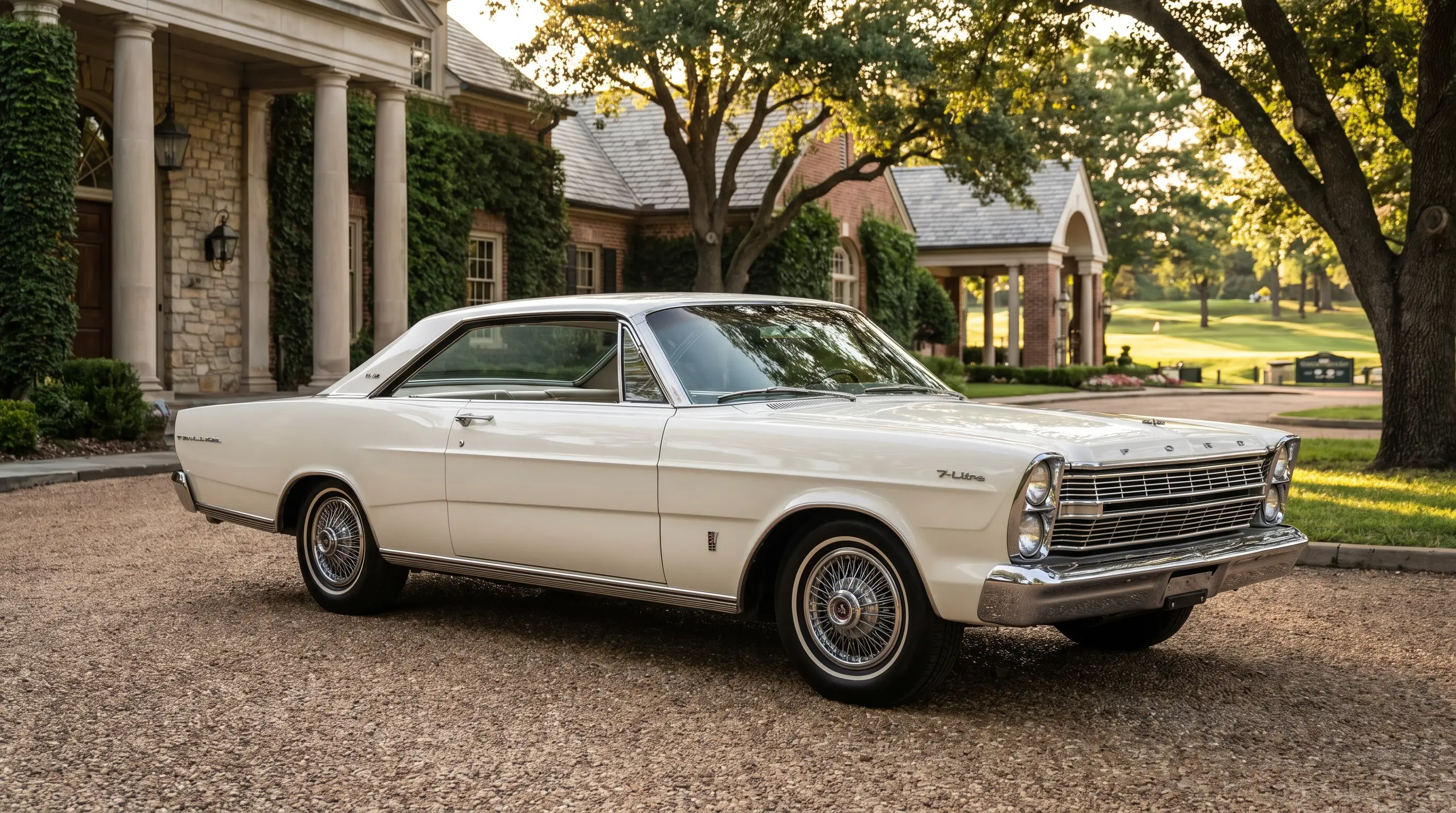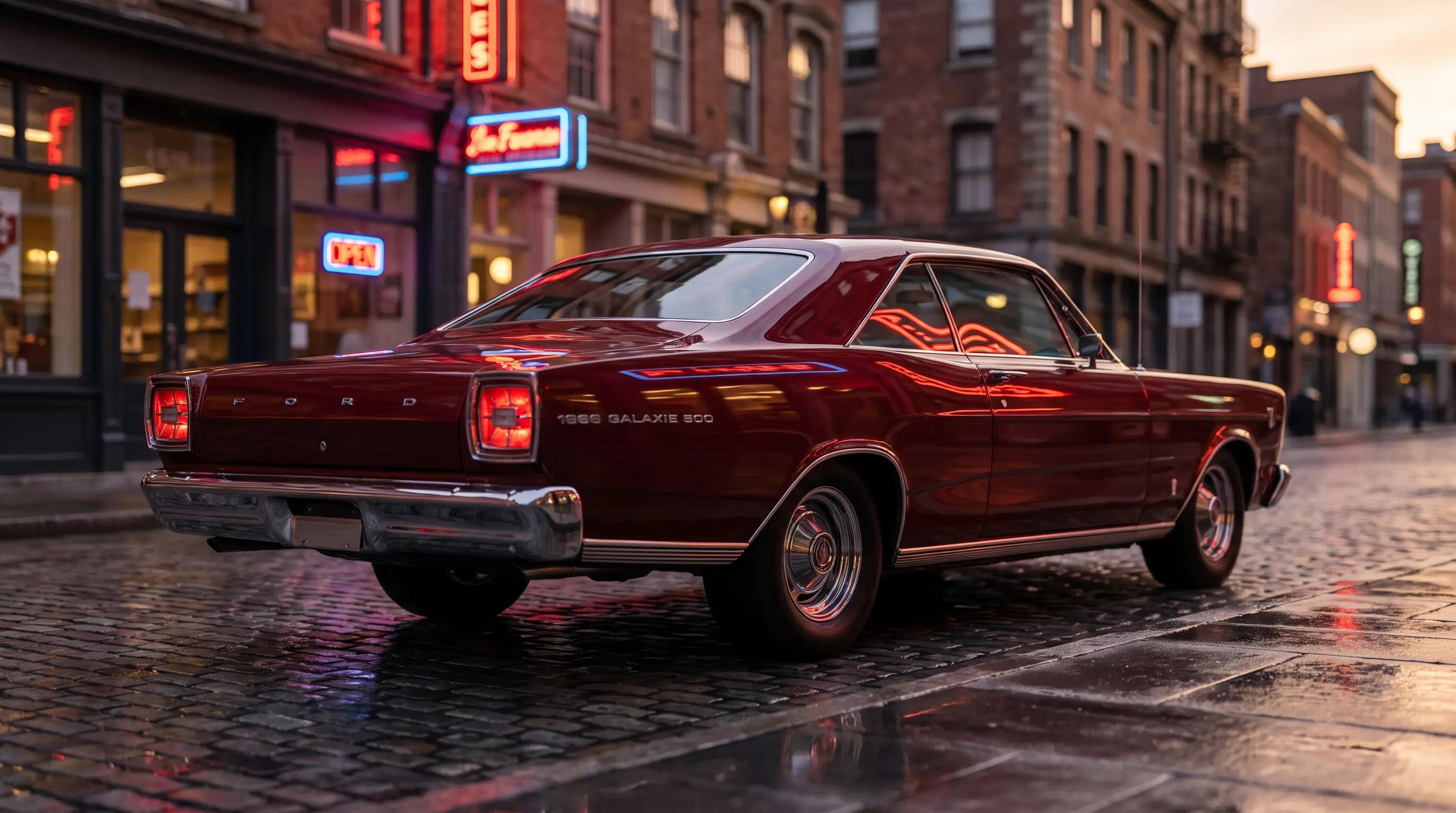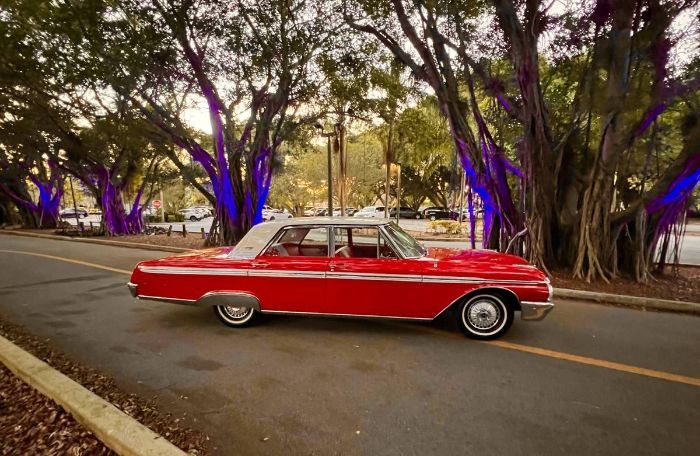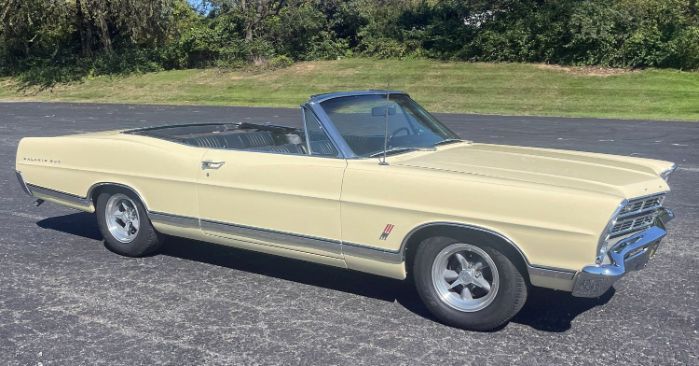
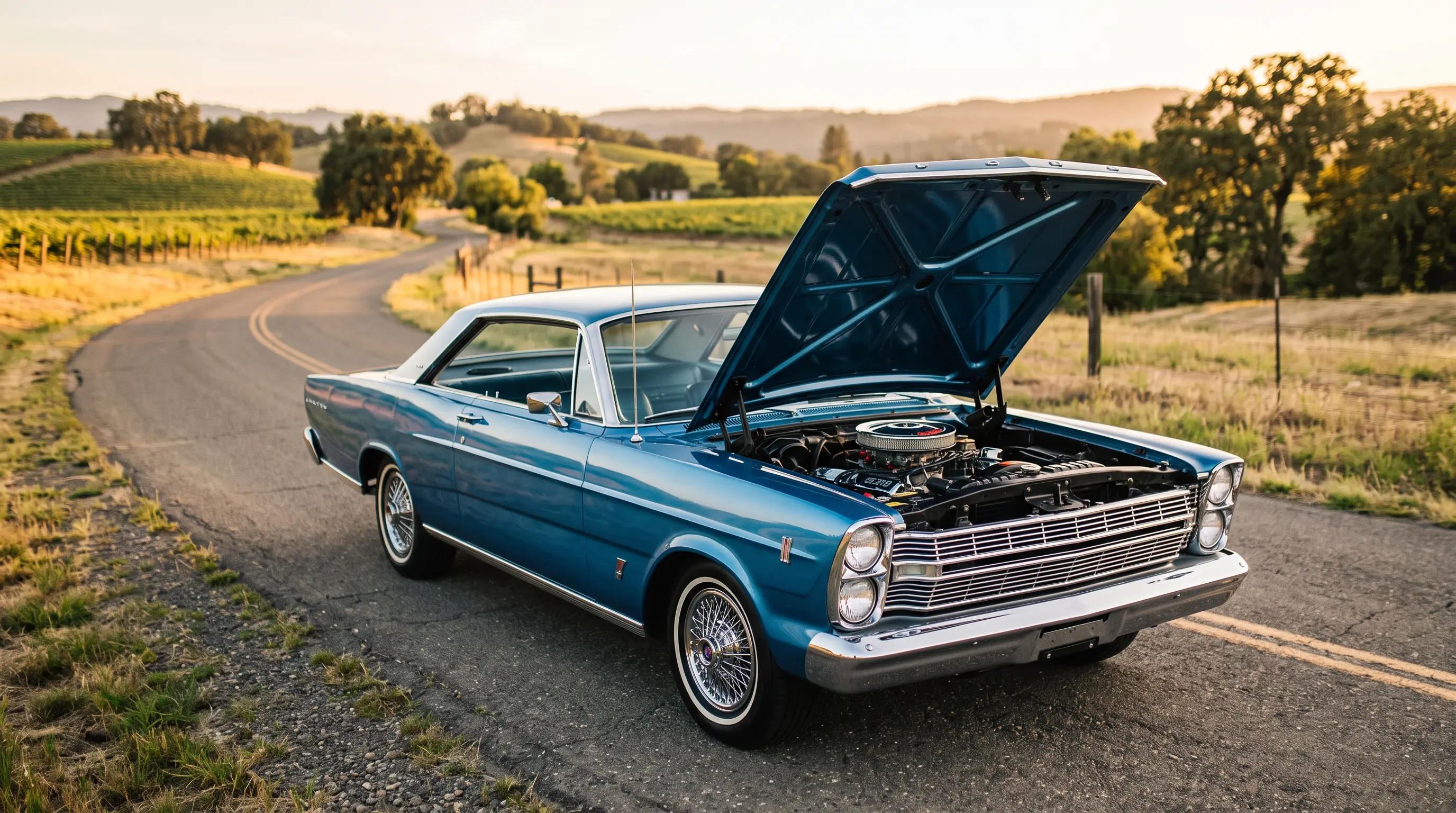
Every big-block engine has a personality, and the Ford Galaxie 1966 428 big block personality is best described as unbothered. It does not scream, it does not need to be wound out to make its case, and it does not punish the driver for short-shifting at 4,000 rpm instead of chasing redline. That is unusual for an engine built in the same era as Chevrolet's 396 and Pontiac's 421, both of which reward aggression. The 428 rewards patience, and understanding why tells you almost everything about how Ford intended the full-size Galaxie to be driven in 1966.
Torque first, everything else second
Ford's FE-series 428 was never designed as a high-revving screamer. Peak torque arrived low in the rev range and stayed flat across a wide band, which meant a Galaxie driver got the sensation of acceleration without needing to work the transmission or chase the tachometer. In practical terms, that translates to a car that feels quick from a stoplight to highway speed without ever feeling frantic. Compare that to a small-block car of similar weight, which typically needs higher rpm and more shifting to produce comparable performance, and the 428's character becomes obvious. It is an engine built around effortlessness, not drama, and Ford's own marketing for the era leaned into exactly that word.
Rated output versus real-world feel
The 428 in 1966 Galaxies came in a single configuration, a four-barrel Q-code engine carrying a factory rating of 345 horsepower, a number that undersells how the engine actually performs once loaded into a full-size car that typically scaled in at somewhere around 3,900 to 4,100 pounds depending on body style and equipment. Horsepower ratings from this era were measured under conditions that do not match how a modern dyno records output, and torque, not peak horsepower, is what a driver notices first in stop-and-go traffic or when merging onto a highway. Buyers cross-shopping a 428 Galaxie against a smaller-displacement competitor rated at similar horsepower on paper are often surprised at how much stronger the Ford feels off the line, simply because the torque curve does the heavy lifting long before horsepower numbers matter.
| Spec | 1966 Galaxie 428 |
|---|---|
| Displacement | 428 cubic inches (FE series) |
| Standard carburetion | Four-barrel (Q-code), the only configuration offered |
| Factory rating | 345 hp |
| Standard transmission | Cruise-O-Matic three-speed automatic |
Why Ford paired it with an automatic, not a stick
Most 428 Galaxies left the factory with the Cruise-O-Matic automatic rather than a manual gearbox, and that pairing was not an accident of parts availability. The automatic suited the engine's low-rpm torque delivery far better than a clutch-and-shifter setup demanding the driver row through gears to access power that was already available at idle. A three-speed automatic tuned for smooth, early upshifts let the 428 do what it did best, pull hard from a stop without fuss, and Ford's engineers clearly built the drivetrain as one coordinated system rather than bolting a big engine into a chassis and hoping the rest caught up. Anyone wanting the complete picture of how the 1966 lineup fit together, trims, body styles, and where this engine sat in the hierarchy, should read our complete history of the model year.
Reliability, maintenance, and what the numbers do not show
An engine engineered for calm, steady torque delivery rather than high rpm operation also tends to live an easier life mechanically. The 428 was not designed to be run at sustained high engine speeds the way a small-block built for a sportier application might be, and that lower operational stress shows up today in how many 1966 examples survive with original engines still installed. Big-block Ford owners frequently report fewer catastrophic failures tied to over-revving simply because the engine's whole design philosophy discouraged that kind of use in the first place. None of this means the 428 was bulletproof or maintenance-free. Cooling system capacity, carburetor tuning, and ignition timing all needed regular attention to keep an engine this large running cleanly, and neglect showed up as fouled plugs and sluggish idle rather than dramatic failure.
The data on surviving numbers-matching 428 Galaxies supports the reliability argument. Engines that were driven within their intended range, moderate rpm, automatic transmission, steady cruising, show up in remarkably original condition decades later, while the rarer manual-transmission cars, which asked more of the driver and got driven harder as a result, tend to have seen more rebuilds. That is a useful signal for anyone evaluating a car today. A numbers-matching 428 with a clean maintenance history is not a lucky survivor, it is the predictable outcome of an engine built to a low-stress design brief.
"People expect a big-block to feel violent, and the 428 just does not. It builds torque low and holds it, which means the car feels strong without ever feeling like it is working hard. That is an engineering choice, not a limitation."
- Emily Chen
For anyone weighing whether a 428-powered 1966 Galaxie fits their driving habits, the honest answer depends on what kind of driving they actually do. A buyer who wants an engine that rewards patience and cruises effortlessly at highway speed will find exactly that. A buyer looking for an engine that wants to be revved will be disappointed, because the 428 was never built for that job. Understanding this distinction up front saves a lot of post-purchase regret, and it explains why so many original owners kept these cars for decades without ever feeling the need to modify the drivetrain.
What this means for a buyer today
Evaluating a 428 in a used car today is less about chasing a dyno number and more about confirming the engine still delivers the low-rpm pull it was built to produce. A healthy 428 should idle smoothly, pull cleanly from a stop without hesitation, and settle into highway cruising without laboring, all before the tachometer needle gets anywhere near where a small-block enthusiast would expect performance to show up. If a seller emphasizes top-end power or a modified exhaust meant to make the engine sound aggressive, that is often a sign the car has been changed from its original character rather than restored to it. The most desirable examples are the ones left alone, still running the torque-first personality Ford engineered in the first place, with the Cruise-O-Matic shifting early and smoothly rather than being reprogrammed to hold gears longer for a sportier feel it was never meant to have.
None of this makes the 428 a boring engine. It makes it a specific one, built for a specific kind of driver, and that specificity is exactly what collectors value when they go looking for a numbers-matching example instead of settling for a car with a period-correct-looking replacement under the hood. Those shopping the current market can find a classic Galaxie and judge that torque character in person, which tells you more in five minutes than any spec sheet.